
Hayabusa2 Torifune Flyby Advances Planetary Defense
Keywords: Hayabusa2, Torifune, JAXA, asteroid flyby, planetary defense, 1998 KY26, Ryugu samples, ISAS, near-Earth asteroid, DART mission, Japan space program Hayabusa2 Torifune Flyby Advances Planetary Defense JAXA confirmed that the Hayabusa2 spacecraft completed its flyby observation of asteroid Torifune on July 5, 2026 at approximately 6:30 p.m. Japan Standard Time, passing
Hayabusa2 Torifune Flyby Advances Planetary Defense
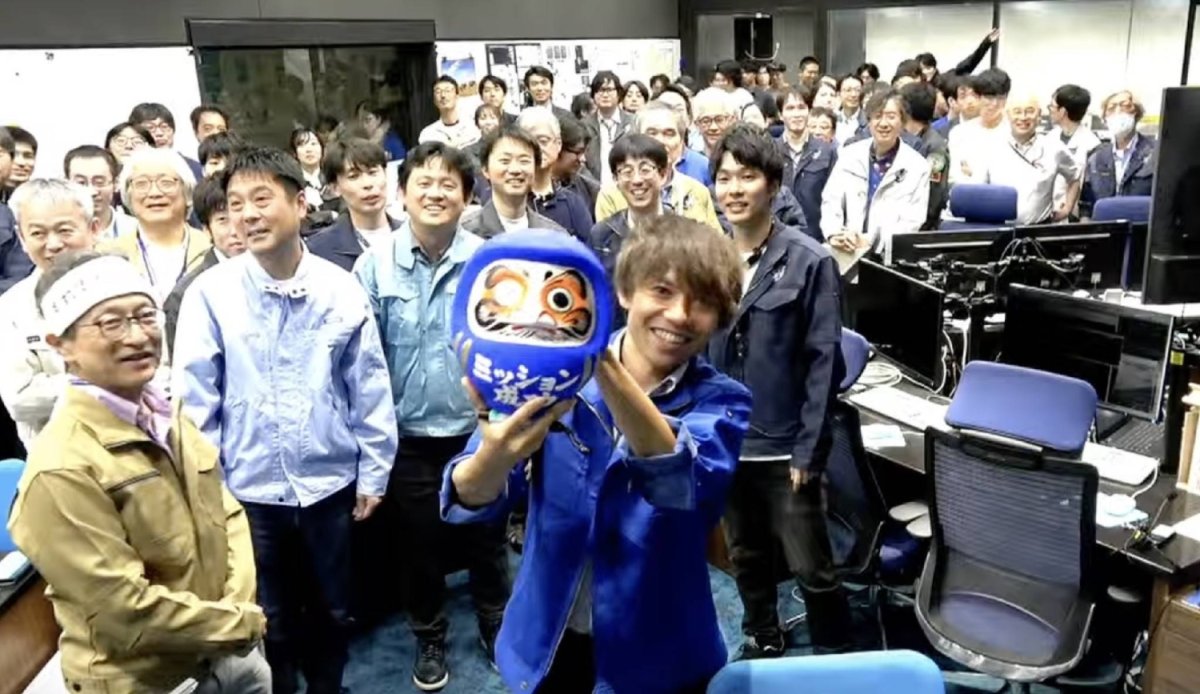
JAXA confirmed that the Hayabusa2 spacecraft completed its flyby observation of asteroid Torifune on July 5, 2026 at approximately 6:30 p.m. Japan Standard Time, passing 800 meters from the asteroid's center at a relative speed of 5 kilometers per second. The operation marks a significant milestone for Japan's planetary defense technology development.
Tags: Hayabusa2, Torifune, JAXA, asteroid flyby, planetary defense, 1998 KY26, Ryugu samples, ISAS, near-Earth asteroid, DART mission, Japan space program
Flyby Execution and Confirmation
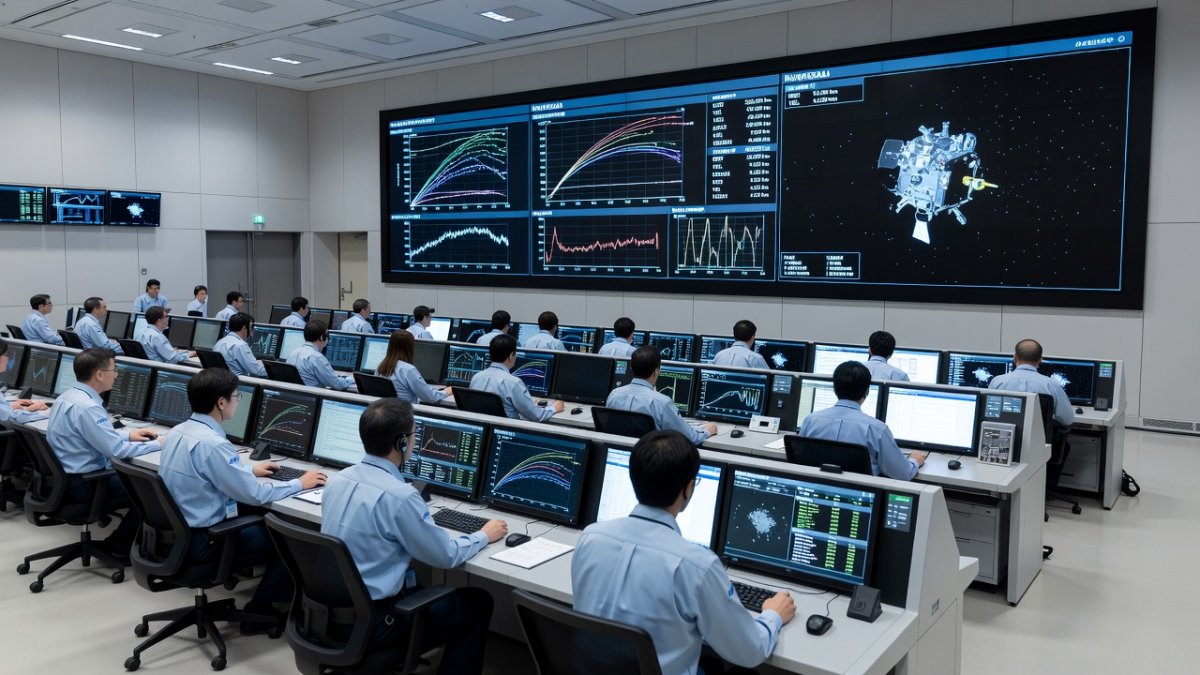
The Hayabusa2 spacecraft executed its scheduled flyby of near-Earth asteroid Torifune on July 5, 2026 at approximately 6:30 p.m. Japan Standard Time. Ground teams at the Usuda Deep Space Center and Misasa Deep Space Station received telemetry confirming the event proceeded without incident. Data packets arrived intact, allowing immediate verification that the probe had passed 800 meters from the asteroid’s center at a relative speed of 5 kilometers per second.
Mission controllers observed the successful closest approach through real-time tracking provided by the NASA Deep Space Network stations in the United States, Australia, and Spain. The coordinated network ensured continuous coverage during the high-speed encounter. Team members in the JAXA control room reacted with applause as confirmation signals reached Earth, marking the first major milestone of the Hayabusa2 Extended Mission.
Images and additional science data are expected to be released following the JAXA news conference scheduled for July 6. The timing of the flyby was deliberately adjusted to capture multiple aspects of Torifune’s roughly five-hour rotation period. This approach maximized the scientific return from cameras not originally designed for rapid flyby operations.
Tags: Hayabusa2, Torifune, JAXA, asteroid flyby, planetary defense, 1998 KY26, Ryugu samples, ISAS, near-Earth asteroid, DART mission, deep space navigation, Japan space program
Technical Achievement: Rendezvous Probe Executing Flyby
Hayabusa2 was engineered primarily for rendezvous and sample collection operations rather than high-speed flybys. Its instrument suite includes fixed cameras without a dedicated long-range telescope, requiring precise trajectory planning to achieve useful observations at 800 meters. Engineers calculated the approach distance carefully to remain within approximately one kilometer of the surface while avoiding collision risk with the roughly 450-meter-diameter asteroid.
Torifune, also designated 2001 CC21, presents an elongated shape and a rotation period of about five hours. The flyby timing was optimized to image different surface regions as the asteroid turned. This demanded exact knowledge of both the spacecraft’s path and the asteroid’s spin state, demonstrating advanced navigation capabilities developed during the original Ryugu mission.
Ground station support from Usuda, Misasa, and the international NASA Deep Space Network proved essential for maintaining two-way communication at interplanetary distances. The 5 km/s relative velocity compressed the observation window to seconds, yet the probe’s attitude control system maintained camera pointing throughout the pass. Post-flyby analysis will assess how well the fixed instruments performed under these unplanned conditions.
The successful execution highlights incremental improvements in autonomous navigation software refined since the spacecraft’s launch in December 2014. Although Hayabusa2 lacks dedicated flyby hardware, trajectory optimization allowed it to gather data complementary to dedicated reconnaissance missions. This achievement underscores the adaptability of the spacecraft bus originally built for sample return.
Planetary Defense Implications
The Torifune flyby serves as a technology demonstration for planetary defense applications. By testing precision navigation at close range, JAXA aims to develop methods capable of altering asteroid trajectories in the future. The mission’s purpose explicitly includes validating techniques that could one day deflect hazardous near-Earth objects, complementing NASA’s DART kinetic impact experiment conducted in 2022.
Unlike DART’s direct collision approach, Hayabusa2’s flyby emphasizes non-destructive characterization and trajectory measurement. Data collected at 800 meters will help refine models of how small changes in velocity affect an asteroid’s path over long timescales. Such measurements are critical for any future deflection campaign that might require multiple gentle nudges rather than a single impact.
Torifune’s size and rotation characteristics make it a representative target for studying objects in the hundreds-of-meters class. Understanding spin state and shape during the five-hour rotation cycle provides baseline information needed to predict how a deflection impulse would propagate through an irregularly shaped body. The flyby therefore contributes practical engineering knowledge beyond pure science.
International collaboration through the NASA Deep Space Network further illustrates the global nature of planetary defense efforts. Shared tracking resources enabled continuous monitoring that would have been impossible for JAXA stations alone. This cooperation mirrors the broader framework required for any actual deflection mission, where early detection and precise orbit determination depend on worldwide assets.
Japan's Position in Asteroid Exploration
Japan has established leadership in asteroid exploration through the Institute of Space and Astronautical Science and JAXA. The original Hayabusa mission and its successor Hayabusa2, which returned Ryugu samples in December 2020, demonstrated end-to-end capabilities from launch through sample curation. The Torifune flyby extends this legacy by showing that the same spacecraft can perform additional high-value tasks years after its primary mission concluded.
ISAS engineers have repeatedly solved complex navigation challenges, from the first Hayabusa’s ion-engine difficulties to Hayabusa2’s precise touchdowns on Ryugu. The July 5, 2026 flyby adds another data point confirming Japan’s ability to operate probes at interplanetary distances with limited margins. Such operational heritage strengthens Japan’s role in future international missions targeting small bodies.
The Hayabusa2 Extended Mission, designated Hayabusa2#, continues this trajectory toward the water-rich asteroid 1998 KY26, expected to arrive in 2031. By conducting the Torifune encounter en route, JAXA maximizes scientific return from an already proven platform. This strategy reflects prudent resource management within Japan’s space program, which balances ambitious goals with constrained budgets.
Japan’s consistent focus on sample return and in-situ characterization distinguishes its approach from impactor or orbiter-only missions flown by other agencies. The Torifune flyby reinforces this emphasis on detailed physical understanding, which remains essential for both science and planetary defense applications.
The Hayabusa2 Extended Mission
Following the successful return of Ryugu samples on December 6, 2020, Hayabusa2 began its extended mission phase. The spacecraft retained sufficient propellant and functional systems to pursue additional targets, leading to the selection of 1998 KY26 as the final destination. The Torifune flyby on July 5, 2026 represents an intermediate waypoint that also serves planetary defense objectives.
The extended mission profile required careful trajectory design to align with both Torifune and the later 1998 KY26 encounter. Engineers balanced the need for a close 800-meter approach with the requirement to preserve remaining delta-v for the 2031 rendezvous. This dual-purpose planning illustrates how legacy spacecraft can contribute to multiple scientific and applied goals.
Ground teams continue to monitor spacecraft health using the same deep-space network that supported the original Ryugu operations. The July 5 flyby provided an opportunity to exercise these assets under dynamic conditions, confirming that communications and navigation systems remain reliable more than a decade after launch in December 2014.
Future operations will focus on preparing for the 1998 KY26 encounter, an asteroid thought to contain water and organic compounds. Data gathered at Torifune will help calibrate instruments and refine navigation techniques ahead of that more distant rendezvous.
What to Watch For
The JAXA news conference on July 6 will provide the first detailed assessment of flyby performance. Analysts will examine camera imagery to determine surface resolution achieved at 800 meters and assess how well the fixed instruments captured rotational variation. Early results are expected to inform planning for the 2031 arrival at 1998 KY26.
Subsequent data releases will include refined trajectory solutions and any measurements of Torifune’s physical properties derived from the brief encounter. Because the spacecraft was not designed for flybys, these results will also highlight the practical limits of repurposed rendezvous hardware.
Longer-term attention will focus on how the Torifune experience influences deflection technology roadmaps. JAXA’s demonstration of precision close approach without impact offers a complementary pathway to kinetic impactors, potentially enabling gentler trajectory adjustments for certain asteroid types.
Looking Ahead
The July 5, 2026 Torifune flyby marks another incremental step in Japan’s sustained commitment to small-body exploration. By leveraging the proven Hayabusa2 platform, ISAS and JAXA continue to extract maximum value from prior investments while advancing capabilities relevant to planetary defense. The mission’s success at 800 meters and 5 km/s validates navigation techniques that may prove essential if future observations identify a genuine impact threat.
International partnerships, particularly through the NASA Deep Space Network, remain vital to these achievements. Shared infrastructure allows continuous tracking that single-nation networks cannot provide alone. This cooperative model aligns with the global coordination required for any actual asteroid deflection scenario.
As Hayabusa2 proceeds toward 1998 KY26, the Torifune encounter supplies both immediate scientific data and operational lessons. Japan’s methodical approach—combining sample return heritage with flyby demonstrations—positions the country as a steady contributor to humanity’s growing ability to understand and, if necessary, protect against near-Earth asteroids.
By Kenji Tanaka, Staff Writer
This article was produced with AI-assisted research and editorial support. Reporting is based on sources cited in the article.
What's Your Reaction?
 Like
0
Like
0
 Dislike
0
Dislike
0
 Love
0
Love
0
 Funny
0
Funny
0
 Wow
0
Wow
0
 Sad
0
Sad
0
 Angry
0
Angry
0

Japan Correspondent at Global1.News. Tokyo-based voice covering Japanese politics, technology, economy, and culture. Tracks the intersection of tradition and innovation in one of the world's most dynamic societies.















Comments (0)