
Israeli Strike on Tyre Signals Lebanon Ceasefire Collapse
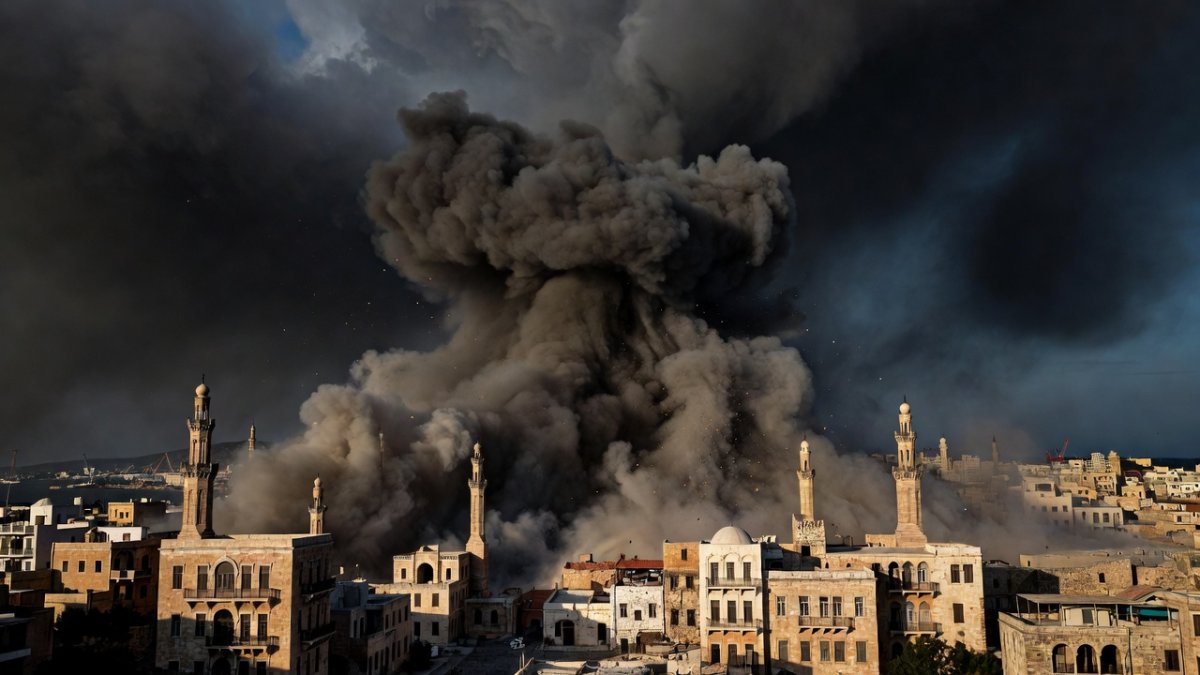
The thick plume of smoke rising over Tyre on June 7, 2026, captured in Al Arabiya English footage, stands as the clearest visual marker yet that the US-brokered ceasefire between Israel and Lebanon has collapsed. What began as a limited exchange has widened into direct Iranian involvement and Israeli strikes inside Iran, pulling multiple fronts into simultaneous conflict. The S
The Strike on Tyre
Al Arabiya English video from June 7 shows a massive column of smoke billowing over the historic southern Lebanese port city after an Israeli airstrike. Lebanese civil defence sources reported that the strike hit an area near Tyre, adding to earlier damage from June 5 when seven people were killed in overnight strikes. The city has faced repeated bombardment throughout the 2026 Lebanon war that began on March 2 when Hezbollah opened a second front against Israel.
Jabal Amel Hospital in Tyre, already damaged in a June 1 strike, lies within the broader zone of operations. AFP and AP reporting confirms that Tyre’s civilian infrastructure has absorbed repeated hits since the northern front opened in March. The visual from Al Arabiya English underscores how the port city, once a symbol of Lebanon’s Mediterranean heritage, now serves as a frontline indicator of escalation.
(Global 1 News)
Collapse of the US-Brokered Ceasefire
The June 3 ceasefire, negotiated under US President Donald Trump’s administration, was rejected outright by Hezbollah leadership. Lebanese Parliament Speaker Nabih Berri publicly denounced the agreement as one-sided, arguing it failed to address core Lebanese demands. Israeli Prime Minister Benjamin Netanyahu and Defense Minister Israel Katz maintained that Israel retained the right to respond to any Hezbollah activity threatening its northern border.
By June 5, Israeli strikes had already resumed in southern Lebanon. The Tyre attack on June 7 confirmed that the pause had ended. Lebanese Prime Minister Najib Mikati’s government found itself caught between Hezbollah’s rejection of the deal and Israeli insistence on operational freedom. The rapid unraveling illustrates how fragile external mediation remains when core parties on both sides view the terms as strategically disadvantageous.
Escalation in Beirut’s Dahiyeh
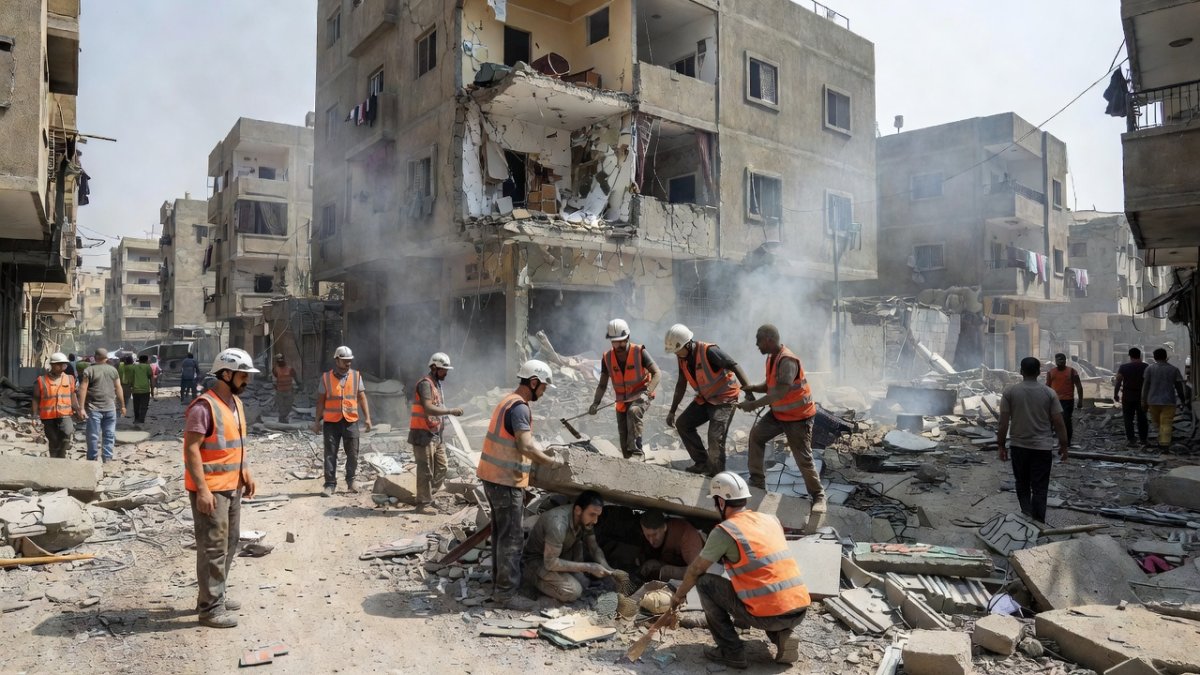
On the same day as the Tyre strike, Israel hit Beirut’s Dahiyeh district for the first time since the June 3 ceasefire. Lebanon’s health ministry reported two killed and twenty wounded. Israeli officials stated the target was a Hezbollah command center. The strike crossed a threshold that had held during the brief pause, signaling that Israel no longer viewed the ceasefire as constraining its operations against Hezbollah infrastructure in the capital.
Iran’s Direct Retaliation
Iran responded on June 7 with ballistic missiles fired at Israel, marking the first direct Iranian attack since the April 8 ceasefire that had paused the US-Israeli war with Iran. Iran’s Foreign Ministry and Foreign Minister Abbas Araghchi framed the launch as retaliation for the Beirut strike. Iranian Supreme Leader Mojtaba Khamenei’s circle signaled that further Israeli action on Lebanese or Iranian soil would trigger additional responses.
Israel retaliated with airstrikes on military targets in western and central Iran, including areas near Tehran, Isfahan, and Tabriz. The exchange moved the conflict beyond the Lebanon-Israel theater into direct state-to-state strikes between Israel and Iran, a development that had been contained since the April pause.
(Global 1 News)
Echoes of the 2006 War
The current pattern recalls the 2006 Israel-Hezbollah war, when Tyre and Beirut’s southern suburbs absorbed heavy bombardment. More than 7,000 people have been killed in Lebanon since October 2023, with a quarter of a million homes destroyed according to multiple reports. The 2026 Lebanon war, which began when Hezbollah entered the conflict on March 2, has produced a level of destruction that exceeds earlier rounds and now includes direct Iranian missile involvement.
Strategic Calculus of Key Actors
Israeli leadership under Netanyahu and Katz calculates that sustained pressure on Hezbollah command nodes and Iranian targets can degrade both adversaries’ capabilities before any renewed diplomatic process. Hezbollah’s rejection of the June 3 ceasefire reflects its assessment that the terms offered insufficient guarantees against future Israeli operations. Iran’s decision to launch missiles directly demonstrates willingness to absorb escalation costs to maintain deterrence credibility with its regional partners.
US mediation under President Trump seeks to prevent a wider regional war while preserving Israeli freedom of action. Lebanese officials, including Berri and Mikati, face the narrowest margin: they must manage domestic fallout from destruction while lacking leverage to enforce a durable halt to fighting.
Broader Regional Implications
The Tyre strike and subsequent Iranian response have accelerated the integration of the Lebanon and Iran fronts. Sunni-Shia competition, Gulf diversification priorities, and Arab-Israeli normalization efforts now operate under the shadow of sustained multi-front conflict. Energy markets face renewed uncertainty as strikes approach Iranian production and export infrastructure. Great-power competition between the United States and Iran’s partners adds another layer of complexity to any future de-escalation.
The smoke over Tyre on June 7 therefore represents more than a single airstrike. It marks the moment when limited containment gave way to open, multi-state confrontation whose second-order effects will shape Middle East security for years.
By Malik Hassan, Staff WriterThis article was produced with AI-assisted research and editorial support. Reporting is based on sources cited in the article.
What's Your Reaction?
 Like
0
Like
0
 Dislike
0
Dislike
0
 Love
0
Love
0
 Funny
0
Funny
0
 Wow
0
Wow
0
 Sad
0
Sad
0
 Angry
0
Angry
0

Middle East Correspondent at Global1.News. Based in Beirut, covering politics, conflict, energy, and society across the Middle East. Brings context and depth to a region often reduced to headlines.










Comments (0)