
China's Sharp Rebuke of British Steel Nationalisation Signals Deepening Tensions in UK-China Economic Relations
Overview of the Nationalisation Decision The United Kingdom government's decision to nationalise British Steel's operations at Scunthorpe has elicited a strong response from Beijing. On 17 July 2026, China's Ministry of Commerce (MOFCOM) issued a statement firmly opposing the move, describing it as a serious infringement on the legitimate rights and interests of Jingye Group, the Chinese owner of the steelmaker. MOFCOM expressed "strong dissatisf
Overview of the Nationalisation Decision
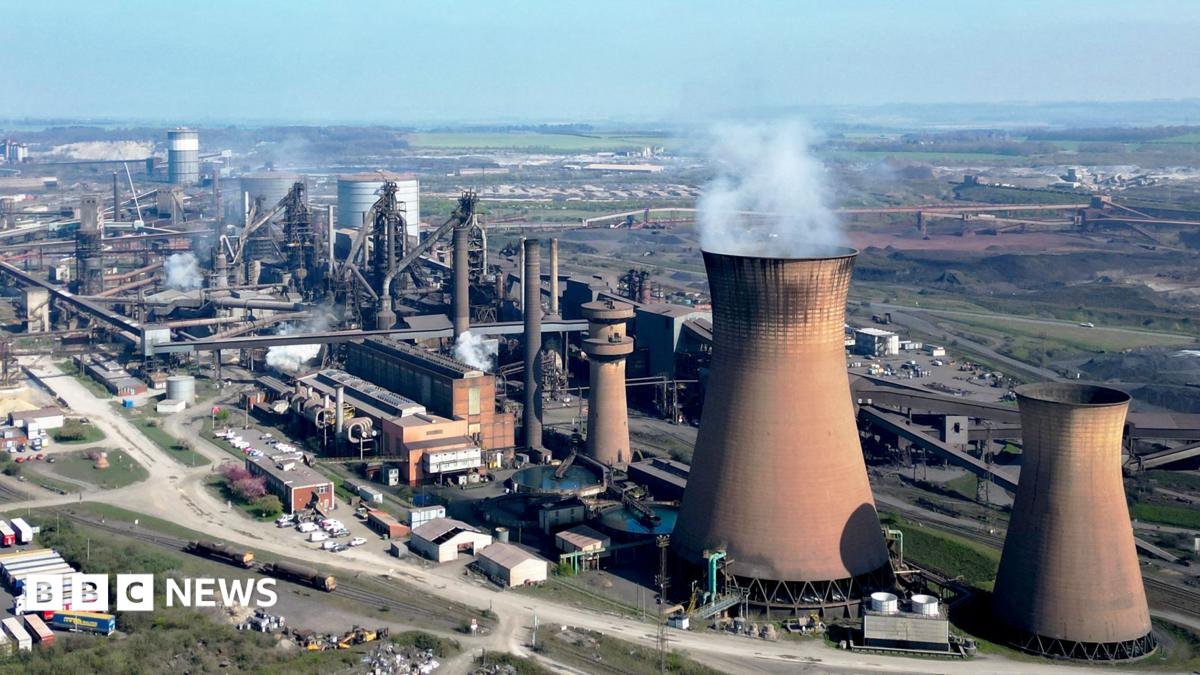
The United Kingdom government's decision to nationalise British Steel's operations at Scunthorpe has elicited a strong response from Beijing. On 17 July 2026, China's Ministry of Commerce (MOFCOM) issued a statement firmly opposing the move, describing it as a serious infringement on the legitimate rights and interests of Jingye Group, the Chinese owner of the steelmaker. MOFCOM expressed "strong dissatisfaction" with the British government's actions, which it claims undermine the confidence of Chinese investors in the United Kingdom.
The nationalisation follows months of negotiations between London and Jingye, during which the UK government concluded that no agreement could be reached that represented value for British taxpayers. The plant, which has been under partial government operational control since last year while still formally owned by Jingye, was losing substantial sums — reportedly around £700,000 per day according to the company's own figures, with the National Audit Office estimating a daily cost to the government of £1.3 million. The incoming administration under Prime Minister Andy Burnham, who assumes office on Monday, now faces the immediate challenge of managing this strategically important but financially burdensome asset.
This development occurs against the backdrop of legislation passed by Parliament enabling the government to bring elements of the steel industry into public ownership when deemed necessary under a public interest test. The move protects approximately 2,700 direct jobs at Scunthorpe and thousands more in the supply chain, while preserving a capability to produce specialised virgin steel essential for Network Rail and the construction sector.
Historical Context of British Steel and UK-China Investment Ties
British Steel's trajectory reflects the long-term transformation of the United Kingdom's industrial landscape. The company was last under full state ownership in 1988, when it was privatised under Margaret Thatcher's government as part of a broader programme of reducing the state's role in heavy industry. The return to public ownership in 2026 therefore marks a significant policy reversal driven by national security and strategic capability considerations rather than ideological commitment to nationalisation.
The involvement of Jingye Group dates back to 2020, when the Chinese firm acquired British Steel out of insolvency. At the time, the acquisition was viewed as a lifeline for the Scunthorpe works, preserving jobs and maintaining production at a facility that had faced repeated closure threats. Jingye invested substantial sums and claimed to have contributed meaningfully to both the local economy and the UK's broader industrial base. However, persistent losses, rising energy costs, and global overcapacity in steel production created unsustainable pressures.
This episode must be situated within the longer history of China-UK economic engagement. The Bilateral Investment Treaty signed between the two countries in 1986 has served as a foundational legal framework for protecting mutual investments. Beijing now invokes this treaty to argue that the nationalisation disregards Jingye's contributions and violates the spirit of bilateral commitments. The current dispute echoes earlier tensions, including those surrounding Chinese investments in critical infrastructure such as nuclear power and telecommunications, where national security reviews have increasingly shaped outcomes.
MOFCOM's Official Position and Legal Arguments
MOFCOM's statement on 17 July 2026 was carefully calibrated to emphasise both legal and political dimensions. The ministry accused the British side of forcibly taking control of the company under the pretext of national security while ignoring Jingye's economic contributions. It called upon the UK to "faithfully fulfil" its obligations under the 1986 China-UK Bilateral Investment Treaty, which includes provisions for fair and equitable treatment of investments and protections against expropriation without compensation.
The Chinese position highlights what Beijing sees as a pattern of selective application of national security criteria that disproportionately affects Chinese investors. MOFCOM stressed that the decision "severely undermined the confidence of Chinese companies investing in the UK," a message clearly intended to resonate not only with Jingye but with the broader community of Chinese enterprises active in Europe. The ministry stopped short of announcing retaliatory measures but left open the possibility of further action if compensation negotiations prove unsatisfactory.
Jingye Group has indicated it will seek compensation, though the UK government has appointed an independent valuer to assess any amount due — a process that could result in nil compensation if the business is deemed to have negative value. This valuation exercise, scheduled to begin in autumn 2026, will likely become a focal point of diplomatic engagement between the two capitals.
Economic Dimensions and Implications for the UK Steel Industry
The economic stakes in the British Steel nationalisation extend far beyond the immediate financial costs. The Scunthorpe facility is one of the few remaining sites in the UK capable of producing virgin steel through blast furnace methods. Should production of this type cease, the United Kingdom would become the only G7 nation without domestic primary steelmaking capacity. This vulnerability carries significant implications for supply chain resilience in construction, rail infrastructure, and defence manufacturing.
Government estimates suggest ongoing operational subsidies will be required in the immediate term, with Business Secretary Peter Kyle acknowledging that running costs must be covered while longer-term restructuring plans are developed. The decision to nationalise reflects a broader recognition across the political spectrum that certain industrial capabilities warrant public support when market mechanisms fail to sustain them.
For China, the case illustrates the challenges of overseas investment in strategically sensitive sectors. Jingye's experience may prompt Chinese investors to recalibrate risk assessments regarding European markets, particularly in energy-intensive industries facing decarbonisation pressures and geopolitical scrutiny. The episode also highlights the tension between globalised supply chains and national efforts to maintain strategic autonomy in critical materials.
From a macroeconomic perspective, the nationalisation occurs as both countries navigate complex economic transitions. China continues to manage overcapacity in its steel sector while pursuing high-quality development under the 14th Five-Year Plan. The United Kingdom, meanwhile, seeks to balance fiscal constraints with industrial policy objectives under its new leadership.
Geopolitical Implications and Strategic Calculus
The British Steel dispute arrives at a delicate moment in UK-China relations. With Andy Burnham preparing to enter Downing Street, the incoming prime minister must balance domestic political pressures to protect British industry with the economic benefits of engagement with the world's second-largest economy. Beijing clearly hopes to shape the new administration's approach through its strong public stance.
This episode reflects China's broader foreign policy doctrine of defending what it perceives as the legitimate rights and interests of its enterprises abroad. By framing the nationalisation as a violation of bilateral treaty obligations, Beijing seeks to establish normative boundaries around investment protection even in cases involving national security claims. The case also tests the resilience of economic ties amid growing strategic competition.
For the United Kingdom, the decision demonstrates a willingness to prioritise strategic autonomy in critical sectors despite potential diplomatic costs. London maintains that it highly values its relationship with China and remains open to Chinese investment in non-sensitive areas. However, the explicit linkage of the nationalisation to national security considerations signals a more assertive approach to protecting key industrial capabilities.
The second-order effects of this dispute will likely extend to other jurisdictions. ASEAN nations, many of which host substantial Chinese steel investments, will observe closely how compensation and treaty obligations are handled. The European Union, engaged in its own recalibration of economic security policies, may draw lessons regarding the management of Chinese state-linked investments in strategic industries. For the Global South, the case provides another data point in assessing the reliability of Western partners versus Chinese investors in long-term industrial projects.
Strategic Outlook for UK-China Relations Under New UK Leadership
The nationalisation of British Steel presents the incoming Burnham government with an early test of its China policy. While the new prime minister has historically emphasised economic pragmatism, the steel dispute forces a choice between protecting domestic industry and preserving investment flows from China. Early signals suggest London will seek to compartmentalise the issue, treating it as a specific commercial disagreement rather than a broader rupture in bilateral relations.
Beijing's strategic interests in this matter extend beyond the fate of a single steel plant. The case touches upon China's objectives of technological self-sufficiency and the protection of overseas assets as part of its "going out" strategy. By responding forcefully, China aims to deter what it views as discriminatory treatment of its firms while signalling to other potential host countries the importance it attaches to investment protection.
Looking ahead, several scenarios appear plausible. A negotiated settlement on compensation could help stabilise relations, allowing both sides to emphasise their commitment to constructive economic engagement. Conversely, prolonged legal or diplomatic confrontation could accelerate decoupling trends in sensitive sectors. The independent valuation process scheduled for autumn 2026 will provide an important indicator of whether compromise remains achievable.
The dispute also occurs within the context of China's Dual Circulation strategy, which seeks to reduce external vulnerabilities while maintaining selective global integration. For the United Kingdom, the episode reinforces the need for a coherent industrial strategy that balances openness with resilience. Both countries share an interest in avoiding escalation, yet domestic political considerations in each capital may complicate efforts at de-escalation.
Broader Ramifications for Global Investment Norms and Multilateralism
The British Steel nationalisation raises important questions about the future of international investment governance. As major economies increasingly invoke national security exceptions to investment treaties, the predictability and enforceability of such agreements come under strain. The 1986 China-UK Bilateral Investment Treaty, while dated, remains a reference point for Beijing in this dispute. Its invocation highlights the tension between evolving security concepts and traditional investment protection standards.
This case may influence ongoing multilateral efforts to reform investment dispute settlement mechanisms. China's participation in various regional trade and investment frameworks, including those with ASEAN members, will be shaped by how this matter is ultimately resolved. The precedent established regarding compensation for nationalised assets in strategic sectors could reverberate across multiple jurisdictions.
For Beijing, the episode connects to its longstanding advocacy for multilateral institution-building that better reflects developing country interests. By positioning itself as a defender of treaty obligations and investor rights, China seeks to contrast its approach with what it characterises as selective protectionism by Western governments. This narrative aligns with China's broader efforts to expand regional influence through economic diplomacy and institutional innovation.
The strategic calculus for all parties involves weighing short-term costs against long-term positioning. The United Kingdom must demonstrate that its actions are proportionate and non-discriminatory. China must calibrate its response to protect specific interests without triggering broader investment flight from its own markets. Third countries, particularly in the Global South, will assess these developments when considering their own engagement strategies with both powers.
Conclusion: Navigating Economic Security in an Era of Strategic Competition
The nationalisation of British Steel and China's subsequent rebuke represent more than a bilateral commercial dispute. They encapsulate the challenges facing governments worldwide as they attempt to reconcile economic interdependence with strategic autonomy. For China, the case tests its ability to safeguard overseas investments while pursuing technological self-sufficiency and expanded regional influence. For the United Kingdom, it highlights the difficult trade-offs inherent in maintaining critical industrial capabilities amid fiscal constraints and geopolitical pressures.
As the Burnham government begins its work, the resolution of the Jingye compensation claim will send important signals about the future trajectory of UK-China relations. Both sides have emphasised their desire to maintain constructive engagement, yet the structural tensions exposed by this episode are unlikely to dissipate quickly. The coming months of negotiation and valuation will reveal whether pragmatic compromise or escalating friction defines the next phase of this complex bilateral relationship.
The British Steel affair ultimately underscores the evolving nature of economic statecraft in the 21st century. National security considerations now extend deep into traditional industrial sectors, reshaping investment patterns and diplomatic priorities. How London and Beijing navigate this specific case may well influence broader patterns of global economic cooperation and competition in the years ahead.
By Prof. Marcus Chen, Staff Writer
This article was produced with AI-assisted research and editorial support. Reporting is based on sources cited in the article.
What's Your Reaction?
 Like
0
Like
0
 Dislike
0
Dislike
0
 Love
0
Love
0
 Funny
0
Funny
0
 Wow
0
Wow
0
 Sad
0
Sad
0
 Angry
0
Angry
0

World Politics Analyst at Global1.News. Based in Beijing, covering US-China relations, global trade, and geopolitical strategy. Brings deep analytical perspective to the power dynamics shaping international affairs.















Comments (0)