
China and North Korea Intensify High-Level Exchanges Amid Shifting Regional Alignments
Commemorating Sixty-Five Years of the Friendship Treaty In mid-July 2026, China and North Korea marked the 65th anniversary of their Treaty of Friendship, Cooperation and Mutual Assistance with a notable round of high-level diplomacy. Wang Huning, a member of the Standing Committee of the Political Bureau of the Communist Party of China and chairman of the National Committee of the Chinese People's Political Consultative Conference, led a party and government delegation to...
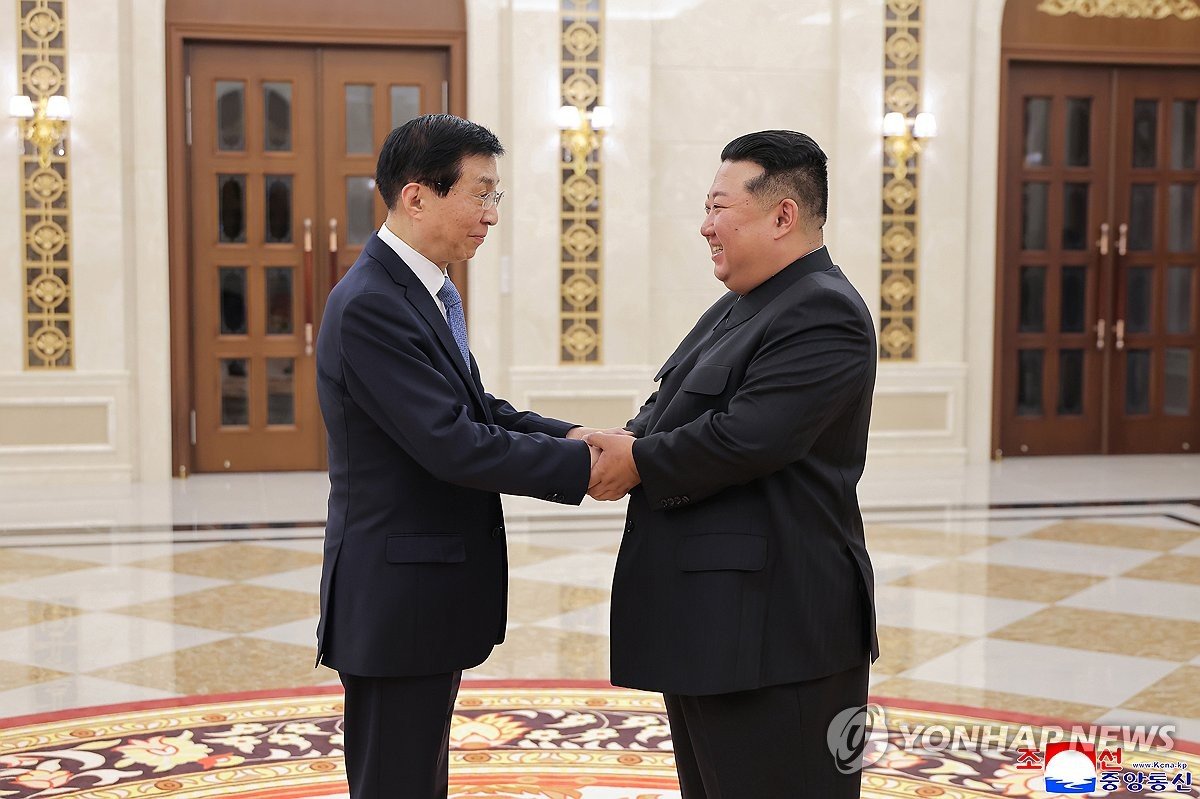
Commemorating Sixty-Five Years of the Friendship Treaty
In mid-July 2026, China and North Korea marked the 65th anniversary of their Treaty of Friendship, Cooperation and Mutual Assistance with a notable round of high-level diplomacy. Wang Huning, a member of the Standing Committee of the Political Bureau of the Communist Party of China and chairman of the National Committee of the Chinese People's Political Consultative Conference, led a party and government delegation to Pyongyang from July 15 to 17. There he met North Korean leader Kim Jong-un, conveying what official accounts described as "the best wishes and comradely greetings" from Chinese President Xi Jinping.
The 1961 treaty remains China's only formal mutual defense pact, a fact that continues to shape the strategic grammar of the bilateral relationship even as both sides navigate a more complex regional environment. Kim Jong-un underscored the treaty's enduring relevance, stating that it had played "an important role in defending the basic interests of the two countries and ensuring regional and global peace and security." He further indicated that the Workers' Party of Korea would continue to develop traditional ties on the basis of the treaty's spirit. Wang, for his part, affirmed Beijing's intention to "promote political mutual trust, bilateral solidarity, and expand and develop mutual collaboration and cooperation."
These exchanges did not occur in isolation. They formed part of a deliberate sequence of reciprocal visits designed to reaffirm political alignment at a moment when Pyongyang has simultaneously deepened its partnership with Moscow. For Seoul and other regional capitals, the optics of renewed Sino-North Korean solidarity carry direct implications for inter-Korean dynamics, alliance management, and the broader balance of influence on the peninsula.
Premier Pak Thae-song's Preceding Visit to Beijing
Wang Huning's trip was immediately preceded by a visit to Beijing by North Korean Premier Pak Thae-song from July 10 to 12. During that stay, Pak met Xi Jinping and relayed Kim Jong-un's expressed wish for the "most powerful strategic relations" between the two states. The sequencing is significant: Pyongyang dispatched its premier first, after which Beijing reciprocated with one of its highest-ranking party officials. Kim himself framed Wang's arrival as evidence of Beijing's commitment to implementing agreements reached at earlier leaders' summits in Pyongyang.
This pattern of carefully staged reciprocity reflects a long-standing feature of China-North Korea diplomacy, in which protocol and hierarchical signaling carry substantive weight. By elevating the commemorative visit to the level of a Standing Committee member, Beijing signaled that it intends to remain an indispensable political partner even as North Korea expands military and political cooperation with Russia. For Korean observers, the dual-track engagement—premier-level talks in Beijing followed by a top ideologue's presence in Pyongyang—suggests both sides are investing political capital in stabilizing the relationship after periods of visible strain over sanctions enforcement and nuclear issues.
Wang Huning's Distinctive Political Profile
Wang Huning is no ordinary envoy. Long regarded as the Chinese Communist Party's principal ideologue, he has served three successive top leaders—Jiang Zemin, Hu Jintao, and Xi Jinping—an unusual continuity that underscores his role in doctrinal formulation. Xinhua's description of the traveling party as a "party and government delegation" rather than a purely CPPCC mission further highlighted the political weight attached to the visit. Overseas Chinese commentary around the trip speculated that Wang may be engaged in preparing theoretical justifications relevant to Xi's next political term, though such claims remain outside official confirmation.
The presence of the Party's chief theorist in Pyongyang, rather than a purely diplomatic or economic official, suggests that Beijing places importance on ideological and political alignment alongside practical cooperation. In the Korean context, this matters because North Korea's own system places heavy emphasis on doctrinal consistency and leadership prestige. High-level ideological engagement can reinforce personal and institutional ties that outlast transactional fluctuations in trade or sanctions policy. At the same time, reports that Wang's long-serving deputy Mu Hong had been absent from public view and skipped a closed-door CPPCC strategy meeting added a layer of internal Chinese political intrigue to external coverage, even if the operational significance for bilateral ties remains unclear.
North Korea's Parallel Deepening of Ties with Russia
Even as Chinese and North Korean officials exchanged visits, Pyongyang maintained an active diplomatic track with Moscow. On July 19, Russian President Vladimir Putin met North Korean Foreign Minister Choe Son-hui in Moscow. Putin publicly thanked Pyongyang for its military assistance in retaking Russia's Kursk region, a rare and explicit acknowledgment of North Korean material support for Russia's war effort in Ukraine. Choe had departed Pyongyang for Russia on July 18, her first such trip since October 2025.
These overlapping timelines illustrate North Korea's deliberate strategy of cultivating both Beijing and Moscow simultaneously. Since the expansion of the Ukraine conflict, Russia has competed more openly with China for influence in Pyongyang, offering diplomatic cover, energy and food supplies, and a market for North Korean munitions and personnel support. For Kim Jong-un, the ability to engage both powers reduces dependence on either and expands room for maneuver. For China, the challenge is to keep pace with the Russia-North Korea entente without appearing to endorse actions that complicate Beijing's own relationships with Europe and the United States.
From a South Korean perspective, the dual alignment is particularly consequential. A North Korea that enjoys reinforced backing from both China and Russia faces fewer immediate constraints on its weapons development and provocative behavior. This complicates Seoul's deterrence calculus and places additional pressure on trilateral coordination among South Korea, the United States, and Japan.
Historical Strain and the Limits of Alliance Rhetoric
Despite the warm commemorative language, the China-North Korea relationship has experienced repeated periods of friction. Beijing's support for United Nations sanctions in response to North Korean nuclear and missile tests created visible tension in the mid-to-late 2010s. Chinese policymakers have long balanced the desire for a stable buffer state against the costs of international isolation and the risks of nuclear escalation on their border. The 1961 treaty's mutual defense clause has never been invoked in a contemporary contingency, and Chinese officials have generally preferred strategic ambiguity over automaticity.
Kim's emphasis on the treaty's role in "defending the basic interests of the two countries" can therefore be read as both reassurance and subtle pressure—an effort to remind Beijing of formal commitments at a time when Pyongyang's value as a partner has risen because of its utility to Russia. Wang's measured response, focused on mutual trust and expanded collaboration, avoided expansive new security guarantees while affirming political solidarity. This calibrated language is consistent with Beijing's preference for managing the relationship through party-to-party channels and controlled symbolism rather than open-ended military pledges.
Implications for Inter-Korean Relations and South Korean Policy
For the Republic of Korea, intensified China-North Korea engagement carries several practical consequences. First, it reduces the likelihood that Beijing will apply significant economic or diplomatic pressure on Pyongyang in the near term, limiting one of the traditional levers available to slow North Korean weapons advances. Second, it reinforces the perception in Seoul that major-power competition is hardening into more rigid blocs, with North Korea increasingly embedded in a China-Russia strategic understanding. Third, it complicates South Korea's own diplomacy with China, which remains a critical economic partner even as security ties with Washington deepen.
South Korean policymakers must therefore navigate a dual challenge: maintaining robust deterrence and alliance coordination while preserving sufficient channels with Beijing to manage crises and pursue denuclearization diplomacy if opportunities arise. Historical precedents, including the aftermath of previous nuclear tests and the 2010s sanctions period, suggest that Chinese cooperation is most attainable when Beijing perceives direct costs to its own stability or international standing. The current environment, marked by North Korean utility to Russia and high-level political reaffirmation with China, does not appear conducive to such pressure.
Domestically, these developments feed into South Korean debates over defense spending, the role of extended deterrence, and the appropriate mix of sanctions, diplomacy, and military readiness. Chaebol with substantial China exposure also watch the political temperature closely, as sharper geopolitical polarization can translate into regulatory and market risks.
Regional Security Architecture and Strategic Outlook
The July 2026 exchanges underscore a broader realignment in Northeast Asian security. North Korea has emerged as a meaningful military supplier and political partner to Russia, while simultaneously refreshing its foundational treaty relationship with China. Beijing, for its part, appears determined not to cede political ground in Pyongyang even as it avoids full identification with the military dimensions of the Russia-North Korea partnership. The result is a more densely connected authoritarian alignment that complicates traditional arms-control and nonproliferation approaches.
The 1961 treaty's anniversary provided a convenient and symbolically potent occasion for both sides to demonstrate continuity. Yet the substance of the relationship will be tested less by commemorative rhetoric than by concrete choices on sanctions enforcement, technology transfers, border management, and crisis behavior. Wang Huning's visit, Pak Thae-song's meetings in Beijing, and Choe Son-hui's consultations in Moscow together illustrate Pyongyang's multi-vector strategy and the competitive dynamics among its partners.
For analysts of Korean affairs, the central question is whether this intensified diplomacy produces greater restraint or greater license for North Korean adventurism. Past cycles suggest that external validation can embolden Pyongyang's weapons programs and rhetorical confrontation with Seoul and Washington. At the same time, China retains an interest in preventing uncontrolled escalation on its doorstep. Managing that tension will remain a defining feature of regional diplomacy in the period ahead. South Korea, the United States, and Japan will need to calibrate their responses with equal attention to deterrence credibility and to the diplomatic space required for eventual risk reduction.
In sum, the high-level China-North Korea exchanges of July 2026 reflect both historical continuity and contemporary strategic adaptation. They reaffirm a treaty relationship unique in China's diplomatic portfolio while occurring against the backdrop of North Korea's expanding role in Russia's war effort. The implications for inter-Korean relations, alliance politics, and Northeast Asian stability are substantial and will require sustained, clear-eyed analysis rather than reactive policy swings.
By Prof. David Park, Staff WriterThis article was produced with AI-assisted research and editorial support. Reporting is based on sources cited in the article.
What's Your Reaction?
 Like
0
Like
0
 Dislike
0
Dislike
0
 Love
0
Love
0
 Funny
0
Funny
0
 Wow
0
Wow
0
 Sad
0
Sad
0
 Angry
0
Angry
0

East Asia/Technology Correspondent at Global1.News. Seoul-based voice covering Korean politics, technology, business, and culture. Analyzes how technology and geopolitics intersect across East Asia.










Comments (0)