
Israel Strikes Beirut as US-Iran Hormuz Deal Advances
**Keywords:** Israel airstrikes Beirut, US Iran deal, Hezbollah Dahiya, Strait of Hormuz, Netanyahu, Qatar mediators, Pakistan negotiations, Iran uranium, G7 summit, Lebanon cease-fire Israel Renews Airstrikes on Beirut's Dahiya as US-Iran Negotiation Nears Breakthrough Beirut/Tel Aviv/Tehran – June 14, 2026 — The Israeli military launched a series of new airstrikes on Beirut o
Israel Renews Airstrikes on Beirut's Dahiya as US-Iran Negotiation Nears Breakthrough
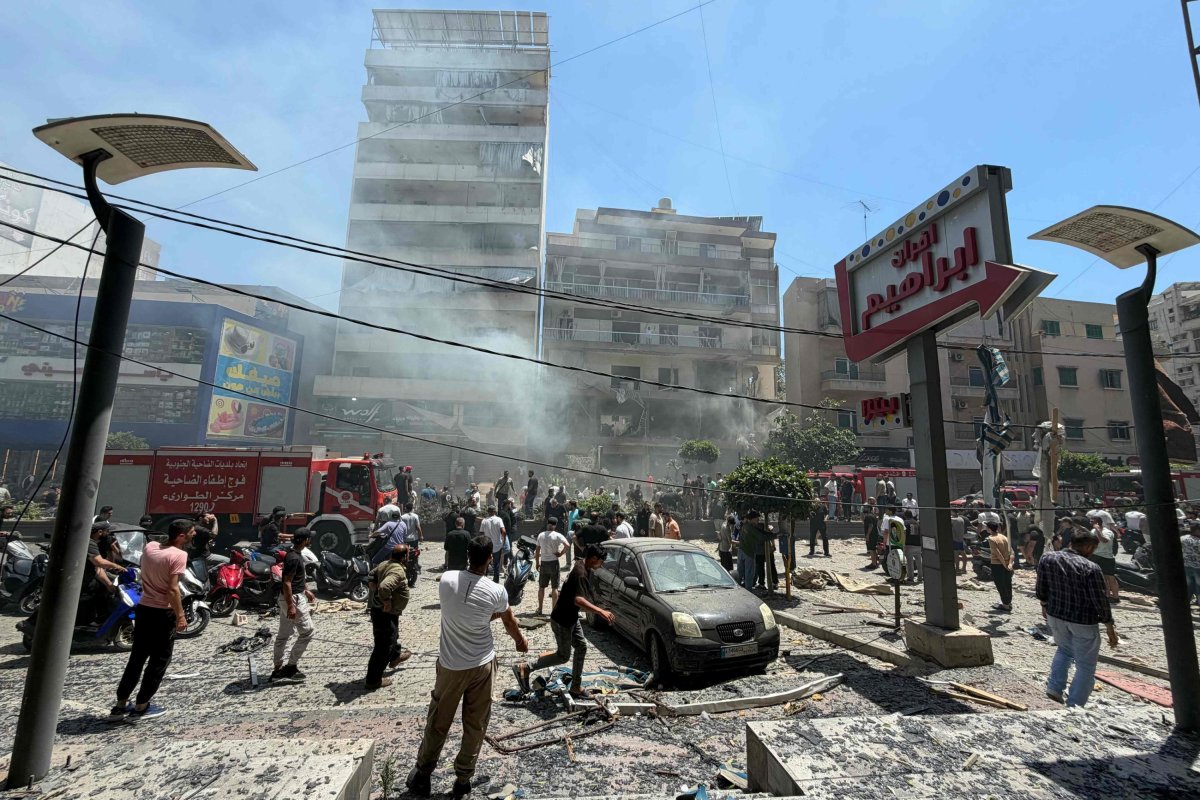
Beirut/Tel Aviv/Tehran – June 14, 2026 — The Israeli military launched a series of new airstrikes on Beirut on Sunday targeting Hezbollah infrastructure, with smoke rising over the Lebanese capital even as American and Iranian negotiators moved closer to a framework agreement that could reopen the Strait of Hormuz. This dual-track dynamic, where kinetic operations on one front intersect with diplomatic breakthroughs on another, encapsulates the complex interplay of military deterrence, proxy warfare, and great-power negotiation that defines the contemporary Middle Eastern security landscape.
Israeli Operations Target Hezbollah's Dahiya Stronghold
A joint statement by Israeli Prime Minister Benjamin Netanyahu and Defense Minister Israel Katz described the targets as terrorist sites in Dahiya, the densely populated southern suburbs of Beirut that serve as a stronghold of the Iran-backed Hezbollah movement. The statement said the strikes were a direct reaction to Hezbollah's attack on Israeli territory earlier that day. Arabic television stations broadcast footage of heavy smoke clouds rising over the area, while residents reported at least two distinct explosions that rattled windows across several neighborhoods. No initial casualty reports were available from Lebanese authorities. This action follows the pattern established a week earlier, when Israeli warplanes struck the suburbs in response to Hezbollah rocket fire in northern Israel, an exchange that triggered a wave of Iranian missile attacks on northern Israeli communities and prompted Israeli vows to strike again if Hezbollah continued cross-border operations. The timing of the latest raids intersects directly with diplomatic momentum elsewhere, illustrating how military operations in Lebanon continue in parallel with broader de-escalation talks advancing between Washington and Tehran. For Iranian strategists, the continued bombardment of Dahiya complicates their negotiating position, as they have consistently sought to link any cease-fire arrangement with the United States to a simultaneous halt in Israeli operations against their Lebanese proxy.
Border Incidents and the Dahiya Doctrine in Practice
Earlier Sunday, the Israeli military recorded two impacts on its territory near the Lebanese border, though no injuries were reported. Warning sirens activated in several northern Israeli communities including Kiryat Shmona and Metula. Israeli news outlet Ynet reported that one drone struck near the border town of Shlomi. Israel's far-right Finance Minister Bezalel Smotrich posted on X that the attack tested Netanyahu's Dahiya doctrine — a strategy emphasizing disproportionate retaliation against civilian infrastructure in Hezbollah-controlled areas to deter future aggression. A week prior, Israeli strikes on the suburbs in response to Hezbollah rocket fire prompted Iranian missile attacks on northern Israel. These exchanges underscore the persistent low-level conflict along the frontier that has continued despite the tenuous cease-fire in place since April 7. The doctrinal emphasis on asymmetric response shapes Israeli military calculations, yet it also risks drawing additional Iranian involvement and deepening the humanitarian toll on Lebanese civilians caught between the two sides. Regional officials familiar with the talks observe that unresolved border tensions complicate efforts to secure any 60-day framework, as further escalation could undermine the momentum generated by Pakistani and Qatari mediators. From Hezbollah's perspective, sustaining border pressure serves as a reminder that the group retains the capacity to disrupt Israeli security even as broader diplomatic processes advance.
Qatari and Pakistani Mediation Drive US-Iran Framework Forward
The latest strikes come as Iran and the United States inched closer to an agreement to end the Iran war, with Qatari mediators traveling to Tehran on Sunday to finalize terms, according to two regional officials who spoke on condition of anonymity. These officials expressed cautious optimism that both sides were approaching a framework capable of halting hostilities that have killed thousands and reopening the Strait of Hormuz, whose closure has disrupted global markets. U.S. President Donald Trump and Pakistani Prime Minister Shehbaz Sharif stated Saturday that the deal would be signed on Sunday, while Iran's Foreign Ministry spokesperson Esmail Baghaei said it could occur in the coming days. Trump added that the Strait of Hormuz would reopen immediately after the signing. The agreement is expected to be executed electronically without an in-person ceremony. Pakistan's monthslong mediation effort involved preventing multiple complete breakdowns in negotiations, according to officials familiar with the process. This role highlights Islamabad's growing diplomatic footprint in Gulf security matters.
Scope and Limitations of the Proposed 60-Day Framework
The emerging deal does not resolve the thorniest issues between Washington and Tehran, including Iran's nuclear program and frozen assets, but provides a 60-day window for technical discussions on those matters. Under the current text being discussed, the United States and Israel appear to have fallen short of their original objectives to dismantle Iran's missile capabilities, eliminate its nuclear infrastructure, and end its support for regional proxies. It remains unclear how or whether the final agreement will address these core disputes. The apparent breakthrough followed a week in which Iran exchanged fire with the United States and Israel, threatening the cease-fire in place since April 7 and risking a return to full-scale war. Iran has consistently sought to link any broader cease-fire arrangement to an end of hostilities in Lebanon, viewing Hezbollah's position as integral to its regional posture. This partial approach reflects the strategic reality that near-term de-escalation around Hormuz takes precedence over comprehensive resolution, yet it leaves significant vulnerabilities unaddressed once the initial 60-day period concludes.
Trump's G7 Agenda and the Strait of Hormuz Demining Operation
Trump was expected to discuss demining the Strait of Hormuz during the Group of Seven summit that begins Monday in Canada. The waterway is critical to global shipments of oil, natural gas, and fertilizer, and its effective closure has severely disrupted energy markets and supply chains worldwide. Trump said the strait would open immediately after the deal is signed, though demining operations in a waterway that saw active naval exchanges present significant logistical challenges. These discussions at the G7 level connect the bilateral US-Iran track to broader Western coordination on energy security, particularly as European economies assess the impact of disrupted natural gas flows and Asian importers scramble for alternative supply routes. The strategic calculation involves sequencing demining operations with the electronic signing to minimize market volatility — a delicate calibration that carries significant economic consequences if mishandled. Qatari and Pakistani mediators have stressed that any delay in implementation risks renewed Iranian threats to close the waterway, underscoring the fragility of the current momentum. The Gulf Cooperation Council, for its part, has been closely monitoring the negotiations, aware that Hormuz stability directly affects the economic diversification ambitions of Saudi Arabia's Vision 2030 and similar UAE initiatives.
Iran's Enriched Uranium Stockpile and the Nuclear Quandary
Iran's nuclear program and its stockpile of highly enriched uranium remain the most intractable issue between Washington and Tehran. Trump asserted on social media that once conditions stabilize, the United States would enter Iran to "downblend and destroy" the enriched uranium either inside Iran or on American soil — a statement that raises complex questions about sovereignty and access to Iran's nuclear facilities. According to the International Atomic Energy Agency, Iran possesses 440.9 kilograms — approximately 972 pounds — of uranium enriched to 60 percent purity, a short technical step from weapons-grade levels of 90 percent. This quantity, if further enriched, would be sufficient for multiple nuclear devices. Tehran has long maintained that its nuclear program is exclusively peaceful and has not publicly committed to relinquishing its enriched uranium stockpile, which is believed to be stored at three nuclear sites that sustained heavy damage from U.S. strikes last year. The 60-day framework deliberately defers these questions, allowing technical talks to proceed separately from the immediate Hormuz reopening. This separation reflects a pragmatic recognition that proxy support and missile capabilities currently lie outside the deal's scope, yet it also leaves open pathways for future escalation if the enriched uranium stockpile remains unaddressed. Israeli officials have expressed deep skepticism about this approach, arguing that a deal that does not address Iran's nuclear threshold capability is inherently unstable.
Persistent Lebanon Conflict and Its Regional Implications
Fighting between Israel and Hezbollah continues despite the tenuous cease-fire. Israel has advanced its ground operations deeper into Lebanon than at any point in over a quarter-century. Iran has insisted that any comprehensive cease-fire must include the fighting in Lebanon, where Hezbollah serves as a core element of its regional deterrence posture. The dual reality of Israeli airstrikes in Dahiya alongside Hormuz negotiations illustrates how unresolved Lebanese frontlines can undermine diplomatic gains elsewhere. Israeli vows to respond to any further northern attacks maintain military pressure on Hezbollah, while Iranian positions tie progress on the 60-day framework to de-escalation in Beirut's southern suburbs. The second-order consequences include sustained displacement in southern Lebanon, continued economic strain on Beirut, and persistent risks of broader confrontation even as global markets anticipate Hormuz reopening. This dynamic reinforces the Middle East's pattern where localized military actions intersect with great-power energy diplomacy, requiring careful sequencing to avoid renewed full-scale conflict.
By Malik Hassan, Staff Writer
This article was produced with AI-assisted research and editorial support. Reporting is based on sources cited in the article.
What's Your Reaction?
 Like
0
Like
0
 Dislike
0
Dislike
0
 Love
0
Love
0
 Funny
0
Funny
0
 Wow
0
Wow
0
 Sad
0
Sad
0
 Angry
0
Angry
0
Middle East Correspondent at Global1.News. Based in Beirut, covering politics, conflict, energy, and society across the Middle East. Brings context and depth to a region often reduced to headlines.












Comments (0)