
Ex-World Leaders Warn Palestine 'Could Disappear' as EU Weighs Settlement Trade Ban
In a recent Middle East Eye report, four members of The Elders—Mary Robinson, Graça Machel, Helen Clark, and Hina Jilani—issued a stark warning after their July 11–16 visit to the West Bank, Israel, Jordan, and Lebanon that Israel's government is working to make Palestine "disappear physically, economically, culturally and politically.
In a recent Middle East Eye report, four members of The Elders—Mary Robinson, Graça Machel, Helen Clark, and Hina Jilani—issued a stark warning after their July 11–16 visit to the West Bank, Israel, Jordan, and Lebanon that Israel's government is working to make Palestine "disappear physically, economically, culturally and politically."
Headline: Ex-World Leaders Warn Palestine 'Could Disappear' as EU Weighs Settlement Trade Ban
Jerusalem — 24 July 2026 — The statement from the group founded by Nelson Mandela arrives at a moment when EU foreign ministers remain deadlocked over measures to curb trade with Israeli settlements, including a possible import ban still under discussion.
The Elders' Warning: A Disappearing State
Mary Robinson told journalists in Jerusalem that she was "ashamed" the EU had not taken a firmer stance. She called on Brussels to suspend trade with Israel and ban settlement products. Helen Clark noted that accountability and an end to impunity were the consistent demands from civil society across the region. The four leaders described a reality in which Palestinian presence is being erased through coordinated policies that affect land, movement, economy, and political institutions.
Their visit allowed direct conversations with Palestinian communities facing daily restrictions. Robinson and her colleagues emphasized that the physical fragmentation of territory, combined with economic isolation and cultural suppression, amounts to a systematic effort to remove any viable Palestinian entity. They urged European governments to match words with concrete trade actions rather than continue policies that sustain the status quo.
Formed in 2007 by Nelson Mandela to address global challenges through independent diplomacy, The Elders have previously focused on nuclear disarmament and climate justice, yet their July 2026 mission marked a sharper emphasis on the Israeli-Palestinian conflict. Historical patterns of settlement growth since 1967, documented in successive UN reports, provide context for their concerns; data from the Israeli Central Bureau of Statistics indicate that settler populations in the West Bank have risen by roughly 15 percent since 2020. Palestinian families interviewed during the visit described how movement permits and checkpoint delays disrupt access to markets in Ramallah and Nablus, illustrating the economic isolation Robinson highlighted. Regional analysts note that such restrictions echo earlier phases of territorial control seen in the 1990s Oslo-era maps, where fragmented zones limited Palestinian contiguity long before current expansion accelerated.
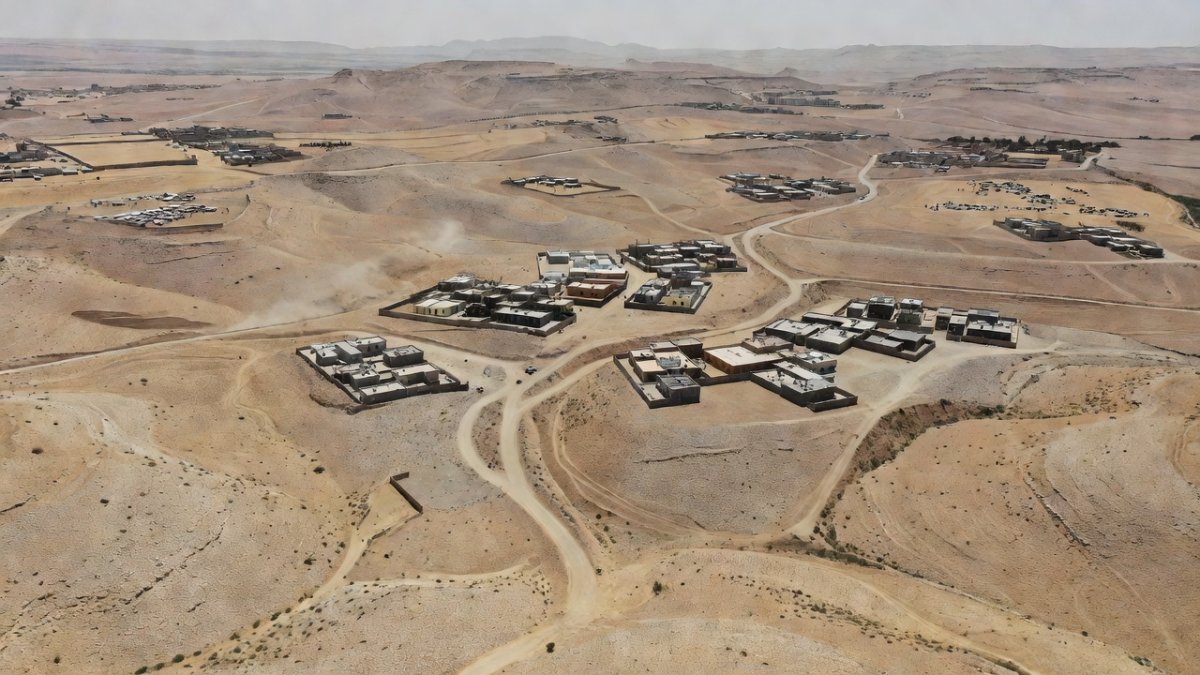
Settlement Expansion and the E1 'Doomsday' Plan
The E1 settlement plan continues to advance in ways that would bisect the West Bank and sever East Jerusalem from the rest of Palestinian territory. If implemented, the plan would complete a ring of settlements that effectively prevents any contiguous Palestinian state from emerging. International observers have long described E1 as a decisive step toward permanent division.
Chatham House warned in April 2026 that accelerating de facto annexation carries dangerous implications for regional stability. The organization highlighted how settlement growth, backed by state infrastructure, alters facts on the ground faster than diplomatic processes can respond. Palestinian residents in affected areas report repeated demolitions and denial of building permits that force families to leave ancestral lands.
Israeli planning authorities have advanced infrastructure tenders for E1 corridors linking Ma’ale Adumim to Jerusalem, with environmental impact assessments submitted in early 2026. Palestinian landowners in Abu Dis and nearby villages describe how access roads to these projects cross their remaining agricultural plots, reducing grazing areas by an estimated 40 percent according to local agricultural cooperatives. Opposition voices inside Israel, including former security officials from the group Commanders for Israel’s Security, have cautioned that E1 construction could trigger broader unrest and complicate security coordination with the Palestinian Authority. These developments align with long-standing concerns that settlement blocs create irreversible barriers to territorial swaps envisioned in past negotiations.
EU Trade Battle: Sanctions or Stalemate?
EU foreign ministers have discussed options to limit trade with settlements, yet no bloc-wide agreement has reached. An import ban remains one of the measures still under consideration, though internal divisions among member states have prevented decisive action. Robinson's call for suspension of broader trade ties reflects frustration among human rights advocates who see current EU policies as inconsistent with stated commitments to international law.
Advocates argue that banning settlement products would send a clear signal without targeting Israeli citizens inside the 1967 lines. The deadlock leaves Palestinian farmers and businesses in the West Bank facing continued economic pressure from settlement goods that enjoy easier market access in Europe.
Trade data from the European Commission show that settlement-origin goods, primarily agricultural and cosmetic products, account for a modest but symbolically significant share of EU-Israel commerce, valued at approximately €200 million annually. Member states such as Ireland and Spain have advocated labeling requirements and import restrictions, while others cite existing association agreements as sufficient. Palestinian exporters in the Jordan Valley report that settlement produce undercuts local prices in European markets, contributing to a 12 percent decline in West Bank agricultural revenues over the past two years, according to Palestinian Central Bureau of Statistics figures. Conditional language in recent EU statements leaves open the possibility of targeted measures if settlement activity intensifies further.
Al-Aqsa Under Siege: Ben Gvir's Mass Raid
Israeli far-right minister Itamar Ben Gvir led a mass raid of more than 3,200 ultranationalists on Al-Aqsa Mosque on July 24, 2026. The event heightened tensions in Jerusalem and drew condemnation from Palestinian religious authorities and civil society groups. Such incursions compound the sense of cultural and political erasure described by The Elders during their visit.
Residents in East Jerusalem describe increased surveillance and movement restrictions around the Old City in the days following the raid. The timing, coinciding with the publication of the Elders' statement, underscores how religious sites remain flashpoints in the broader effort to assert control over Palestinian spaces.
Waqf officials documented damage to historic paving stones and restricted prayer access for several hours after the event, with Jordanian diplomatic channels issuing formal protests citing the 1994 peace treaty obligations. Local shopkeepers near the Damascus Gate reported a sharp drop in foot traffic the following week, attributing it to temporary closures and heightened security checks that disproportionately affect Palestinian residents of the Old City. These incidents occur against a backdrop of incremental changes to access protocols at the compound since 2021, raising concerns among heritage experts about long-term implications for the site's status quo.
Human Impact: Displacement and Daily Life in the West Bank
A UN report documented more than 36,000 Palestinians forcibly displaced from Area C in the past year. Families who have lived for generations in these zones face home demolitions, loss of grazing land, and denial of water access. Amnesty International warned in June 2026 of patterns amounting to ethnic cleansing in the West Bank.
Daily life for those who remain involves lengthy checkpoints, restricted access to medical care, and uncertainty over whether children can reach schools safely. Local organizations report rising rates of psychological distress among youth who witness repeated raids and land seizures. These conditions directly illustrate the physical and economic disappearance The Elders warned against.
Community health workers in Hebron and Bethlehem governorates have recorded increased referrals for trauma-related conditions among children aged 8–14, with some families opting to relocate to urban centers like Ramallah to preserve access to education. Water scarcity data from the Palestinian Water Authority indicate that Area C communities receive an average of 20 liters per person daily, well below WHO minimum standards, exacerbating agricultural losses reported by herding families. These cumulative pressures contribute to a gradual depopulation trend that local leaders describe as eroding the social fabric of rural Palestinian life.
International Law and the ICJ
The ICJ’s July 2024 advisory opinion, which found the Israeli occupation of Palestinian territory unlawful under international law, provides a legal framework that aligns closely with The Elders’ assessment of systematic erasure. The court outlined obligations for states to refrain from recognizing or assisting the occupation, including restrictions on trade that could perpetuate unlawful settlement activity. UN Security Council Resolution 2334, adopted in 2016, had already declared settlements a flagrant violation of international law, yet implementation has remained limited amid ongoing diplomatic divisions.
Palestinian Authority officials have referenced both the ICJ opinion and Resolution 2334 in formal submissions to European capitals, urging alignment of trade policies with these legal findings. Israeli legal experts and former diplomats, including some associated with the opposition, have noted that sustained non-compliance could expose Israel to further international scrutiny, though they caution that advisory opinions lack automatic enforcement mechanisms. These legal developments add weight to calls for targeted measures without prejudging outcomes of future negotiations.
Palestinian Civil Society Response
Grassroots organizations across the West Bank have intensified documentation efforts and legal advocacy in response to settlement expansion and displacement pressures. Groups such as the Palestinian Center for Human Rights and local youth networks have organized community workshops to support families facing demolition orders, while also coordinating with international observers to record incidents in real time. These initiatives reflect a determination to maintain presence on the land despite economic and administrative constraints.
University students and women’s cooperatives in affected areas have launched small-scale economic projects, including alternative agricultural cooperatives, to offset losses from restricted market access. Civil society statements issued after The Elders’ visit welcomed the emphasis on accountability while stressing that external trade measures must be paired with direct support for Palestinian institutions. Such responses illustrate both resilience and the challenges of operating under prolonged restrictions.
Regional Dynamics and the Path Ahead
The India-Middle East-Europe Economic Corridor has stalled at its Israeli end, limiting potential economic benefits that might have flowed through Palestinian territories. At the same time, the White House stated on July 24, 2026, that a Saudi nuclear deal remains contingent on normalization with Israel. Israel's October 2026 elections approach amid these external pressures and internal political shifts.
Palestinian analysts note that regional normalization talks rarely center Palestinian rights or the daily realities of occupation. The combination of stalled infrastructure projects and conditional diplomatic deals leaves communities in the West Bank and Gaza with few immediate prospects for relief.
Analysis and Implications
The Elders' intervention highlights a growing international recognition that current policies risk eliminating the possibility of Palestinian statehood. Their specific recommendations on trade measures offer European policymakers concrete steps that could alter incentives on the ground. Yet the continued deadlock in Brussels and the acceleration of settlement activity suggest that warnings alone may not shift entrenched positions.
For Palestinians, the stakes extend beyond abstract statehood to the ability to remain on ancestral land, access holy sites, and maintain cultural continuity. The convergence of displacement figures, settlement plans, and religious site incursions paints a picture of coordinated pressure that The Elders described as deliberate erasure. Whether EU trade discussions produce results before the October elections will determine if accountability measures can still influence events.
By Fatima Al-Rashid, Staff Writer
This article was produced with AI-assisted research and editorial support. Reporting is based on sources cited in the article.
What's Your Reaction?
 Like
0
Like
0
 Dislike
0
Dislike
0
 Love
0
Love
0
 Funny
0
Funny
0
 Wow
0
Wow
0
 Sad
0
Sad
0
 Angry
0
Angry
0

Gulf/MENA Correspondent at Global1.News. Based in Doha, covering Gulf politics, energy markets, diplomacy, and development across the Middle East and North Africa. Tracks the economic transformation of the Gulf states.











Comments (0)