
FIFA World Cup 2026: Mixed Economic Signals for Toronto
A Promised Economic Boost Meets Early Complications The 2026 FIFA World Cup was positioned from the outset as a transformative economic opportunity for Toronto and the broader Canadian economy, with expectations that hosting multiple matches would draw substantial international visitors and generate widespread revenue across hospitality and related sectors. Thousands of fans fr
A Promised Economic Boost Meets Early Complications
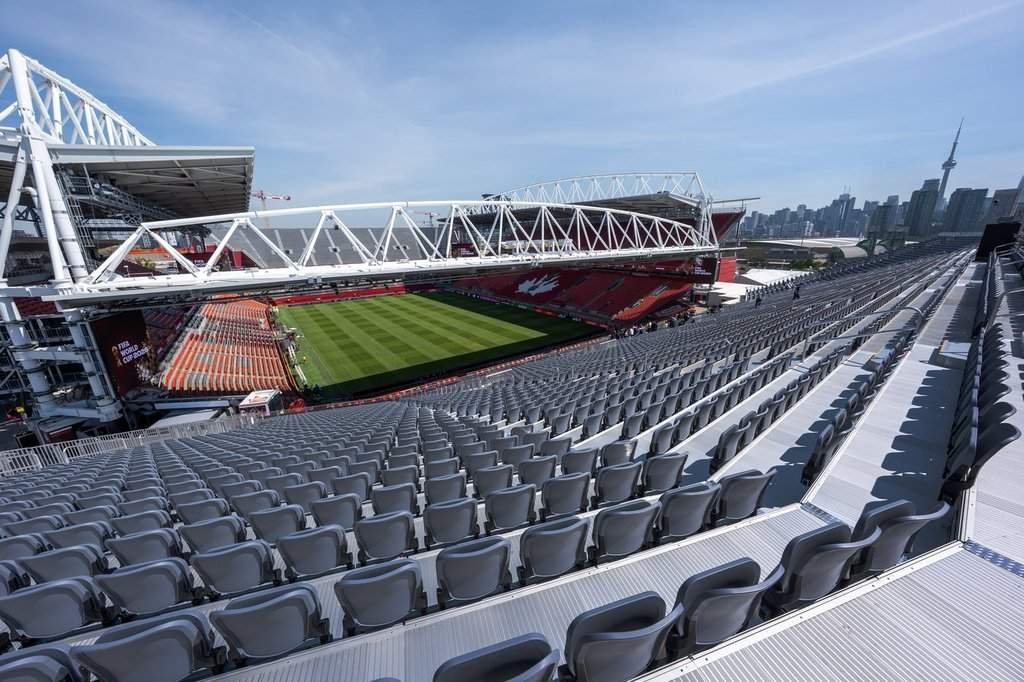
The 2026 FIFA World Cup was positioned from the outset as a transformative economic opportunity for Toronto and the broader Canadian economy, with expectations that hosting multiple matches would draw substantial international visitors and generate widespread revenue across hospitality and related sectors. Thousands of fans from around the world have already descended on the city for its first men's World Cup matches, creating visible excitement and activity in key downtown areas. Yet early indicators reveal a more nuanced picture, where initial projections of robust demand have encountered complications that temper immediate gains. June occupancy rates are tracking below those recorded in the previous year, with estimates suggesting a finish around 65 per cent, a figure that falls short of the heightened hopes tied to the tournament's arrival. This shortfall stems partly from the fact that June already represents one of Toronto's busiest periods, leading some regular visitors to avoid the city altogether amid the disruptions associated with FIFA events. When additional tickets were released closer to the tournament dates, previously reserved hotel rooms were returned to the market, further illustrating how supply and demand dynamics have shifted unexpectedly. Despite these early hurdles, the presence of fans has injected notable energy into the urban core, with streets and public spaces animated by international crowds.
The contrast between the billed economic windfall and these preliminary data points underscores the challenges of accurately forecasting outcomes for such large-scale events, where variables like ticket releases and visitor behaviour can alter trajectories in real time. The tournament's structure, spanning five group stage matches plus one knockout game from June 12 to July 2, promises sustained activity through the early weeks of summer. The opening phase highlights how promised boosts must be weighed against observable short-term variances in traditional hospitality metrics.
Hotel Sector Faces Uneven Demand
Sara Anghel, president and CEO of the Greater Toronto Hotel Association, has described the current atmosphere as one of amazing energy throughout the city, even as occupancy figures paint a picture of uneven demand. Current tracking shows June rates falling below last year's levels, with projections pointing toward a final occupancy around 65 per cent. This outcome reflects the reality that June is already a peak month for Toronto tourism, prompting many usual visitors to stay away and resulting in a period that deviates from the typical patterns seen when FIFA events are not in town. The release of additional tickets nearer the tournament dates contributed directly to this situation, as rooms that had been held in anticipation were subsequently placed back on the market, increasing available supply at a time when demand did not fully materialise as anticipated.
Anghel characterised the month as "uneven," noting that some days performed better than others. She explained that "a lot of them stayed away," resulting in "not the June we usually get when FIFA isn't here." Despite the occupancy softness, the energy generated by arriving fans has been palpable in lobbies and surrounding areas, suggesting that while volume metrics lag, the qualitative impact on the sector includes heightened visibility and potential for future bookings. Hoteliers are now navigating this balance, monitoring daily fluctuations while recognising that the tournament's schedule through early July may yet influence longer-term occupancy trends beyond the initial group stage matches.
Restaurants and Street-Level Businesses Report Gains
Street-level businesses, particularly restaurants, have reported tangible gains amid the influx of World Cup visitors, with anecdotal evidence pointing to increased foot traffic and extended operating hours. Restaurant manager Callam Hald noted the presence of a lineup forming in the morning, well before a scheduled game at 3 p.m., indicating strong interest from fans seeking dining options in proximity to match venues. "We had a lineup this morning and the game wasn't until 3," Hald told Global News, capturing the early enthusiasm among match-goers arriving hours ahead of kickoff.
Sara Anghel further observed that areas stretching from the convention centre to Front Street were filled with people occupying patios and hotel lobbies, including prominent locations such as the Royal York, where the atmosphere reflected a blend of local and international patrons. "Yesterday afternoon, everything from the convention centre all the way to Front Street was full of people at patios and lobbies like the Royal York," Anghel said. This surge in activity has provided a counterpoint to softer hotel occupancy numbers, demonstrating that certain segments of the hospitality industry are capturing direct benefits from the tournament's draw. The visible crowds have transformed typical daytime routines into bustling scenes, with patios serving as gathering points for supporters ahead of matches.
City Leadership Highlights Global Branding Opportunity
Mayor Olivia Chow has emphasised the tournament's role in placing Toronto under the scrutiny of the entire world, framing the event as a significant opportunity for global branding that extends beyond immediate financial returns. "The entire world, they have their eyes on Toronto," Chow said, capturing the sentiment that the city's turn on the global stage represents a long-term asset. With the city hosting five group stage matches plus one knockout game between June 12 and July 2, the international spotlight offers a platform to showcase Toronto's infrastructure, cultural offerings and hospitality capabilities to audiences who might otherwise remain unfamiliar with the destination.
This exposure is viewed as a long-term asset, potentially influencing future tourism decisions and investment interest even after the final whistle. City leadership acknowledges that while early occupancy data presents complications, the qualitative value of having the world's eyes fixed on Toronto during this period cannot be understated, as it reinforces the city's status as a capable host for major international gatherings. The co-hosting arrangement with the United States and Mexico further amplifies this branding effect by associating Toronto with a collaborative North American effort, enhancing perceptions of regional connectivity.
Canada's Co-Hosting Role Shapes Visitor Dynamics
Canada's role as co-host alongside the United States and Mexico introduces distinctive dynamics to the tournament's economic landscape in Toronto, where the shared format distributes matches across multiple nations and influences visitor flows in ways that differ from single-host events. Toronto's allocation of five group stage matches plus one knockout game from June 12 to July 2 positions the city as a key node in this tri-national structure, yet it also means that some potential attendees may opt for games in other host cities, affecting local demand patterns. The presence of Canada's national team adds an additional layer of interest, drawing domestic supporters who blend with international arrivals to create a diverse spectator base.
This co-hosting model encourages cross-border travel considerations, with fans potentially combining Toronto visits with stops in American or Mexican venues, which can both enhance and fragment spending within any single location. The collaborative approach fosters a sense of continental partnership, potentially strengthening long-term tourism ties across borders while requiring careful coordination of marketing and infrastructure planning. The unique scheduling also means that Toronto's matches occur within a compressed window that overlaps with established summer activities, necessitating adaptive strategies to integrate World Cup visitors into the city's existing calendar.
Summer Outlook and Measured Optimism
Andrew Weir, CEO of Destination Toronto, has expressed measured optimism regarding the summer outlook, suggesting that even if June concludes somewhat below initial expectations, the remainder of the season is likely to balance out through continued tournament activity and residual effects. "Even if June ends up a little bit lower than initial expectations — or even lower than a typical June would be — the rest of the summer likely will balance out," Weir previously told Global News. With matches extending into early July, the city anticipates that later group stage encounters and the knockout game will sustain visitor momentum, allowing hotels and related businesses to recover ground lost in the opening weeks.
Anghel echoed this sentiment, noting that May performed solidly and that July and August are expected to deliver strong results. "May did well and we expect July and August will do very, very well," she said. This projection accounts for the possibility that some regular June travellers avoided the city due to FIFA-related changes, yet it also recognises the potential for pent-up demand in July and August as international audiences extend their stays or plan follow-up trips. Stakeholders are focusing on leveraging the remaining fixtures to maximise exposure, with promotions aimed at converting one-time visitors into repeat guests.
Full Economic Assessment Awaits Tournament Conclusion
As the tournament advances through its remaining matches in Toronto, the full economic picture will require comprehensive data collection and analysis before definitive conclusions can be drawn. The initial phase has revealed both the promised opportunities and the complications arising from occupancy shortfalls and shifted visitor patterns, yet the complete impact encompassing all five group stage matches and the knockout game will only become clear once final figures are compiled after July 2. Lessons from this period, including the effects of additional ticket releases on hotel availability and the strong performance of street-level dining establishments, will inform future planning for similar events.
City officials and industry leaders are committed to thorough evaluation, examining how the global attention highlighted by Mayor Olivia Chow translates into measurable long-term gains alongside immediate hospitality metrics. This measured approach ensures that assessments account for the unique aspects of Canada's co-hosting role and the interplay between early challenges and later summer recovery. By gathering detailed information across sectors, Toronto can refine its strategies for maximising benefits from international sporting events while addressing any imbalances observed during the 2026 World Cup.
Tags: FIFA World Cup 2026, Toronto tourism, hospitality sector, Canadian economy, mega-event economics
By Alex Thompson, Staff Writer
This article was produced with AI-assisted research and editorial support. Reporting is based on sources cited in the article.
What's Your Reaction?
 Like
0
Like
0
 Dislike
0
Dislike
0
 Love
0
Love
0
 Funny
0
Funny
0
 Wow
0
Wow
0
 Sad
0
Sad
0
 Angry
0
Angry
0

Canada Correspondent at Global1.News. Based in Toronto, covering Canadian politics, energy, trade, and US-Canada relations. Provides the Canadian perspective on North American and global affairs.













Comments (0)