
Russia's Central Bank Cuts Rate to 14 Percent — Tenth Consecutive Reduction
In a significant move signaling caution amid persistent economic pressures, Russia's Central Bank has cut its key rate to 14 percent, marking the tenth consecutive reduction since October 2024, as Governor Elvira Nabiullina navigates fuel market disruptions, rising inflation, and widening budget ...
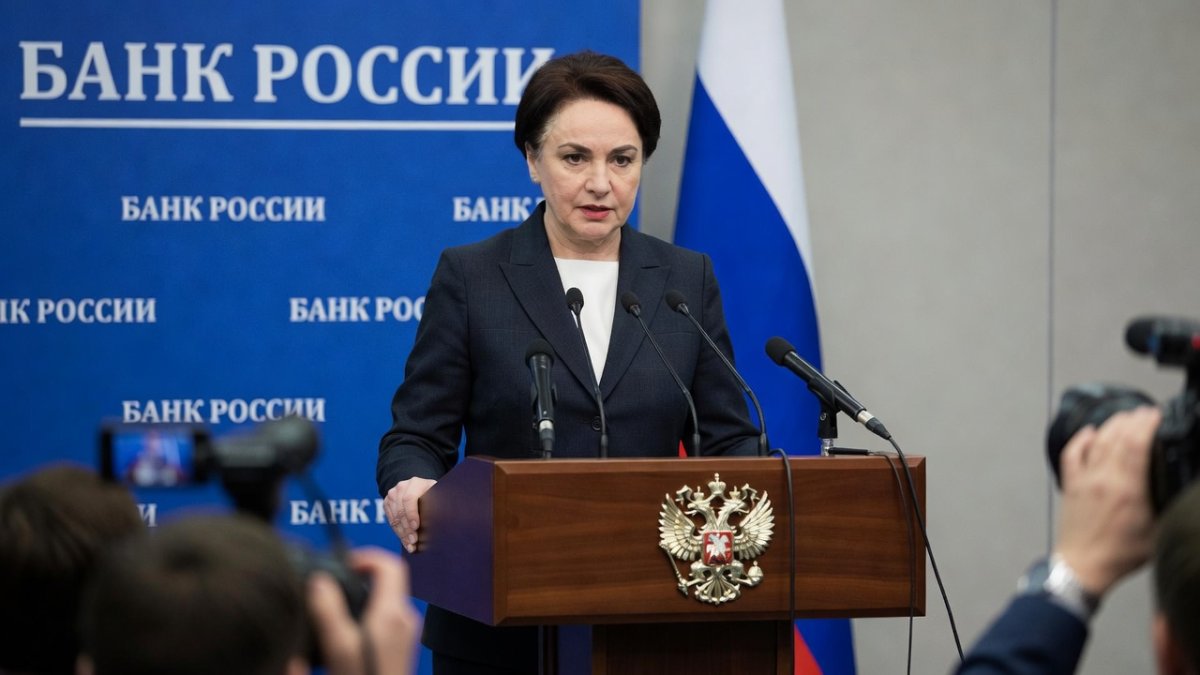
Russia's Central Bank Cuts Rate Tenth Time to 14 Percent
Moscow, Russia — The path from the 21 percent peak reached in October 2024 reflected an urgent response to the sharp depreciation of the ruble and the surge in import prices that followed intensified Western sanctions.
Central Bank Delivers Tenth Consecutive Rate Cut
Russian monetary authorities viewed the elevated rate as essential to anchor expectations and prevent a broader loss of confidence in the currency during the early phases of the military operation.
Since that high point, the Central Bank has pursued a measured sequence of reductions, each justified by evidence that the most acute inflationary impulses were moderating. The current 14 percent level remains well above the single-digit rates that prevailed before 2022, underscoring how wartime conditions have shifted the entire structure of Russian interest-rate policy.
Historical comparisons reveal that Russian benchmark rates have rarely stayed this high for so long outside of crisis episodes. The prolonged period above 10 percent illustrates the structural constraints imposed by restricted access to foreign capital and the need to finance large fiscal outlays through domestic channels.
Inflation Data Shows Mixed Signals
Annual inflation reached 5.9 percent as of July 20. The Central Bank projects inflation will settle between 6 and 7 percent later this year while maintaining its target of 4 percent by 2027. Household inflation expectations climbed to 14.7 percent in July, the highest level recorded since the start of Russia's military operation in Ukraine.
An official annual rate of 5.9 percent masks the uneven distribution of price increases across essential categories. Foodstuffs and housing-related costs have risen more rapidly than the headline figure suggests, directly affecting household budgets in regions where wages have not kept pace with local market conditions.
Household inflation expectations at 14.7 percent carry particular weight because they influence wage demands and consumption patterns more immediately than official CPI readings. When consumers anticipate higher prices, they often accelerate purchases or shift savings into tangible assets, creating self-reinforcing pressures that the Central Bank must monitor closely.
Collective memory of Soviet-era shortages and the 1990s hyperinflation continues to shape public reactions to any acceleration in prices. These historical episodes make Russian households especially sensitive to signals from fuel and food markets, amplifying the importance of managing perceptions alongside actual inflation outcomes.
Fuel Market Disruptions Drive Price Pressures
Ukrainian drone strikes on Russia's largest oil refineries have reduced refining capacity. Oil-processing rates in the first half of July fell to their lowest level in more than two decades. Russian regions have responded by introducing fuel purchase limits and QR code systems for gasoline distribution.
Reduced refining capacity has forced regional authorities to implement purchase limits and digital allocation systems in multiple areas, measures that disrupt normal supply chains for both commercial and private users. These administrative responses highlight the vulnerability of domestic fuel distribution when processing infrastructure faces sustained external pressure.
The resulting shortages affect agriculture through higher costs for machinery operation and transportation, while logistics firms pass increased expenses along the supply chain. Gasoline price rises compound these effects, raising the cost of moving goods across Russia’s vast territory and feeding into broader price levels.
Over time, such disruptions risk creating persistent bottlenecks in sectors that rely on timely fuel availability. Policymakers must weigh the short-term stabilization benefits of rate cuts against the possibility that energy-market frictions will sustain inflationary momentum longer than projected.
Nabiullina Links Fuel Costs to Broader Inflation
Central Bank Governor Elvira Nabiullina stated that rising fuel prices are beginning to affect a wide range of goods and services. She described the current acceleration as temporary and noted that the fuel market is gradually normalizing. Nabiullina also indicated that the bank stands ready to raise rates again if conditions require it.
Governor Nabiullina’s remarks emphasize that fuel-price pass-through extends beyond direct energy costs into food production, construction, and retail logistics. Her framing of the current episode as temporary reflects an effort to maintain credibility while acknowledging that normalization depends on restoring refining output.
As a technocrat operating within a system that prioritizes military objectives, Nabiullina must calibrate policy to avoid overt conflict with fiscal authorities. This balancing act requires signaling readiness to tighten again if inflationary risks reassert themselves, thereby preserving the Bank’s institutional autonomy.
The underlying tension between elevated military spending and restrictive monetary settings remains unresolved. Sustained high defense outlays increase aggregate demand at a time when supply constraints are acute, placing continuous pressure on the Central Bank to adjust its stance in response to evolving fiscal realities.
Growth Outlook Revised Downward
The Central Bank cut its GDP growth forecast for 2026 to a range of 0 to 1 percent, down from the previous projection of 0.5 to 1.5 percent. This adjustment reflects concerns over the economic slowdown caused by elevated borrowing costs.
A projected GDP expansion of only 0 to 1 percent for 2026 stands in stark contrast to the scale of defense-related expenditures, which absorb a substantial share of national resources. This modest outlook suggests that heavy fiscal stimulus is failing to generate broad-based productive capacity outside the military-industrial sector.
Labor shortages stemming from mobilization and emigration have reduced the available workforce in manufacturing and construction, limiting the economy’s ability to respond to demand. Capacity constraints in key industries further constrain growth even as government spending remains elevated.
Comparisons with other wartime economies indicate that prolonged high military outlays often crowd out civilian investment and lead to slower long-term expansion once initial stimulus effects fade. Russia’s current trajectory aligns with these patterns, raising questions about the durability of any recovery once external pressures ease.
Budget Revenues Decline Amid Sanctions
Russia's oil and gas revenues have halved in recent periods. The budget deficit continues to widen, and the government missed its revenue targets last year. On July 23 the European Union announced its 21st sanctions package, targeting Russian energy, financial services, and crypto sectors.
The halving of oil and gas revenues has widened the budget deficit and forced greater reliance on domestic borrowing and reserve drawdowns. The European Union’s 21st sanctions package, announced on July 23, extends restrictions on energy-related transactions and financial services, further complicating revenue collection.
Russia has adapted through the use of a shadow fleet and expanded sales to Chinese buyers, yet these mechanisms carry higher transaction costs and expose the country to secondary sanctions. The resulting revenue shortfall raises sustainability concerns, particularly if oil prices remain capped or decline further.
Over the medium term, persistent deficits could limit the government’s room for maneuver in both economic and foreign policy. Dependence on non-transparent trading arrangements also increases vulnerability to enforcement actions by Western authorities seeking to tighten existing restrictions.
Analyst Views on Policy Priorities
Natalya Orlova, chief economist at Alfa Investments, observed that the rate cut indicates the Central Bank regards the recent inflation increase as temporary. She noted that policymakers appear more focused on the risks of economic slowdown from sustained high interest rates.
Natalya Orlova’s assessment that the Central Bank views recent inflation as temporary aligns with the decision to continue easing despite mixed signals. Western analysts have noted similar caution, emphasizing that any renewed acceleration in prices could force a policy reversal before the end of the year.
The rate cut carries direct consequences for Russian households through mortgage and consumer-loan pricing, while savers face continued erosion of real returns. These effects influence public sentiment at a time when the Kremlin must maintain domestic support for its strategic priorities.
Geopolitically, the easing cycle signals to international observers that Russian authorities believe they can manage economic headwinds without immediate crisis. Yet the ruble’s sensitivity to both sanctions enforcement and domestic policy choices means that further volatility remains possible if inflation expectations continue to diverge from official targets.
Next Policy Meeting Scheduled for September
The Central Bank's next rate decision meeting is set for September 11. Market participants will watch for any signals on whether the sequence of cuts will continue or whether renewed inflationary pressures from energy markets will prompt a reversal.
Analysts expect the September gathering to provide clearer guidance on whether the easing cycle can persist amid ongoing fuel-price volatility and external sanctions pressure. Any indication of renewed tightening would mark a sharp departure from the recent pattern of measured reductions.
Market pricing already reflects uncertainty, with futures suggesting limited further cuts unless inflation data improves markedly in the coming weeks. The Central Bank’s willingness to reverse course remains a key variable for investors and households alike.
Observers note that the September decision will also test the institution’s independence as fiscal demands from military spending continue to shape the broader economic environment. Clear communication will be essential to maintain credibility in the face of competing policy priorities.
By Irina Volkov, Staff WriterThis article was produced with AI-assisted research and editorial support. Reporting is based on sources cited in the article.
What's Your Reaction?
 Like
0
Like
0
 Dislike
0
Dislike
0
 Love
0
Love
0
 Funny
0
Funny
0
 Wow
0
Wow
0
 Sad
0
Sad
0
 Angry
0
Angry
0

Russia/Eastern Europe Correspondent at Global1.News. Covering Russian politics, energy, security, and the shifting dynamics of the post-Soviet space. Provides clear-eyed analysis on one of the world's most opaque regions.











Comments (0)