
Iran Stages Six-Day Funeral for Slain Supreme Leader Khamenei
Iran’s elaborate six-day funeral for Supreme Leader Ayatollah Ali Khamenei unfolds against the backdrop of a fragile US-Iran ceasefire and intensifying regional rivalries. The ceremonies, spanning Tehran, Qom, Najaf, Karbala and Mashhad, highlight Shia solidarity networks while exposing fractures in Iran’s post-war leadership. These events carry direct implications for Hezbolla
Iran’s elaborate six-day funeral for Supreme Leader Ayatollah Ali Khamenei unfolds against the backdrop of a fragile US-Iran ceasefire and intensifying regional rivalries. The ceremonies, spanning Tehran, Qom, Najaf, Karbala and Mashhad, highlight Shia solidarity networks while exposing fractures in Iran’s post-war leadership. These events carry direct implications for Hezbollah’s future, Iraq’s stability, Gulf energy calculations and the stalled nuclear talks.
Iran Stages Elaborate Six-Day Funeral for Slain Supreme Leader Khamenei
Tehran, Iran – July 3, 2026 — Iran launched a six-day funeral programme on July 3 for Ayatollah Ali Khamenei, the Supreme Leader killed in a US-Israeli strike on February 28, 2026. The ceremonies, postponed from March due to active wartime conditions, now serve as both national mourning and a calculated display of regime resilience.
Scale of the Funeral
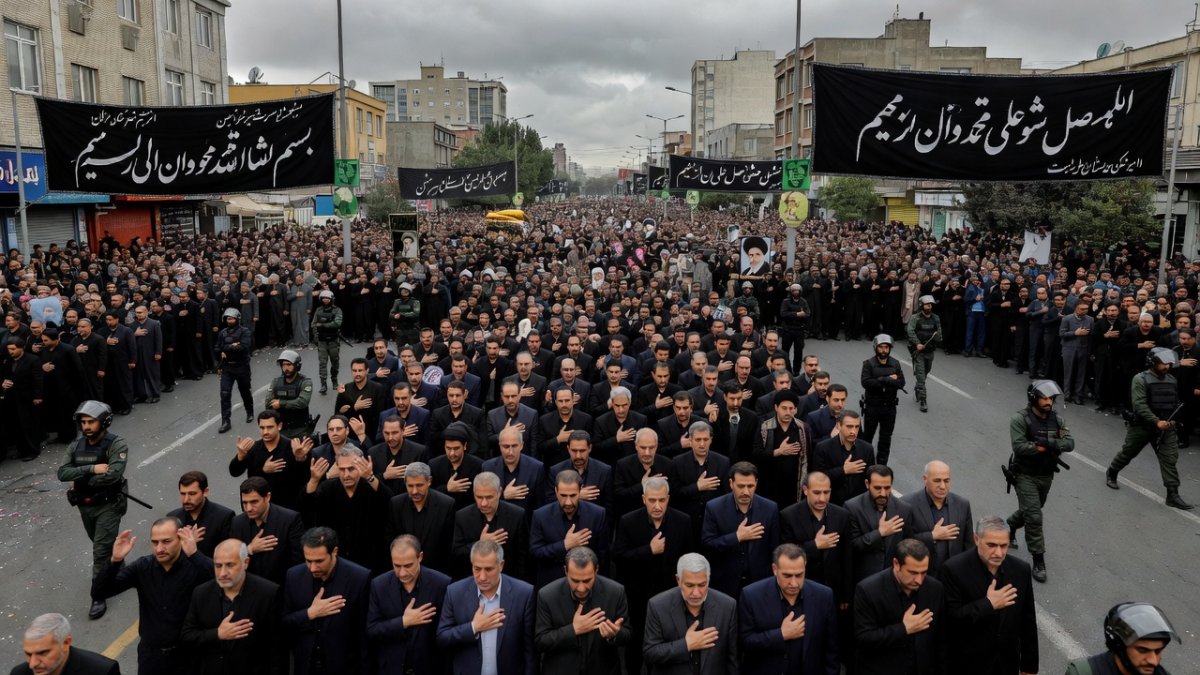
The programme runs July 3-9 across five cities. Tehran hosts the central processions expected to draw 20 million mourners, according to regime announcements. Qom follows with clerical ceremonies, while Najaf and Karbala in Iraq accommodate cross-border Shia pilgrims. The final burial occurs July 9 at the Imam Reza Shrine in Mashhad.
Logistical preparations include designated routes through major avenues and temporary facilities for the anticipated crowds. State media frame the turnout as evidence of enduring loyalty despite the recent war losses.
International Presence
Between 40 and 100 nations are sending delegations. Pakistani Prime Minister Shehbaz Sharif and Army Chief General Asim Munir attended the Tehran events, underscoring Islamabad’s continued ties with Tehran. Iraqi officials coordinated access for pilgrims traveling to Najaf and Karbala.
The breadth of participation signals that many governments view engagement with Iran as necessary even after the US-Israeli strike. Sunni-majority states sent lower-level representatives, reflecting caution amid ongoing Sunni-Shia competition across the region.
Security and the Fragile US Ceasefire
The fragile ceasefire agreed after the February-March war remains in place during the ceremonies. Iranian authorities deployed additional security forces along procession routes while avoiding provocative military displays that could breach the truce.
US monitoring assets continue to track Iranian movements, yet both sides have refrained from actions that would collapse the agreement. The pause allows Tehran to project internal cohesion without immediate external pressure.
Emotional and Symbolic Dimensions
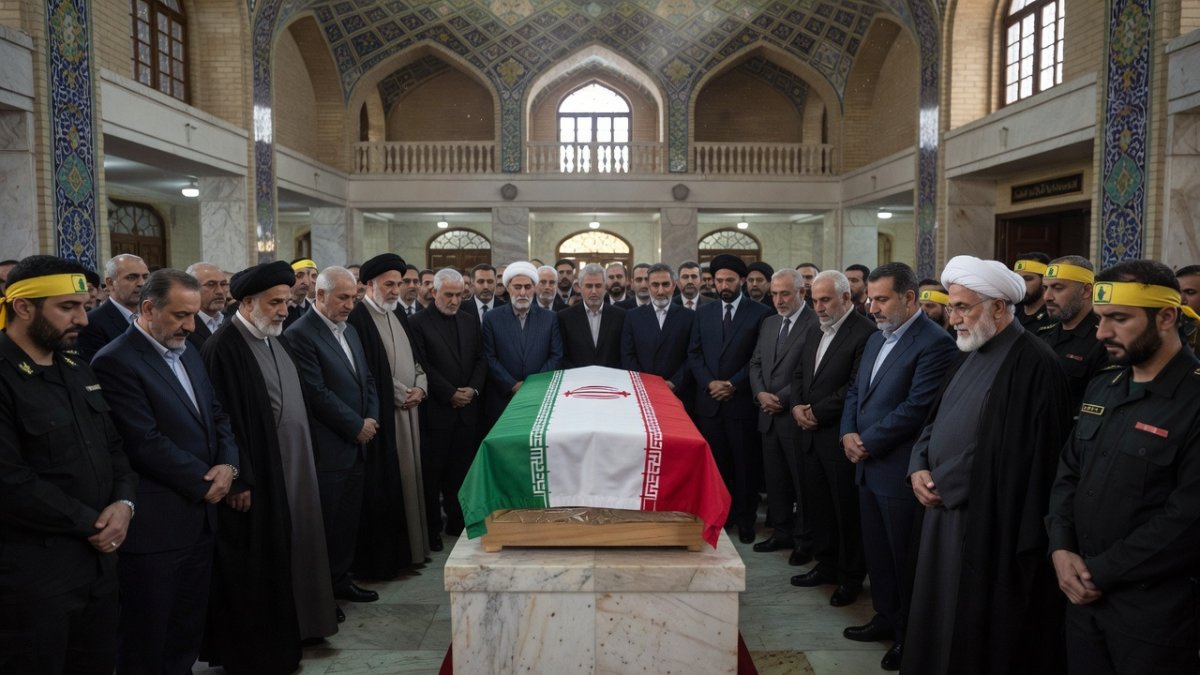
IRGC chief Ahmad Vahidi made his first public appearance since the war began, standing alongside President Masoud Pezeshkian, Speaker Mohammad Bagher Ghalibaf and Foreign Minister Abbas Araqchi. Hezbollah members visibly broke down beside the coffin, including relatives of Hassan Nasrallah and Imad Mughniyeh.
These scenes reinforced the transnational character of Iran’s Axis of Resistance network. The presence of senior IRGC figures alongside elected officials also illustrated the dual power structure still operating inside the Islamic Republic.
Succession Battle
Attention now turns to who will replace Khamenei after his 37-year tenure. The IRGC seeks greater influence, while senior clerics in Qom aim to retain doctrinal authority. President Pezeshkian, elected on a reformist platform, faces constraints from both factions.
Any successor must navigate the same institutional balance that Khamenei maintained. Early indications suggest the IRGC may push for a candidate with stronger security credentials, potentially altering Iran’s approach to negotiations and proxy management.
Regional Implications
The funeral period offers a temporary window for de-escalation, yet underlying tensions persist. Hezbollah’s visible grief signals continued dependence on Iranian support, while Iraq must manage cross-border flows without reigniting sectarian friction. Gulf states watch energy markets closely, aware that renewed instability could affect Strait of Hormuz transit.
Analyst Derek Grossman noted on the W News programme that the ceremonies test whether Iran can project strength without triggering renewed confrontation. The outcome will shape prospects for nuclear talks, reconstruction in Lebanon and the durability of the current ceasefire.
By Malik Hassan, Staff Writer
This article was produced with AI-assisted research and editorial support. Reporting is based on sources cited in the article.
What's Your Reaction?
 Like
0
Like
0
 Dislike
0
Dislike
0
 Love
0
Love
0
 Funny
0
Funny
0
 Wow
0
Wow
0
 Sad
0
Sad
0
 Angry
0
Angry
0

Middle East Correspondent at Global1.News. Based in Beirut, covering politics, conflict, energy, and society across the Middle East. Brings context and depth to a region often reduced to headlines.









Comments (0)