
Trumps US Saudi Nuclear Deal Reshapes Middle East Power Dynamics
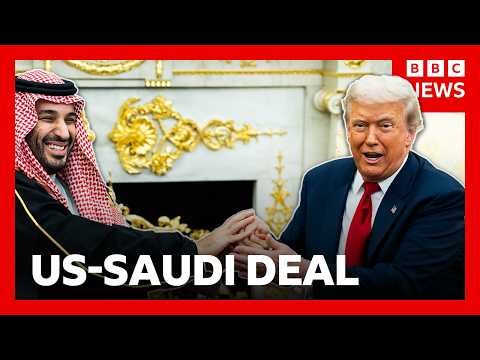
In a recent BBC News report, the landmark nuclear cooperation agreement between the United States and Saudi Arabia was detailed, revealing a deal that fundamentally reshapes the Middle East's nuclear landscape.
In a recent BBC News report, the landmark nuclear cooperation agreement between the United States and Saudi Arabia was detailed, revealing a deal that fundamentally reshapes the Middle East's nuclear landscape. The agreement, signed by US Energy Secretary Chris Wright and Saudi Energy Minister Prince Abdulaziz bin Salman, allows Saudi Arabia to develop a civilian nuclear programme — and reportedly permits the kingdom to enrich uranium on its own soil for the first time in US nuclear cooperation history.
Trump's Nuclear Gambit: US-Saudi Deal Reshapes Middle East Power Dynamics
Washington, DC – This Week — The Trump administration has signed a landmark nuclear cooperation agreement with Saudi Arabia, abandoning decades-old US demands that Riyadh normalise relations with Israel as a precondition. The deal, described by the US Energy Department as a "peaceful nuclear co-operation agreement," comes amid the ongoing US-Israeli war with Iran and escalating maritime threats from Houthi forces in the Red Sea. Critics warn the agreement could spark a nuclear arms race across an already volatile Middle East.
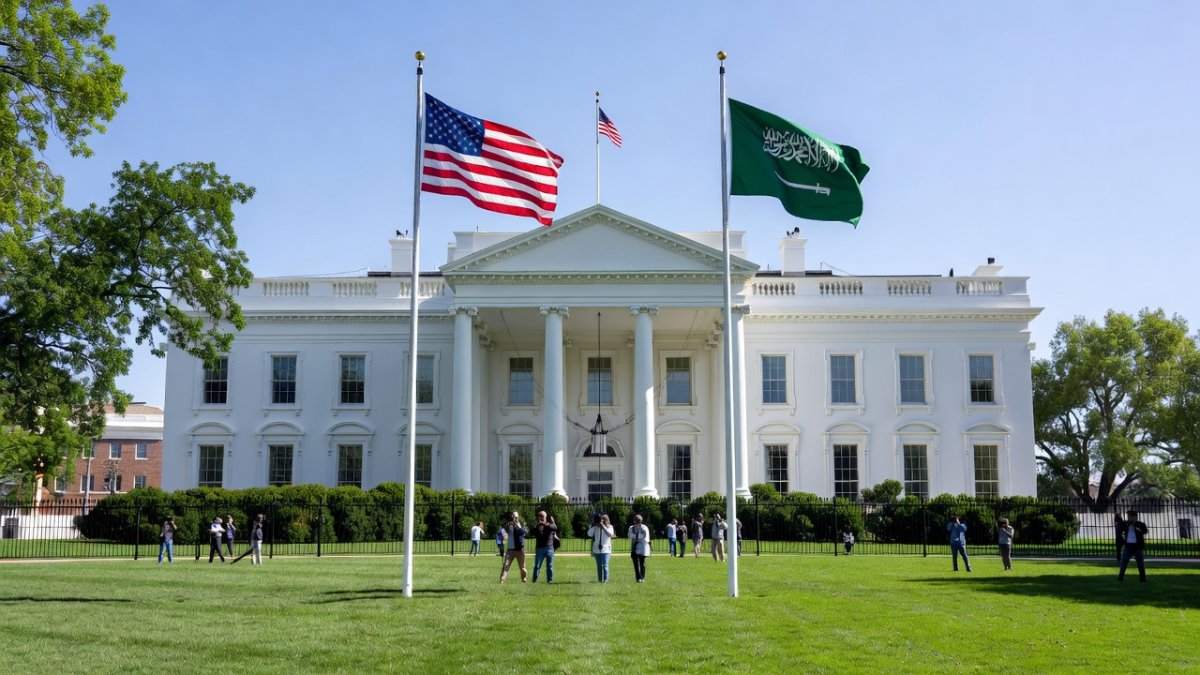
The Deal: What Was Signed
The United States and Saudi Arabia formalised a "123 Agreement" for peaceful nuclear cooperation on Wednesday, with US Energy Secretary Chris Wright and Saudi Energy Minister Prince Abdulaziz bin Salman signing the document. The US Department of Energy described the pact as a "bilateral safeguards agreement" that lays "the legal foundation for a decades-long, multi-billion-dollar partnership that advances several priority economic and strategic objectives, including nuclear nonproliferation." This framework opens doors for American firms to supply reactors and fuel services while establishing oversight mechanisms that both sides claim will prevent diversion to military uses. Saudi officials have emphasised that the agreement aligns with the kingdom's Vision 2030 goals for economic diversification beyond oil revenues.
Specific details of the agreement have not been made public, but US media reports indicate that Saudi Arabia may be permitted to enrich uranium on its own soil — a provision that would mark a first for the United States in such nuclear cooperation agreements. The deal reportedly allows for a US-built enrichment facility in the kingdom, where Saudi technicians could produce nuclear fuel for civilian power plants. Enriched uranium can also be used to manufacture nuclear weapons, a fact that has alarmed non-proliferation experts and regional analysts. Under the terms, American companies like Westinghouse are expected to play a central role in building Saudi Arabia's civilian nuclear infrastructure. The Saudi government said the deal "represents an extension of existing co-operation between the two countries in the energy sector," noting that it follows Crown Prince Mohammed bin Salman's visit to Washington last November.
Breaking With Decades of US Policy
The agreement represents a significant departure from longstanding US diplomatic strategy in the Middle East. Previous administrations — both Republican and Democratic — had insisted that any transfer of American nuclear technology to Saudi Arabia be contingent on Riyadh's normalisation of diplomatic and economic relations with Israel. The Trump administration has dropped that requirement entirely. This shift reflects broader priorities in Washington to counter Chinese and Russian influence in Gulf energy markets rather than tying every deal to the Israeli-Palestinian track. Analysts note that the policy change could weaken the leverage the United States once held over regional normalisation processes.
"Past US presidents insisted that Saudi Arabia normalise relations with Israel in exchange for receiving American nuclear technology for civilian energy programmes," BBC News reported. President Donald Trump gave Saudi Arabia what it wanted without extracting concessions for Israel in return — and over objections from critics who argued that it could spark a nuclear arms race in the region. The deal also differs markedly from the 2009 nuclear cooperation agreement between the US and the United Arab Emirates. That pact included strict inspections by the International Atomic Energy Agency and a commitment by the UAE not to enrich its own uranium. The Saudi agreement reportedly lacks equivalent restrictions on domestic enrichment — a critical distinction that nuclear experts say substantially increases proliferation risk.
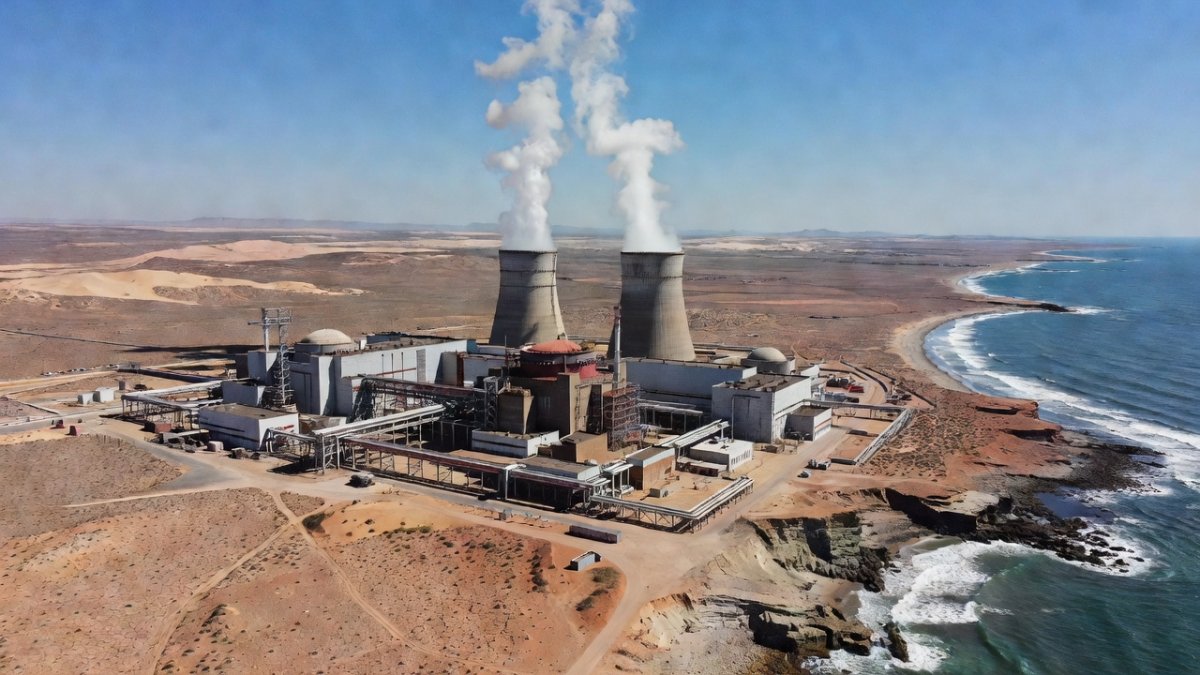
Regional Fallout — Israel, Iran, and the Gulf
The announcement has already drawn sharp criticism from Israel and Democratic lawmakers in Washington. Former Israeli defence minister Avigdor Lieberman warned that "a civilian nuclear program in Saudi Arabia [will] lead to a mad arms race across the entire Middle East." Israel, which is widely believed to possess nuclear weapons though it has never officially acknowledged them, joined the US war with Iran over shared concerns about Tehran's nuclear ambitions. Israeli officials have privately expressed concerns that the deal erodes their qualitative military edge in the region. Regional security dialogues may now need to address new proliferation pathways that were previously contained through stricter US conditions.
Israeli Economy Minister Nir Barkat struck a more measured tone, saying Israel "can manage it" if Saudi Arabia develops nuclear power for peaceful means. However, the potential for Saudi uranium enrichment fundamentally alters the strategic calculus for Israel, which has long relied on its undeclared nuclear monopoly in the region. Iran, already engaged in active conflict with the United States and Israel, now faces the prospect of a nuclear-capable Saudi Arabia on its southern flank. Saudi Arabia's de facto ruler, Crown Prince Mohammed bin Salman, stated in a 2018 CBS News interview that "without a doubt if Iran developed a nuclear bomb, we will follow suit as soon as possible." The Iran-US war, which the US justified partly on preventing Tehran from acquiring nuclear weapons, has paradoxically cleared the path for Saudi nuclear ambitions.
Congressional Review and Domestic Opposition
The agreement must now be submitted to the US Congress for a mandatory review period. While some lawmakers on both sides of the aisle have voiced opposition, the Republican Party controls both chambers, and opponents do not appear to have the votes necessary to block the deal. Lawmakers are expected to scrutinise the enrichment provisions during closed-door briefings with intelligence officials. The process could still generate public debate over non-proliferation standards even if passage appears likely.
Democratic Congressman Ro Khanna of California called the deal "a giveaway to the Saudis," telling the BBC that "it's only going to fuel further ambitions from Iran. It's only going to further destabilise the region with Israel. It's just not smart policy." Massachusetts Senator Edward Markey accused the administration of "allowing Saudi Arabia, a belligerent and authoritarian nation, to develop nuclear weapons technologies while starting a war with Iran." Secretary of State Marco Rubio defended the agreement, telling reporters that "the US is not going to reach any agreement with any country in the world that leads to the risk of proliferation." Critics noted that during his time as a senator, Rubio had endorsed legislation — the "No Nuclear Weapons for Saudi Arabia Act" — requiring congressional approval of any nuclear deal with Riyadh.
Energy Economics and American Industry
Beyond geopolitics, the deal opens a lucrative market for American nuclear technology companies. Saudi Arabia is seeking to diversify its energy sector away from oil dependence, using nuclear power to meet rapidly rising electricity demands driven by industrialisation, desalination, and population growth. American firms stand to gain contracts worth tens of billions over the coming decades if the framework leads to actual reactor construction. This economic dimension strengthens bilateral ties at a time when Gulf states are recalibrating their energy partnerships.
Energy expert Christopher Russo of Charles River Associates noted that nuclear power offers insulation from the volatilities that plague oil markets. "Oil can be disrupted. You can bomb oil fields. Oil tankers can be stuck somewhere, as we're seeing right now" in the Strait of Hormuz, Russo told the BBC. "Nuclear power is pretty self-contained." The Houthi maritime blockade against Saudi Arabia, announced two days before the nuclear deal, underscored the kingdom's vulnerability to energy supply disruptions. The economic benefits for the United States will not materialise overnight — building nuclear power plants is a decade-long endeavour. But the framework establishes Saudi Arabia as a long-term client for American nuclear engineering, construction, and fuel services, potentially worth billions of dollars.
Analysis — A New Nuclear Order in the Middle East
The US-Saudi nuclear deal marks one of the most consequential geopolitical shifts of Trump's second term. By decoupling nuclear technology transfer from Israeli normalisation, Washington has signalled a fundamental reassessment of its Middle East priorities — one that prioritises great-power competition with China and Russia over the traditional US-Israel axis. Analysts point to an additional driver: Russia and China have reportedly been in discussions with Saudi Arabia about similar nuclear cooperation agreements. "Countries in the Middle East want to develop their nuclear infrastructure and they're going to do it even if the US is not involved," said Yusuf Can, a Middle East expert at Amena Strategies. "The US is basically saying you don't have to work with China. You can work with us."
Non-proliferation specialists warn that the precedent set by this agreement could cascade across the region. If Saudi Arabia successfully enriches uranium on its soil, other Gulf states — the UAE, Qatar, Turkey, and Egypt — may demand equivalent terms, eroding the global non-proliferation framework that has held for decades. The IAEA's ability to monitor and constrain nuclear programmes in the region faces its most serious test since the Iran nuclear deal collapsed. For the Kremlin, the deal presents a complex challenge. Russia has long cultivated energy and security relationships with Saudi Arabia through OPEC+ and arms sales. A US nuclear partnership that deepens Riyadh's Western alignment threatens to erode Moscow's influence in the Gulf. At the same time, Russia may seize on the non-proliferation concerns to position itself as a responsible nuclear supplier — a role it has played in building Iran's Bushehr plant and exploring nuclear cooperation with Turkey and Egypt.
Saudi Arabia's technical timeline for a functional nuclear programme remains measured in years rather than months. Initial reactor construction under the new framework could begin within five years, with domestic enrichment capabilities potentially online by the early 2030s if regulatory and technical hurdles are cleared. This pace allows time for international monitoring arrangements but also gives Riyadh leverage in future negotiations with both Western and Eastern suppliers. Russia's energy relationship with the kingdom, already anchored in coordinated oil production through OPEC+, now faces indirect pressure as nuclear cooperation tilts toward American vendors. Moscow may respond by offering competitive financing or fuel-cycle services to retain influence, particularly if Saudi planners seek to diversify suppliers beyond a single partner. The global non-proliferation architecture confronts renewed strain as the deal tests the durability of export controls and inspection regimes that have limited enrichment technology spread since the 1970s. Kremlin officials have historically advocated for multilateral approaches that preserve Russian commercial interests while criticising unilateral US policy shifts that bypass established safeguards.
The coming months will determine whether this deal becomes a template for responsible nuclear partnership or a catalyst for proliferation that the Middle East cannot contain. The congressional review, Israeli reaction, and Iranian response will shape the answer.
By Irina Volkov, Staff Writer
This article was produced with AI-assisted research and editorial support. Reporting is based on sources cited in the article.
What's Your Reaction?
 Like
0
Like
0
 Dislike
0
Dislike
0
 Love
0
Love
0
 Funny
0
Funny
0
 Wow
0
Wow
0
 Sad
0
Sad
0
 Angry
0
Angry
0
Russia/Eastern Europe Correspondent at Global1.News. Covering Russian politics, energy, security, and the shifting dynamics of the post-Soviet space. Provides clear-eyed analysis on one of the world's most opaque regions.











Comments (0)