
Iraq's Anti-Corruption Drive: Breaking the Cycle of Patronage and Impunity
**Keywords:** Iraq corruption raids, Adnan al-Jumaili arrest, Muhasasa quota system, ghost employees, Heist of the Century, Transparency International CPI, Ali al-Zaidi reforms Iraq's Anti-Corruption Drive: Breaking the Cycle of Patronage and Impunity Raids That Shook Baghdad: The Scope of the Operation When Iraqi investigators raided the homes of several senior officials just
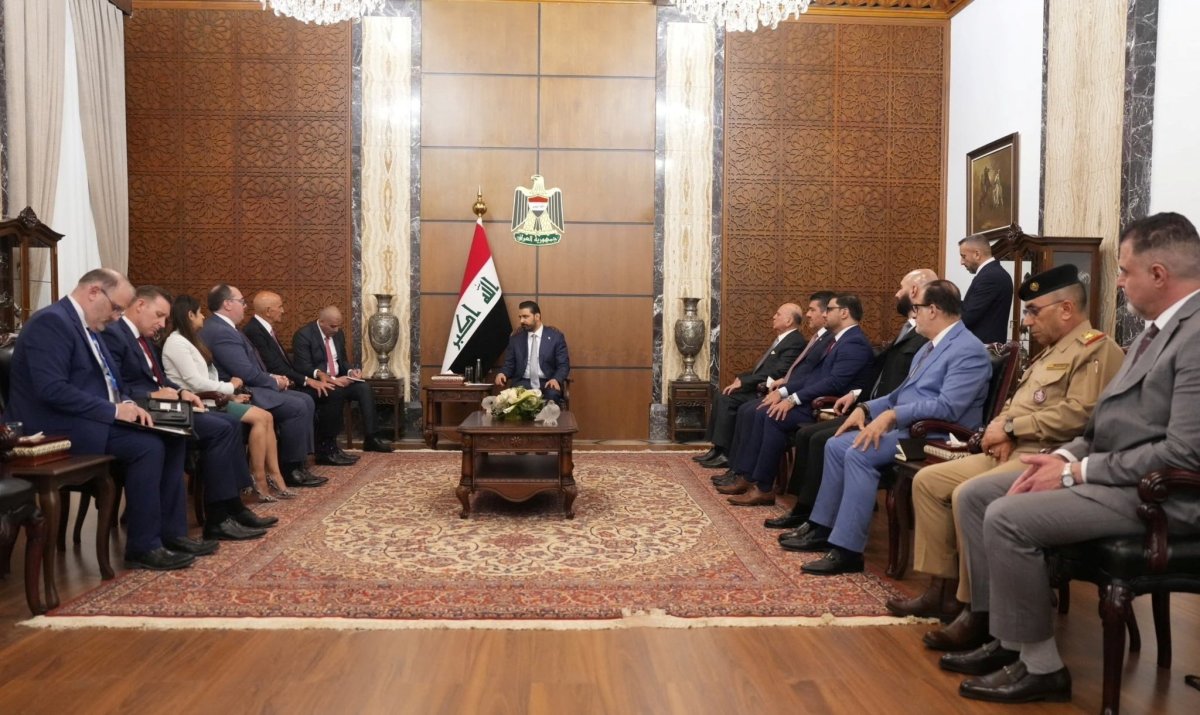
Raids That Shook Baghdad: The Scope of the Operation
When Iraqi investigators raided the homes of several senior officials just weeks after the new government took office, they uncovered what appears to be one of the country's largest corruption networks in years. According to Iraqi authorities, the raids led to the seizure of millions of dollars in cash, dozens of properties, luxury vehicles and large quantities of gold. As the investigation expanded, it began to implicate current and former officials, lawmakers and other politically connected figures. The scale of the operation has drawn widespread attention, but what many Iraqis find even more important is that the investigation appears to be reaching individuals once viewed as beyond the reach of the law, including some who were widely praised for their anti-corruption stance. High-profile raids and arrests may signal a stronger commitment to tackling corruption, but lasting progress will depend on successful prosecutions, the recovery of stolen public funds and reforms that strengthen transparency and accountability. If those goals are achieved, this campaign could mark the beginning of the meaningful change many Iraqis have been waiting for after years of failed anti-corruption drives. The arrest of former Deputy Oil Minister Adnan al-Jumaili proved pivotal as his testimony reportedly exposed broader networks. Raids uncovered about $86 million in cash, 70 properties, 21 vehicles and 3 kilograms of gold. This operation stands out because it targeted figures previously considered untouchable, raising cautious optimism that accountability might finally extend to the highest levels of power. Yet analysts caution that without convictions and asset recovery, the seizures alone represent only symbolic victories in a system resistant to change. The timing, coming immediately after the government assumed office, suggests a deliberate strategy to establish credibility early, though skeptics recall similar announcements from prior administrations that faded without structural impact. Public reaction has been mixed, with many citizens demanding evidence that recovered funds will return to state coffers rather than disappear again through new channels of influence.
The Muhasasa System: How Post-2003 Politics Created Patronage
To understand why this campaign matters, it is important to understand how corruption became so deeply embedded in Iraq's political system. The roots of Iraq's corruption problem can largely be traced to the political order established after the 2003 U.S.-led invasion, when the country's state institutions were rebuilt. As ministries and government agencies were restructured, many came under the influence of political parties through the "Muhasasa" quota system, an informal power-sharing arrangement that allocated key government positions among Iraq's sectarian and ethnic groups. While intended to ensure political representation, the system enabled patronage networks to expand, allowing parties to exert greater control over state institutions and public resources. Over two decades this quota mechanism evolved into a sophisticated mechanism for distributing jobs, contracts and influence along sectarian lines rather than merit. Political parties embedded loyalists in every layer of bureaucracy, creating parallel structures of authority that often superseded official government policy. The Muhasasa framework effectively turned ministries into fiefdoms where party interests dictated hiring, procurement and regulatory decisions. This arrangement fostered an environment where accountability became secondary to maintaining sectarian balances, allowing corruption to flourish under the guise of political stability. Successive leaders inherited this system and found it difficult to reform without upsetting the delicate power-sharing equilibrium that kept the post-2003 state intact. Consequently, anti-corruption rhetoric frequently collided with the reality that dismantling patronage would require confronting the very parties sustaining the government. The endurance of Muhasasa explains why isolated raids, however dramatic, struggle to produce systemic change without parallel political restructuring.
Public Sector Explosion and the Ghost Employee Economy
Data also support the argument that Iraq's patronage-based public sector has become deeply entrenched. According to the World Bank, the number of public sector employees increased from about 900,000 in 2003 to more than 3 million by 2015, while the government's wage bill grew to account for more than 44% of public spending. Audits also uncovered thousands of ghost employees, and hiring in many institutions became increasingly tied to political connections rather than qualifications. This rapid expansion transformed the state into the primary employer, crowding out private sector growth and creating a dependent population reliant on government salaries. Ghost employees represent a particularly egregious form of leakage where nonexistent workers drain public funds, often with salaries funneled to political operatives or their associates. The wage bill dominance means that any meaningful fiscal reform must confront entrenched interests within the bureaucracy itself. Political parties benefit directly from this arrangement because they control hiring pipelines and can reward supporters with secure positions. Over time the public sector became both a tool of patronage and a barrier to efficiency, with overlapping responsibilities and inflated payrolls undermining service delivery. Citizens experience the consequences through deteriorating infrastructure and unreliable services despite massive state expenditures. Attempts to audit and trim the workforce have repeatedly stalled because they threaten the political base of ruling parties. The ghost employee phenomenon illustrates how deeply corruption has been normalized within administrative structures, making external investigations necessary but insufficient without internal restructuring.
A History of Failed Reform: From Abadi to Sudani
Successive Iraqi governments have pledged to fight corruption, but few efforts have produced lasting results. In 2015, former Prime Minister Haider al-Abadi unveiled a broad package of reforms following nationwide protests over corruption and poor public services. Years later, Mustafa al-Kadhimi and Mohammed Shia al-Sudani also launched major anti-corruption initiatives, yet none succeeded in dismantling the networks that allowed corruption to flourish, leaving many Iraqis skeptical of every new campaign. Abadi's reforms promised institutional overhaul but encountered resistance from parties benefiting from the status quo. Kadhimi's efforts similarly generated headlines without sustained prosecutions or recovered assets. Sudani's earlier initiatives followed the same pattern of announcements followed by limited implementation. Each administration faced the structural obstacle that meaningful reform threatens the patronage foundations sustaining political coalitions. Protests repeatedly forced leaders to acknowledge the problem, yet the response remained confined to cosmetic measures that avoided confronting embedded interests. The cycle of promises and disappointments has bred deep public cynicism, with citizens viewing new campaigns as temporary political theater rather than genuine commitments. Without mechanisms to insulate investigators from political pressure, previous drives collapsed once initial momentum faded. This historical pattern places the current operation under intense scrutiny, as observers seek signs that it will break from predecessors by pursuing cases to completion regardless of political cost.
The Heist of the Century and Its Lingering Legacy
Public skepticism remains strong after the 2022 "Heist of the Century," when about 2.5 trillion Iraqi dinars ($1.7 billion) was stolen from tax authority accounts. While some suspects were arrested and part of the money was recovered, many Iraqis still doubt that powerful figures will be fully held accountable. The theft exposed vulnerabilities in financial oversight and highlighted how sophisticated networks could siphon enormous sums with apparent impunity. Recovery efforts yielded partial results, yet the absence of high-level convictions reinforced perceptions that elite protection persists. The scandal continues to shape public expectations, serving as a benchmark against which current raids are measured. Citizens question whether recovered assets from recent operations will truly benefit the state or merely redistribute among competing factions. The Heist of the Century demonstrated the scale of potential losses when accountability mechanisms fail, fueling demands for transparency in ongoing investigations. Lingering doubts stem from the realization that even massive thefts produced incomplete justice, suggesting that smaller networks uncovered in current raids may face similar obstacles. This legacy underscores the necessity for judicial independence and public reporting on case outcomes to rebuild trust in state institutions.
Iraq's Global Standing: Transparency International Rankings
The scale of these challenges is reflected in international assessments. Iraq ranked 136th out of 182 countries in Transparency International's 2025 Corruption Perceptions Index, highlighting that corruption remains a major challenge despite recent improvements. This position places Iraq among the more corrupt nations globally, reflecting persistent weaknesses in governance and accountability. The ranking serves as an external validation of domestic concerns and influences foreign investment decisions as well as international aid conditions. Low scores correlate with reduced economic opportunities and heightened instability risks. While incremental gains have occurred in recent years, the overall trajectory shows that structural reforms lag behind the scale of the problem. International observers note that perception indices capture both actual corruption levels and confidence in reform efforts. Therefore, successful prosecutions from current raids could positively affect future rankings, whereas repeated failures would further damage Iraq's global reputation. The index also draws attention to regional comparisons, where neighboring countries have achieved better scores through sustained institutional changes. Iraq's position emphasizes the urgency of converting high-profile operations into measurable governance improvements that international partners can recognize.
The Strategic Calculus: What Zaidi Must Overcome
Within weeks of taking office, Prime Minister Ali al-Zaidi launched a large-scale anti-corruption operation targeting dozens of current and former senior officials, lawmakers and politically connected figures. The investigation widened after the arrest of former Deputy Oil Minister Adnan al-Jumaili, whose testimony reportedly led investigators to a broader network of politicians and senior officials. Raids uncovered about $86 million in cash, 70 properties, 21 vehicles and 3 kilograms of gold. The scale of the seizures has raised hopes that this crackdown could go further than previous anti-corruption campaigns. Whether this becomes a turning point or just another campaign depends on what comes next; arrests alone will not change a system that has taken decades to build. Zaidi must navigate political backing from parties potentially implicated, pressure from armed groups protecting their interests, and the complex influence of U.S. policy priorities in the region. Regional implications extend to neighboring states watching whether Iraq can stabilize its institutions. Success requires insulating investigators from retaliation and securing judicial follow-through. The prime minister faces the delicate task of maintaining coalition support while pursuing cases that may implicate key allies. External actors, including the United States, may provide diplomatic leverage but also introduce competing agendas that complicate domestic priorities. Zaidi's calculus involves balancing immediate political survival against long-term institutional credibility, knowing that half-measures will reinforce existing cynicism. The operation's outcome will determine whether Iraq can finally escape the patronage trap or remain mired in cycles of scandal and impunity.
Regional Implications and the Road Ahead
This could be Iraq's best chance in years to challenge corruption, but it will only matter if the investigations lead to convictions, recovered public funds and reforms that deliver lasting change. Lasting progress will depend on successful prosecutions, the recovery of stolen public funds and reforms that strengthen transparency and accountability. The impact on Gulf stability could be significant if Iraq demonstrates credible governance improvements that encourage regional investment and cooperation. An improved investment climate would benefit neighboring economies seeking stable energy partnerships and trade routes. Broader Middle East governance discussions often cite Iraq as a cautionary example; positive outcomes could inspire reform movements elsewhere. The road ahead requires sustained political will beyond initial raids, including legal frameworks protecting whistleblowers and independent oversight bodies. Without these foundations, even dramatic seizures risk becoming isolated events rather than catalysts for transformation. Regional actors will monitor whether recovered assets translate into visible public benefits, such as improved services, which could shift domestic and international perceptions. Ultimately, Iraq's trajectory hinges on converting current momentum into enduring institutional safeguards that prevent the resurgence of patronage networks.
By Malik Hassan, Staff WriterThis article was produced with AI-assisted research and editorial support. Reporting is based on sources cited in the article.
What's Your Reaction?
 Like
0
Like
0
 Dislike
0
Dislike
0
 Love
0
Love
0
 Funny
0
Funny
0
 Wow
0
Wow
0
 Sad
0
Sad
0
 Angry
0
Angry
0

Middle East Correspondent at Global1.News. Based in Beirut, covering politics, conflict, energy, and society across the Middle East. Brings context and depth to a region often reduced to headlines.












Comments (0)