
Iran's Permacrisis: US Strikes, Houthi Tanker Attacks...
As night after night of American bombs rain down on Iranian soil and Houthi missiles set Saudi tankers ablaze in the Red Sea, oil prices have exploded past $100 a barrel, dragging the world toward a dangerous new confrontation that blends conventional strikes, proxy warfare and the ever-present threat of a closed Strait of Hormuz. Iran's Permacrisis: US Strikes, Houthi Tanker Attacks and the $100 Barrel War Beirut, Lebanon — The United States conducted its twelfth consecutive night of strikes...
As night after night of American bombs rain down on Iranian soil and Houthi missiles set Saudi tankers ablaze in the Red Sea, oil prices have exploded past $100 a barrel, dragging the world toward a dangerous new confrontation that blends conventional strikes, proxy warfare and the ever-present threat of a closed Strait of Hormuz.
Iran's Permacrisis: US Strikes, Houthi Tanker Attacks and the $100 Barrel War
Beirut, Lebanon — The United States conducted its twelfth consecutive night of strikes on Iranian territory, hitting sites in Hormozgan, Bushehr and Khuzestan provinces including Ramshir. CENTCOM stated the operations aim to further degrade Iran’s capacity to threaten civilian shipping. Iranian President Masoud Pezeshkian described the situation as a full-scale war, while US Defense Secretary Pete Hegseth put cumulative American costs at $37.5 billion.
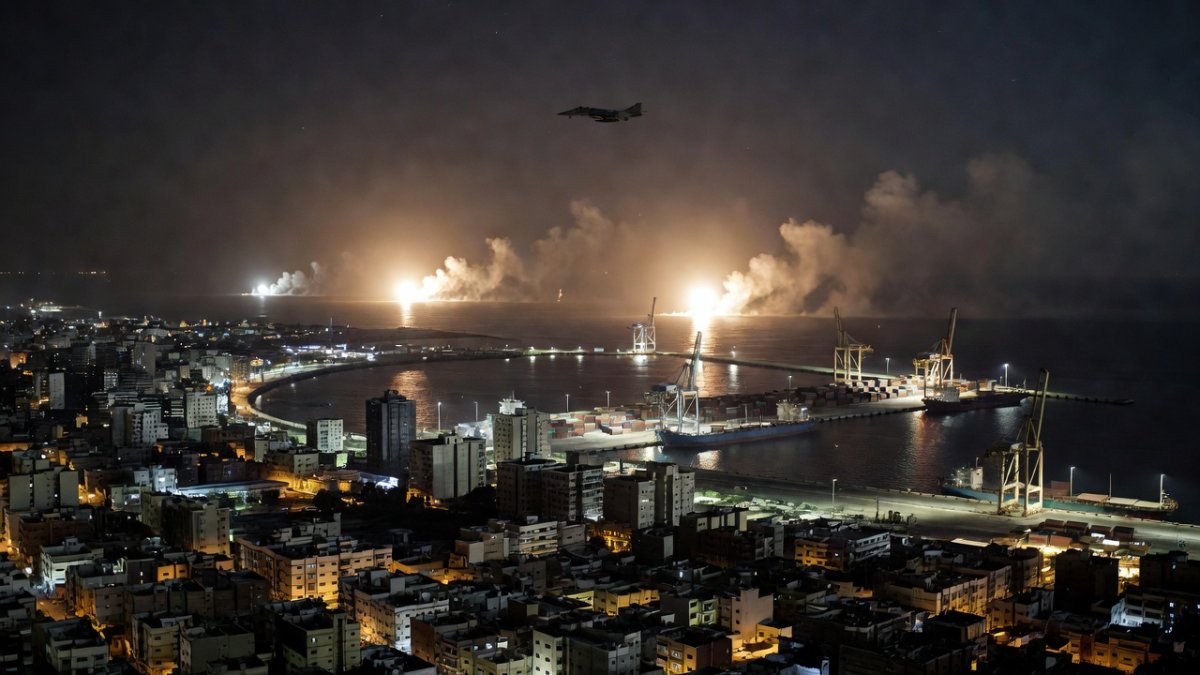 The extension of U.S. strikes into a twelfth consecutive night has relied heavily on B-2 Spirit bombers operating from Diego Garcia and Tomahawk land-attack missiles launched from the USS Carl Vinson carrier strike group positioned in the northern Arabian Sea. Pentagon sources indicate that more than 180 munitions were expended across Hormozgan, Bushehr, and Khuzestan, with particular emphasis on IRGC naval bases and suspected missile storage facilities. Iranian air defenses, including S-300 and domestically produced Bavar-373 systems, reportedly intercepted roughly 40 percent of incoming threats, though degraded command nodes in Khuzestan limited coordinated responses after the first three nights. Civilian casualties in Bushehr province have been estimated by local health officials at over 120, with damage to port infrastructure raising concerns about long-term economic disruption in an area already strained by sanctions.
Comparisons to the 2011 Libya campaign and the 2018 Syria strikes reveal a markedly different tempo and target set. Whereas those operations lasted days and focused on regime command centers, the current campaign has systematically degraded IRGC regional corps headquarters, with at least four senior commanders confirmed killed according to Israeli intelligence assessments shared with CENTCOM. Defense Secretary Pete Hegseth’s cited $37.5 billion figure breaks down to approximately $22 billion in munitions and sortie costs, $9 billion in carrier group sustainment, and the remainder allocated to intelligence, surveillance, and reconnaissance assets. This sustained pressure has forced IRGC leadership to disperse remaining missile units deeper into the Zagros Mountains, complicating future targeting but also slowing Iranian retaliation cycles.
The extension of U.S. strikes into a twelfth consecutive night has relied heavily on B-2 Spirit bombers operating from Diego Garcia and Tomahawk land-attack missiles launched from the USS Carl Vinson carrier strike group positioned in the northern Arabian Sea. Pentagon sources indicate that more than 180 munitions were expended across Hormozgan, Bushehr, and Khuzestan, with particular emphasis on IRGC naval bases and suspected missile storage facilities. Iranian air defenses, including S-300 and domestically produced Bavar-373 systems, reportedly intercepted roughly 40 percent of incoming threats, though degraded command nodes in Khuzestan limited coordinated responses after the first three nights. Civilian casualties in Bushehr province have been estimated by local health officials at over 120, with damage to port infrastructure raising concerns about long-term economic disruption in an area already strained by sanctions.
Comparisons to the 2011 Libya campaign and the 2018 Syria strikes reveal a markedly different tempo and target set. Whereas those operations lasted days and focused on regime command centers, the current campaign has systematically degraded IRGC regional corps headquarters, with at least four senior commanders confirmed killed according to Israeli intelligence assessments shared with CENTCOM. Defense Secretary Pete Hegseth’s cited $37.5 billion figure breaks down to approximately $22 billion in munitions and sortie costs, $9 billion in carrier group sustainment, and the remainder allocated to intelligence, surveillance, and reconnaissance assets. This sustained pressure has forced IRGC leadership to disperse remaining missile units deeper into the Zagros Mountains, complicating future targeting but also slowing Iranian retaliation cycles.
Houthi Naval Actions Disrupt Red Sea Shipping
Houthi forces attacked the Saudi-owned tankers Encelia and Layla, asserting the vessels violated their declared naval blockade. These incidents compound pressure on maritime routes already strained by prior attacks. The strikes coincide with rising insurance premiums and rerouting decisions by major energy firms seeking to avoid the Bab el-Mandeb chokepoint.
Houthi naval forces have expanded their Red Sea operations using a mix of Iranian-supplied anti-ship ballistic missiles, loitering munitions, and explosive-laden unmanned surface vessels, striking the Encelia and Layla tankers within 48 hours of each other near the Bab el-Mandeb chokepoint. The strait’s narrow 20-mile width makes it particularly vulnerable, with roughly 12 percent of global trade and 8 percent of LNG shipments transiting daily. Insurance premiums for vessels passing through the area have surged 340 percent since the attacks began, according to Lloyd’s of London data, prompting several major carriers to reroute around the Cape of Good Hope at an added cost of $1.2 million per voyage. Saudi naval assets, including the Al Riyadh-class frigates, have conducted joint patrols with U.S. and British destroyers, yet the Houthis’ dispersed coastal launch sites continue to evade decisive neutralization. This phase echoes the 2023-24 Red Sea crisis but with greater intensity, as Houthi targeting now includes vessels linked to Gulf Cooperation Council states. The resulting delays threaten to reduce Saudi and Emirati crude exports by up to 15 percent in the coming quarter if disruptions persist, while CENTCOM’s forward-deployed destroyers and the USS Dwight D. Eisenhower carrier group remain stretched across both the Red Sea and Gulf of Oman.Energy Markets React to Strait of Hormuz Fears
Brent crude surpassed $100 per barrel for the first time since May 2026, marking the fifth straight day of gains. US gasoline prices reached $4.09 per gallon, a 37 percent increase since the conflict began. Markets also registered sharp declines in Alphabet and Tesla shares amid broader risk-off sentiment on Wall Street.
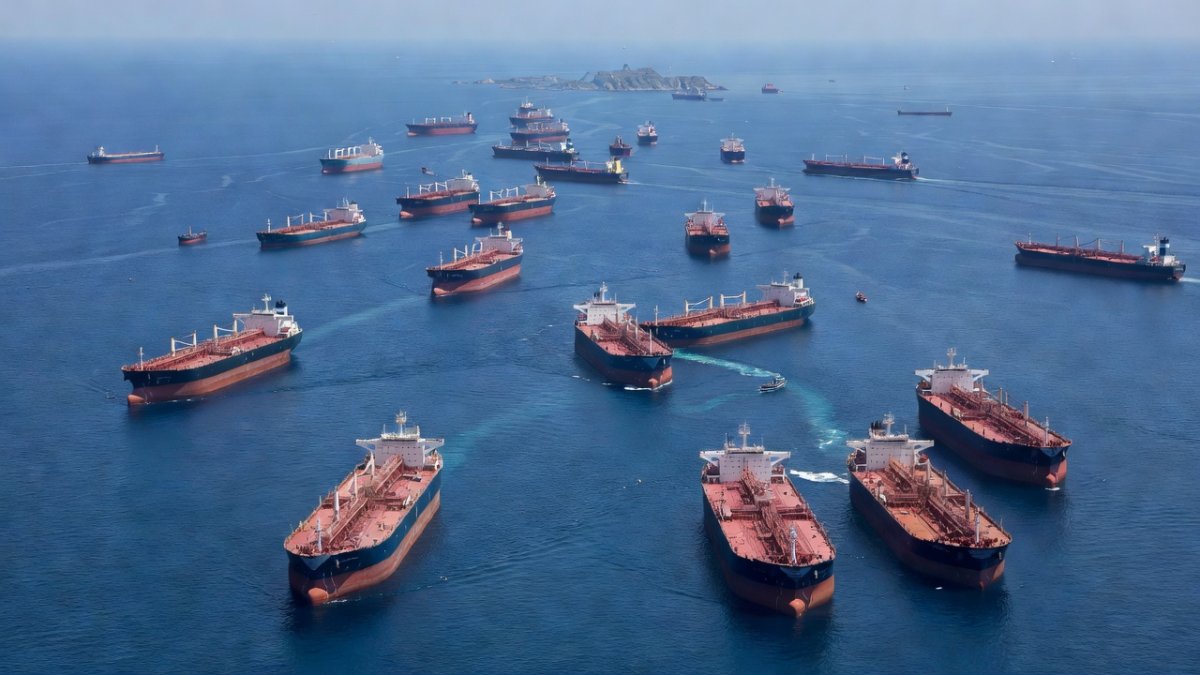 Brent crude’s climb above $100 per barrel and U.S. gasoline prices reaching $4.09 have been driven by fears that Iranian mining or missile strikes could close the Strait of Hormuz for weeks. OPEC+ spare capacity stands at roughly 3.5 million barrels per day, concentrated primarily in Saudi Arabia and the UAE, yet analysts at the International Energy Agency note that even partial closure would overwhelm this buffer within ten days. Japan and South Korea, which import 80 percent and 70 percent of their oil from the Gulf respectively, have begun drawing down strategic reserves, while India has activated emergency procurement talks with Russia and Latin American suppliers.
Iran’s oil exports have already fallen from 1.4 million barrels per day to under 400,000 since the strikes commenced, according to tanker tracking data from Vortexa. LNG markets have seen parallel spillover, with Qatari cargoes facing higher war-risk premiums and some European buyers shifting to U.S. and Australian suppliers. Gulf sovereign wealth funds, including Saudi Arabia’s Public Investment Fund and Abu Dhabi’s Mubadala, have increased hedging positions in energy futures by an estimated $18 billion over the past week, seeking to offset potential revenue shortfalls while maintaining diplomatic channels with Beijing to secure alternative offtake agreements.
Brent crude’s climb above $100 per barrel and U.S. gasoline prices reaching $4.09 have been driven by fears that Iranian mining or missile strikes could close the Strait of Hormuz for weeks. OPEC+ spare capacity stands at roughly 3.5 million barrels per day, concentrated primarily in Saudi Arabia and the UAE, yet analysts at the International Energy Agency note that even partial closure would overwhelm this buffer within ten days. Japan and South Korea, which import 80 percent and 70 percent of their oil from the Gulf respectively, have begun drawing down strategic reserves, while India has activated emergency procurement talks with Russia and Latin American suppliers.
Iran’s oil exports have already fallen from 1.4 million barrels per day to under 400,000 since the strikes commenced, according to tanker tracking data from Vortexa. LNG markets have seen parallel spillover, with Qatari cargoes facing higher war-risk premiums and some European buyers shifting to U.S. and Australian suppliers. Gulf sovereign wealth funds, including Saudi Arabia’s Public Investment Fund and Abu Dhabi’s Mubadala, have increased hedging positions in energy futures by an estimated $18 billion over the past week, seeking to offset potential revenue shortfalls while maintaining diplomatic channels with Beijing to secure alternative offtake agreements.
Diplomatic Channels Yield Limited Results
US Secretary of State Marco Rubio met Russian Foreign Minister Sergei Lavrov in Ankara without achieving a breakthrough on the Ukraine war. The talks occurred against the backdrop of simultaneous US-Iran hostilities, illustrating how great-power competition now intersects with Gulf security dynamics. President Trump separately warned of major military punishment against both Iran and the Houthis via social media.
Strategic Calculus Across Regional Actors
Iran’s leadership faces a narrowing set of options: continued asymmetric responses through proxies risk further degradation of its conventional capabilities, while direct escalation could invite wider coalition involvement. Gulf Arab states, particularly Saudi Arabia, balance support for maritime security with the recent signing of a US-Saudi civil nuclear agreement that signals long-term diversification away from sole reliance on Iranian energy leverage.
Sunni-Shia competition adds another layer. Tehran’s ability to sustain Houthi operations tests Riyadh’s tolerance for prolonged instability near its southern border. Meanwhile, the Strait of Hormuz remains the central vulnerability; any sustained closure would affect Asian and European importers far more than the United States, giving Washington asymmetric leverage but also exposing it to secondary sanctions pressure from China and India.
The UAE has maintained a cautious posture under the Abraham Accords framework, quietly expanding security cooperation with the United States while avoiding direct involvement in strikes on Iranian territory. Turkish officials, balancing NATO obligations with longstanding economic ties to Tehran, have offered mediation through back-channel talks in Ankara, though President Erdogan’s public statements have emphasized Turkish energy security interests in the Black Sea and Caspian corridors. Israel’s potential role remains the most volatile variable, with senior IDF sources indicating that precision strikes on Iranian nuclear facilities at Natanz and Fordow are under active consideration should U.S. operations fail to degrade enrichment capacity. Qatar and Oman continue low-profile mediation efforts, leveraging their respective relationships with Iran and the United States to explore de-escalation pathways. China’s acute energy vulnerability—importing over 50 percent of its crude from the Gulf—has prompted Beijing to accelerate diplomatic engagement with both Tehran and Riyadh, while Russia seeks to extract concessions in Ukraine talks by positioning itself as a potential energy supplier of last resort to Asian markets disrupted by Hormuz instability.Historical Context and Second-Order Effects
The current campaign echoes earlier patterns of limited strikes intended to degrade capabilities without triggering full-scale war. Yet the addition of sustained Houthi tanker attacks and simultaneous Ukraine diplomacy creates a permacrisis environment. Analysts Tobias Ellwood and Dr. Patrick Bury highlighted the risk that incremental US actions could lock all parties into a cycle where de-escalation becomes politically costly.
Strategic Implications for the Region
If the pattern of nightly strikes continues without a diplomatic off-ramp, Iran may accelerate nuclear threshold activities or deepen ties with Russia and China. Gulf states will likely accelerate defense procurement and civil nuclear programs. Energy importers face sustained price volatility, while the Red Sea corridor’s reliability remains in question. The interplay between US military pressure, Houthi disruption and great-power maneuvering suggests the Middle East’s security architecture is entering a prolonged period of managed confrontation rather than swift resolution.
By Malik Hassan, Staff WriterThis article was produced with AI-assisted research and editorial support. Reporting is based on sources cited in the article.
What's Your Reaction?
 Like
0
Like
0
 Dislike
0
Dislike
0
 Love
0
Love
0
 Funny
0
Funny
0
 Wow
0
Wow
0
 Sad
0
Sad
0
 Angry
0
Angry
0
Middle East Correspondent at Global1.News. Based in Beirut, covering politics, conflict, energy, and society across the Middle East. Brings context and depth to a region often reduced to headlines.











Comments (0)