
Oil Surges Past $100 After Houthi Attacks on Saudi Tankers
Oil Markets React Sharply to Red Sea Disruptions Brent crude jumped 7.1 percent to settle at $100.74 per barrel on Thursday, marking its highest level since May. The move extended a five-day rally driven by fresh attacks on shipping in the Red Sea. Just weeks earlier, Brent had traded below $72 per barrel on hopes that the Strait of Hormuz would reopen fully after the start of the United States and Israel campaign against Iran. The rapid reversal highlights how quickly sup...
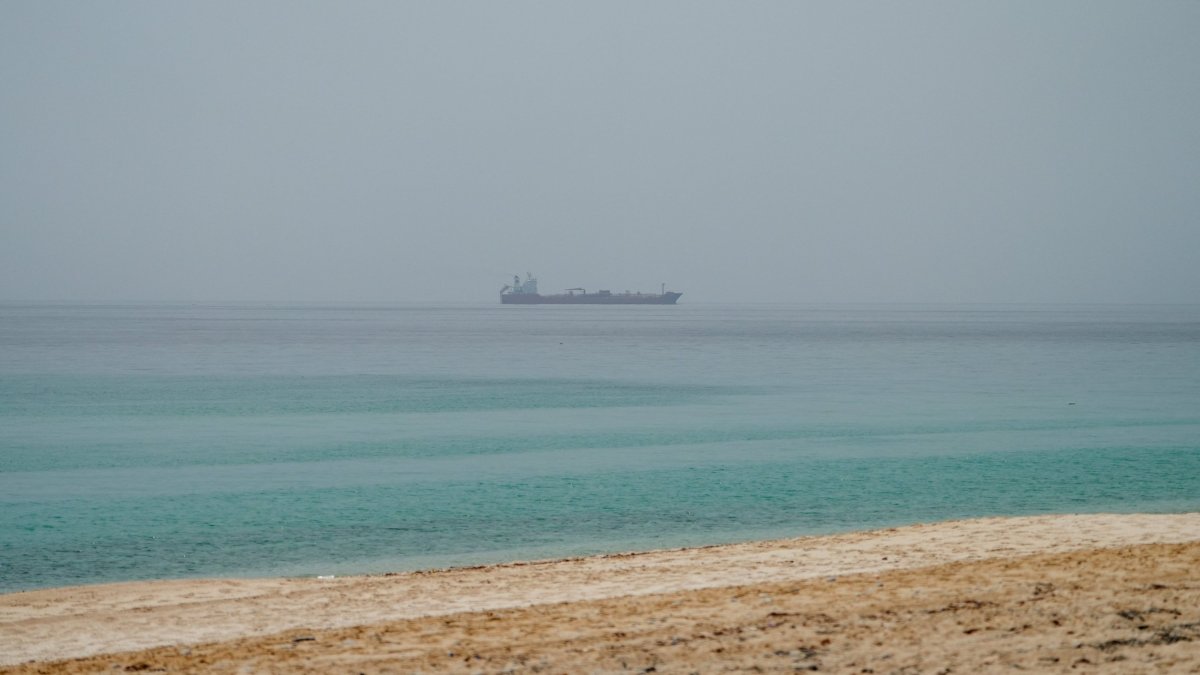
Oil Markets React Sharply to Red Sea Disruptions
Brent crude jumped 7.1 percent to settle at $100.74 per barrel on Thursday, marking its highest level since May. The move extended a five-day rally driven by fresh attacks on shipping in the Red Sea. Just weeks earlier, Brent had traded below $72 per barrel on hopes that the Strait of Hormuz would reopen fully after the start of the United States and Israel campaign against Iran. The rapid reversal highlights how quickly supply concerns can reprice the market when a second chokepoint comes under threat.
Since the US-Iran war erupted, oil prices have traced a volatile path from pre-war levels near $70 per barrel, spiking sharply when Iran closed the Strait of Hormuz, then dipping briefly below $72 during partial reopening before the current Red Sea surge. This trajectory reflects repeated shocks to trader confidence as each new chokepoint enters the fray. Compared with the 2019 Abqaiq attacks that briefly lifted prices 15 percent before swift Saudi repairs restored calm, the 1990 Gulf War spike that exceeded $40 amid invasion fears, or the 1973 embargo that quadrupled prices to $12, today's move past $100 occurs against far tighter spare capacity and simultaneous threats at both Hormuz and Bab al-Mandab.
Analysts at the International Energy Agency note that the speed of repricing now outpaces those earlier episodes because futures markets price in prolonged proxy harassment rather than one-off supply losses. Saudi Energy Minister Prince Abdulaziz bin Salman has warned that sustained Red Sea closures could remove an additional 4 million barrels per day from seaborne trade, a volume larger than the Abqaiq outage.
Houthi Strikes Target Saudi Oil Tankers
The Iran-backed Houthi movement in Yemen said it fired missiles and drones at two Saudi-flagged tankers, the Encelia and the Layla, while they transited the Red Sea. The group claimed the vessels were carrying crude bound for international markets. Three other tankers reportedly executed U-turns after receiving warnings of a possible Houthi naval blockade. These incidents mark the first sustained attempt by the Houthis to interdict energy flows outside the Persian Gulf since the current round of escalation began.
The Houthis have developed sophisticated anti-ship ballistic missiles, naval drones, and maritime strike capabilities that evolved rapidly during the Saudi-led war in Yemen since 2015, drawing on Iranian technical assistance and battlefield experience against coalition naval forces. These systems now allow the group to target vessels hundreds of kilometers from Yemeni shores with increasing accuracy. Saudi Arabia has responded with naval escort operations and Patriot/SAM deployments along the Red Sea coast, yet the kingdom's navy remains limited in its ability to patrol a 2,000-plus-kilometer coastline without sustained external support from the United States and other partners.
Western naval officers familiar with Red Sea operations say the Houthis' drone swarm tactics have forced Saudi commanders to spread thin their limited surface combatants, exposing gaps that smaller craft can exploit during night transits.
US Issues Strong Warning to Iran and Houthis
President Donald Trump stated that Washington would hold Iran responsible for any further Houthi attacks on shipping and threatened "major military punishment" against the rebels. The warning came on the twelfth consecutive night of American strikes against Iranian military targets. US officials have made clear that the campaign aims to degrade Iran's capacity to direct and resupply its regional proxies, including the Houthis operating from Yemen.
The US-Iran war escalated from initial US-Israel strikes on Iranian missile and nuclear sites into twelve consecutive nights of sustained bombing, reflecting a strategic preference for aerial degradation over ground operations that would risk heavier US casualties and regional entanglement. Pentagon planners have argued that repeated precision strikes can erode Iran's command-and-control networks without committing large ground forces. In Congress, the House vote to end the war against Iran passed with a slim bipartisan margin, signaling eroding domestic political support for open-ended military engagement even among some Republican members concerned about defense spending and escalation risks.
Senator Lindsey Graham, who opposed the measure, warned that cutting funding now would embolden Tehran's proxies, while House Speaker Mike Johnson has scheduled further classified briefings before any final appropriations vote.
Bab al-Mandab Strait Becomes Critical New Chokepoint
Attention has now shifted to the Bab al-Mandab strait, the narrow passage linking the Red Sea to the Gulf of Aden. Roughly 10 percent of global oil trade normally passes through this route. Any sustained Houthi blockade would force tankers to divert around the Cape of Good Hope, adding weeks of sailing time and significant freight costs. Saudi Arabia, whose oil exports rely on both the Strait of Hormuz and the Red Sea, faces direct exposure to disruptions at either chokepoint.
The Bab al-Mandab's narrower width and shallower depths compared with the Strait of Hormuz make sustained naval chokepoint defense more feasible for smaller forces yet also easier for shore-based missiles to dominate, while alternative routes around Africa add roughly 12,000 kilometers and 20-25 days of sailing. Insurance markets have already priced war-risk premiums for Red Sea transits at $150,000-$200,000 per tanker voyage, up from negligible levels six weeks ago. These costs are rapidly feeding back into global oil prices as charterers pass higher freight and insurance charges to buyers in Asia and Europe.
Lloyd's of London syndicates have begun requiring additional armed security teams on vessels, further inflating daily operating expenses for operators already facing elevated bunker fuel prices.
Iran's Proxy Network Expands Leverage
Tehran continues to rely on the Houthis as one element in its wider network of regional partners that also includes Hezbollah and Iraqi armed groups. By activating the Red Sea corridor, Iran can pressure global energy markets without directly closing the Strait of Hormuz, an action that would invite even stronger international retaliation. The current strategy allows Iran to raise costs for Saudi Arabia and other Gulf exporters while preserving some diplomatic space with major powers.
Iran's approach favors low-cost harassment through proxies rather than direct confrontation, a doctrine rooted in the concept of "strategic depth" that extends Tehran's defensive perimeter beyond its borders at minimal financial expense. Gulf states have responded with divergent hedges: the UAE has leaned into Abraham Accords normalization to secure alternative security guarantees, while Saudi Arabia has accelerated Vision 2030 diversification to reduce long-term dependence on vulnerable energy exports. Yet both strategies face limits when physical export routes remain exposed to sustained low-intensity attacks that no economic transformation can fully neutralize.
Emirati officials have quietly expanded port capacity at Fujairah outside the Strait of Hormuz, while Riyadh continues to weigh new east-west pipelines that would bypass the Red Sea entirely.
Broader Economic and Market Consequences
Oil's 40 percent rise this month has already pushed average US gasoline prices to $4.09 per gallon. European Central Bank officials kept interest rates unchanged, while markets now assign a 38 percent probability to a Federal Reserve rate hike next week. The 10-year US Treasury yield climbed to 4.70 percent from 3.97 percent recorded before the US-Israel campaign against Iran began. Airlines such as American Airlines saw shares drop 8.4 percent despite solid earnings, reflecting investor concern over sustained higher fuel costs.
Import-dependent economies in South Asia and Africa are already feeling the strain, with Pakistan and Kenya facing sharply higher import bills that threaten currency stability and could trigger fresh debt crises requiring IMF interventions. OPEC+ faces difficult choices at its next meeting: Saudi Arabia and Russia must decide whether to release additional spare capacity or maintain cuts that support prices. Current spare capacity estimates of roughly 3.5 million barrels per day may prove insufficient if Red Sea disruptions persist beyond a month, forcing Gulf producers to weigh revenue gains against the risk of accelerating global demand destruction.
Indian Oil Minister Hardeep Singh Puri has already requested emergency consultations with OPEC+ members to explore temporary supply assurances for Asian buyers.
Strategic Calculus for Key Regional Actors
Saudi Arabia seeks stable export routes and has quietly supported efforts to deter Houthi naval activity. Iran aims to demonstrate that it can impose costs on energy flows even under military pressure. The United States is attempting to restore deterrence through direct strikes while avoiding a wider regional war. Each party calculates that controlled escalation can improve its bargaining position, yet the risk of miscalculation remains high if tanker traffic through the Bab al-Mandab continues to be targeted.
A direct Houthi-Israeli confrontation would intensify risks, given the Houthis' prior missile launches toward Israel, and could draw Egyptian and Jordanian interests into the fray because both nations rely on Red Sea shipping lanes for trade and energy transit that any widening conflict would immediately threaten.
By Malik Hassan, Staff Writer
===SUMMARY=== Brent crude surged past $100 per barrel after Iran-backed Houthi rebels struck two Saudi oil tankers in the Red Sea, threatening the Bab al-Mandab strait and opening a new front in the US-Iran war. The attacks mark a dangerous escalation in the conflict's impact on global energy markets, with oil prices up 40 percent this month as supply disruptions at multiple chokepoints compound market fears. Malik Hassan analyzes the strategic calculus for Saudi Arabia, Iran, the United States, and the implications for regional stability, energy security, and the global economy.This article was produced with AI-assisted research and editorial support. Reporting is based on sources cited in the article.
What's Your Reaction?
 Like
0
Like
0
 Dislike
0
Dislike
0
 Love
0
Love
0
 Funny
0
Funny
0
 Wow
0
Wow
0
 Sad
0
Sad
0
 Angry
0
Angry
0

Middle East Correspondent at Global1.News. Based in Beirut, covering politics, conflict, energy, and society across the Middle East. Brings context and depth to a region often reduced to headlines.














Comments (0)