
Venezuela Earthquake: Latin America's Disaster Preparedness Tested as 2,500+ Dead and Thousands Missing
The Twin Earthquakes Strike Venezuela Twin earthquakes struck Venezuela on 24 June 2026, hitting coastal areas including Catia La Mar and La Guaira state with immediate force. The events collapsed structures such as the parking lot next to Galerias Playa Grande mall, where security guard Hernán Gil later became trapped. Wednesday reports recorded 2,295 confirmed deaths before t
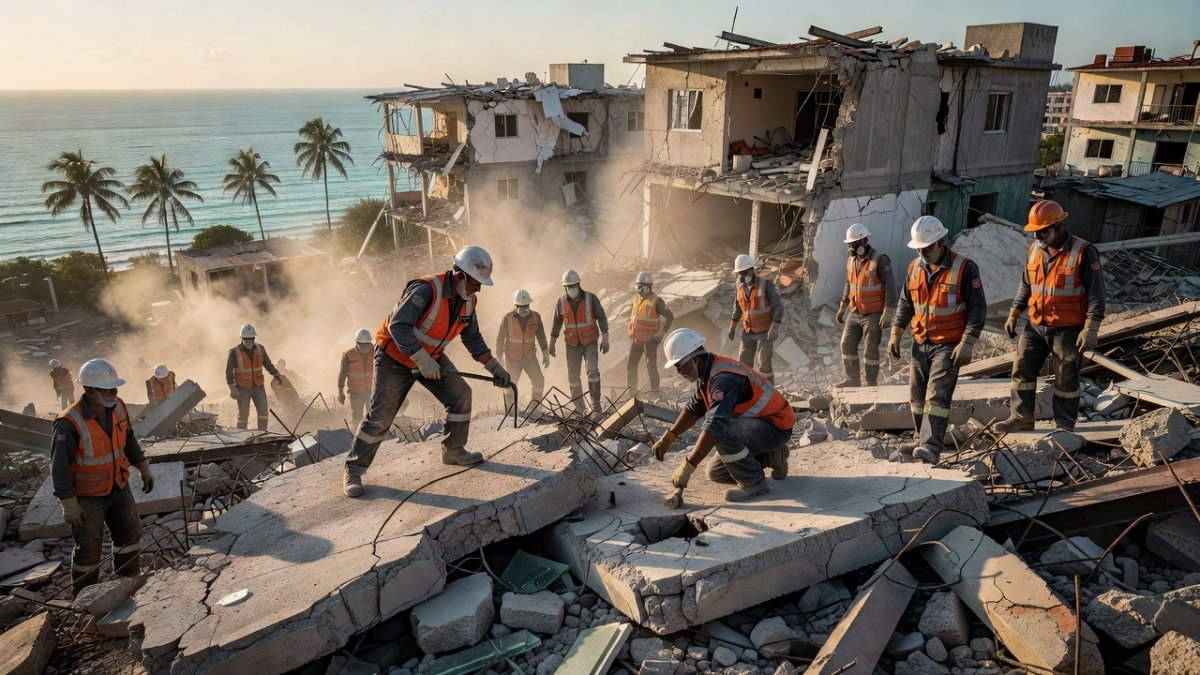
The Twin Earthquakes Strike Venezuela
Twin earthquakes struck Venezuela on 24 June 2026, hitting coastal areas including Catia La Mar and La Guaira state with immediate force. The events collapsed structures such as the parking lot next to Galerias Playa Grande mall, where security guard Hernán Gil later became trapped. Wednesday reports recorded 2,295 confirmed deaths before the toll rose.
By Thursday the confirmed death count reached 2,595 according to official updates, with more than 10,000 injured and over 50,000 missing per United Nations figures. The UN procured 10,000 body bags to support recovery operations across affected zones. These numbers reflect the scale of destruction in older urban districts built along the Caribbean coast.
Rescue teams from Venezuela, Chile, Costa Rica, El Salvador, Mexico, Portugal and the United States arrived within days to search rubble in La Guaira and surrounding municipalities. The international presence highlighted both the urgency of the moment and the limits of local capacity when older buildings failed under seismic stress.
Rising Death Toll and International Aid
Confirmed fatalities increased from 2,295 on Wednesday to 2,595 on Thursday, while the United Nations reported more than 10,000 injured and over 50,000 missing. The procurement of 10,000 body bags by the UN provided a concrete measure of the recovery challenge facing Venezuelan authorities and partner agencies.
Search operations continued in collapsed sites such as the basement parking structure adjacent to Galerias Playa Grande mall in Catia La Mar. International teams coordinated with local responders to clear access points repeatedly blocked by shifting concrete and debris. These efforts occurred against a backdrop of limited heavy equipment in the initial days after 24 June 2026.
Regional neighbors supplied specialized personnel and equipment, including Chilean firefighters who described the technical demands of one particular extraction as among the most complex they had encountered. The arrival of teams from Costa Rica, Mexico and Portugal added capacity for both urban search and medical support in field hospitals set up near La Guaira.
(Global 1 News)
Presidential Response and Government Actions
Acting President Delcy Rodríguez described the events as a natural tragedy on a scale never imagined and rejected criticism of the pace of the response by stating that authorities had done everything in their power. Her comments came as the death toll climbed and rescue operations extended into the second week after the 24 June 2026 quakes.
Rodríguez publicly referred to the survival of security guard Hernán Gil as a living miracle after his extraction from beneath 140 tonnes of rubble. She also highlighted the rescue of two-year-old Kleiber Moran as a source of hope for families still searching for relatives in La Guaira state.
Government statements emphasized coordination with international partners while noting that older building stock in Catia La Mar and La Guaira had proved less resistant than newer construction elsewhere in Latin America. The remarks placed the disaster within the wider context of infrastructure gaps that affect responses to earthquakes, floods and landslides across the region.
The Rescue of Hernán Gil
Security guard Hernán Gil remained trapped for eight days beneath 140 tonnes of rubble from a collapsed parking lot next to Galerias Playa Grande mall in Catia La Mar. A small concrete booth in the basement formed a protective shell that prevented fatal crushing injuries during the 24 June 2026 earthquakes.
Costa Rican paramedic Allan Madrigal first heard faint cries after more than 100 hours of excavation, though he initially doubted the sounds. Access ducts collapsed repeatedly, forcing teams from Chile, Mexico and other countries to reroute their approach multiple times before reaching the survivor.
Rescuers supplied Gil with water, an intravenous drip, a face mask and goggles through narrow openings in the debris. Mexican Red Cross worker Marco Antonio Franco later described Gil as a cheerful man who requested specific flavored hydration drinks once stable. Chilean firefighters called the operation the most complex and technically difficult they had managed in the country. Gil emerged without fractures or crushed nails.
Kleiber Moran's Survival Story
Two-year-old Kleiber Moran was rescued after six days in La Guaira state by Jordanian rescuers working alongside Venezuelan personnel. His aunt, 23-year-old Andreína Sarmiento, took him to a Caracas hospital where he received treatment for scratches on his arms and legs but no fractures.
Kleiber's parents, Ana Luz aged 31 and Carlos, remained among the missing at the time of his release from care. Andreína Sarmiento stated she would care for the child with a mother's warmth while he stayed in a hospital ward alongside other surviving children from the affected area.
Acting President Delcy Rodríguez cited Kleiber's survival as a source of hope amid the rising casualty figures. The case illustrated both the vulnerability of young children in collapsed residential structures and the capacity of international teams to locate survivors days after the initial shocks on 24 June 2026.
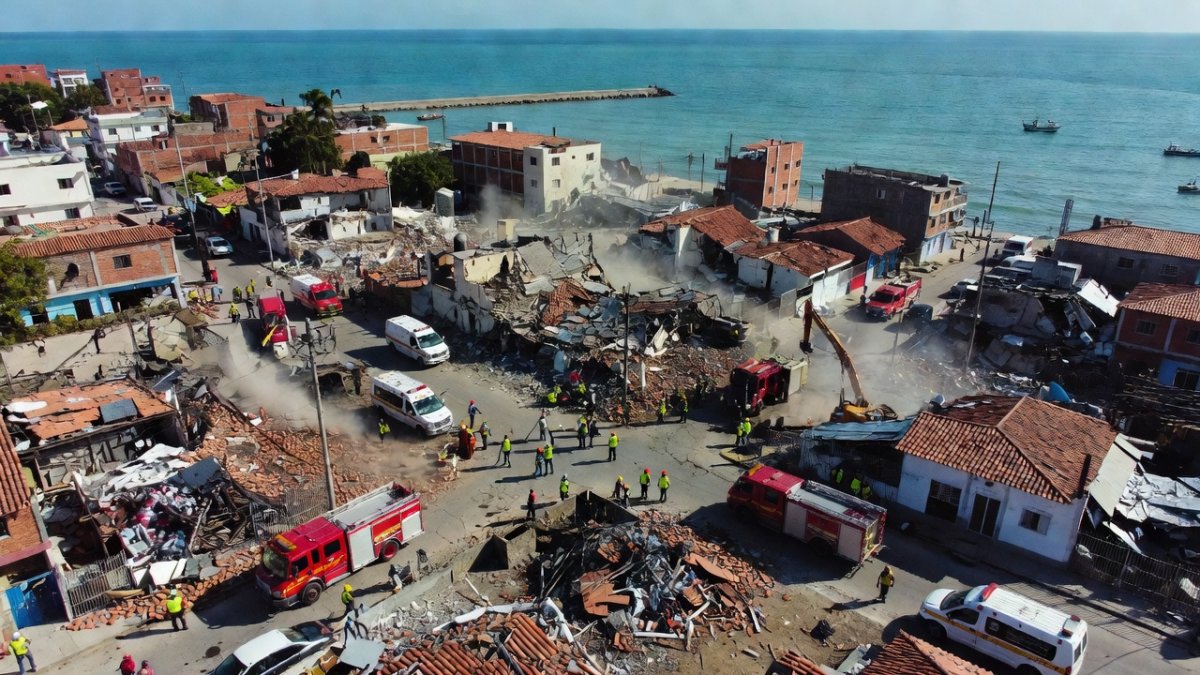
(Global 1 News)
The Fate of Deportees from Flight 164
More than 140 Venezuelans arrived on US deportation Flight 164 hours before the earthquakes and were housed at Hotel Santuario La Llanada in La Guaira, a building that was later destroyed. Abelardo Rincón, 23, who had built a life over six years in Georgia and was expecting a daughter, was reported missing after the collapse.
Grandfather Jose Rincón viewed more than 200 bodies while searching for his grandson. Another deportee, 35-year-old Darwin Eliecer Serrano Lopez, placed a call to family at 17:32 on the day of the quakes, which struck around 18:02; he was later presumed dead. Twenty-eight-year-old Daniel Alejandro Nunez was also listed among the missing deportees.
US Department of Homeland Security stated that once an individual is no longer in ICE custody, the agency bears no further responsibility. The timing of the arrivals placed the deportees in a structure that lacked the seismic reinforcements found in newer buildings in Chile or Mexico, exposing gaps in post-deportation support during a sudden regional disaster.
Latin America's Position on Seismic Zones
Latin America sits along the Pacific Ring of Fire and Caribbean plate boundaries, producing frequent seismic activity from Mexico through Central America and into the Andean nations. Venezuela's northern coast, including Catia La Mar and La Guaira, lies directly on one of these active margins where the 24 June 2026 twin earthquakes occurred.
Countries such as Chile and Mexico maintain strict seismic building codes and conduct regular drills that have reduced fatalities in comparable events. Venezuela's older urban stock in the affected coastal municipalities lacked equivalent reinforcements, contributing to the scale of collapse recorded after the shocks.
Regional data from Brazil's IBAMA and Colombia's Ministry of Environment show that multi-hazard planning increasingly incorporates earthquake risk alongside floods and landslides. These frameworks recognize that quake-damaged slopes become more susceptible to failure during heavier rainfall events linked to changing climate patterns.
Lessons from Chile and Mexico's Preparedness
Chile and Mexico enforce seismic codes that require ductile materials and regular inspections, practices credited with limiting deaths during recent large earthquakes. Venezuela's pre-2026 building inventory in Catia La Mar and La Guaira did not meet the same standards, resulting in higher rates of structural failure on 24 June 2026.
Regular national drills in Chile have trained both officials and residents to respond within minutes, shortening the time between impact and organized rescue. Mexican protocols similarly emphasize rapid deployment of urban search-and-rescue units equipped for confined-space operations, capabilities that proved decisive when international teams joined Venezuelan responders.
The contrast underscores how sustained investment in code enforcement and public training can alter outcomes even when tectonic forces remain constant. Venezuela's experience after the twin quakes illustrated the consequences when such investments lag behind population growth in coastal cities.
Venezuela's Urban Vulnerability Exposed
Older construction in Catia La Mar and La Guaira proved less resistant to the 24 June 2026 shaking, producing the majority of confirmed fatalities and the entrapment sites where international teams worked for more than a week. Infrastructure gaps extend beyond earthquakes to include flood defenses and landslide mitigation along the Caribbean slope.
Rising sea levels already threaten low-lying sections of the Venezuelan coast, while heavier rainfall can destabilize slopes loosened by seismic activity. Families who lost homes now face prolonged displacement that interrupts schooling and removes livelihoods tied to fishing and small-scale commerce in La Guaira state.
These overlapping hazards require coordinated planning that Venezuela had not fully implemented before the events. The presence of 50,000 missing persons and the need for 10,000 body bags supplied by the United Nations further illustrate the recovery burden placed on communities already navigating economic pressures.
Multi-Hazard Risks and Regional Planning
Brazil's IBAMA and Colombia's Ministry of Environment have developed multi-hazard frameworks that integrate seismic, flood and landslide risks into single planning documents. Venezuela's response after 24 June 2026 revealed gaps in similar integrated approaches, particularly in older coastal neighborhoods where building standards had not kept pace with regional best practices.
Displaced families encounter extended periods without permanent housing, which disrupts children's education and eliminates daily income from fishing and informal trade. These secondary effects compound the immediate toll of 2,595 confirmed deaths and more than 10,000 injuries recorded by Thursday.
International cooperation during the rescue phase, including teams from Chile, Mexico and Costa Rica, demonstrated the value of shared expertise. Sustained regional mechanisms for code enforcement and early-warning systems could reduce future losses when the next seismic event occurs along the Caribbean plate boundary.
Long-term Displacement and Livelihoods
Survivors who lost homes in Catia La Mar and La Guaira now confront months or years of displacement that severs access to schools and local markets. Fishing families and small traders face the additional loss of equipment and customer bases destroyed in the collapses that followed the 24 June 2026 quakes.
Acting President Delcy Rodríguez acknowledged the unprecedented scale while noting that government resources had been fully mobilized. The survival stories of Hernán Gil and Kleiber Moran offered limited but visible signs that coordinated international and local efforts could still produce positive outcomes amid widespread destruction.
Regional analysis indicates that climate-driven changes in rainfall intensity will continue to interact with earthquake-damaged terrain, raising the likelihood of secondary landslides in the coming rainy seasons. Planning that connects seismic resilience with coastal adaptation remains essential for Venezuela and neighboring Caribbean nations.
By Elena Vasquez, Staff WriterThis article was produced with AI-assisted research and editorial support. Reporting is based on sources cited in the article.
What's Your Reaction?
 Like
0
Like
0
 Dislike
0
Dislike
0
 Love
0
Love
0
 Funny
0
Funny
0
 Wow
0
Wow
0
 Sad
0
Sad
0
 Angry
0
Angry
0

Latin America Correspondent at Global1.News. Based in Mexico City, covering politics, economics, energy, and culture across the region. Brings an on-the-ground perspective to stories spanning from the Rio Grande to Patagonia.















Comments (0)