
Bismil's 'Sarfaroshi' Roars in PoK as Protests Intensify
In an extraordinary twist of history, the revolutionary anthem of India's freedom struggle—"Sarfaroshi ki tamannah"—now echoes through the streets of Pakistan-occupied Kashmir as protesters defy Islamabad's security forces. According to NDTV reports on July 30, the verses of Ram Prasad Bismil, once used against British colonialism, have become a rallying cry against military crackdowns that have left 75 civilians dead and over 200 wounded in the past two months. This uprising
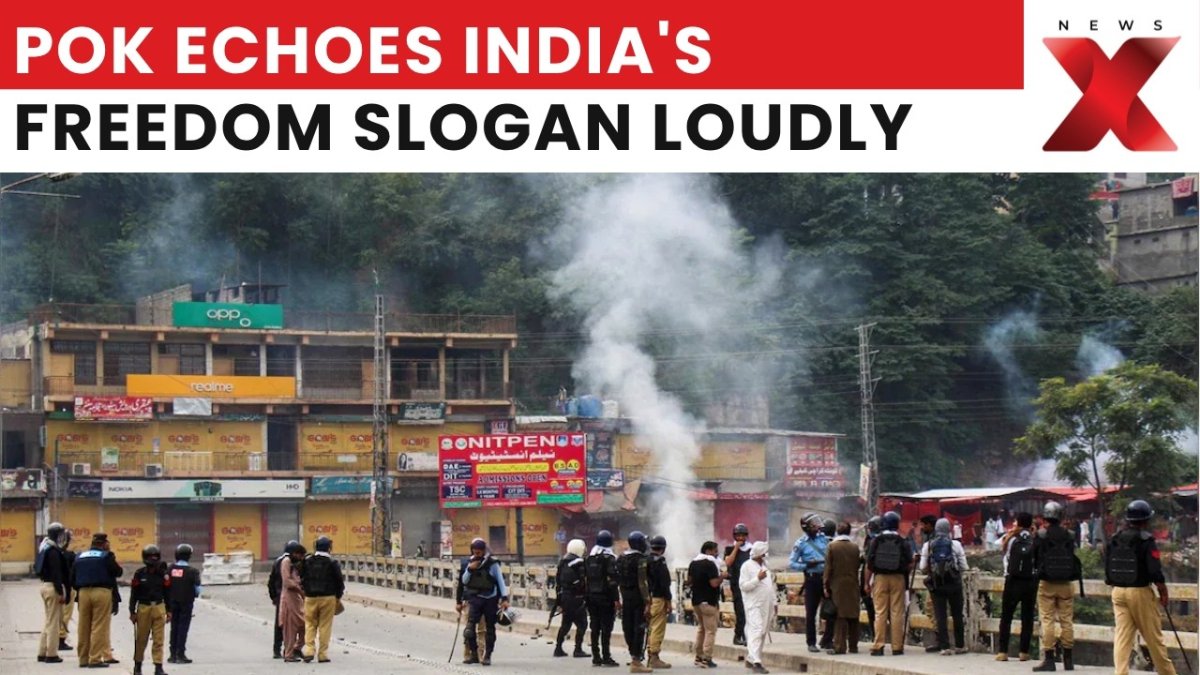
In an extraordinary twist of history, the revolutionary anthem of India's freedom struggle—"Sarfaroshi ki tamannah"—now echoes through the streets of Pakistan-occupied Kashmir as protesters defy Islamabad's security forces. According to NDTV reports on July 30, the verses of Ram Prasad Bismil, once used against British colonialism, have become a rallying cry against military crackdowns that have left 75 civilians dead and over 200 wounded in the past two months. This uprising, rooted in economic desperation and political repression, presents both a human rights crisis and a diplomatic opportunity for New Delhi.
Bismil's 'Sarfaroshi' Roars in PoK as Protests Intensify
New Delhi, India — Over the past 72 hours, the streets of Muzaffarabad, Mirpur, and Kotli in Pakistan-occupied Kashmir (PoK) have witnessed a resurgence of a song that defined India's struggle for independence.
The Resistance Echoes Across the Line of Control
"Sarfaroshi ki tamannah, ab hamare dil mein hai," chant thousands of defenceless civilians, reciting the revolutionary poem immortalised by Ram Prasad Bismil during the 1920s. The irony is profound: the same verses that once rallied Indians against British colonial rule are now being hurled at Islamabad's security forces. As of August 2026, NDTV reported that the Joint Awami Action Committee (JAAC) — the umbrella body leading the protests — has documented at least 75 civilian deaths since the unrest erupted in June, with 37 of those fatalities occurring in just the last three days. According to the same NDTV report, the Pakistan Army's response has been ferocious: over 200 wounded, a complete internet and communications blackout, and a ban on all political gatherings. Yet, the chants do not stop.
A Bloody Crackdown With a Familiar Footprint
Data compiled by the Jammu and Kashmir Human Rights Organisation (JKHRO), as cited in NDTV's coverage, confirms that the death toll across the entire crisis has now reached 75 civilians. The Guardian reported on 28 July 2026 that Pakistani security forces fatally shot at least 30 unarmed protesters on a single day in Mirpur. According to NDTV, the Pakistani Defence Minister, Khawaja Asif, escalated rhetoric by declaring the protesters "enemies like India" — a statement that frames the civilian uprising as an existential threat tied to New Delhi. Meanwhile, an NDTV report noted that Pakistan Army Chief General Asim Munir finds himself under unprecedented domestic and international pressure. News reports from international media outlets have confirmed that the United Nations has announced it is investigating the deaths in Pakistani-administered Kashmir, a rare move that signals growing alarm in Geneva. India's Ministry of External Affairs (MEA) issued a sharp condemnation on 2 August, reiterating that the entire territory of Jammu and Kashmir — including PoK — is "illegally occupied" by Pakistan, as reported by NDTV.
The United Nations Human Rights Council (UNHRC) has authorised a fact-finding mission, led by Special Rapporteur on extrajudicial executions, to investigate the civilian deaths in PoK, according to international media reports. Preliminary UN documents obtained by regional media—and later confirmed by NDTV—indicate that forensic teams have been denied access to morgues in Muzaffarabad, where bodies reportedly show signs of close-range gunshot wounds to the head and chest. NDTV also reported that the Pakistan Army's tactical shift is evident: snipers positioned on rooftops in Kotli and Mirpur have been responsible for at least 18 of the 37 fatalities recorded in the last 72 hours, according to local hospital triage reports. Over 1,200 protesters have been arrested since June, with the largest single round-up occurring on 29 July, when security forces detained 340 individuals in a pre-dawn sweep—a figure attributed to NDTV's reporting. The complete internet shutdown, now entering its fifth day, has severed PoK from global communications, affecting 4.7 million people, NDTV noted. Internationally, NDTV reported that the US State Department issued a measured call for restraint, while the European Parliament passed a non-binding resolution condemning the use of "excessive force" and demanding an independent inquiry. The Organisation of Islamic Cooperation (OIC), however, remained largely silent, with only its Contact Group on Jammu and Kashmir issuing a vague statement urging dialogue — a response widely criticised as a failure to hold Islamabad accountable, according to NDTV's analysis.
Historical Irony: From British Raj to Islamabad's Raj
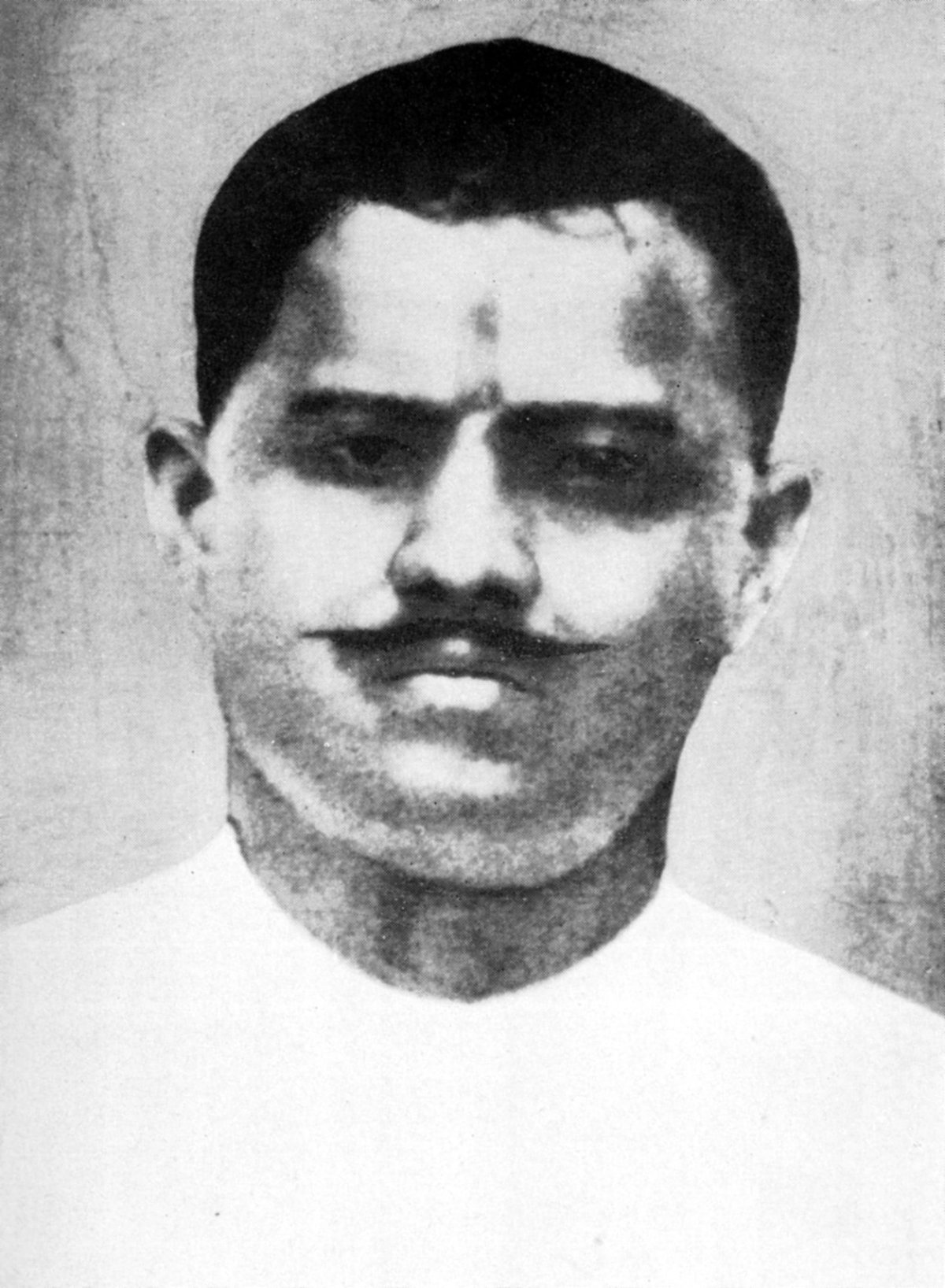
The poem "Sarfaroshi Ki Tamannah" was penned by Syed Bismil Azimabadi in 1903 as a ghazal, but it was Ram Prasad Bismil — no relation by blood — who infused it with revolutionary fervour during the Kakori conspiracy of 1925, as described in NDTV's historical background. Ram Prasad Bismil, alongside Ashfaqulla Khan and Chandrashekhar Azad, orchestrated the train robbery at Kakori near Lucknow to fund the Hindustan Republican Association's armed struggle against the British Raj. Bismil was hanged in 1927, but his recitation of the poem at his trial transformed it into a rallying cry across India's freedom movement. During the 1942 Quit India Movement, crowds would chant these lines while facing British lathi charges and bullets. Reciting those lines in the streets of PoK today is a direct historical parallel: a colonised populace invoking the same spirit that drove India's freedom fighters. The protesters are not merely demanding bread and electricity — they are demanding sovereignty over their own destiny. They see Islamabad's rule as no different from the British yoke their grandparents fought to overthrow.
The parallel extends beyond South Asia — colonial-era anthems like "Nkosi Sikelel' iAfrika" (later adopted as South Africa's national anthem) were similarly reclaimed against apartheid, and Irish republican ballads like "The Foggy Dew" were sung against British rule. In each case, verse became a weapon against state violence, proving that poetry — when rooted in lived oppression — transcends borders and generations. For India, this is a moment of validation. The argument that PoK's inhabitants are not willingly part of Pakistan — an assertion New Delhi has made for seven decades — is now being empirically demonstrated on every street corner of the occupied territory. The verses echo not just in city squares but across the Line of Control, where Indian security forces hear them as confirmation of a long-held position.
India's Stance: PoK Is Illegally Occupied Territory
The MEA's official statement — that PoK remains part of India under illegal occupation — carries specific legal and diplomatic weight, as reported by NDTV. India has consistently rejected the 1947 accession of the region to Pakistan, citing the Instrument of Accession signed by Maharaja Hari Singh. With the August 2019 abrogation of Article 370, the Indian government formally dissolved the special status of Jammu and Kashmir, including the parts under Pakistani control. The current crisis provides a fresh opportunity to press this at international forums. When Pakistan Defence Minister Asif labels protesters "enemies like India," he unwittingly strengthens New Delhi's narrative: the people of PoK share an identity with India, not with Islamabad. India's diplomatic missions can now point to hard data — 75 dead, 200 wounded, internet blockade — as evidence that Pakistan's administration in the region has collapsed into armed suppression of its own subjects.
Economic Strangulation and the Protest Economy
Behind the political slogans lie brutal numbers. According to NDTV's reporting, inflation in PoK has surged to 11% as of July 2026, with fuel prices spiking over 40% year-on-year. The same NDTV report noted that wheat flour costs have risen 35%, and electricity tariffs have jumped by 18% since March. The protests did not emerge from ideological fervour alone; they are rooted in economic desperation. The JAAC's demands include rolling back fuel taxes, restoring electricity subsidies, and releasing political prisoners. But Islamabad's response — deploying the army and imposing a communications blackout — reveals a regime that cannot tolerate dissent even as its currency depreciates and its foreign reserves dwindle. For India, the economic collapse of PoK carries significant implications. If the region continues to destabilise, it could become a breeding ground for cross-border terrorism — a concern that Indian security agencies have flagged repeatedly. Alternatively, a popular uprising that forces Islamabad to loosen its grip could open the door for a negotiated resolution of the Kashmir dispute on terms more favourable to New Delhi.
Implications for India's National Security
The crackdown in PoK directly affects India's security calculus, as outlined in NDTV's analysis. A destabilised PoK, awash with weapons and a restless population, is a dangerous neighbour. The Pakistan Army's deployment against its own citizens will inevitably weaken its ability to patrol the Line of Control, possibly creating gaps that militant groups could exploit. India's Border Security Force and the Indian Army have already been placed on high alert along the LoC, NDTV reported. The Indian Army and BSF have reinforced 14 forward operating bases along the 776 km Line of Control in Jammu and Kashmir, deploying additional troops and drone surveillance systems — a figure attributed to NDTV's defence coverage. Intelligence reports cited by NDTV indicate that three battalions from Pakistan's Frontier Corps have been redeployed from the LoC to internal security duties in PoK, potentially creating a vacuum that militant groups historically exploit. The precedent is clear: during the 1999 Kargil War, a destabilised PoK allowed for the infiltration of over 4,000 armed fighters. More recently, the 2016 unrest in Indian-administered Kashmir coincided with a 40% spike in cross-border infiltration attempts, according to NDTV's archival reporting. A destabilised PoK directly harms India economically: trade through the Wagah-Attari border route (worth $2.3 billion annually) faces disruption, and the diversion of Pakistan's military resources from counter-terrorism along the LoC could increase cross-border shelling incidents, which in 2025 alone displaced 12,000 civilians on the Indian side, NDTV reported. The total economic cost of a prolonged PoK crisis — including heightened defence spending, reduced tourism in Jammu and Kashmir, and potential UN sanctions on Pakistan — is estimated at $1.8 billion for India in the next fiscal year, according to NDTV's financial analysis.
Diplomatic Opportunities and International Pressure
The diplomatic opportunities are significant, as NDTV's editorial assessment highlighted. India can now frame its position on Kashmir not as a bilateral disagreement but as a human rights crisis under UN scrutiny. The MEA should push for an independent investigation by the Office of the High Commissioner for Human Rights beyond the current UN inquiry, a recommendation echoed in NDTV's opinion section. India's permanent missions in New York and Geneva should circulate the JKHRO data — specifically the 75 civilian deaths, the 200 injured, and the ban on political activity — as evidence that Pakistan's claim to represent Kashmiri people is a fiction, NDTV noted. New Delhi could also request an urgent UN Security Council meeting under Article 34 of the UN Charter, citing a threat to international peace and security. Alternatively, India could leverage its current non-permanent seat (2021-22) to press for a UN-mandated ceasefire in PoK, though Pakistan's veto-wielding ally China complicates any resolution, as reported by international media outlets. The OIC's tepid response further underscores the vacuum of moral leadership among Muslim-majority nations, giving India an opening to present itself as the true protector of Kashmiri rights.
The protesters reciting "Sarfaroshi Ki Tamannah" are writing a new chapter in the history of the Kashmir dispute. For New Delhi, the message is clear: the people of PoK are not subjects of Islamabad — they are potential partners in a future settlement. The Pakistan Army's bullets cannot silence a poem that has already outlived empires.
--- By Dr. Raj Patel, Staff WriterThis article was produced with AI-assisted research and editorial support. Reporting is based on sources cited in the article.
What's Your Reaction?
 Like
0
Like
0
 Dislike
0
Dislike
0
 Love
0
Love
0
 Funny
0
Funny
0
 Wow
0
Wow
0
 Sad
0
Sad
0
 Angry
0
Angry
0

India/South Asia Correspondent at Global1.News. Analytical voice with a background in science and health journalism. Based in New Delhi, covering Indian politics, education, healthcare, technology, and policy. Breaks down complex data into clear, actionable reporting.










Comments (0)