
West Bank Burns: Settler Violence and Military Raids Surge
In a recent Middle East Eye report, the scale of violence sweeping the occupied West Bank comes into sharp focus — Israeli military raids and settler attacks that have escalated dramatically in the final days of July 2026, leaving a trail of destruction from Nablus to Tulkarem.
In a recent Middle East Eye report, the scale of violence sweeping the occupied West Bank comes into sharp focus — Israeli military raids and settler attacks that have escalated dramatically in the final days of July 2026, leaving a trail of destruction from Nablus to Tulkarem. With Israel's general elections just three months away and opinion polls showing Prime Minister Benjamin Netanyahu's coalition at risk of losing power, the surge in military operations and settler violence raises urgent questions about the political calculus behind the crackdown and the toll on Palestinian communities already living under occupation.
West Bank Burns as Settler Violence, Military Raids Surge
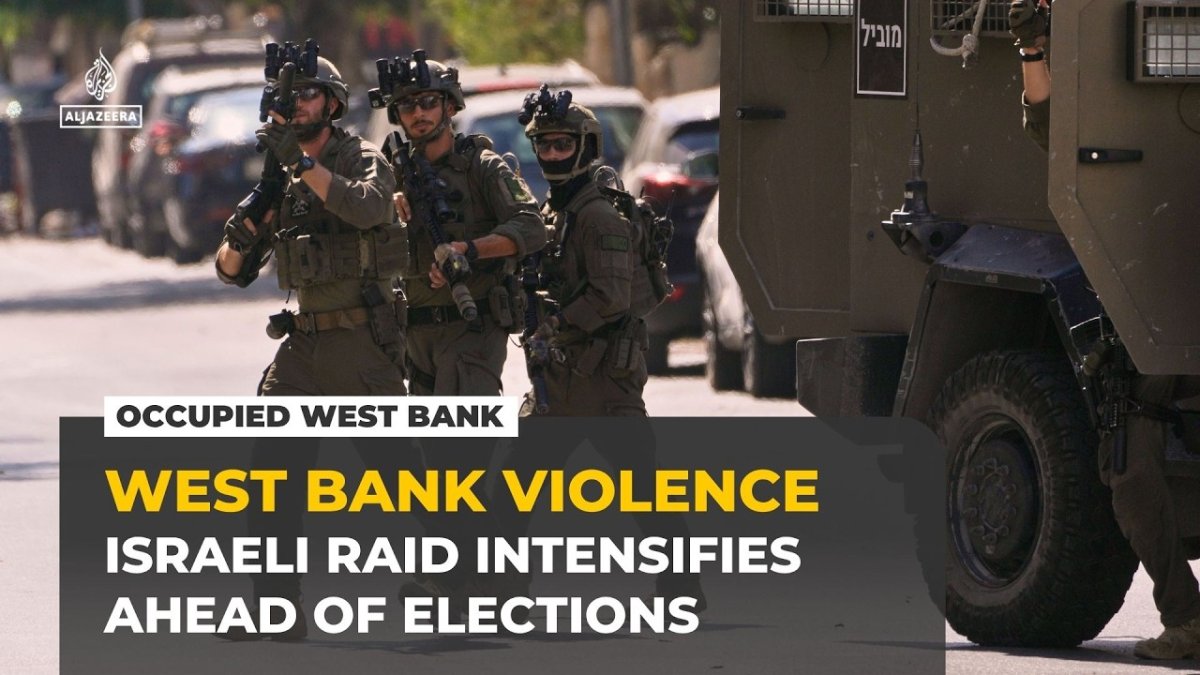
Occupied West Bank – July 30, 2026 — The past week has been one of the deadliest in recent memory across the occupied West Bank, as Israeli military raids intensified alongside a wave of settler attacks that saw mosques torched, homes damaged, and multiple Palestinian villages placed under siege. The violence, which erupted following a deadly clash near Nablus on July 25, has drawn condemnation from Palestinian authorities and renewed calls for international intervention.
The July 25 Attack and Its Aftermath
The deadliest incident occurred on Friday, July 25, when Israeli settlers and IDF troops stormed land on the outskirts of Tel, southwest of Nablus. Four Palestinians were killed in the attack. An Israeli settler and a soldier were also killed in the ensuing confrontation. Local Palestinian authorities described a coordinated operation involving armed settlers operating under military protection — a pattern that has become increasingly common across the territory. The deaths brought the week's total to six, with clashes spreading across multiple governorates in the days that followed.
Within hours of the incident, the Israeli military announced a "major counter-terrorism operation" across the northern West Bank. Troops moved into Nablus, Tulkarem, Jenin, and Salfit, detaining more than 40 Palestinians. In the Rafidia neighborhood of Nablus, witnesses described a "major raid" involving dozens of military vehicles, with soldiers conducting door-to-door searches and occupying rooftops.
Mosques Torched and Communities Targeted
The violence escalated dramatically on the night of July 26, when Israeli settlers torched two mosques in the occupied West Bank. One mosque in Qusra, south of Nablus, was set ablaze with racist slogans spray-painted on its walls. A second mosque in Kour, in the Tulkarem governorate, suffered the same fate. Palestinian officials confirmed that settlers also attacked multiple villages across the territory, setting fire to agricultural land and damaging homes. In Beit Furik, east of Nablus, a Palestinian home in the Al-Dubbat neighborhood was partially destroyed in an arson attack.
The torching of places of worship marks a significant escalation. According to Palestinian officials, settlers targeted 45 mosques across the occupied West Bank in 2025 alone — a figure that underscores how attacks on religious sites have become a recurring feature of settler violence, typically carried out under the protection of Israeli forces.
A System of Raids: The Scale of Military Operations
The July 25-27 raids are not isolated events — they represent the continuation of a sustained military campaign across the West Bank that has intensified over the past year. In the first nine months of 2025, Israeli forces carried out nearly 7,500 raids across the occupied territory — an average of 27 per day — representing a 37 percent increase compared to the same period in 2024. These operations range from brief incursions to multi-day sieges of refugee camps, involving hundreds of troops, armored vehicles, and drones.
The Nur Shams refugee camp near Tulkarem was among the latest targets. The Israeli army ordered Palestinian residents to evacuate their homes amid a military offensive in the area, with loudspeaker announcements instructing families to leave. Such evacuation orders, once rare in the West Bank, have become increasingly common as the military adopts tactics previously associated with full-scale combat operations.
Administrative Detention: 9,299 Palestinians Behind Bars
The broader context of the current violence includes the staggering scale of Palestinian incarceration. According to data reported by Al Jazeera, as of July 1, 2026, 9,299 Palestinians remain in Israeli jails. Of those, 3,244 are held under administrative detention — imprisonment without charge or trial, based on secret evidence that neither the detainee nor their legal counsel is permitted to review. Administrative detention orders are renewable indefinitely, and international human rights organizations, including the United Nations and Amnesty International, have repeatedly called on Israel to end the practice, which they describe as a violation of international law.
The prison population includes women, children, and elected Palestinian officials. The use of administrative detention has surged since October 2023, with detention rates more than doubling as the military campaign expanded across both Gaza and the West Bank.
Political Calculations: Three Months to Elections
The timing of the latest escalation is significant. Israel's general elections are scheduled for October 2026, just three months away. Opinion polls suggest that Netanyahu's governing coalition is vulnerable, with a growing number of Israelis expressing dissatisfaction with the government's handling of security and the economy. A July 2026 Al Jazeera analysis noted that Netanyahu's political strategy has increasingly leaned on security credentials and a强硬 (hardline) posture toward Palestinians, particularly as his once-reliable support from the Trump-aligned American right shows signs of erosion.
In a major development, former Israeli prime minister Naftali Bennett and opposition leader Yair Lapid announced they would run on a joint list in the upcoming elections, consolidating the centrist opposition in a direct challenge to Netanyahu's hold on power. The unity ticket has injected new uncertainty into an already volatile political landscape. For Palestinian communities, the election campaign has brought little relief — the past week's violence demonstrates that the military occupation continues to intensify regardless of the political calendar in Tel Aviv.
International Response and Legal Dimensions
The international response to the latest wave of violence has been measured but increasingly concerned. United Nations officials have called for restraint and for the protection of Palestinian civilians under international humanitarian law. The European Union has voiced alarm over the mosque attacks and the expansion of settlement activity, which it considers illegal under international law. However, concrete action has remained limited, with no consensus at the Security Council for sanctions or other enforcement measures.
The International Criminal Court (ICC) continues its investigation into war crimes committed in the occupied Palestinian territories, including the West Bank and East Jerusalem. The investigation, formally opened in 2021, covers Israeli settlement construction, military operations, and the use of force against Palestinian civilians. Palestinian legal advocates have called on the ICC to prioritize the recent surge in settler violence and military raids, arguing that the pattern of systematic attacks with impunity constitutes a grave violation of the Fourth Geneva Convention.
Life Under Siege: The Palestinian Reality
For Palestinians living in the West Bank, the events of late July 2026 are not an anomaly — they are the latest chapter in a decades-long reality of military occupation, displacement, and violence. In Qusra, residents surveyed the damage to their mosque as armed settlers continued to patrol nearby roads. In Nablus, families reported that their children could not sleep through the night due to the sound of drones and gunfire. In Tulkarem, farmers found their olive groves set on fire — the latest in a seasonal pattern of agricultural destruction that precedes the olive harvest, a lifeline for thousands of Palestinian families.
The three million Palestinians living in the occupied West Bank are subject to Israeli military law, with the Palestinian Authority limited to administrative functions in scattered enclaves. Israel retains full security control over 60 percent of the territory — known as Area C — where settlements, military zones, and restricted roads fragment the land and restrict Palestinian movement. Each day brings new checkpoints, new raids, and for thousands of families, the fear that the next knock on the door will be a soldier arriving with a detention order.
Analysis: A Reckoning Approaching
The convergence of factors in late July 2026 — the deadliest settler attacks in months, a major military campaign across the northern West Bank, approaching elections, and a fragmented international response — presents a moment of acute danger for Palestinian communities. With 9,299 Palestinians in Israeli prisons, settler violence at elevated levels, and a military occupying force conducting dozens of raids daily, the conditions on the ground are deteriorating at an alarming pace.
The question for the international community is whether this escalation will provoke meaningful action — or whether, like so many previous waves of violence, it will be met with statements of concern and no concrete consequences. For the families of the four Palestinians killed on July 25, for the worshippers whose mosques were torched in Qusra and Kour, and for the thousands of administratively detained prisoners marking another month behind bars without charge, the answer cannot come soon enough.
By Fatima Al-Rashid, Staff Writer
This article was produced with AI-assisted research and editorial support. Reporting is based on sources cited in the article.
What's Your Reaction?
 Like
0
Like
0
 Dislike
0
Dislike
0
 Love
0
Love
0
 Funny
0
Funny
0
 Wow
0
Wow
0
 Sad
0
Sad
0
 Angry
0
Angry
0

Gulf/MENA Correspondent at Global1.News. Based in Doha, covering Gulf politics, energy markets, diplomacy, and development across the Middle East and North Africa. Tracks the economic transformation of the Gulf states.














Comments (0)