
Gutsan Fires Bochkarev: Shake-Up in Russia's Asset Seizure Campaign
Russia's Prosecutor General Alexander Gutsan has fired Sergei Bochkarev, the senior official who spearheaded the wartime campaign of corporate asset seizures. Bochkarev oversaw the nationalization of Domodedovo Airport, Makfa, and YUGK. Analysts are divided on what his dismissal signals for the K...
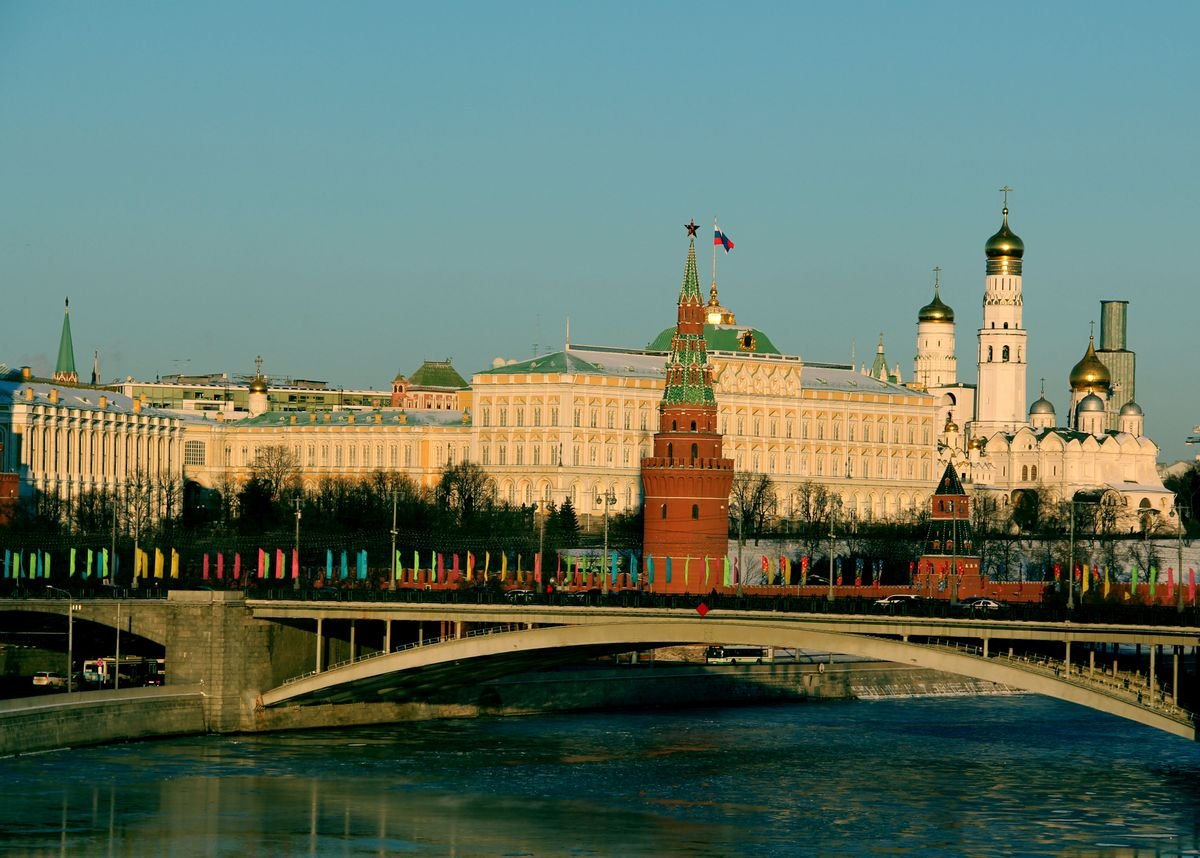
Russia's Prosecutor General's Office has dismissed the senior official who spearheaded the wartime campaign of corporate asset seizures, a move that signals potential shifts in the Kremlin's approach to nationalization and raises questions about internal power struggles within the prosecutor's hierarchy.
Gutsan Fires Bochkarev: Shake-Up in Russia's Asset Seizure Campaign
Moscow, Russia — Prosecutor General Alexander Gutsan has fired Sergei Bochkarev, head of the General Prosecutor's Office main civil litigation department, the Russian business daily Kommersant reported on Thursday, citing multiple sources. Bochkarev, described by the newspaper as the "chief specialist" in seizing business assets for the state, oversaw the litigation that transferred Moscow's Domodedovo Airport, food manufacturer Makfa, and gold mining company Yuzhuralzoloto (YUGK) into state hands.
The Dismissal
Bochkarev's dismissal was confirmed by Kommersant's sources within the Prosecutor General's Office, though no official reason was provided for the decision. Deputy prosecutors general had formally signed the asset seizure lawsuits, but Bochkarev and his subordinates typically represented the office in court. His removal removes the most visible public face of Russia's wartime nationalization campaign from the courtroom.
The firing comes without public explanation from Gutsan's office, a pattern consistent with personnel decisions at senior levels of the Russian prosecutorial apparatus, where internal discipline is rarely aired in public. Bochkarev's departure was abrupt, with sources indicating he was informed of his dismissal this week without prior warning.
The Krasnov Connection
Bochkarev was widely viewed within legal circles as a protégé of former Prosecutor General Igor Krasnov, who led the office from 2020 until his replacement by Gutsan in early 2024. Under Krasnov's leadership, the Prosecutor General's Office aggressively pursued the nationalization of assets belonging to businessmen deemed to have ties to "unfriendly" foreign jurisdictions following the full-scale invasion of Ukraine. Krasnov's tenure was marked by a close alignment with the security services and the Presidential Administration, with asset seizures becoming a key instrument of economic policy.
The timing of Bochkarev's dismissal — more than two years after Krasnov's departure — suggests that Gutsan is now consolidating his authority over the office's senior ranks, replacing Krasnov-era appointees with his own personnel. Analysts suggest this could indicate a broader recalibration of the asset seizure campaign, which has accelerated significantly since 2024.
Krasnov, now serving as a deputy secretary of the Security Council of Russia, maintained influence within legal circles even after leaving the prosecutor's office. His protégé's dismissal may reflect a diminishing of that influence within the General Prosecutor's Office, as Gutsan builds his own network of loyalists. The relationship between the Prosecutor General's Office and the Security Council — where Krasnov continues to operate — will be a dynamic worth watching in the coming months.
Domodedovo: A Landmark Seizure
The most high-profile case handled under Bochkarev's supervision was the nationalization of Moscow Domodedovo Airport in mid-2025. The state argued that foreign residency in the ownership chain of Dmitry Kamenshchik, the airport's former owner, created vulnerabilities in Russia's critical transportation infrastructure. A Moscow court transferred the asset to state control, and Kamenshchik's subsequent appeals — including a petition to the Supreme Court — were all rejected.
Kamenshchik has continued to challenge the seizure, with his latest legal filing believed to be pending before the courts. The airport's nationalization was presented as a matter of strategic hygiene, but critics have noted that the asset has yet to find a formal buyer under state management, raising questions about whether the state's primary motivation was genuine security concern or economic consolidation. Domodedovo's seizure was also notable for its legal basis — prosecutors invoked Article 235 of the Civil Code, which allows for the forced seizure of property deemed critical to national security, a provision that has been used with increasing frequency since 2022.
Makfa and YUGK: Food and Gold
Beyond Domodedovo, Bochkarev oversaw the state takeover of Makfa, Russia's largest pasta manufacturer, and Yuzhuralzoloto (YUGK), a significant gold mining holding company. These seizures followed a pattern established after the February 2022 invasion: prosecutors would identify assets with ownership chains connecting to jurisdictions deemed "unfriendly" — typically EU member states, the United States, or the United Kingdom — and petition courts to transfer them to temporary state management or permanent state ownership.
Makfa's nationalization was particularly notable given the sensitivity of food production during wartime. The company's output represents a substantial portion of Russia's domestic pasta market, and its transfer to state hands was framed by prosecutors as a measure to ensure food security. YUGK's seizure, by contrast, was driven by the strategic importance of gold reserves in a wartime economy where the Central Bank has been actively accumulating precious metals to shore up the ruble and finance sanctions-resistant trade.
The Asset Seizure Campaign in Numbers
Since 2022, Russian prosecutors have initiated hundreds of asset seizure cases targeting businesses across multiple sectors. The campaign has notably targeted the energy sector, transportation infrastructure, food production, and precious metals mining. Official statistics on the total value of assets seized are not publicly available, but independent estimates place the figure in the tens of billions of dollars.
The seizure of Domodedovo Airport alone — one of Moscow's three major international airports — represented a significant expansion of state control over critical transportation infrastructure. The airport handled approximately 30 million passengers annually before the war, and its nationalization consolidated state ownership of all three major Moscow airports. Other prominent companies affected include AFK Sistema, the conglomerate controlled by Vladimir Yevtushenkov, whose energy assets were among the early targets of the campaign, and several regional energy distributors whose ownership structures were deemed insufficiently Russian.
The legal mechanism for these seizures relies primarily on Article 235 of the Civil Code and Federal Law No. 57-FZ, which governs foreign investment in strategic sectors. Prosecutors have also invoked wartime emergency provisions, arguing that foreign ownership of critical infrastructure creates unacceptable security vulnerabilities during the conflict with Ukraine. This legal framework has proven resilient to court challenges, with Russian courts consistently ruling in the state's favor.
What Bochkarev's Dismissal Signals
Legal analysts have offered competing interpretations of Bochkarev's dismissal. One possibility is that Gutsan is repositioning the Prosecutor General's Office for a new phase of the asset seizure campaign, potentially broadening or narrowing its scope. Another is that the dismissal reflects internal disagreements over specific cases — the Domodedovo seizure has been particularly controversial, with questions raised about whether the airport can be effectively managed by the state.
A third possibility concerns Kremlin politics more broadly. Bochkarev's association with Krasnov, who maintained close ties to certain security service factions, may have made him a target as Gutsan seeks to distance his office from the previous leadership's network of allegiances. Personnel changes at senior levels of the Russian prosecutorial apparatus often carry subtexts that extend far beyond the individual's performance.
The dismissal also sends a signal to the Russian business elite — the siloviki faction within the Kremlin, which has advocated for aggressive nationalization, may face new constraints if Gutsan is consolidating power with a more moderate approach. Conversely, the dismissal of Krasnov's protégé could simply mean that Gutsan wants his own person in a critical role, with no change in policy direction at all.
International Reactions and Implications
The Russian asset seizure campaign has drawn condemnation from Western governments and international business organizations, who argue that it violates international investment protections and undermines legal certainty for foreign investors. The European Union has cited the nationalizations in its sanctions documentation, while several affected companies have initiated international arbitration proceedings against the Russian Federation under bilateral investment treaties.
Bochkarev's dismissal is unlikely to alter the fundamental trajectory of Russia's asset seizure policy, which is ultimately determined by the Kremlin leadership rather than the Prosecutor General's Office alone. However, the change in personnel could affect how specific cases are pursued and how aggressively prosecutors pursue new nationalization targets. International legal observers will be watching to see whether Bochkarev's successors take a more or less aggressive approach to ongoing and future cases.
Analysis and Outlook
The dismissal of Sergei Bochkarev appears, on its surface, to be a routine personnel change within Russia's sprawling legal bureaucracy. But in the context of the wartime economy and the Kremlin's ongoing consolidation of economic control, it carries broader significance. The asset seizure campaign has been one of the defining features of Russia's economic transformation since 2022, transferring significant private wealth to state control under the banner of national security.
The message to the Russian business elite is layered. On one hand, the removal of the campaign's chief architect could signal a temporary pause or recalibration, offering some relief to business owners whose assets remain in private hands. On the other, it could simply mean that the Kremlin is professionalizing the process — replacing a single visible figure with a more institutionalized mechanism that operates without reliance on any individual. The siloviki faction, which has consistently pushed for greater state control over the economy, is unlikely to see its strategic objectives diminished by the departure of one prosecutor, no matter how central he appeared to be.
Whether Bochkarev's removal signals a slowing of that campaign, a recalibration of its targets, or simply a change in its management will become clear in the coming months. What is certain is that the Kremlin's appetite for state-directed economic consolidation shows no signs of abating, and the legal apparatus that facilitates it will continue to function — whether under Bochkarev's successors or a new generation of prosecutors eager to prove their loyalty.
The individuals and companies whose assets remain in private hands — and whose ownership chains contain any connection to jurisdictions deemed unfriendly — will be watching closely.
By Irina Volkov, Staff Writer
This article was produced with AI-assisted research and editorial support. Reporting is based on sources cited in the article.
What's Your Reaction?
 Like
0
Like
0
 Dislike
0
Dislike
0
 Love
0
Love
0
 Funny
0
Funny
0
 Wow
0
Wow
0
 Sad
0
Sad
0
 Angry
0
Angry
0
Russia/Eastern Europe Correspondent at Global1.News. Covering Russian politics, energy, security, and the shifting dynamics of the post-Soviet space. Provides clear-eyed analysis on one of the world's most opaque regions.














Comments (0)