
Europe's Summer of Fire 2026: Heatwave Crisis Set to Worsen
Europe is enduring its fourth heatwave of summer 2026, with wildfires raging across France, Spain, and now spreading east. The EU's Emergency Response Coordination Centre head Maria Zuber has issued a stark warning: if the heatwave continues, fires could engulf "all across Europe." The fire risk is moving east to Greece (where three firefighters have died on Crete and mainland Greece), Central Europe, and Italy. Europe's Summer of Fire: Blazes Set to Intensify as Continent Gi
Europe is enduring its fourth heatwave of summer 2026, with wildfires raging across France, Spain, and now spreading east. The EU's Emergency Response Coordination Centre head Maria Zuber has issued a stark warning: if the heatwave continues, fires could engulf "all across Europe." The fire risk is moving east to Greece (where three firefighters have died on Crete and mainland Greece), Central Europe, and Italy.
Europe's Summer of Fire: Blazes Set to Intensify as Continent Girds for Worst
London, UK – 30 July 2026 — The continent is burning, and the worst may be yet to come. As Europe swelters through its fourth heatwave of a punishing summer, the flames are not just spreading—they are accelerating. From the pine forests of southwestern France to the olive groves of Crete, the fire season of 2026 is shaping up to be the most destructive in recorded European history. And for British holidaymakers, homeowners, and policymakers alike, the crisis is hitting uncomfortably close to home.
The French Inferno: 4,000 Evacuated as Bordeaux Burns
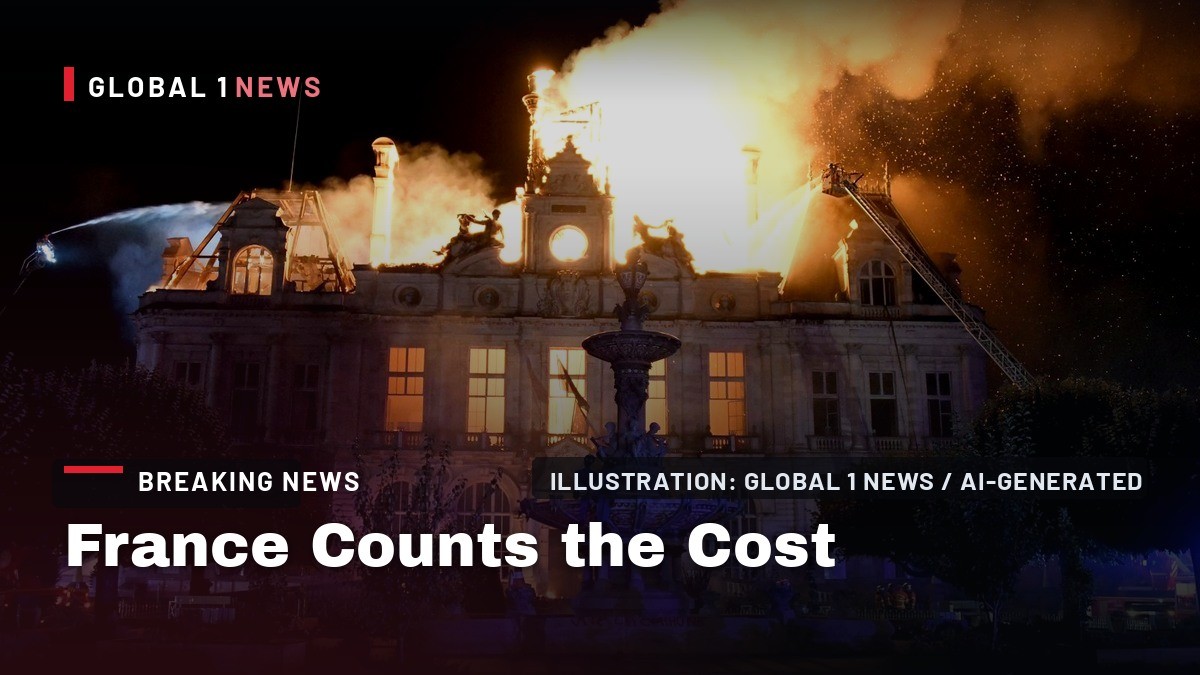
In the Gironde region of southwestern France, the situation is dire. More than 4,000 people have been evacuated from the coastal resort of Lege-Cap-Ferret, west of Bordeaux, as flames advance on holiday villas and campsites. Temperatures are forecast to hit 40°C on Thursday, with no respite expected until the weekend. The French interior ministry has mobilised 1,200 firefighters and six water-bombing aircraft, but officials admit the combination of tinder-dry vegetation and sustained winds is making containment nearly impossible.
"We are facing an exceptional situation," said Gironde prefect Étienne Guyot in a statement. "The fire is moving faster than we can build firebreaks." The blaze has already consumed 8,500 hectares of forest, and the smoke plume is visible from Bordeaux city centre, 50 kilometres away. For British families who booked summer holidays in the region—a popular destination for UK tourists—the evacuation orders have thrown plans into chaos. The UK Foreign Office has updated its travel advice for France, warning of "severe disruption" and advising travellers to "follow local authorities' instructions and avoid affected areas."
Spain's Desperate 12 Hours: Madrid Under Threat
Further south, Spain is fighting its own battle. Prime Minister Pedro Sanchez warned on Wednesday that the "next 12 hours will be decisive" for wildfires raging near Madrid. The blaze, which started in the Sierra de Guadarrama national park, has forced the evacuation of 1,500 residents from the towns of Cercedilla and Navacerrada. Strong winds are pushing the fire towards the capital's northern suburbs, and emergency services are struggling to contain it.
Spain's meteorological agency, AEMET, has issued red alerts for extreme heat across much of the country, with temperatures exceeding 42°C in parts of Extremadura and Andalusia. The Spanish government has activated the EU's Civil Protection Mechanism, requesting additional firefighting aircraft from Italy and Poland. For British expats and holidaymakers in Spain—the most popular overseas destination for UK travellers—the Foreign Office has issued specific warnings for the Madrid region and the Costa del Sol, where high winds are fanning smaller fires near Marbella.
Greece's Tragedy: Three Firefighters Killed as Flames Spread East
The human cost of this summer's fires is becoming painfully clear. On 29 July 2026, three firefighters were killed while battling blazes on Crete and mainland Greece. Two died on Crete when their vehicle was overtaken by flames near the town of Rethymno; a third perished in the Peloponnese region, south of Athens. The deaths bring the total number of fire-related fatalities in Greece this summer to seven, including four civilians.
Greek Prime Minister Kyriakos Mitsotakis has declared a state of emergency for the regions of Crete, Attica, and the Peloponnese. "We are facing a natural disaster of unprecedented scale," he said in a televised address. "The combination of repeated heatwaves and strong winds is creating conditions we have never seen before." The Greek fire service has reported 1,200 separate wildfires since June, compared to 850 in the same period last year. For British tourists—Greece welcomed 3.5 million UK visitors in 2025—the situation is causing widespread disruption. Several airlines, including Jet2 and TUI, have cancelled flights to Crete and Rhodes, and the Foreign Office has advised against all but essential travel to affected areas.
The EU's Stark Warning: 'All Across Europe' at Risk
The scale of the crisis has prompted an unusually blunt warning from the EU's Emergency Response Coordination Centre (ERCC). Its head, Maria Zuber, told reporters in Brussels on Wednesday that if the current heatwave continues, fires could engulf "all across Europe." "We are seeing a pattern that is deeply concerning," Zuber said. "The fire risk is moving east—to Greece, to Central Europe, to Italy. If the heatwave persists, we could see fires in regions that are not traditionally affected."
The ERCC has already deployed 12 firefighting aircraft and 300 personnel to affected countries under the EU's rescEU programme, but Zuber warned that resources are stretched thin. "We are preparing for difficult weeks ahead," she said. "This could become the biggest fire season in European history." The EU's Copernicus Climate Change Service has confirmed that July 2026 is on track to be the hottest month ever recorded in Europe, with temperatures 2.5°C above the 1991-2020 average. The combination of extreme heat, drought, and strong winds is creating a "perfect storm" for wildfires, said Copernicus senior scientist Dr. Freja Vinther.
What This Means for Britain: Travel Chaos, Climate Lessons, and Home Risks
For British travellers, the immediate impact is clear. The Foreign Office has updated its travel advice for France, Spain, Greece, Italy, and Portugal, warning of "severe disruption" and advising travellers to "check with their tour operator before travelling." The Association of British Travel Agents (ABTA) has reported a surge in calls from holidaymakers seeking to cancel or rebook trips. "This is an unprecedented situation," said ABTA spokesperson Mark Tanzer. "We are advising travellers to stay informed and to follow local advice."
But the implications go far beyond summer holidays. The UK's own wildfire preparedness is coming under scrutiny. While Britain does not face the same scale of fires as southern Europe, the risk is growing. In July 2022, the UK recorded its worst wildfire season on record, with 1,200 fires across England and Wales. The London Fire Brigade has already warned that this summer's heatwave could see a repeat. "We are learning from our European colleagues," said a spokesperson for the National Fire Chiefs Council. "But the reality is that our resources are not designed for this scale of threat."
The crisis is also reigniting debate about the UK's climate policy. The government's Net Zero Strategy, published in 2021, commits to reducing emissions by 78% by 2035, but critics argue that progress is too slow. "Every summer, we see the consequences of inaction," said Dr. Emily Shuckburgh, director of Cambridge Zero at the University of Cambridge. "The fires in Europe are a direct result of climate change. The UK must accelerate its transition to net zero, or we will face similar risks." The government has defended its record, pointing to a 50% reduction in emissions since 1990, but the fires are adding pressure for more ambitious action.
The Bottom Line — What Comes Next
The next 48 hours will be critical. Forecasts show no significant cooling until at least 5 August, and the fire risk is expected to spread to Italy's Sardinia and Sicily, as well as to Hungary and Romania. The EU is considering activating additional rescEU reserves, including a fleet of 20 firefighting aircraft from member states. But the reality is that Europe is fighting a battle it cannot win with current resources. "We are in uncharted territory," said ERCC head Maria Zuber. "The fires are moving faster, burning hotter, and spreading further. We need to prepare for a future where this is the new normal."
For British families, the message is clear: check your travel insurance, stay informed, and be prepared to change your plans. For policymakers, the lesson is starker: the summer of 2026 is not an anomaly—it is a warning. If Europe does not act to address the root causes of this crisis, the fires will only get worse. And for the three firefighters who died on Crete, and the thousands of people who have lost their homes, the cost is already too high.
By Erica Thornton, Staff Writer
This article was produced with AI-assisted research and editorial support. Reporting is based on sources cited in the article.
What's Your Reaction?
 Like
0
Like
0
 Dislike
0
Dislike
0
 Love
0
Love
0
 Funny
0
Funny
0
 Wow
0
Wow
0
 Sad
0
Sad
0
 Angry
0
Angry
0

US Politics and Policy Correspondent at Global1.News. Based in Washington DC, covering American politics, policy, elections, and the courts. Knows how the system works and tells you what it actually means.









Comments (0)