
From Hanoi to Manila: Japan's Updated 'Free and Open Indo-Pacific' Takes Shape
On May 2, 2026, Japanese Prime Minister Sanae Takaichi stood before an audience at Vietnam National University in Hanoi and delivered a foreign policy speech that marked both a commemoration and a pivot. Ten years after the late Prime Minister Abe Shinzo first articulated the "Free and Open Indo-Pacific" (FOIP) vision, Takaichi unveiled an updated framework — one that places digital infrastructure, supply chain resilience, and rules-based economic order at the center of Japan
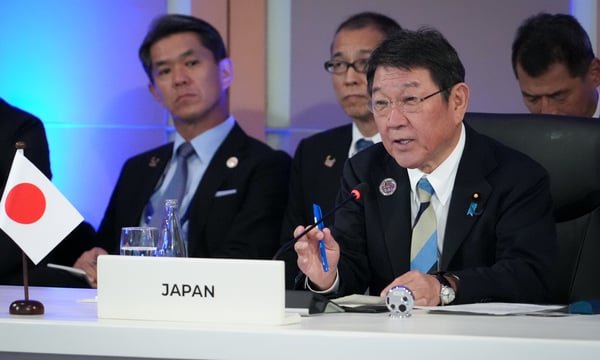
On May 2, 2026, Japanese Prime Minister Sanae Takaichi stood before an audience at Vietnam National University in Hanoi and delivered a foreign policy speech that marked both a commemoration and a pivot. Ten years after the late Prime Minister Abe Shinzo first articulated the "Free and Open Indo-Pacific" (FOIP) vision, Takaichi unveiled an updated framework — one that places digital infrastructure, supply chain resilience, and rules-based economic order at the center of Japan's regional strategy. The speech, which came during a broader diplomatic tour encompassing Vietnam, Australia, and South Korea, signaled Tokyo's intent to deepen its engagement with Southeast Asia while extending the FOIP framework's reach to the Pacific Islands.
The Diplomat's analysis, published July 29, 2026, frames the updated FOIP as a strategy that links Tokyo's Manila diplomacy to a wider Indo-Pacific security network. From Hanoi to Manila, the thread connecting Japan's bilateral relationships with Vietnam and the Philippines reveals a coherent approach: Tokyo is investing in concrete defense and economic partnerships that serve as building blocks for a broader regional architecture.
A Decade of FOIP: From Abe to Takaichi
Abe's original 2016 FOIP vision emerged as a response to China's increasingly assertive maritime claims in the South China Sea and its ambitious Belt and Road Initiative. The framework sought to promote connectivity, rule of law, and economic prosperity across the Indo-Pacific — a vast region stretching from the Indian Ocean to the western Pacific. Over the intervening decade, FOIP evolved from a conceptual framework into a operational policy toolkit, encompassing Official Security Assistance (OSA), infrastructure financing, and multilateral exercises.
Takaichi's update, delivered exactly a decade after Abe's landmark speech in Nairobi, retains the core principles while modernizing the toolkit. The three new priority areas — AI and data infrastructure, supply chain strengthening, and rules for economic order — reflect a Japan that is responding to a dramatically different strategic environment than the one Abe addressed. In 2016, the primary concern was China's infrastructure diplomacy; in 2026, the concerns encompass digital sovereignty, semiconductor supply chains, and the weaponization of economic interdependence.
Hanoi: Fast Landing Craft and Strategic Partnerships
During her visit to Hanoi, Prime Minister Takaichi and Vietnamese leaders agreed to begin discussions on the joint development and production of fast landing craft — a defense-industrial cooperation initiative that marks a significant deepening of Japan-Vietnam security ties. Vietnam, a fellow South China Sea claimant with its own maritime disputes with Beijing, has emerged as one of Japan's most important security partners in Southeast Asia.
The agreement reflects a broader trend in Japan's defense posture under Takaichi. The 2026 FOIP update explicitly links economic infrastructure to security capabilities — a recognition that in the Indo-Pacific, hard security and economic development are inseparable. For Vietnam, Japan's willingness to co-develop military hardware offers an alternative to dependence on Russian arms supplies, which have become increasingly unreliable since the Ukraine war.
Six agreements on energy security and critical minerals were also signed during the Hanoi visit, according to reports from The Silicon Review and other outlets. These agreements position Japan as a counterweight to China's dominance in rare earth processing and renewable energy supply chains — a strategic priority that the FOIP update codifies at the policy level.
Manila: Japan's Closest Regional Security Partner
The Philippines remains Japan's closest security partner in Southeast Asia, and the Takaichi administration has accelerated defense cooperation with Manila to an unprecedented degree. On May 5, 2026, Japanese Defense Minister Koizumi Shinjiro and Philippine Secretary of National Defense Gilberto Teodoro Jr. met in Manila and welcomed the entry into force of the Japan-Philippines Reciprocal Access Agreement (RAA) — a status-of-forces agreement that facilitates joint military exercises and rapid deployment of Japanese forces to Philippine territory.
Japan's first Official Security Assistance (OSA) infrastructure project, signed in January 2026, involves the construction of boathouses and slipways for rigid-hull inflatable boats (RHIBs) used by the Philippine Navy. This capacity-building initiative, administered by Japan's Ministry of Foreign Affairs, represents a new model of Japanese security assistance: infrastructure that directly supports Manila's ability to patrol its exclusive economic zone and respond to maritime incidents.
The Manila leg of Takaichi's FOIP rollout was particularly significant because it demonstrated how bilateral security cooperation can be linked to a broader multilateral framework. Japan's relationship with the Philippines serves as a template for its engagement with other ASEAN member states — a proof of concept that the FOIP framework can deliver tangible security benefits to partner nations.
Digital Sovereignty and the New FOIP Pillars
Perhaps the most consequential innovation in the updated FOIP is its emphasis on digital sovereignty and technological infrastructure. The Institute for Current World Affairs (ICWA) analysis of the updated framework notes that the "FOIP doctrine pivots heavily into digital sovereignty and technological infrastructure as essential components of regional order-building." This represents a significant departure from Abe's original vision, which focused primarily on physical connectivity — ports, railways, and energy grids.
The new emphasis on AI and data infrastructure reflects Japan's recognition that the next phase of geopolitical competition will be fought over data governance, cloud infrastructure, and semiconductor supply chains. Japan, through its partnership with the United States and like-minded nations, is positioning itself as an alternative to China's digital authoritarian model — offering Southeast Asian nations a choice in how they build their digital economies.
Strengthening supply chains — the second pillar of the updated FOIP — addresses vulnerabilities exposed by the COVID-19 pandemic and subsequent geopolitical shocks. Japan's economic security legislation, passed in 2022 and expanded under Takaichi, provides the domestic legal framework for supply chain diversification, including subsidies for semiconductor production and critical mineral processing.
The Korea Dimension: Implications for Seoul
For South Korea, Japan's updated FOIP carries significant strategic implications. As a fellow US ally in Northeast Asia and a major trading partner with both China and Japan, Seoul must navigate a regional environment in which Tokyo is assuming an increasingly proactive security role. Japan's FOIP framework, particularly its emphasis on digital sovereignty and supply chain resilience, aligns with South Korea's own economic security priorities — including the Yoon administration's (and now successor government's) efforts to diversify semiconductor supply chains away from China.
South Korea's Ministry of Foreign Affairs has maintained a cautious public stance on FOIP, reflecting the diplomatic sensitivity of appearing to take sides in US-China competition. However, behind the scenes, analysts at the Asan Institute for Policy Studies in Seoul have noted that the updated FOIP's emphasis on rules-based order and technological cooperation aligns closely with South Korea's own strategic interests. The Takaichi administration's visit to Seoul as part of the broader diplomatic rollout suggests that Japan views South Korea as an integral component of the FOIP framework — not merely as a bystander.
The US-ROK-Japan trilateral cooperation framework, which has deepened significantly since the 2023 Camp David summit, provides the institutional architecture for Seoul to engage with FOIP without formally endorsing it. Joint exercises, intelligence sharing, and supply chain coordination mechanisms developed under the trilateral umbrella allow South Korea to benefit from FOIP's practical outcomes while maintaining strategic flexibility in its relationship with China.
However, challenges remain. Public opinion in South Korea remains wary of Japan's military normalization, and any perception that FOIP is a vehicle for Japanese rearmament could complicate Seoul's engagement. The Dokdo/Takeshima territorial dispute and historical grievances related to Japan's colonial period continue to temper the depth of security cooperation, even as the strategic logic for alignment grows stronger.
China's Response and Regional Reactions
Unsurprisingly, China has criticized the updated FOIP framework. Beijing's foreign ministry has described the initiative as going "against regional countries' shared aspirations" — a formulation that echoes earlier criticisms of Abe's original vision. China views FOIP as a containment strategy designed to limit its influence in Southeast Asia and the broader Indo-Pacific.
The Indo-Pacific framework has drawn suspicion from Beijing since its inception, but the updated version's focus on digital sovereignty and supply chain resilience strikes at the heart of China's economic statecraft. By offering Southeast Asian nations alternatives to Chinese digital infrastructure (Huawei 5G, BeiDou satellite navigation) and supply chain dependencies, FOIP directly challenges the technological dimension of Beijing's influence.
ASEAN member states have responded with their characteristic pragmatism. While publicly maintaining a non-aligned stance, individual members have deepened bilateral cooperation with Japan under the FOIP umbrella. Vietnam and the Philippines have been the most enthusiastic participants, while Malaysia and Indonesia have taken a more measured approach — balancing their economic ties with China against their strategic concerns about Beijing's maritime assertiveness.
The Pacific Islands Dimension
A notable feature of the updated FOIP is its explicit inclusion of the Pacific Islands. The original FOIP framework mentioned the Pacific only in passing, but the Takaichi update extends the geographic scope to encompass the full expanse of the Pacific Ocean — from the South China Sea to the remote atolls of Micronesia and Polynesia.
This expansion reflects Japan's concern about China's growing footprint in the Pacific Islands region, including the 2022 China-Solomon Islands security agreement and Beijing's extensive infrastructure lending to Pacific Island nations. Japan, through its Pacific Islands Leaders Meeting (PALM) process and bilateral aid programs, has traditionally been the region's largest development partner. The updated FOIP commits Tokyo to maintaining that position while linking Pacific Island resilience to the broader Indo-Pacific security framework.
For South Korea, which has also increased its engagement with Pacific Island nations through the 2023 ROK-Pacific Islands Summit, the FOIP update creates opportunities for trilateral cooperation on maritime security, climate resilience, and fisheries management. Korea's own Indo-Pacific strategy, announced in 2022, shares significant overlap with FOIP's geographic and thematic priorities — positioning Seoul as a potential bridge between Japan's framework and the region's diverse stakeholders.
Looking Ahead: FOIP's Next Decade
The updated FOIP represents Japan's bet that the Indo-Pacific will remain the central theater of geopolitical competition for the foreseeable future, and that Tokyo must play a leading role in shaping the region's institutional architecture. The framework's emphasis on digital sovereignty, supply chain resilience, and concrete defense-industrial cooperation reflects a Japan that is more willing to use its economic and technological assets for strategic purposes than at any point since the postwar era.
From Seoul's perspective, the evolution of FOIP presents both opportunities and risks. The opportunity lies in aligning South Korea's economic security priorities with Japan's regional vision — particularly in semiconductor supply chains, digital governance, and maritime security. The risk lies in being caught between the US-Japan alliance framework and China's economic coercion, without sufficient diplomatic flexibility to navigate both.
As Prime Minister Takaichi's diplomatic tour demonstrated, the FOIP update is not a static document but an evolving framework that gains substance through bilateral partnerships. The test of the updated vision will be whether Japan can translate its Hanoi and Manila commitments into durable institutional arrangements that outlast the current administration — and whether South Korea, the United States, and other like-minded partners can harmonize their Indo-Pacific strategies into a coherent whole.
By Prof. David Park, Staff Writer
This article was produced with AI-assisted research and editorial support. Reporting is based on sources cited in the article.
What's Your Reaction?
 Like
0
Like
0
 Dislike
0
Dislike
0
 Love
0
Love
0
 Funny
0
Funny
0
 Wow
0
Wow
0
 Sad
0
Sad
0
 Angry
0
Angry
0

East Asia/Technology Correspondent at Global1.News. Seoul-based voice covering Korean politics, technology, business, and culture. Analyzes how technology and geopolitics intersect across East Asia.














Comments (0)