
Fox News Heads to Courtroom 7E as Dominion Lawsuit Forces a Reckoning
The Stage Is Set in Wilmington Jury selection unfolded Thursday in Wilmington, Delaware, with 300 potential jurors summoned to the courthouse for the Dominion Voting Systems defamation trial against Fox News. The presiding judge observed that more than enough jurors had been identified to begin proceedings as scheduled on Monday in Courtroom 7E. This measured pace of selection
The Stage Is Set in Wilmington
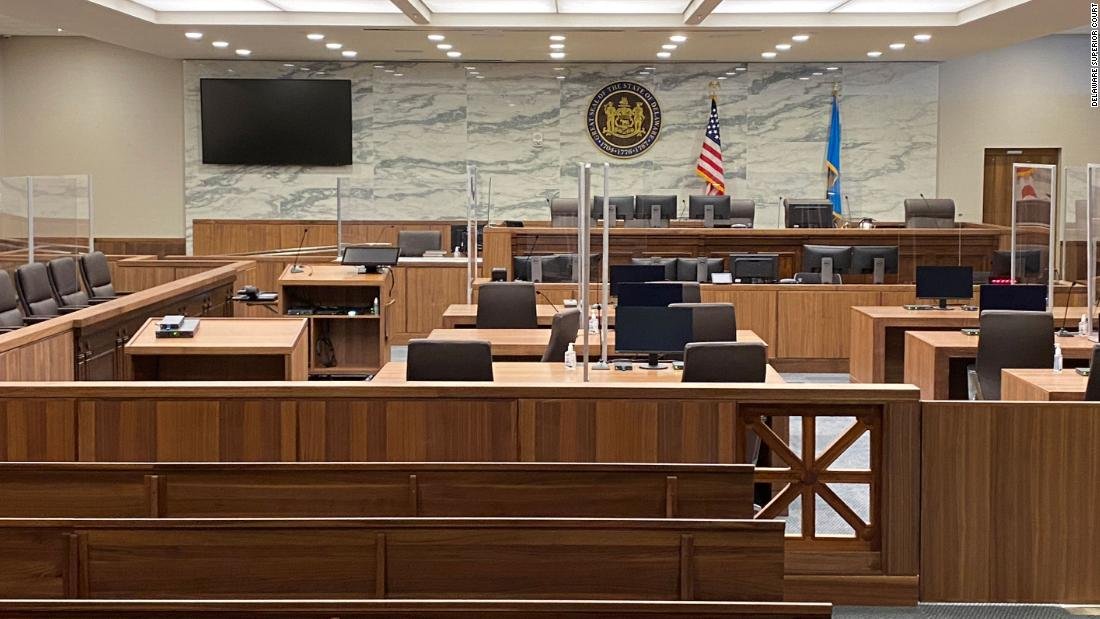
Jury selection unfolded Thursday in Wilmington, Delaware, with 300 potential jurors summoned to the courthouse for the Dominion Voting Systems defamation trial against Fox News. The presiding judge observed that more than enough jurors had been identified to begin proceedings as scheduled on Monday in Courtroom 7E. This measured pace of selection signals a deliberate process in a case carrying extraordinary public weight, where every prospective juror must be vetted for exposure to years of election-related coverage.
The physical setting of Courtroom 7E now becomes the arena where Fox News executives and hosts must defend their post-2020 election broadcasts under oath. Unlike cable segments that can pivot or deflect, this room enforces rules of evidence and cross-examination that strip away the network’s usual insulation. The judge’s early impatience with defense motions already hints at tight control over proceedings, ensuring that arguments remain tethered to documented facts rather than narrative spin.
Atlanta viewers and national audiences alike recognize that Wilmington’s courthouse has rarely hosted litigation of this scale involving a major media company. The presence of high-powered legal teams alongside key Murdoch Media figures underscores how seriously the stakes are being treated. Jury selection’s completion sets the stage for a trial that will test whether a network long accustomed to shaping its own story can withstand scrutiny when the story is no longer under its control.
Deep analysis reveals that the Delaware venue and Monday start date compress the timeline for preparation, forcing both sides to crystallize their positions quickly. The judge’s assurance of sufficient jurors also reduces the risk of delays that could otherwise dilute public attention. In this environment, every ruling on admissibility will carry amplified consequences for how the public ultimately understands the relationship between media claims and electoral integrity.
The Stakes Behind the $1.6 Billion Question
Dominion Voting Systems seeks $1.6 billion in damages, a figure that reflects both alleged reputational harm and the scale of the false claims broadcast after the 2020 election. To prevail, Dominion must demonstrate that Fox News knowingly or recklessly aired false statements about the company’s voting machines. This standard requires concrete evidence that network personnel possessed contrary information yet continued the broadcasts anyway.
The financial magnitude alone forces a reckoning with how media organizations weigh audience retention against factual accuracy. Dominion’s burden is not merely to show that statements were wrong, but that decision-makers at the highest levels understood their falsity. Pre-trial records already indicate internal communications that could prove pivotal in meeting this threshold.
Analysis of the case structure shows that success for Dominion would establish a precedent for holding cable networks accountable when they amplify demonstrably false election narratives. The $1.6 billion demand serves as both compensation and deterrent, signaling to other outlets that the costs of unchecked falsehoods can extend far beyond temporary ratings spikes. Yet the burden remains exacting, requiring Dominion to connect specific on-air claims to internal knowledge rather than relying on general assertions of harm.
Because the trial will unfold under Delaware procedural rules, evidentiary thresholds will be applied rigorously. This environment rewards precise documentation over rhetorical flourish, placing the network’s internal records under sustained examination. The outcome will clarify whether defamation law can effectively police the boundary between protected opinion and actionable falsehood when the subject is election administration.
A Network That Built Itself on Deflection
Fox News has navigated multiple controversies by shifting focus, attacking critics, or simply moving to the next segment. Over years of coverage, the network has promoted narratives that undermined public health guidance, featured inflammatory immigration rhetoric, and elevated fringe conspiracy theories into mainstream rotation. Each episode generated external criticism, yet the organization consistently emerged with its audience intact and its programming model unchanged.
Deflection served as the operational default. Requests for comment were ignored or reframed as attacks by “the media,” allowing hosts to maintain momentum without engaging inconvenient facts. This pattern created an internal culture where accountability appeared optional rather than structural. The network’s resilience through earlier storms reinforced the perception that external pressure rarely produced lasting operational change.
Deep examination of this history reveals how audience loyalty and ratings incentives aligned to reward rapid narrative pivots over sustained factual correction. When controversies arose, the response typically involved recharacterizing the issue rather than addressing underlying reporting failures. Such tactics preserved short-term stability but accumulated exposure that now faces judicial review.
The pattern also illustrates the limits of self-regulation within partisan media ecosystems. Without external enforcement mechanisms, networks could calibrate content to viewer expectations while treating factual accuracy as secondary. The current trial interrupts that cycle by imposing an external authority that cannot be dismissed through on-air commentary or selective framing.
Why This Time Is Different
The Dominion litigation places Fox News in a setting where deception carries direct procedural consequences. Courtroom rules prohibit the casual distortion of evidence that has characterized some on-air segments. Executives and hosts cannot simply decline to respond or redirect attention; they must answer questions under penalty of perjury and within the constraints of discovery.
Pre-trial hearings already demonstrate the judge’s willingness to enforce boundaries, having expressed frustration with defense tactics and placed the legal team on notice. This judicial posture signals that the trial will not accommodate the network’s accustomed latitude. The absence of an audience to applaud deflection further alters the dynamic, replacing cable viewers with a jury tasked with weighing evidence.
Analysis of the legal framework shows that defamation standards applied to public figures require proof of actual malice, a high bar that Dominion must clear with internal documents rather than public statements alone. Yet the volume of pre-trial material already surfaced suggests the network faces a more rigorous factual examination than previous controversies allowed. The combination of compelled testimony, sealed records, and judicial oversight creates conditions that previous deflection strategies cannot neutralize.
Because the trial occurs in open court rather than the court of public opinion, outcomes will rest on admissible evidence instead of narrative momentum. This structural difference explains why earlier storms passed without fundamental change while the present case carries the potential for lasting operational consequences.
The Players in the Room
Rupert Murdoch, Suzanne Scott, Tucker Carlson, and Sean Hannity will occupy central positions as the trial proceeds. Each has been associated with programming decisions or on-air statements now under scrutiny. Their testimony or depositions will test whether internal awareness of contrary evidence existed while false claims continued to air.
Murdoch’s oversight role places him at the intersection of corporate strategy and content direction. Scott, as a senior executive, represents the operational bridge between ownership priorities and daily programming choices. Carlson and Hannity, as prominent hosts, embody the on-air delivery of the contested narratives. The requirement that they engage the legal process directly removes the protective layer of selective response that previously insulated them.
Deep analysis indicates that the trial will expose how these individuals interacted with information contradicting the broadcast claims. Pre-trial records already reference communications that could link knowledge of inaccuracies to continued programming. This level of personal exposure differs markedly from past controversies, where public statements could be managed without sworn testimony.
The courtroom setting also equalizes the power dynamic. Hosts accustomed to controlling the microphone will instead answer questions posed by opposing counsel under judicial supervision. This reversal forces a level of precision and accountability that cable formats have historically avoided, potentially reshaping how future content decisions are documented and reviewed internally.
What This Means for the Future of Media
A verdict against Fox News would establish that defamation liability can reach cable networks when they knowingly amplify false election claims. Such an outcome would incentivize stronger internal fact-checking protocols and more cautious handling of unverified allegations. Media organizations across the ideological spectrum would confront the reality that audience demand alone does not shield against legal exposure.
The trial also highlights the distinction between protected commentary and statements presented as factual reporting. Future litigants may cite this precedent when challenging coverage that blends opinion with demonstrably false assertions. This clarification could narrow the safe harbor that some outlets have relied upon when addressing politically charged topics.
Analysis of broader implications shows that sustained accountability requires more than public criticism. Only when legal and financial consequences attach do organizations face structural pressure to alter longstanding practices. The Dominion case tests whether defamation law can serve that function without chilling legitimate journalistic inquiry.
Ultimately, the proceedings in Wilmington underscore that media power, however entrenched, remains subject to external checks when evidence of knowing falsehoods accumulates. The outcome will influence how newsrooms document decision-making and how executives weigh the risks of amplifying contested claims. In this sense, the trial marks a potential inflection point in the relationship between media accountability and democratic information ecosystems.
By Jessica Ali, Staff WriterThis article was produced with AI-assisted research and editorial support. Reporting is based on sources cited in the article.
What's Your Reaction?
 Like
0
Like
0
 Dislike
0
Dislike
0
 Love
0
Love
0
 Funny
0
Funny
0
 Wow
0
Wow
0
 Sad
0
Sad
0
 Angry
0
Angry
0

Editor-in-Chief at Global1.News. Atlanta-based journalist who cuts through the BS and tells it like it is. Lead anchor, host, and the voice you hear when the spin stops and the truth starts.















Comments (0)