
Israeli Forces Kill Three Palestinians in Northern West Bank
Israeli Forces Kill Three Palestinians in Northern West Bank Israeli army forces killed three Palestinians, including a minor, on Thursday and withheld their bodies in the northern West Bank amid ongoing assaults in the occupied territory, the Health Ministry said. The ministry received information from the General Authority of Civil Affairs detailing the deaths in separate locations near Nablus and Jenin.
Israeli Forces Kill Three Palestinians in Northern West Bank
Israeli army forces killed three Palestinians, including a minor, on Thursday and withheld their bodies in the northern West Bank amid ongoing assaults in the occupied territory, the Health Ministry said. The ministry received information from the General Authority of Civil Affairs detailing the deaths in separate locations near Nablus and Jenin. Early reports from the official news agency Wafa, citing security forces, confirmed that two Palestinians were shot and killed in Beit Furik, with their bodies withheld by Israeli forces.
Identities of the Victims
The victims included Mahmoud Hussein Abu Samra, aged 20, and Mohammad Samer Mleitat, a 16-year-old minor, both killed by Israeli fire in the town of Beit Furik, east of Nablus. A separate incident involved a 24-year-old man shot and killed by Israeli forces near Haddad Roundabout, east of Jenin. Two other Palestinians were injured by Israeli fire in the Beit Furik area and transferred to a hospital for treatment. These names and ages come directly from statements issued by the Palestinian Health Ministry.
Assault on Beit Furik and Settler Involvement
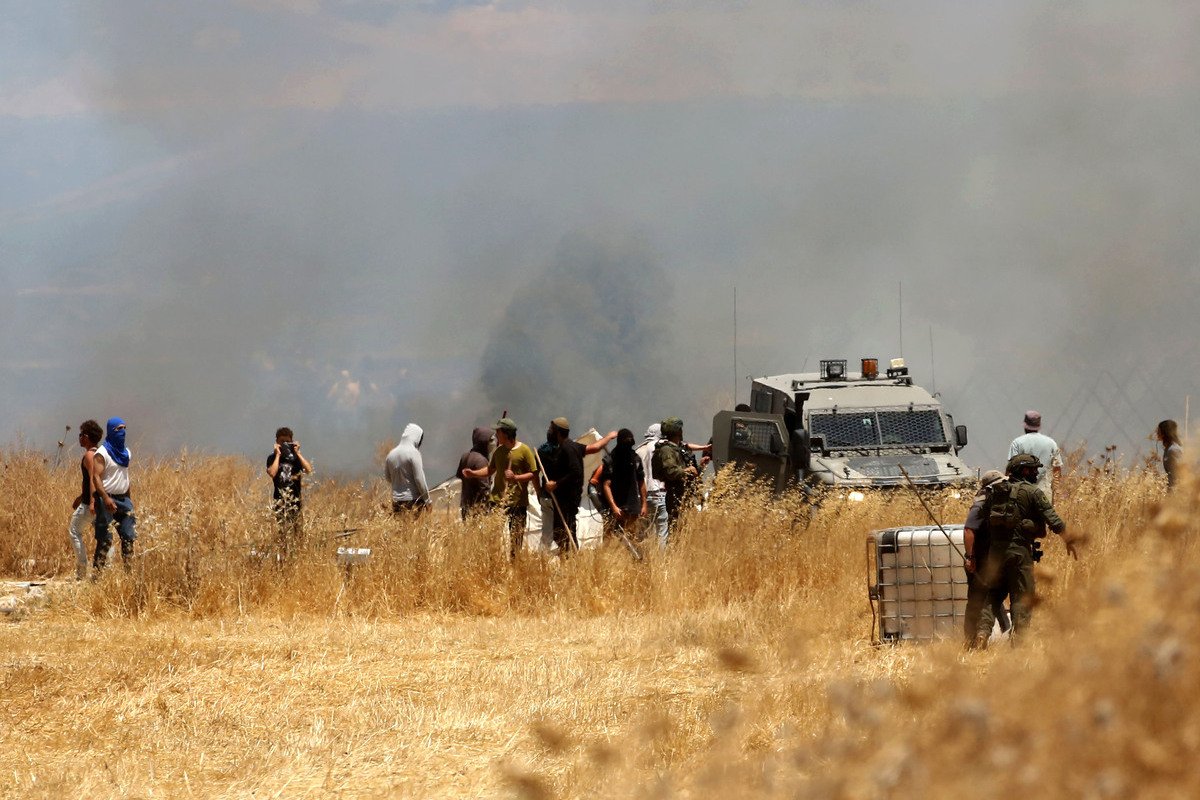
Beit Furik Mayor Youssef Hanani described how Israeli forces shut all entry points to the town while soldiers and settlers attacked residents attempting to extinguish fires that broke out in their fields. Israeli troops forced a Palestinian family to evacuate its home after assaulting its owner. Fires spread to electricity poles, and settlers set fire to two Palestinian vehicles. These actions occurred in the context of intensified attacks on Palestinian property in the occupied West Bank.
Settler violence around Beit Furik follows a recognizable pattern tied to illegal outposts established on nearby hilltops. These outposts, built in violation of Israeli law and international norms, serve as launch points for organized attacks on Palestinian farmers and herders. In recent months, such assaults have increased in frequency and coordination, frequently occurring under the protection or active participation of Israeli soldiers.
This dynamic reflects Israel's broader settlement enterprise in Area C, where state resources and military presence enable the gradual transfer of land. The policy creates facts on the ground that undermine any future contiguous Palestinian state while normalizing daily intimidation and property destruction. Local residents describe a reality in which military and settler actions operate as two sides of the same territorial project.
Closure of Checkpoints and Impact on Residents
Dozens of residents were unable to reach their homes or leave the town after the Israeli army closed the Beit Furik military checkpoint. The restrictions prevented normal movement and access to essential services in an area already facing daily challenges from military presence. Local agriculture suffered direct damage as fields burned and infrastructure faced disruption from the fires and attacks.
Practice of Withholding Bodies
Israeli forces withheld the bodies of the three Palestinians killed on Thursday. This practice has been documented in multiple incidents across the occupied West Bank, where families are denied the opportunity to conduct burials according to their traditions. The Health Ministry statement highlighted the withholding in both Beit Furik and the Jenin area incident, adding to the distress experienced by affected communities.
The practice of withholding bodies contravenes core provisions of international humanitarian law. Article 130 of the Fourth Geneva Convention and the Hague Regulations require occupying powers to facilitate the dignified return of remains to families, treating the dead with respect and allowing burial according to cultural and religious rites. Israel's policy, formalized through military orders in the 1990s and expanded after 2000, treats Palestinian bodies as bargaining chips rather than human remains, creating a deliberate exception to these obligations in the occupied territories.
This systematic approach emerged as a tool of collective deterrence during the Second Intifada and has persisted through successive governments. Families in towns like Beit Furik endure prolonged uncertainty, unable to perform proper funerals or visit graves, compounding trauma across generations. Human rights organizations, including the UN Human Rights Council and the International Committee of the Red Cross, have repeatedly condemned the practice as cruel and degrading treatment, documenting its use against hundreds of Palestinians since 2015.
Broader Violence in the Occupied West Bank Since October 2023
The killings came shortly after the Israeli army shot dead a Palestinian in the northern West Bank on claims of carrying out a stabbing attack targeting one of its soldiers near the illegal settlement of Ganim. Since the start of Israel's actions in Gaza on Oct. 8, 2023, the Israeli army and settlers have intensified attacks on Palestinians and their property in the occupied West Bank, killing at least 1,185 people and injuring 3,816 others, according to official Palestinian figures. These numbers reflect the scale of violence reported by Palestinian authorities in the territory.
Since 8 October 2023, lethal violence in the West Bank has surged far beyond pre-October 7 levels. Israeli forces killed over 500 Palestinians in the territory in the following twelve months, compared with roughly 150 in the preceding year, according to UN monitoring. This escalation coincides with intensified military raids and a sharp rise in armed settler attacks, which have displaced entire communities and destroyed agricultural infrastructure under the cover of the Gaza war.
The breakdown of Palestinian Authority security coordination has removed previous restraints on both Israeli operations and settler activity. Settler violence, often conducted with military escort, now functions as an extension of state policy in Area C. The West Bank situation cannot be isolated from Gaza; the same political and military logic that justifies mass bombardment there sustains daily lethal force and land appropriation here, deepening a single, interconnected crisis.
Human Rights Implications and Local Realities
Residents in towns like Beit Furik and areas east of Jenin face repeated disruptions to daily life, including restricted movement through checkpoints and damage to agricultural lands that form the backbone of the local economy. The events connect to wider patterns of military operations and settler activities that affect access to homes, fields, and basic services. Palestinian officials continue to document these incidents as part of ongoing human rights concerns in the occupied territory.
Beit Furik and surrounding villages in the Nablus governorate have suffered direct economic devastation. Burned olive groves and restricted access to farmland during the harvest season have slashed family incomes that depend on this annual cycle. Movement restrictions at checkpoints isolate producers from markets in Nablus and beyond, driving up costs and spoiling perishable goods while preventing timely medical evacuations.
These measures compound decades of land confiscation and settlement expansion that have already reduced Palestinian agricultural holdings. The cumulative effect is a suffocated local economy where daily life is shaped by permit regimes and military barriers. International observers note that such policies violate the right to an adequate standard of living and amount to de facto annexation measures under the guise of security.
Context of Military Operations in Nablus and Jenin Governorates
The northern West Bank, encompassing areas around Nablus and Jenin, has seen sustained military activity that influences local governance and community resilience. Mayor Youssef Hanani's account of the Beit Furik events underscores how such operations extend beyond direct confrontations to include restrictions on civilian movement and property damage. These developments occur against a backdrop of longstanding occupation policies that shape economic and social conditions for Palestinian communities.
By Fatima Al-Rashid, Staff Writer
This article was produced with AI-assisted research and editorial support. Reporting is based on sources cited in the article.
What's Your Reaction?
 Like
0
Like
0
 Dislike
0
Dislike
0
 Love
0
Love
0
 Funny
0
Funny
0
 Wow
0
Wow
0
 Sad
0
Sad
0
 Angry
0
Angry
0

Gulf/MENA Correspondent at Global1.News. Based in Doha, covering Gulf politics, energy markets, diplomacy, and development across the Middle East and North Africa. Tracks the economic transformation of the Gulf states.











Comments (0)