
Armenia-Russia Tensions: Pashinyan's Russia Day Message and the Kremlin's Strategic Silence
The Russia Day Message and Its Subtext Armenian Prime Minister Nikol Pashinyan issued a carefully worded message on Friday to Russian President Vladimir Putin marking Russia Day. The text, published on the Prime Minister's official website, deliberately emphasized themes of independence, sovereignty, and state interests rather than the warm fraternal language that once characte
The Russia Day Message and Its Subtext
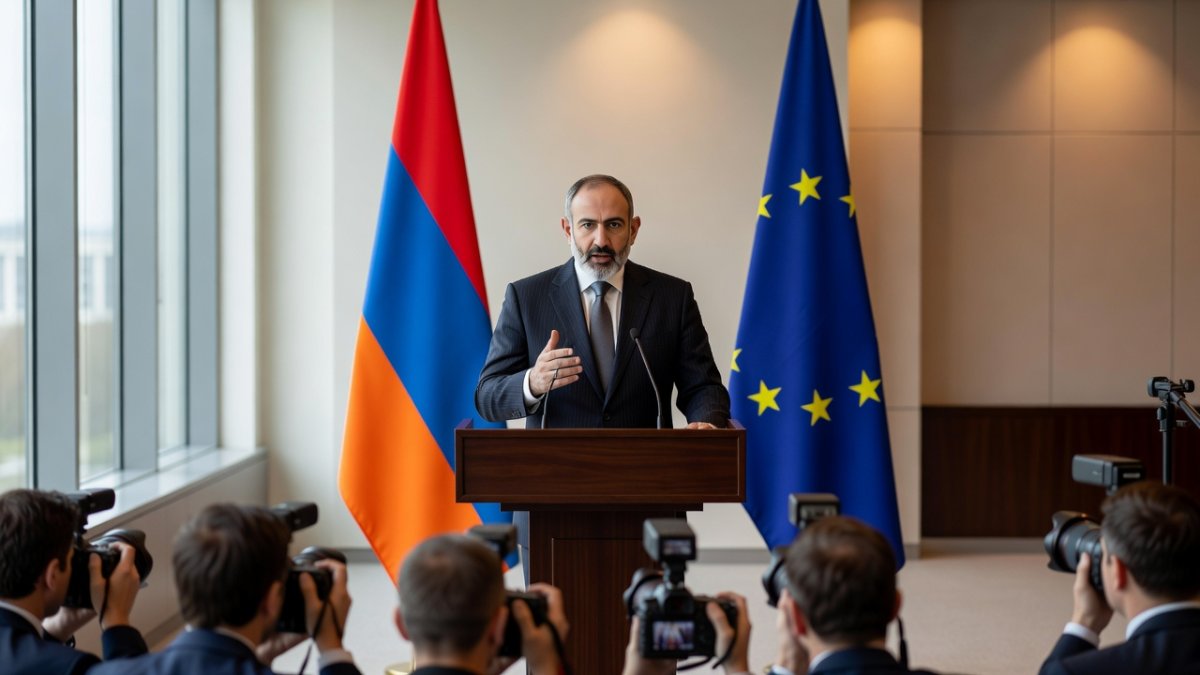
Armenian Prime Minister Nikol Pashinyan issued a carefully worded message on Friday to Russian President Vladimir Putin marking Russia Day. The text, published on the Prime Minister's official website, deliberately emphasized themes of independence, sovereignty, and state interests rather than the warm fraternal language that once characterized bilateral exchanges. Pashinyan stated that the holiday embodies the responsibility of Russian citizens for the future of their country and the aspiration of the friendly Russian people toward independently choosing their state's path of development. This phrasing, while polite on the surface, signaled Yerevan's determination to chart its own course amid mounting pressure from Moscow.
The choice of language reflects deeper post-Soviet dynamics in which smaller states like Armenia seek to balance historical ties with Russia against the need to protect their own decision-making autonomy. Kremlin officials have long viewed such rhetorical shifts as potential challenges to their sphere of influence in the South Caucasus. Ordinary Armenians, many of whom still rely on remittances and trade links with Russia, now watch these exchanges with growing anxiety as economic measures begin to bite.
Only five other leaders extended public congratulations to Putin on the same occasion: the presidents of Belarus, North Korea, Turkmenistan, Azerbaijan, and Oman. The limited roster underscored Armenia's increasingly isolated position within Moscow's traditional circle of partners and highlighted how Pashinyan's message stood apart in its emphasis on sovereign choice.
Post-Election Dynamics and the Kremlin's Silence
Pashinyan's ruling party secured victory in the June 7 parliamentary elections, an outcome widely observed as a barometer of Armenia's westward pivot. The results drew sharp contrasts in international reactions. Russia accused Western actors of interference in the process, while the European Union welcomed the conduct and outcome of the vote. Putin had sent birthday congratulations to Pashinyan on June 1, yet offered no corresponding message after the electoral success, a notable omission that Armenian observers interpreted as deliberate diplomatic cooling.
This silence from the Kremlin fits a pattern of calibrated responses designed to signal displeasure without immediate rupture. Within Russian power structures, decisions on such messaging often involve coordination between the Foreign Ministry and the presidential administration, reflecting calculations about maintaining leverage over post-Soviet neighbors. For Armenian citizens, the absence of routine goodwill gestures reinforces perceptions that Moscow prioritizes geopolitical control over partnership.
Regional neighbors have taken note of the evolving dynamic. Azerbaijan's decision to congratulate Putin on Russia Day while maintaining its own complex relationship with Moscow illustrates how other South Caucasus actors navigate the same pressures differently. The contrast leaves Armenia exposed as it attempts to diversify its alignments.
Trade Warfare: Moscow's Import Restrictions
Russia has implemented a series of import bans targeting Armenian goods in the period leading up to and following the elections. A sweeping prohibition on most Armenian food products, seeds, flowers, wood, and fertilizer took effect on Friday, with Moscow citing health and safety concerns as justification. These measures build on earlier restrictions and directly affect sectors that employ thousands of Armenians in rural and agricultural regions.
Armenian exporters now face sudden loss of access to a major market, prompting urgent discussions within Yerevan about alternative routes through the European Union and other partners. The timing, coinciding with the post-election period, suggests the bans serve as economic leverage tied to Armenia's foreign policy choices. Defense Ministry and Foreign Ministry statements in Russia have framed the actions as technical rather than political, yet the pattern aligns with broader efforts to influence post-Soviet states.
From the Armenian perspective, these restrictions compound existing vulnerabilities stemming from the 2023 Nagorno-Karabakh conflict. Ordinary households dependent on agricultural income experience direct hardship, while government officials weigh the costs of continued friction with the Kremlin against the benefits of EU-oriented reforms.
The EU Accession Pivot
Armenia advanced its European orientation through a 2025 law that formally initiates the EU accession process. This legislative step marks a significant departure from previous reliance on Russian-led structures and reflects sustained public and elite support for closer integration with Western institutions. The move has accelerated diplomatic engagement with Brussels and prompted new discussions on trade, security cooperation, and regulatory alignment.
EU officials have responded positively to both the legislative development and the June 7 election results, viewing them as evidence of Armenia's commitment to democratic processes and diversified partnerships. This support contrasts with Russian accusations of external meddling, highlighting competing narratives over Armenia's future direction. For citizens in Yerevan and beyond, the pivot raises hopes of economic modernization alongside concerns about short-term instability.
The accession law also reshapes Armenia's negotiating position with Moscow. Kremlin strategists must now account for a neighbor actively pursuing EU membership, altering calculations about influence in the South Caucasus. Neighboring states such as Georgia, already on an EU path, provide both precedent and cautionary context for Armenian policymakers.
Security Realignment and the CSTO Freeze
In 2024 Armenia suspended its participation in the Collective Security Treaty Organization, the Russian-led security bloc, following accusations that Moscow's peacekeepers failed to prevent Azerbaijan's 2023 military offensive in Nagorno-Karabakh. The decision represented a direct rebuke to the security guarantees Armenia had long relied upon within the CSTO framework. Russian officials have portrayed the suspension as temporary, yet the move has already reduced joint exercises and intelligence sharing.
The freeze carries implications for Armenia's defense posture and for CSTO cohesion more broadly. Other member states observe how Moscow responds to this challenge to its regional security architecture. Armenian leaders have cited the 2023 events as proof that existing arrangements no longer meet national needs, prompting exploration of alternative security partnerships.
Perspectives from Azerbaijan and the EU further complicate the picture. Baku maintains its own security dialogue with Russia while consolidating gains from 2023, whereas Brussels has signaled openness to deeper security cooperation with Yerevan as part of the broader EU accession trajectory. These overlapping interests create a fluid environment in which Armenia must balance multiple actors.
Regional Diplomatic Landscape
The diplomatic field surrounding Armenia-Russia tensions now includes active engagement from the EU, continued CSTO formal structures despite Armenia's suspension, and varied approaches by immediate neighbors. Azerbaijan's congratulations to Putin on Russia Day illustrate one model of pragmatic coexistence, while Belarus and the Central Asian states demonstrate differing degrees of alignment with Moscow. This landscape forces Armenian diplomacy to operate across multiple tracks simultaneously.
Kremlin power structures, centered on the presidential administration and Foreign Ministry, treat the South Caucasus as a core zone of interest where deviations from Russian preferences trigger calibrated pushback. Armenia's recent steps test the limits of that tolerance. Regional analysts note that similar tensions have historically affected trade volumes, migration patterns, and energy arrangements affecting ordinary populations across borders.
EU statements welcoming the June 7 elections and supporting the 2025 accession law provide Yerevan with external validation, yet practical implementation of new ties will require sustained effort. The interplay between these actors shapes daily realities for Armenian businesses and families navigating shifting economic and security conditions.
Analysis and Implications
The current phase of Armenia-Russia tensions reveals how post-Soviet states renegotiate relationships when traditional security providers appear unreliable. Pashinyan's emphasis on sovereignty in the Russia Day message, combined with the EU accession law and CSTO suspension, forms a coherent strategy of diversification, even as Russian import bans impose immediate costs. The Kremlin's selective silence after the June 7 elections and the limited circle of congratulatory messages underscore Moscow's preference for maintaining hierarchical ties.
Multiple parties hold stakes in the outcome. Armenia seeks greater autonomy and economic opportunity; Russia aims to preserve influence; the EU offers an alternative pole of attraction; and neighbors such as Azerbaijan calibrate their own positions accordingly. These dynamics affect not only governments but also citizens whose livelihoods depend on cross-border trade, remittances, and stable regional relations.
Over time, the trajectory will depend on whether economic pressures prompt Armenia to moderate its course or whether the pursuit of EU integration generates sufficient compensatory benefits. The interplay between these forces will continue to define Armenia's place within the evolving post-Soviet and European security environment.
By Irina Volkov, Staff WriterThis article was produced with AI-assisted research and editorial support. Reporting is based on sources cited in the article.
What's Your Reaction?
 Like
0
Like
0
 Dislike
0
Dislike
0
 Love
0
Love
0
 Funny
0
Funny
0
 Wow
0
Wow
0
 Sad
0
Sad
0
 Angry
0
Angry
0
Russia/Eastern Europe Correspondent at Global1.News. Covering Russian politics, energy, security, and the shifting dynamics of the post-Soviet space. Provides clear-eyed analysis on one of the world's most opaque regions.










Comments (0)