
Trump Swaps Jet After Iran Proxy Threat Hits Ankara
President Trump ditched his shiny new ride mid-mission in Turkey, swapping Air Force One for the older model after intelligence flagged a direct Iranian proxy hit on the aircraft and the commander in chief. The July 7, 2026, switch in Ankara exposed raw security gaps in a $400 million Qatari gift that was supposed to be the future of presidential travel. Trump Swaps Jet After Iran Proxy Threat Hits Ankara Washington, D.C. — Article continues below... Breaking: The Plane Swap
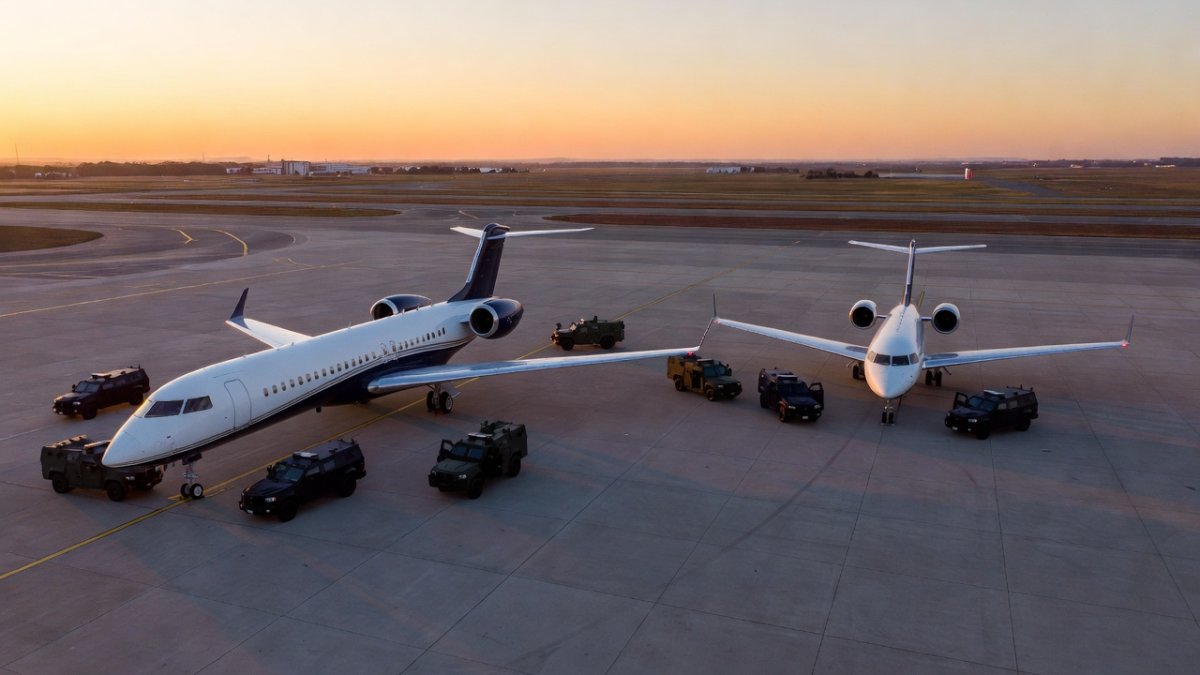
President Trump ditched his shiny new ride mid-mission in Turkey, swapping Air Force One for the older model after intelligence flagged a direct Iranian proxy hit on the aircraft and the commander in chief. The July 7, 2026, switch in Ankara exposed raw security gaps in a $400 million Qatari gift that was supposed to be the future of presidential travel.
Trump Swaps Jet After Iran Proxy Threat Hits Ankara
Washington, D.C. — Article continues below...
Breaking: The Plane Swap
Trump had just wrapped the NATO summit in Ankara when the order came down. Instead of boarding the retrofitted Boeing 747-800 donated by Qatar earlier this year, the president climbed aboard the legacy Air Force One that had been standing by. The move was not announced. It happened fast, driven by the Secret Service after they received fresh reporting on Iranian proxy forces zeroing in on the new plane while it sat on the tarmac in Turkey.
Trump had already taken his first flight on the Qatari-donated jet earlier in July. That trip went off without incident. The Turkey departure was different. Sources briefed on the matter said the threat was specific enough that the Secret Service overruled any preference for the newer aircraft. The older plane flew the president out. The new one stayed grounded until the threat window closed.
The emergency swap unfolded with practiced precision at Ankara's Esenboga Airport. As the NATO summit concluded, Secret Service agents redirected the motorcade to a secondary hangar where the legacy VC-25A stood fueled and crewed. Ground teams transferred the president's protective detail and communications gear in under twelve minutes while the newer 747-800 remained sealed under guard. The counter-assault team established a perimeter around both aircraft, scanning for surveillance or drone activity that Iranian proxies might have positioned near the tarmac.
Historical precedent exists for such mid-mission changes. During the 1980s, Reagan's detail once swapped aircraft in Europe after Soviet-linked threats surfaced. Eisenhower's team executed a similar rotation in the 1950s amid Cold War alerts. In each case, the decision rested with operational security rather than political preference, underscoring how real-time intelligence can override scheduled movements even for the commander in chief.
The Iranian Threat
US officials described the intelligence as credible. Iranian proxy groups had been tracking Air Force One movements and had positioned assets near the Ankara airport. The threat was separate from a separate warning that originated with Israeli intelligence, according to people familiar with the briefings. This one came through American channels and pointed straight at the aircraft itself.
Trump later acknowledged the switch in public remarks, tying it to ongoing Iranian assassination plots. He did not detail the proxy angle but made clear the decision was driven by real-time threat data rather than routine rotation. The episode underscored how quickly a single credible report can force a presidential movement change in an active conflict zone.
Iranian proxy networks in Turkey include Hezbollah operatives embedded in local logistics cells and Fatemiyoun Division fighters drawn from Afghan recruits, both capable of rapid deployment for targeted strikes. These groups have demonstrated access to man-portable air-defense systems (MANPADS) and small drone swarms suited for airport perimeter attacks, with recent signals intelligence showing increased procurement of shoulder-fired missiles and loitering munitions routed through Turkish border crossings.
The Secret Service assessed the threat envelope as high-probability within a 48-hour window, factoring in proxy surveillance reports and escalation patterns that shifted from indirect harassment to direct targeting of U.S. leadership assets. This marked a clear move from proxy harassment to potential direct-action attempts, prompting immediate aircraft rotation protocols to mitigate exposure during the Ankara departure.
A $400 Million Question: Is Qatar's Gift Safe?
Qatar handed over the retrofitted 747-800 this year. The plane carries a $400 million price tag and has been under scrutiny from the moment it arrived. Security teams have questioned whether the aircraft’s systems were fully vetted for foreign hardware and software before it entered presidential service. Those questions intensified after the Ankara incident.
The Secret Service decision to default to the older plane in Turkey effectively paused the new jet’s operational debut under live threat conditions. Trump has publicly dismissed security concerns about the gift, yet the swap itself sent a different message. If the plane cannot be trusted during an active Iranian threat window, its long-term viability as the primary presidential aircraft remains in doubt.
The Qatari 747-8 features hardened communications suites, encrypted satellite links, and defensive countermeasures including missile warning systems and chaff dispensers. Secure conference rooms allow real-time video links to the Pentagon and intelligence agencies. Yet questions persist over who conducted the final cybersecurity audits on its foreign-sourced avionics and software, with reports indicating only partial reviews by U.S. contractors before operational use.
Previous presidential aircraft followed stricter domestic modification paths. The VC-25A underwent years of classified upgrades at Boeing's Wichita facility under full U.S. control. Congressional leaders have raised ethics concerns about accepting the $400 million gift, citing potential influence operations and the absence of transparent foreign-hardware inspections. These gaps became acute after the Ankara incident exposed lingering doubts about the plane's readiness under live threat conditions.
War With Iran: Escalation by the Numbers
The plane swap occurred against the backdrop of direct US military action. This was the 11th consecutive night of American strikes on Iranian targets. Defense Secretary Pete Hegseth put the running cost of the campaign at $375 billion. Iranian Foreign Minister Abbas Araghchi responded with a blunt warning: any attack on Iranian infrastructure would be met with an “eye for an eye” response.
The conflict has moved beyond proxy skirmishes. Iranian leadership has signaled willingness to strike back at US assets and infrastructure if the campaign continues. That environment made the Ankara threat assessment especially urgent. A compromised presidential aircraft in a hostile theater is not an abstract risk when both sides are trading blows nightly.
The $375 billion figure encompasses munitions, carrier deployments, aerial refueling, and forward basing across the Gulf. Much of the spend supports precision strikes and logistics for sustained operations that have already strained defense stockpiles. Oil markets reacted sharply as Iranian threats to close the Strait of Hormuz pushed Brent crude above $120 per barrel, raising global energy costs and prompting emergency releases from strategic reserves.
Regional allies present mixed positions. Saudi Arabia and the UAE have offered limited basing access while urging de-escalation to protect their own energy infrastructure. Israel has coordinated intelligence but avoided direct involvement in strikes. Compared with the Iraq War's roughly $2 trillion or Afghanistan's $2.3 trillion, the current campaign shows faster daily burn rates. Iran's "eye for an eye" doctrine explicitly targets U.S. bases in Qatar, Bahrain, and Kuwait, forcing commanders to harden sites and rotate forces more frequently.
What This Means for National Security
The episode reveals how thin the margin is when the president is traveling in a contested region. Intelligence on Iranian proxy activity forced an immediate change in aircraft. That decision was made by the Secret Service, not the White House political team, which tells you the reporting was taken seriously at the operational level.
It also highlights the unresolved problems with the Qatari aircraft. A $400 million gift is only useful if it can be cleared for presidential use under the same threat conditions that apply to the existing fleet. The Ankara swap suggests that clearance has not yet been fully granted. Until those security questions are answered in public, the plane remains a liability rather than an asset.
Broader escalation with Iran adds another layer. Eleven nights of strikes and a $375 billion bill show the campaign is no longer limited or symbolic. Iranian threats of direct retaliation mean every presidential movement now carries elevated risk. The fact that the new plane was sidelined during one of those movements is the clearest signal yet that the gift has not passed the test.
Presidential security doctrine will likely incorporate stricter aircraft rotation protocols during contested travel. Future foreign gifts of transport hardware will face mandatory multi-agency audits before acceptance, shifting policy away from rapid integration of donated platforms. Intelligence agencies can extract lessons from the Ankara intercept about proxy tracking networks and the value of layered human and signals reporting that forced the swap.
The episode also signals to Iran that U.S. threat awareness remains high even amid active strikes. By grounding the newer jet, Washington demonstrated willingness to accept operational inconvenience rather than risk a high-value asset. This posture may deter further proxy attempts while highlighting unresolved vulnerabilities in how presidential movements are protected during prolonged regional conflicts.
The Bottom Line
Americans need to know the president’s aircraft was changed because of a specific Iranian proxy threat in Turkey on July 7, 2026. The $400 million Qatari plane that was supposed to replace the old Air Force One was left on the ground while the older jet flew the mission. That decision was driven by the Secret Service after credible intelligence arrived. The United States is now on night eleven of strikes against Iran at a cost of $375 billion, and Tehran has promised an eye-for-an-eye response. Until the new plane’s security is proven under these conditions, the swap will remain the default whenever the threat level spikes. The president is still flying, but the route just got more complicated.
This incident signals that the Iran conflict is entering a phase of sustained, high-stakes attrition where proxy threats can rapidly escalate to direct leadership targeting, forcing U.S. planners to treat every overseas movement as a potential flashpoint and accelerating the shift toward more defensive, resource-intensive war management rather than decisive victory.
By Jessica Ali, Staff Writer
This article was produced with AI-assisted research and editorial support. Reporting is based on sources cited in the article.
What's Your Reaction?
 Like
0
Like
0
 Dislike
0
Dislike
0
 Love
0
Love
0
 Funny
0
Funny
0
 Wow
0
Wow
0
 Sad
0
Sad
0
 Angry
0
Angry
0

Editor-in-Chief at Global1.News. Atlanta-based journalist who cuts through the BS and tells it like it is. Lead anchor, host, and the voice you hear when the spin stops and the truth starts.










Comments (0)