
FDA Issues Class I Recall for Alfredo Sauce Sold in 41 States Over Salmonella Risk
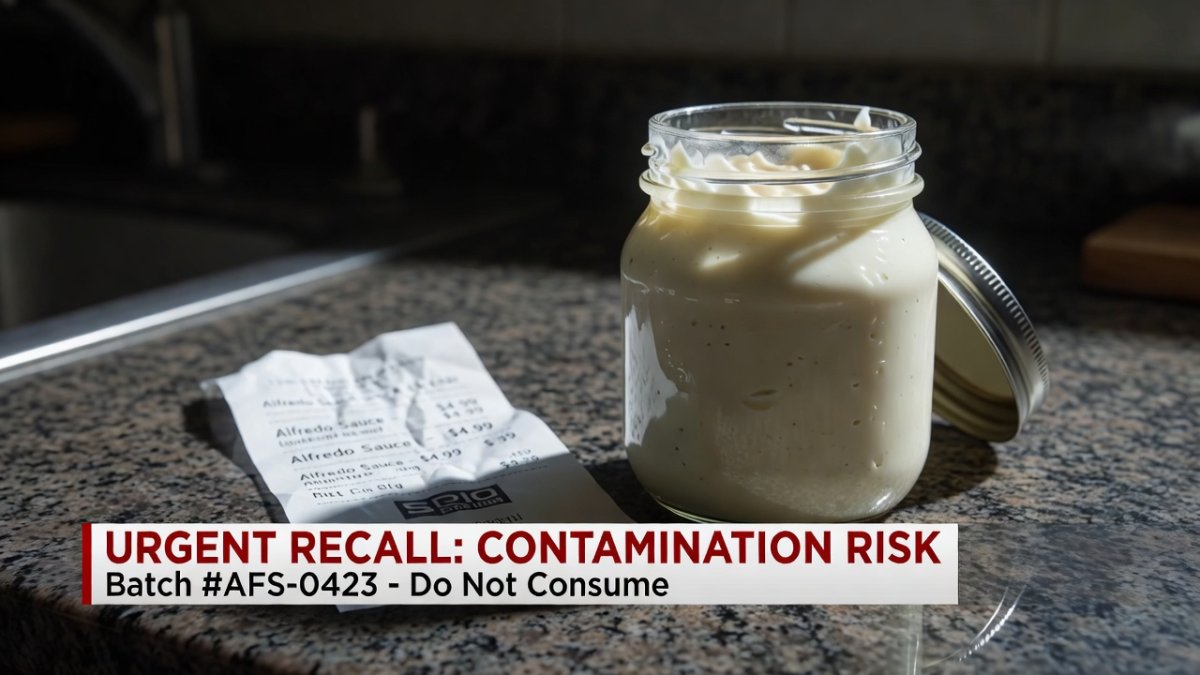
The Breaking News The Food and Drug Administration has issued a Class I recall for alfredo sauce distributed across 41 states, marking the highest-risk category for potential contamination. This designation signals a reasonable probability that consumption could lead to serious adverse health consequences or even death. The recall centers on products from Coffee Connexion Co. i
The Breaking News
The Food and Drug Administration has issued a Class I recall for alfredo sauce distributed across 41 states, marking the highest-risk category for potential contamination. This designation signals a reasonable probability that consumption could lead to serious adverse health consequences or even death. The recall centers on products from Coffee Connexion Co. in Ohio, where 913 cases are now under scrutiny due to possible salmonella presence from contaminated milk powder.
Folks, this is not a routine advisory. Salmonella contamination remains invisible to the naked eye, with no changes in taste, smell, or appearance to alert consumers. The affected sauce has already reached store shelves and pantries nationwide, prompting urgent calls for immediate checks. Global 1 News has confirmed the details through official FDA channels and multiple reporting outlets including Fox Business and Fox8 News.
The recall carries the official number H-0909-2026, underscoring its formal tracking within federal systems. Public health officials emphasize that vulnerable populations face elevated dangers, including children, the elderly, pregnant individuals, and those with weakened immune systems. This development arrives amid broader conversations about food supply integrity in the United States.
Atlanta residents and others across the country are advised to treat any alfredo sauce matching the recalled descriptions with extreme caution. The Class I label elevates this beyond standard warnings, demanding swift consumer action to prevent potential outbreaks. With distribution spanning from coast to coast, no household in the affected states should assume they are exempt from checking.
The Recall Timeline
The sequence began on May 6, 2026, when Coffee Connexion Co. initiated the voluntary recall after internal testing flagged potential issues with milk powder ingredients. At that stage, the action focused on removing the 913 cases from distribution channels in 41 states. Early notifications went out to retailers and distributors to halt sales.
By June 4, 2026, the FDA upgraded the recall to Class I status following further evaluation of the contamination risks. This escalation reflects the agency's assessment that the hazard level warranted the strictest classification. The timeline highlights how initial company-led steps transitioned into a federally prioritized response.
Throughout this period, no confirmed illnesses have been publicly linked to the product, yet the invisible nature of salmonella keeps health authorities on alert. Distribution records show the cases spread widely, reaching both large supermarket chains and smaller outlets. Monitoring continues as additional lots undergo review.
The progression from May initiation to June classification demonstrates standard FDA procedures in action. Consumers who purchased alfredo sauce in recent months should cross-reference purchase dates against this timeline to determine if their items fall under the recall umbrella.
The Company Behind the Recall
Coffee Connexion Co., based in Ohio, took the proactive step of self-initiating the recall upon discovering the potential salmonella link through its supply chain. The company specializes in various food products, including sauces that incorporate milk powder as a key component. This internal detection allowed for rapid notification to federal regulators.
Officials at the firm have cooperated fully with the FDA throughout the process, providing distribution details that enabled the 41-state scope to be identified quickly. The 913 cases represent a targeted batch rather than the company's entire output, though the precise production codes remain critical for verification.
Industry observers note that such self-initiated actions often reflect robust quality control measures within smaller manufacturers. Coffee Connexion Co. maintains that the recall aims to prioritize consumer safety above all else. No statements suggest ongoing production of the affected formulation until the issue is fully resolved.
The company's Ohio location places it at the center of Midwest distribution networks, which explains the broad geographic reach. Retail partners have been instructed to remove stock immediately, with return protocols established through standard supplier channels.
The incident raises important questions about ingredient sourcing. Milk powder, a common additive in creamy sauces, entered the production stream from a third-party supplier. Coffee Connexion Co. has subsequently strengthened its testing regimen, but the detection gap during production demonstrates how quality assurance at one facility can fail to catch upstream contamination. For consumers, this means trusting brand reputation alone is insufficient — checking recall notices directly remains the only reliable safeguard.
The Health Danger
Salmonella contamination poses a stealthy threat because the bacteria produce no detectable alterations in the alfredo sauce itself. Once ingested, the pathogen can trigger symptoms including fever, diarrhea, and abdominal cramps within hours or days. In severe cases, the infection spreads beyond the intestines into the bloodstream, requiring hospitalization.
Folks, the risks amplify significantly for certain groups. Children under five, adults over 65, pregnant women, and immunocompromised individuals face higher chances of complications such as dehydration or invasive illness. Medical professionals stress that even mild symptoms warrant prompt attention in these populations.
The bacteria's resilience allows survival through typical storage conditions, making pantry items particularly concerning. Public health data indicates salmonella ranks among leading causes of foodborne illness in the United States each year. This recall serves as a reminder of how ingredient sourcing can introduce hazards at any stage.
Healthcare providers recommend monitoring for persistent symptoms and seeking care if they appear after consuming potentially affected products. The absence of visible warning signs in the sauce itself heightens the importance of heeding recall notices rather than relying on sensory checks. In cases where symptoms develop, patients should inform their doctor about possible salmonella exposure so appropriate testing and treatment can begin without delay.
What You Must Do
Consumers should immediately inspect their pantries and refrigerators for alfredo sauce matching the recalled descriptions from Coffee Connexion Co. Verify lot codes and production details against the official FDA list associated with recall number H-0909-2026. Any matching items must not be consumed under any circumstances.
Return the product to the place of purchase for a full refund or discard it safely to prevent accidental use. Retailers have been directed to post notices and facilitate returns, so check with local stores if uncertainty exists about specific batches. Documentation of lot numbers aids in tracking compliance.
Folks, do not attempt to cook or salvage the sauce in hopes of neutralizing the bacteria. Salmonella can withstand many preparation methods, leaving the risk intact. Contact the FDA or local health department with questions about identification or next steps.
Stay informed through official channels rather than unverified social media posts. The recall's broad distribution means vigilance extends beyond major cities to rural areas as well. Prompt action now can avert potential health incidents across affected regions.
For additional guidance, the FDA website offers a searchable database where consumers can enter product names or lot codes to verify recall status. Signing up for automated recall alerts provides ongoing protection beyond this specific incident. Keep in mind that even items purchased weeks ago may still be sitting in pantries, so thorough checking covers all storage areas including freezers and secondary shelving spots. When in doubt, err on the side of caution — replacing a jar of sauce costs far less than a hospital visit.
The FDA's Classification System
The FDA maintains a three-tier recall classification system to communicate risk levels clearly. Class I represents the most urgent category, reserved for situations where there exists a reasonable probability of serious health consequences or death. This label triggers the most aggressive public notifications and enforcement measures.
Class II and Class III designations address lower probabilities of harm, allowing for more measured responses. The upgrade to Class I on June 4, 2026, for this alfredo sauce recall followed detailed analysis of the salmonella hazard and its potential reach. Such classifications guide both industry and consumer behavior effectively.
Understanding these tiers helps the public prioritize actions amid multiple food safety announcements. The system draws from scientific assessments rather than speculation, ensuring consistency across incidents. Regulators update classifications as new data emerges during investigations.
This framework supports broader public health goals by aligning resources with actual threats. Consumers benefit from clear signals that distinguish routine advisories from critical interventions like the current one involving 913 cases across 41 states.
The Bigger Picture
Food safety remains a shared responsibility across supply chains, from ingredient suppliers to end consumers. The current recall illustrates how a single contaminated component, such as milk powder, can cascade into widespread distribution challenges. Enhanced traceability measures continue to evolve within the industry to address such vulnerabilities.
Atlanta-based reporting highlights that similar incidents underscore the need for ongoing vigilance at every level. Regulatory oversight, company accountability, and informed purchasing decisions together form the defense against contamination events. The 41-state scope of this action reflects modern distribution realities.
Public awareness campaigns encourage routine pantry audits, especially for shelf-stable items like sauces and pre-made meal components. Collaboration between agencies and manufacturers has improved response times, yet prevention through rigorous testing stays paramount. This event adds to the record of proactive interventions that protect communities.
Ultimately, recalls like H-0909-2026 reinforce the value of transparent communication. Staying engaged with verified sources empowers individuals to safeguard their households while supporting systemic improvements in food production standards nationwide.
By Jessica Ali, Lead Anchor — Global 1 News
This article was produced with AI-assisted research and editorial support. Reporting is based on sources cited in the article.
What's Your Reaction?
 Like
0
Like
0
 Dislike
0
Dislike
0
 Love
0
Love
0
 Funny
0
Funny
0
 Wow
0
Wow
0
 Sad
0
Sad
0
 Angry
0
Angry
0

Editor-in-Chief at Global1.News. Atlanta-based journalist who cuts through the BS and tells it like it is. Lead anchor, host, and the voice you hear when the spin stops and the truth starts.














Comments (0)