
Mourners Queue to Pay Tribute to Princess Bajrakitiyabha
The Gathering at the Grand Palace On 14 June 2026 the Bureau of the Royal Household opened the first condolence venue at the Grand Palace for members of the public to pay tribute to Princess Bajrakitiyabha Narendiradebyavati. Large numbers of mourners arrived continuously from 08:30 onward at Sahathai Samakhom Pavilion and the designated tent area near the lawn beside Sala Luk
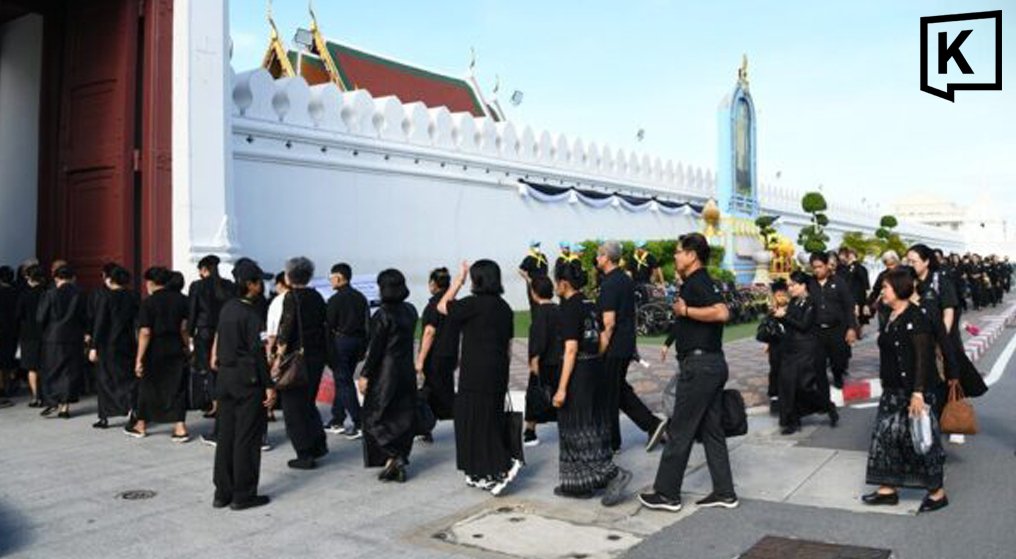
The Gathering at the Grand Palace
On 14 June 2026 the Bureau of the Royal Household opened the first condolence venue at the Grand Palace for members of the public to pay tribute to Princess Bajrakitiyabha Narendiradebyavati. Large numbers of mourners arrived continuously from 08:30 onward at Sahathai Samakhom Pavilion and the designated tent area near the lawn beside Sala Luk Khun. Government officials, military leaders, private-sector representatives, foundations and ordinary citizens formed steady lines to sign condolence books and offer floral tributes before the Princess's portrait. The scene reflected the deep respect Thai people hold for the royal family during times of national loss.
Authorities quickly set up supporting services including food distribution points and medical service stations to care for the arriving crowds. Free motorcycle shuttle services moved visitors efficiently across the Grand Palace grounds. The Ministry of Transport coordinated six free shuttle bus routes that linked major transport hubs and mass transit stations directly with Sanam Luang. These measures ensured that people from every part of Bangkok could reach the venue without difficulty on the opening day.
The collective presence of senior military commanders, charitable organizations, civil servants and former Prime Minister Somchai Wongsawat underscored the national character of the mourning. Representatives from public and private institutions stood alongside ordinary citizens in quiet reflection. This shared participation highlighted how the loss of Princess Bajrakitiyabha Narendiradebyavati touched every level of Thai society. The Grand Palace grounds became a focal point for expressing loyalty and sorrow on 14 June 2026.
Procedures for Paying Condolences
Visitors pay respects before the Princess's portrait at Sahathai Samakhom Pavilion and the designated tent area near Sala Luk Khun within the Grand Palace grounds. The Bureau of the Royal Household has set daily hours from 08:30 to 16:00 beginning 14 June 2026 for these tributes. Attendees sign condolence books and place offerings in an orderly manner under the guidance of palace staff. The procedures allow thousands of people to participate each day while maintaining dignity and respect.
Notable figures including former Prime Minister Somchai Wongsawat joined senior military commanders and representatives from charitable organizations on the first day. Civil servants from various ministries and private-sector leaders arrived in groups to offer their respects. These attendees represented the broad institutional support for the royal family across Thailand. Their presence encouraged many ordinary citizens to join the tribute lines throughout the day.
The Bureau of the Royal Household continues to manage the flow of visitors with clear signage and volunteer assistance. Members of the public are reminded to dress appropriately and maintain silence during their time at the venue. This structured approach ensures that every person who arrives can complete their tribute in a calm environment. The procedures reflect the careful planning that characterizes royal ceremonies in Thailand.
Transportation Network Supporting Mourners
The Ministry of Transport arranged six free shuttle bus routes connecting key transport hubs and mass transit stations with Sanam Luang to serve mourners from 14 June 2026 onward. Eighteen regular Bangkok Mass Transit Authority bus routes also operate normally to the area, providing additional capacity for the large crowds. The Marine Department runs three free boat shuttle routes along the Chao Phraya River between 13 June and 27 June 2026, allowing visitors to travel by water from various piers. These coordinated services demonstrate Thailand's ability to manage large-scale public events through integrated logistics.
Free motorcycle shuttle services operate inside the Grand Palace grounds to move people quickly between entry points and the condolence areas. Food distribution points and medical service stations are positioned at convenient locations to support visitors who spend long hours waiting. The combination of road, river and on-site transport creates a complete network that reduces travel stress for families coming from distant provinces. Bangkok authorities have refined these systems over many years of royal ceremonies.
Thai and Southeast Asian readers recognize this transportation effort as a practical expression of national unity during mourning periods. The free services remove financial barriers so that citizens from every economic background can participate. Coordination between the Ministry of Transport, Bangkok Mass Transit Authority and Marine Department ensures smooth operations each day. This logistical achievement allows the focus to remain on paying respects rather than on travel difficulties.
Buddhist Merit-Making Traditions in Royal Rites
Following the initial 15-day royal merit-making ceremonies, members of the public will be permitted to pay respects before the Princess's casket at Phiman Rattaya Hall. In Theravada Buddhist tradition, such ceremonies allow the living to transfer merit to the deceased, supporting their journey toward peace. The Bureau of the Royal Household has scheduled public access at Phiman Rattaya Hall from 08:00 to 21:00 daily beginning 27 June 2026. These rites connect directly to long-standing Thai practices of honoring the departed through chanting and offerings.
After the completion of the first 100 days of royal rites, government agencies, state enterprises, private organizations and members of the public may participate as hosts of funeral chanting ceremonies. This extended period of merit-making reflects the Thai belief that sustained religious activity benefits both the deceased and the community. Phiman Rattaya Hall holds special significance as the location where the casket rests during this phase. The structured timeline allows families across Thailand to plan their own participation in these Buddhist observances.
Thai communities understand that royal merit-making ceremonies strengthen social bonds and reinforce shared values of compassion and respect. The involvement of ordinary citizens alongside state institutions illustrates how Buddhism remains central to national life. These traditions provide a framework for collective healing during times of loss. The 15-day and 100-day milestones mark important stages in the royal mourning process observed throughout the kingdom.
Public Access Schedule at Phiman Rattaya Hall
The Bureau of the Royal Household announced that public access to Phiman Rattaya Hall begins on 27 June 2026 after the 15-day royal merit-making ceremonies conclude. Daily hours run from 08:00 to 21:00, giving citizens extended time to pay respects before the Princess's casket. Coordination across multiple government agencies ensures that the venue remains orderly and accessible throughout this period. Visitors can expect a solemn atmosphere with clear guidance from palace officials.
The schedule allows people from Bangkok and surrounding provinces to attend after work hours or on weekends. The Bureau of the Royal Household continues to manage entry procedures to accommodate large numbers while preserving the dignity of the occasion. This extended access reflects the royal family's wish for broad public participation in the mourning. Thai citizens appreciate the opportunity to express their loyalty in person at such a historic location.
Planning for the public access phase began well before 14 June 2026 to prepare facilities and staff. The Bureau of the Royal Household works closely with security and transport authorities to maintain smooth operations. This careful preparation ensures that the schedule can be followed without interruption. The result is a respectful environment where every visitor can complete their tribute in peace.
Regional and Cultural Significance for Thai Communities
The mourning at the Grand Palace connects Thai citizens across generations and regions through shared Buddhist values and loyalty to the monarchy. Communities in every province follow the ceremonies through media reports and local merit-making activities that mirror the events in Bangkok. This national participation strengthens social cohesion during a period of collective sorrow. Southeast Asian neighbors observe these traditions as examples of how Thailand maintains cultural continuity amid change.
The presence of former Prime Minister Somchai Wongsawat and senior military commanders alongside ordinary citizens demonstrates the inclusive nature of royal mourning. Local foundations and charitable organizations play visible roles, showing how civil society supports national rituals. These connections remind Thai readers that the monarchy remains a unifying force in daily life. The logistics and ceremonies together illustrate the practical and spiritual dimensions of Thai identity.
For readers in neighboring countries, the scale of public involvement highlights Thailand's distinctive blend of Buddhism and royal tradition. The free transportation network and extended access hours make participation possible for people from all walks of life. This approach reinforces the message that every citizen has a place in honoring the Princess. The events of June 2026 thus carry meaning beyond Bangkok for the wider region.
Conclusion
The gathering of mourners at the Grand Palace on 14 June 2026 and the weeks that follow embody the unity of the Thai people in times of loss. Through structured condolence procedures, extensive transportation support and Buddhist merit-making ceremonies, the nation expresses collective respect for Princess Bajrakitiyabha Narendiradebyavati. These shared activities strengthen the bonds that connect citizens, institutions and the monarchy. The careful planning by the Bureau of the Royal Household ensures that everyone who wishes to participate can do so with dignity.
Buddhist values of compassion and merit transfer guide the entire process, offering comfort to families across Thailand. The regional perspective shows how these traditions continue to shape Southeast Asian understanding of Thai culture. In this period of mourning, the country finds strength in unity and faith.
By Ann Srisawat, Staff WriterThis article was produced with AI-assisted research and editorial support. Reporting is based on sources cited in the article.
What's Your Reaction?
 Like
0
Like
0
 Dislike
0
Dislike
0
 Love
0
Love
0
 Funny
0
Funny
0
 Wow
0
Wow
0
 Sad
0
Sad
0
 Angry
0
Angry
0

Southeast Asia Correspondent at Global1.News. Based in Bangkok, covering Thai and Southeast Asian politics, economy, technology, and culture. Deep regional perspective on one of the world's most dynamic regions.














Comments (0)