
Trump Alleges 'Shocking Vulnerabilities' in US Election Security Ahead of Midterms
Trump delivered a primetime address alleging China compromised 220 million US voter files and exposed shocking vulnerabilities in election systems, directly contradicting US intelligence findings. Critics warn the speech is designed to undermine confidence ahead of the November midterms.
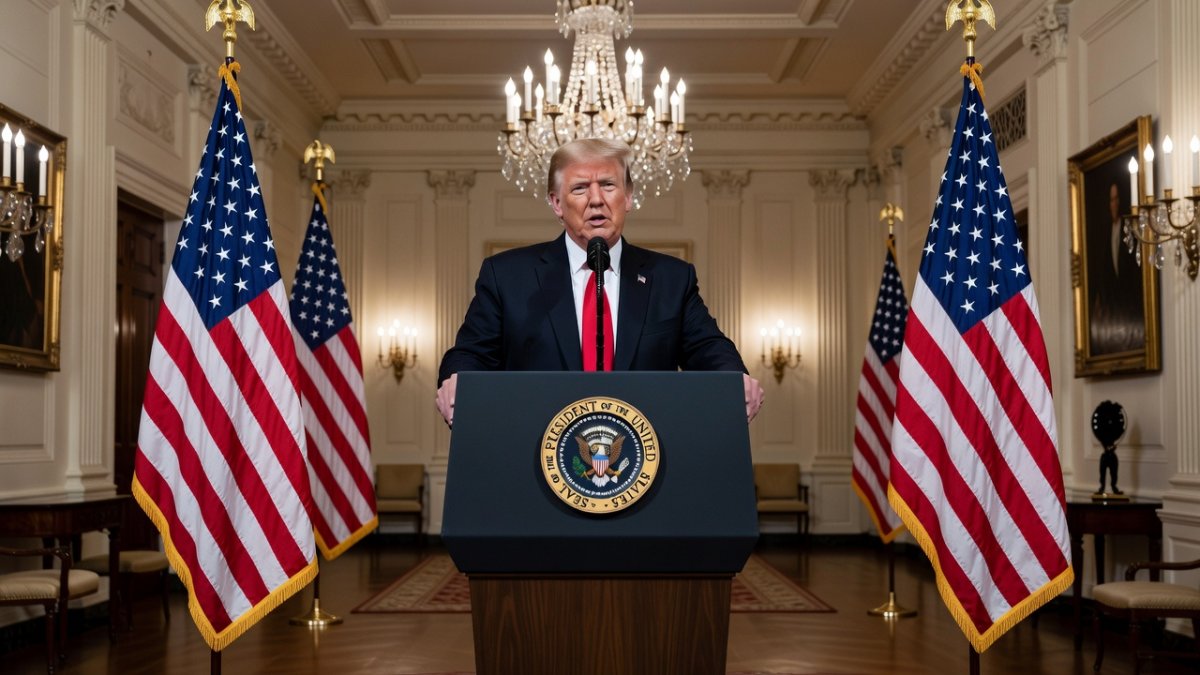
Donald Trump has gone to the American people with a primetime address alleging "shocking vulnerabilities" in US election security, accusing China of compromising the data of 220 million American voters and directly contradicting years of US intelligence assessments. The speech, delivered from the East Room of the White House on Thursday evening, has been met with fierce criticism from Democrats and election security experts who warn it is designed to sow doubt ahead of November's crucial midterm elections.
Trump Alleges 'Shocking Vulnerabilities' in US Election Security — and Contradicts His Own Intelligence Agencies
Washington, DC – 17 July 2026 — In a highly anticipated primetime address that lasted roughly half an hour, President Donald Trump used recently declassified intelligence documents to argue that America's election infrastructure is dangerously exposed to foreign interference, singling out China for what he described as "the largest compromise of election data in history."
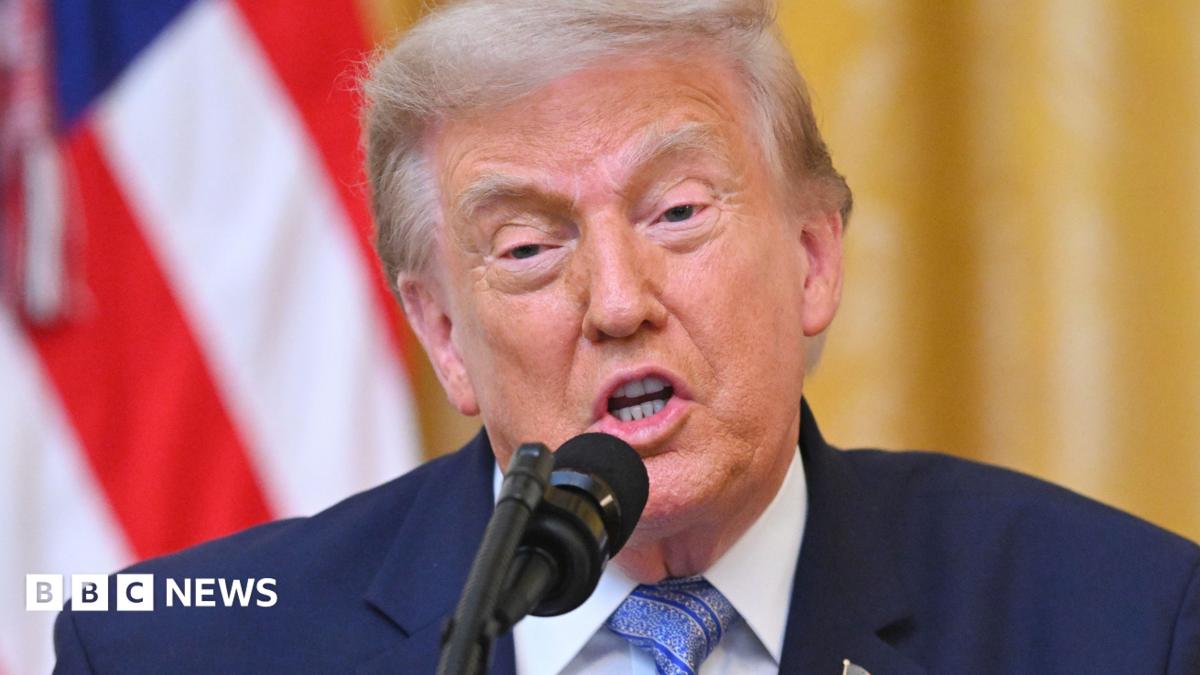
The Speech: What Trump Actually Said
Speaking before an audience of Republican lawmakers, senior administration officials, and acting Director of National Intelligence Bill Pulte, Trump alleged that China had deployed a dedicated "data exploitation unit" targeting American voter records. He claimed Beijing had acquired voter registration data from 18 states, compromising 220 million records, and that US voting machines and ballot counting systems remained "vulnerable and easily compromised."
The documents in question were declassified by Trump's administration and published by the White House shortly before the speech, though many are extensively redacted. Notably, Trump stopped short of explicitly claiming that Chinese interference had altered the outcome of the 2020 election, which he lost to Joe Biden — a subtle but significant limitation on his broader narrative.
Contradicting the Intelligence Community
The president's allegations stand in direct tension with the conclusions of his own intelligence agencies. An assessment published by the Office of the Director of National Intelligence in 2021 found that while China did seek to influence the 2020 campaign — primarily through promoting narratives critical of both candidates and amplifying domestic divisions — there was no evidence that Beijing had compromised voting infrastructure or altered vote tallies. A joint intelligence bulletin from March 2021 stated unequivocally that "no actor has altered any ballots, vote tallies, or election results."
Acting DNI Bill Pulte, who appeared alongside Trump at the White House, defended the declassification as a matter of transparency but did not directly endorse the president's more sweeping claims. Critics within the intelligence community have privately expressed frustration that selectively declassified documents are being used to advance what they describe as a misleading political narrative.
What's Actually in the Documents
According to analyses by multiple news organisations, including the New York Times and CNN, the newly released documents do not substantiate Trump's most aggressive assertions. They contain significant redactions and refer largely to Chinese efforts to obtain voter registration data — information that is already publicly available in many states. Voter registration databases, which include names, addresses, and party affiliations, are considered low-sensitivity information compared to actual vote-casting systems, which remain decentralised and physically disconnected from the internet.
Cybersecurity experts have long warned that voter registration data is a legitimate target for foreign intelligence gathering — but the step from obtaining that data to compromising election outcomes is a very large one, for which the declassified documents provide no direct evidence.
Political Reactions — and What This Means
Democrats were swift and forceful in their condemnation. Senate Majority Leader Chuck Schumer accused Trump of "peddling conspiracy theories from the Oval Office", while the Democratic National Committee described the address as "a desperate attempt to pre-emptively delegitimise an election Republicans are about to lose." House Minority Leader Hakeem Jeffries called it "the most dangerous presidential address of the modern era," warning that it laid the groundwork for challenges to the midterm results.
But the reaction among Republicans was more muted. While some conservative lawmakers praised the president for raising election security concerns, others notably declined to endorse his specific claims. The silence from key Republican figures on Capitol Hill suggests a party cautiously navigating between a president who remains dominant within the party base and a political strategy that could backfire if the claims are shown to be overblown.
The UK and European Perspective
For British observers, the spectacle of an American president using the full power of his office to cast doubt on his own country's electoral integrity is deeply unsettling. The United Kingdom has long relied on the stability of US democratic institutions as a cornerstone of the transatlantic alliance. When the world's most powerful democracy begins questioning the legitimacy of its own elections — three months before a vote that will determine control of Congress — the reverberations are felt squarely in Whitehall.
British officials are watching closely. The Foreign Office has declined to comment on the record, but diplomatic sources indicate serious concern within the government about the potential for post-election instability in the United States. The UK relies on the US for intelligence sharing through the Five Eyes alliance, for trade negotiations, and for collective security through NATO. An America consumed by electoral legitimacy crises is not an America that can reliably lead the West.
What Happens Next — the Midterm Context
The timing of the address is no coincidence. With the November midterm elections just over three months away — and Republicans defending wafer-thin majorities in both the House and the Senate — Trump's decision to centre election security in the national conversation serves a clear strategic purpose. If Republican voters believe the electoral system is fundamentally compromised, their turnout could be affected. Conversely, if Trump has laid the groundwork to challenge unfavourable results, the post-election period could become a constitutional crisis.
Several key swing states — including Georgia, Arizona, Michigan, and Pennsylvania — have already seen Republican-led legislative efforts to tighten voting laws in the name of "election integrity." The intersection of those laws, Trump's allegations, and a closely contested midterm presents a volatile combination. Election administrators across the country have already begun preparing for an onslaught of challenges, whether they materialise in courtrooms, state legislatures, or the court of public opinion.
The Bottom Line — Democracy on the Line
What is most striking about Thursday night's address is not what Trump said — much of it has been said before, in rallies and social media posts — but the setting in which he said it. The East Room of the White House, the same space where presidents have historically addressed the nation in moments of genuine crisis, was used to deliver claims that his own intelligence agencies have not substantiated. That institutional weight matters. It gives fringe theories the imprimatur of the presidency, and it makes the task of defending democratic norms that much harder for those who will have to do so when the votes are counted.
The question now is whether the American electorate will accept the invitation to doubt — or whether, when November arrives, the democratic process will prove more resilient than the forces working to undermine it. For the rest of the world, and particularly for allies like the United Kingdom who have built their foreign policy around American reliability, the stakes could not be higher.
By Erica Thornton, Staff Writer
This article was produced with AI-assisted research and editorial support. Reporting is based on sources cited in the article.
What's Your Reaction?
 Like
0
Like
0
 Dislike
0
Dislike
0
 Love
0
Love
0
 Funny
0
Funny
0
 Wow
0
Wow
0
 Sad
0
Sad
0
 Angry
0
Angry
0

US Politics and Policy Correspondent at Global1.News. Based in Washington DC, covering American politics, policy, elections, and the courts. Knows how the system works and tells you what it actually means.














Comments (0)