
Europe Heatwave 2026: Record Crisis Warns Latin America
The June 2026 European heatwave stands as a stark warning that climate change is no longer a distant threat but an immediate killer reshaping daily life across continents. With temperatures shattering all-time records and infrastructure buckling under relentless heat, the crisis reveals how quickly extreme weather can overwhelm even wealthy nations. For Latin America, already f
The June 2026 European heatwave stands as a stark warning that climate change is no longer a distant threat but an immediate killer reshaping daily life across continents. With temperatures shattering all-time records and infrastructure buckling under relentless heat, the crisis reveals how quickly extreme weather can overwhelm even wealthy nations. For Latin America, already facing a powerful El Niño and lower adaptive capacity, the lessons from Europe demand urgent preparation before similar disasters strike home.
Deadly Heatwave Engulfs Europe: June 2026 Becomes One of the Worst on Record as Climate Change Amplifies Extreme Heat
Updated June 27, 2026 — A deadly heatwave has gripped Europe since June 21, pushing temperatures above 40°C across Spain, Italy, and France and claiming hundreds of lives in one of the most severe June events on record. The World Weather Attribution team declared the scale of the disaster virtually impossible without human-caused climate change, with Europe warming at twice the global average. As Latin America braces for a potentially Super El Niño that is already breaking Pacific sea-surface temperature records, the European catastrophe offers a chilling preview of what lies ahead for the region.
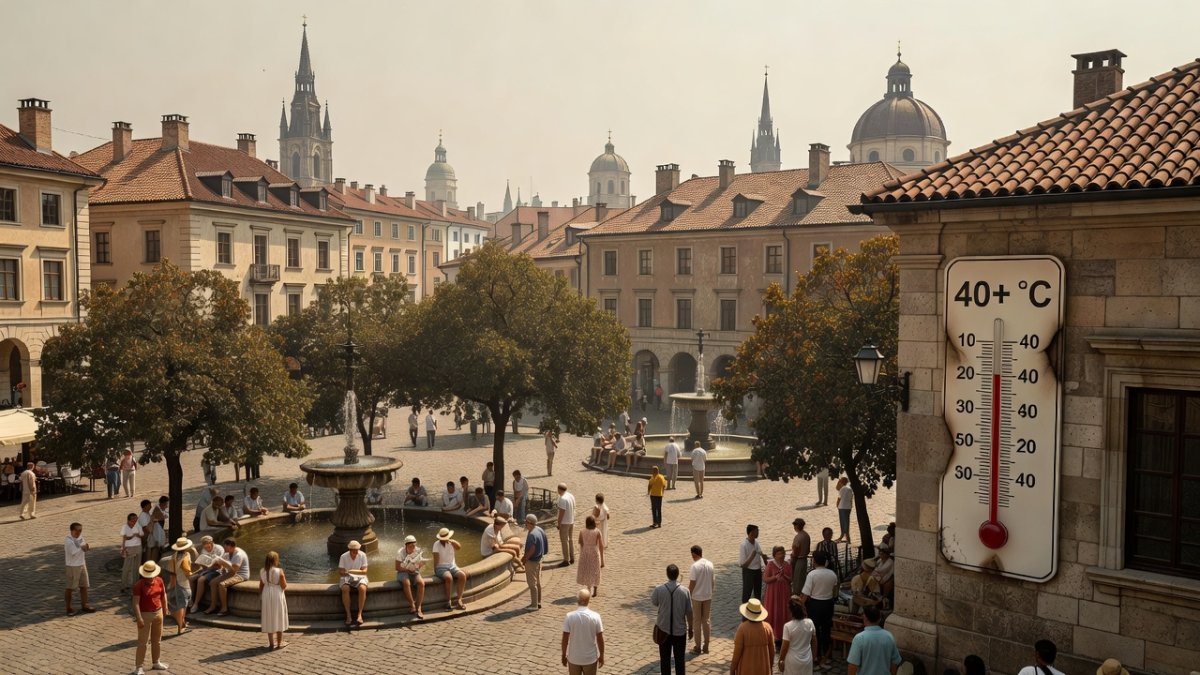
The Heat Dome: Record-Shattering Temperatures
France recorded an astonishing 44.3°C in Pissos, marking the all-time hottest day in national history, while Paris reached approximately 40.9°C. Spain saw temperatures climb to 45°C in multiple locations, triggering red alerts for 18 cities. The United Kingdom experienced its hottest June day since 1976, with readings nearing 39°C and the first-ever Red Extreme Heat Warning issued for parts of the country. The Netherlands issued its inaugural red heat alert as the oppressive dome settled over the continent.
An Omega Block pattern locked the heat in place, preventing cooler air from advancing and allowing daytime highs to soar while nighttime temperatures remained dangerously elevated. In France alone, authorities closed or placed 13,500 schools on special schedules because indoor conditions became unbearable for students. With only about 25 percent of French homes equipped with air conditioning, millions of residents had no refuge from the suffocating conditions that persisted day after day.
Hundreds Dead as Heat Claims Lives Across the Continent
Spain’s MoMo mortality monitoring system attributed at least 327 excess deaths to the heat since June 21. France reported between 40 and 58 heat-related fatalities, while the United Kingdom counted around 20 deaths directly linked to the extreme temperatures. In Germany, more than 20 people drowned while seeking relief in rivers and lakes, and several additional deaths occurred in Italy amid the crisis.
Emergency room admissions in Italian cities on red alert, including Rome, Milan, and Venice, rose 10 to 15 percent as heat exhaustion and cardiovascular complications overwhelmed hospitals. Prolonged exposure proved especially lethal for elderly residents and outdoor workers who lacked access to cooled spaces. The cumulative toll across Europe reached several hundred lives lost in just one week, underscoring how quickly sustained extreme heat translates into human tragedy.
Infrastructure Under Siege: Melting Roads, Closed Schools, Strained Power Grids
Asphalt roads across France and Spain literally melted under the 40-plus-degree onslaught, forcing emergency crews to spread sand and close major routes. Rail networks suffered widespread disruptions as tracks buckled and signaling systems failed in the heat. Several nuclear power plants reduced output because river water used for cooling became too warm, threatening grid stability during peak demand.
The Eiffel Tower closed early each afternoon to protect visitors and staff from dangerous conditions. School closures extended beyond France into neighboring countries, leaving parents scrambling for childcare while children remained at home without adequate cooling. These cascading failures demonstrated that even advanced European infrastructure was not designed for the temperatures now arriving with increasing frequency.
Virtually Impossible Without Climate Change — The Science
World Weather Attribution scientists concluded that an event of this magnitude would have been virtually impossible without human-caused climate change. The same heat dome occurring in 1976 would have been approximately 3.5°C cooler, transforming what was once a rare anomaly into a recurring nightmare. Events like this are now estimated to be 10 to 100 times more likely than they were during the deadly 2003 European heatwave.
Nighttime temperatures, which prevent the human body from recovering overnight, have become 100 times more likely under current climate conditions. Europe’s rapid warming rate, twice the global average, is accelerating these shifts and compressing the timeline between once-in-a-century events. The data leave no doubt that continued greenhouse gas emissions are directly engineering deadlier summers for millions.
What This Means for Latin America — A Warning From the North
A powerful 2026 El Niño is developing rapidly and already breaking Pacific sea-surface temperature records, setting the stage for extreme heat across Latin America. Mexico is enduring its annual canicula midsummer heat period with health alerts issued nationwide, while Brazil’s Center-West region faces dangerously high temperatures that threaten both public health and agricultural output. The Amazon basin stands at heightened risk of drought and fire outbreaks fueled by the combined forces of El Niño and background warming.
Latin America possesses even lower air-conditioning penetration than Europe, meaning extreme heat mortality risk is substantially higher for vulnerable populations. Past events already illustrate the danger: Argentina recorded temperatures above 45°C in 2023, Brazil experienced a heat index reaching 60°C in 2024, and Mexico faced severe heat episodes throughout 2025. Argentina’s Esperanza Antarctic base set a new June temperature record, confirming that warming is reaching even the continent’s southernmost territories.
Without rapid investment in cooling infrastructure, early-warning systems, and urban redesign, the death tolls witnessed in Europe could be multiplied across Latin American cities and rural areas where adaptive capacity remains limited. The European heatwave is not an isolated tragedy but a preview of the 2026-2027 period that now looms over the hemisphere.

Adapting to a Hotter Continent — and Hemisphere
Urban greening initiatives such as Medellín’s green corridors have already demonstrated measurable reductions in local temperatures and should be expanded aggressively across Latin American capitals. Early-warning systems paired with heat-health action plans can save lives when activated days in advance, as several European cities proved during the recent crisis. Cooling centers, especially in low-income neighborhoods, must become standard municipal infrastructure rather than temporary emergency measures.
São Paulo’s developing heat-preparedness framework offers a regional model that other Brazilian cities and neighboring countries can adapt quickly. Investments in reflective roofing, expanded tree cover, and public hydration stations represent cost-effective defenses that reduce both mortality and economic losses. Latin American governments cannot afford to treat these measures as optional when the climate data show extreme heat arriving with greater frequency and intensity each year.
The Bottom Line — A Hemisphere at a Crossroads
The combination of a developing Super El Niño and ongoing climate change creates unprecedented risk for Latin America in 2026 and 2027. Emissions reductions remain essential to limit further warming, yet adaptation investments must accelerate immediately to protect populations already exposed to dangerous heat. European governments learned painful lessons this June; Latin American leaders still have a narrow window to act before similar disasters unfold closer to home.
Failure to prepare will result in preventable deaths, overwhelmed health systems, and economic disruption that the region can ill afford. The time for half-measures has passed. Latin American nations must treat extreme heat as the central climate threat it has become and mobilize resources accordingly before the next record-shattering summer arrives.
By Elena Vasquez, Staff Writer
This article was produced with AI-assisted research and editorial support. Reporting is based on sources cited in the article.
What's Your Reaction?
 Like
0
Like
0
 Dislike
0
Dislike
0
 Love
0
Love
0
 Funny
0
Funny
0
 Wow
0
Wow
0
 Sad
0
Sad
0
 Angry
0
Angry
0

Latin America Correspondent at Global1.News. Based in Mexico City, covering politics, economics, energy, and culture across the region. Brings an on-the-ground perspective to stories spanning from the Rio Grande to Patagonia.















Comments (0)