
Ageing Blacksmith in Nonthaburi Preserves Knife-Making Heritage
Surapol Booonrueng, born in Ayutthaya and now working from his workshop in Nonthaburi, continues the family tradition of hand-forging knives that has passed through generations of Thai artisans. His decades of work reflect the patience and skill that define many Thai craft practices rooted in respect for elders and ancestral knowledge. This story connects to wider efforts across Thailand to keep traditional skills alive amid rapid modernization. Ageing Blacksmith in Nontha...
Surapol Booonrueng, born in Ayutthaya and now working from his workshop in Nonthaburi, continues the family tradition of hand-forging knives that has passed through generations of Thai artisans. His decades of work reflect the patience and skill that define many Thai craft practices rooted in respect for elders and ancestral knowledge. This story connects to wider efforts across Thailand to keep traditional skills alive amid rapid modernization.
Ageing Blacksmith in Nonthaburi Preserves Generations of Knife-Making Heritage
Nonthaburi, Thailand — Surapol Booonrueng shapes steel each day using techniques his family taught him in Ayutthaya. The veteran blacksmith, now based just north of Bangkok in Nonthaburi province, has spent decades at the forge. His work stands as one example of how older craftspeople maintain Thailand's artisanal roots.
The Blacksmith's Story and Techniques
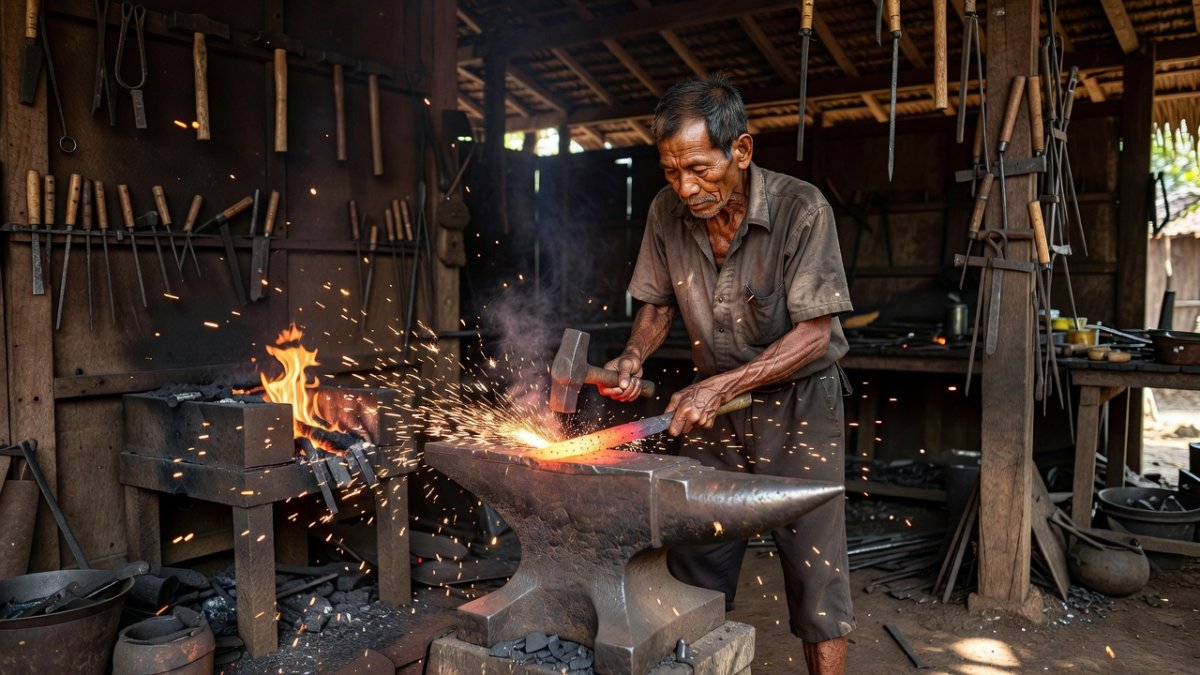
Surapol Booonrueng learned knife-making directly from family members while growing up in Ayutthaya. He hammers heated metal into shape using the same steps passed down through his household. Years at the anvil have shown him that steady repetition builds both skill and khwam otthon, the Thai value of patience.
Each blade receives individual attention from start to finish. Surapol Booonrueng controls the fire temperature and hammer strikes without machines. This hands-on process remains central to his daily routine in Nonthaburi.
In the quiet hours before dawn, Surapol begins his day by kindling the charcoal forge with coconut-shell embers gathered from nearby orchards, coaxing the fire to a steady 900 degrees Celsius where recycled leaf-spring steel from old trucks glows cherry red. He draws the metal into shape with rhythmic hammer blows on a century-old anvil, folding and welding layers to create the distinctive hamon-like patterns that mark his kitchen cleavers and curved rice-harvesting sickles. After rough forging, he quenches each blade in a vat of rainwater mixed with local tamarind leaves for a gentle cooling that preserves flexibility, then tempers it over low coals while sharing stories with visiting apprentices.
His materials remain deliberately local: high-carbon steel sourced from discarded agricultural machinery and charcoal produced by village elders who still practice sustainable coppicing of mango wood. This daily rhythm - forging in the cool morning, grinding and polishing through the afternoon heat, and sharpening edges by lamplight - embodies a meditative pace that contrasts sharply with factory production lines.
The Cultural Heritage of Thai Blade-Making
Thai blade-making carries deep roots in the country's history of craftsmanship. Families in regions like Ayutthaya once supplied tools for farming communities and temple needs. Surapol Booonrueng's methods echo these older practices that valued durability over speed.
Respect for elders forms a core part of this heritage. Younger generations traditionally watched and learned at the side of experienced makers. Surapol Booonrueng continues this chain by keeping the family techniques active today.
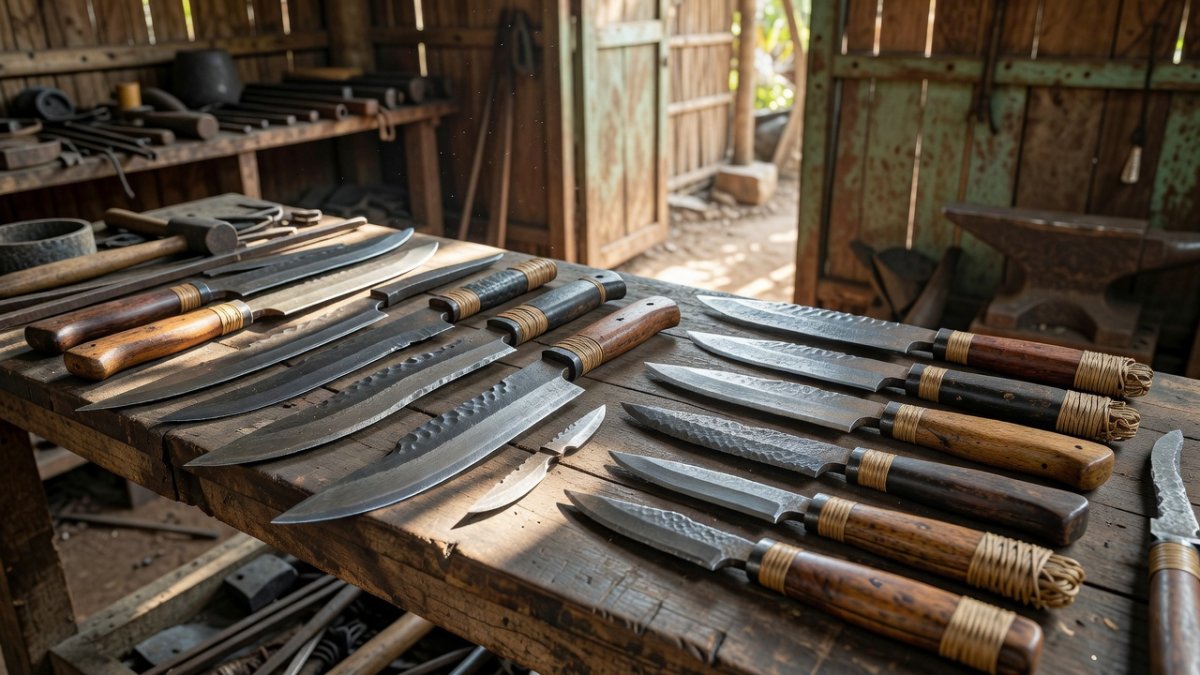
Thai bladesmithing traces its lineage to the workshops of Ayutthaya, where metalworkers fused Khmer forging methods with Chinese crucible techniques to produce tools essential for wet-rice agriculture and riverine life. Farmers once relied on these hand-forged sickles and paring knives to harvest fragrant jasmine rice and prepare meals along the Chao Phraya, their balanced weight and resilient edges reflecting centuries of practical refinement passed quietly from master to apprentice.
Nonthaburi and Ayutthaya's Craft Traditions
Nonthaburi province lies directly north of Bangkok and hosts many small workshops that preserve local skills. Surapol Booonrueng relocated his work here after beginning in Ayutthaya, the former Siamese capital now recognized as a UNESCO World Heritage site. The move placed him closer to markets while he maintained his craft.
Ayutthaya's historical role as a trading center supported many artisan families. Surapol Booonrueng carries forward techniques developed in that setting. Nonthaburi's position allows him to connect with both urban buyers and visitors interested in authentic Thai tools.
The Challenge of Preserving Traditional Skills in Modern Thailand
Thailand faces ongoing questions about how to keep artisanal knowledge alive as master craftspeople age. Surapol Booonrueng represents one of many elders whose daily work demonstrates perseverance. Government agencies such as the Ministry of Culture have supported similar heritage projects in recent years.
Younger Thais often choose factory jobs over long apprenticeships. This shift leaves gaps in communities where hand skills once passed naturally from parent to child. Surapol Booonrueng's continued presence in Nonthaburi highlights the quiet effort required to hold these traditions steady.
Thailand's Ministry of Culture has begun documenting such crafts through its Intangible Cultural Heritage registry and occasional artisan stipends, yet these efforts often reach only a handful of practitioners amid rising steel prices and the lure of urban wages. In Nonthaburi, Surapol's forge stands alongside the famed terracotta potters of Koh Kret and the bamboo basket weavers of Bang Bua Thong, all facing the same quiet erosion as younger generations choose air-conditioned offices over the soot and sweat of inherited trades.
Hand-Forged Blades Versus Machine-Made Tools
Surapol Booonrueng states that blades made by hand last longer than those produced by machines. The careful heating and hammering create stronger edges that hold up through years of use. Machine processes, while faster, often skip the layered treatment that gives traditional knives their resilience.
His experience shows that the extra time spent at the forge produces tools suited to Thai daily life. Farmers and cooks in the Isaan region and central provinces still seek such reliable implements. The difference appears in how each blade performs after repeated sharpening and heavy work.
The Future of Thailand's Cultural Heritage
Surapol Booonrueng's work points to the need for continued support of traditional makers across Thailand. When elders pass on their knowledge, the country retains living links to its past. This matters for tourism in places like Ayutthaya and for local economies that value authentic products.
Preserving these skills strengthens Thailand's identity within ASEAN. Visitors from neighboring countries often seek out genuine craftsmanship during festivals such as Loy Krathong. Surapol Booonrueng's example reminds communities that patience and respect for elders keep cultural roots strong for the next generation.
Thailand's artisanal heritage will endure only if younger people continue to learn directly from those who still practice the old ways. Surapol Booonrueng's forge in Nonthaburi stands as one quiet but steady example of that ongoing effort.
By Ann Srisawat, Staff WriterThis article was produced with AI-assisted research and editorial support. Reporting is based on sources cited in the article.
What's Your Reaction?
 Like
0
Like
0
 Dislike
0
Dislike
0
 Love
0
Love
0
 Funny
0
Funny
0
 Wow
0
Wow
0
 Sad
0
Sad
0
 Angry
0
Angry
0

Southeast Asia Correspondent at Global1.News. Based in Bangkok, covering Thai and Southeast Asian politics, economy, technology, and culture. Deep regional perspective on one of the world's most dynamic regions.












Comments (0)