
Indian-Origin Astronaut Anil Menon Launches to ISS
Launch Details Mark Milestone for International Crew NASA astronaut Dr. Anil Menon lifted off aboard Soyuz MS-29 from the Baikonur Cosmodrome in Kazakhstan on July 14, 2026, at 8:17 PM IST, according to NASA records. The spacecraft carried Roscosmos cosmonauts Pyotr Dubrov and Anna Kikina as crewmates. Docking occurred at the ISS Prichal module around 11:56 PM IST following a three-hour fast-track approach, with hatch opening at approximately 1:25 AM IST on July 15.
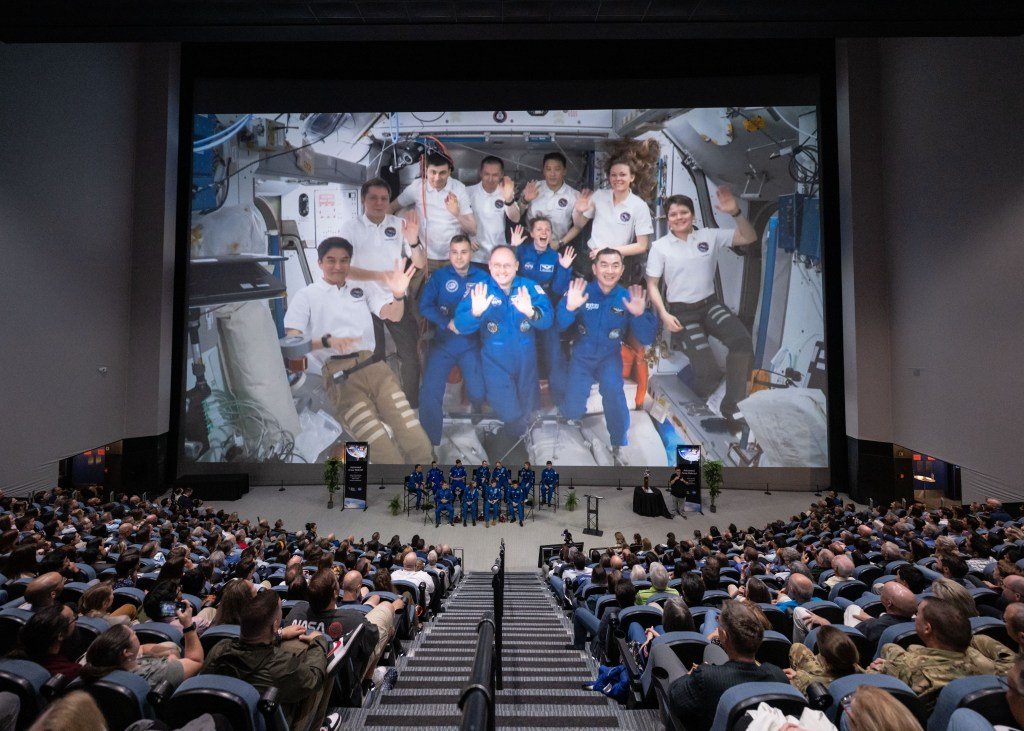
Launch Details Mark Milestone for International Crew
NASA astronaut Dr. Anil Menon lifted off aboard Soyuz MS-29 from the Baikonur Cosmodrome in Kazakhstan on July 14, 2026, at 8:17 PM IST, according to NASA records. The spacecraft carried Roscosmos cosmonauts Pyotr Dubrov and Anna Kikina as crewmates. Docking occurred at the ISS Prichal module around 11:56 PM IST following a three-hour fast-track approach, with hatch opening at approximately 1:25 AM IST on July 15. The mission is scheduled for eight months, with return planned for April 2027 as part of Expeditions 74 and 75.
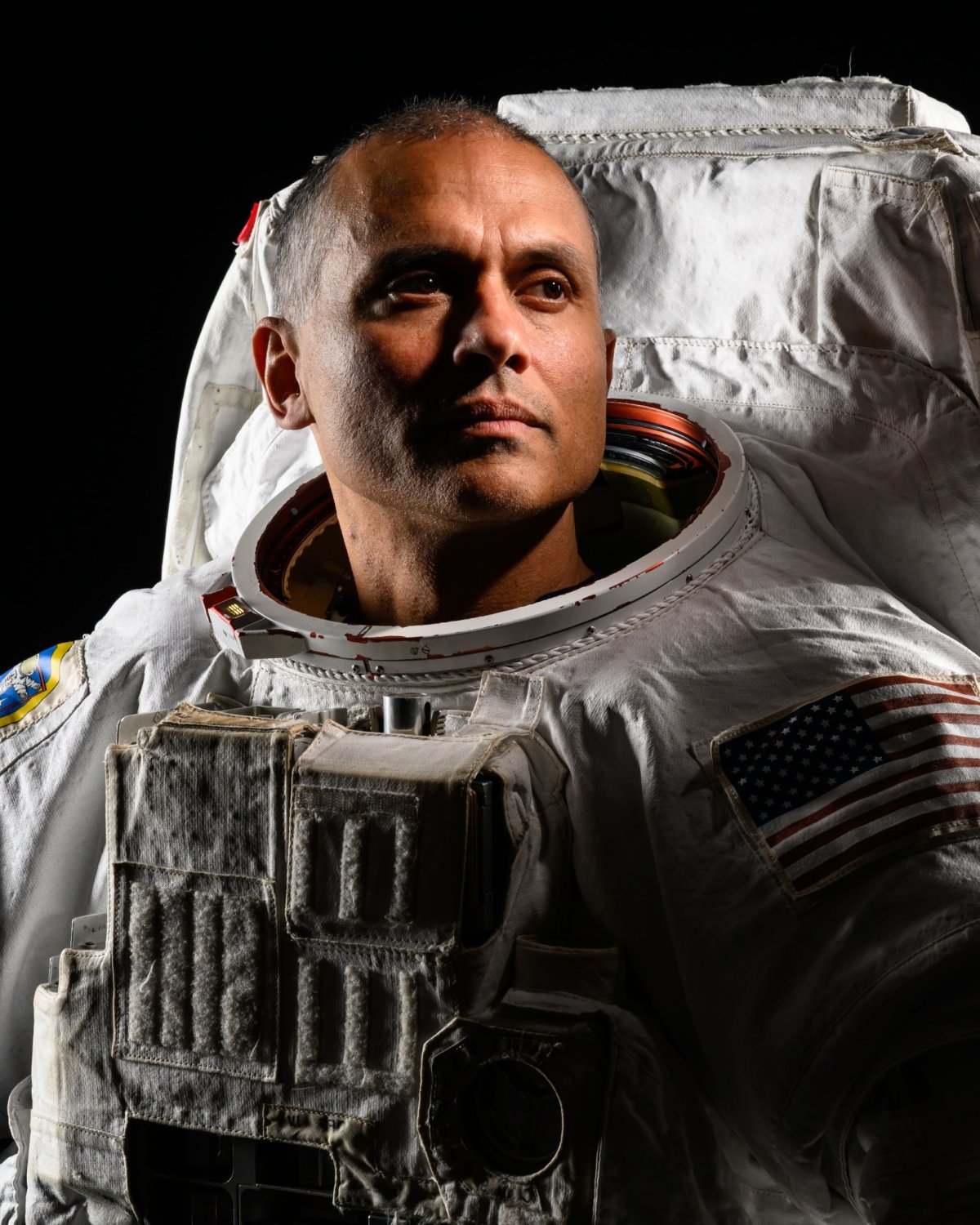
Professional Profile and Operational Experience
Dr. Menon, aged 49, trained as an emergency medicine physician and holds the rank of colonel in the US Space Force. He previously served as SpaceX's first flight surgeon and was selected in NASA's 2021 astronaut class. His earlier deployments included medical support during Operation Enduring Freedom in Afghanistan and participation in rescue operations with the Himalayan Rescue Association on Everest. These assignments provide documented field experience in high-altitude and remote medical care.
Family Background and Indian Lineage
Dr. Menon was born in Minneapolis. His father, K P Shankaran Menon, originates from Ottapalam in Kerala's Palakkad district, while his mother, Elizabeth, is from Ukraine. Such family connections to Kerala have been noted in public profiles from India Today and The Federal. His wife, Anna Wilhelm, is a NASA astronaut candidate who flew on the Polaris Dawn mission in September 2024; the couple has two children.
ISS Research Activities and Technical Focus Areas
During the mission, the crew is conducting studies on blood flow in microgravity, augmented-reality and artificial-intelligence-assisted ultrasound procedures, semiconductor crystal growth, and bioprinting techniques. These investigations align with ongoing NASA priorities for long-duration spaceflight health monitoring and materials processing. Attribution for experiment manifests rests with NASA documentation released ahead of the launch.
The crew aboard Soyuz MS-29 is examining cardiovascular responses to prolonged microgravity through continuous blood-flow monitoring, an area that builds on established NASA protocols for tracking fluid shifts and vascular changes. Augmented-reality and artificial-intelligence-assisted ultrasound systems allow crew members to perform scans with real-time guidance overlays and automated image interpretation, reducing dependence on ground-based specialists during communication delays. Bioprinting experiments focus on depositing living cells layer by layer to form tissue constructs, where the absence of sedimentation in microgravity permits more uniform cell distribution and structural integrity than is achievable under terrestrial gravity.
These investigations hold direct relevance for Indian healthcare delivery. Rural districts and high-altitude regions continue to face acute shortages of radiologists and emergency physicians, conditions that mirror the isolation experienced on the ISS. Institutions such as AIIMS and ICMR-supported telemedicine networks could adapt the same AR/AI ultrasound frameworks to enable primary-care doctors in remote Primary Health Centres to obtain diagnostic-quality images under specialist oversight from distant medical colleges.
Context Within India's Human Spaceflight Programme
India's Gaganyaan programme, managed by ISRO, continues development toward crewed orbital flight following an uncrewed test flight and the planned BAS module. Observations of Dr. Menon's Kerala roots and medical background have prompted commentary in Indian media on potential knowledge exchange pathways, though formal bilateral agreements remain under discussion. The emphasis stays on documented programme milestones rather than projected outcomes.
ISRO’s Gaganyaan programme remains in the preparatory phase, with the Human Space Flight Centre in Bengaluru coordinating astronaut selection, systems integration and crew-vehicle testing. Following the completion of uncrewed demonstration flights, the programme is advancing toward integrated vehicle-level trials that will validate life-support systems, crew escape mechanisms and orbital insertion procedures. The planned Bharatiya Antariksh Station module is conceived as an independent orbital platform that will eventually support sustained Indian crew operations beyond the ISS era.
Participation of Indian-origin crew members on the ISS supplies operational data on long-duration habitation, docking sequences and microgravity countermeasures that directly inform Gaganyaan spacecraft architecture. ISRO engineers are studying ISS environmental-control and thermal-management solutions to refine indigenous designs, ensuring compatibility with future BAS docking ports and crew-transfer protocols. Such knowledge transfer occurs through documented technical exchanges rather than formal bilateral hardware agreements at present.
Medical Education and Research Funding Observations
The ICMR has announced an ₹850 crore roadmap for space-medicine and high-altitude health research. This allocation supports studies in microgravity physiology and remote-care protocols, areas consistent with Dr. Menon's clinical expertise. Indian medical institutions may examine how such funding intersects with existing curricula in aerospace medicine, drawing on publicly available government notifications.
Aerospace medicine remains a niche discipline within Indian medical education, offered primarily as short modules within aerospace engineering or physiology departments rather than as dedicated postgraduate streams. Most medical colleges continue to emphasise terrestrial emergency care and high-altitude physiology without structured exposure to microgravity or spaceflight physiology. This creates a discernible gap between the clinical expertise required for crewed missions and the curricula currently available at institutions such as AIIMS or state medical universities.
Dr. Menon’s progression from emergency-medicine deployments in conflict zones and Himalayan rescue operations to NASA astronaut selection illustrates a viable pathway for Indian physicians. NITI Aayog and the Ministry of Health have outlined telemedicine policy frameworks that prioritise specialist outreach to underserved regions; these frameworks could incorporate space-derived remote-diagnostic tools to strengthen existing National Digital Health Mission infrastructure. Such alignment would allow medical graduates to contribute to both national healthcare equity and future crewed-space objectives.
Semiconductor and Materials Research Linkages
The India Semiconductor Mission carries a publicly stated allocation of ₹76,000 crore. Experiments on semiconductor crystal production aboard the ISS offer one avenue for observing process variables under microgravity conditions. Reporting from NASA and Indian government sources frames these activities as complementary to domestic fabrication initiatives, without specific performance projections attached.
Microgravity crystal-growth experiments on the ISS examine how reduced convection and sedimentation influence semiconductor lattice formation, yielding crystals with fewer defects than those produced under Earth gravity. The India Semiconductor Mission seeks to establish domestic fabrication capabilities; observations from these orbital processes offer qualitative insights into process variables that could complement ground-based research conducted by institutions partnered with ISRO.
International collaboration on the ISS therefore functions as an observational platform for Indian materials scientists. Data shared through NASA documentation can inform optimisation of crystal-growth parameters relevant to electronics manufacturing clusters being developed under the mission. This exchange supports technology absorption without requiring India to replicate full orbital infrastructure independently.
Administrative Presence at the Launch
NASA Administrator Jared Isaacman, the 15th Administrator since December 2025, attended the Soyuz MS-29 launch. His presence underscores continued US commitment to ISS operations and international crew exchanges. Coverage in NASA releases and Indian outlets such as India Today recorded the event without additional interpretive framing.
— By Dr. Raj Patel, Staff WriterThis article was produced with AI-assisted research and editorial support. Reporting is based on sources cited in the article.
What's Your Reaction?
 Like
0
Like
0
 Dislike
0
Dislike
0
 Love
0
Love
0
 Funny
0
Funny
0
 Wow
0
Wow
0
 Sad
0
Sad
0
 Angry
0
Angry
0

India/South Asia Correspondent at Global1.News. Analytical voice with a background in science and health journalism. Based in New Delhi, covering Indian politics, education, healthcare, technology, and policy. Breaks down complex data into clear, actionable reporting.










Comments (0)