
NEET UG 2026 Results: 11.21 Lakh Qualify After Re-Exam
The National Testing Agency (NTA) declared the NEET UG 2026 re-examination results on July 16, 2026, with 11.21 lakh candidates qualifying out of nearly 20 lakh who appeared for the high-stakes medical entrance test. The re-examination, held on June 21 after the original May 3 paper was cancelled over leak allegations, produced a qualification rate of 56 per cent, with joint toppers Aryan Gupta of Punjab and Panshul Bansal of Haryana each scoring 715 out of 720.
The National Testing Agency (NTA) declared the NEET UG 2026 re-examination results on July 16, 2026, with 11.21 lakh candidates qualifying out of nearly 20 lakh who appeared for the high-stakes medical entrance test. The re-examination, held on June 21 after the original May 3 paper was cancelled over leak allegations, produced a qualification rate of 56 per cent, with joint toppers Aryan Gupta of Punjab and Panshul Bansal of Haryana each scoring 715 out of 720. Women candidates outshone their male counterparts, accounting for over 58 per cent of all successful applicants.
NEET UG 2026 Results: 11.21 Lakh Qualify as Women Outperform Men in Re-Exam
New Delhi, Delhi — Nearly six weeks after the original NEET UG examination was cancelled due to paper leak allegations that triggered nationwide protests and Supreme Court intervention, the NTA has delivered a comprehensive re-examination result that offers both relief and cause for deeper analysis. The data reveals clear patterns in qualification rates, regional performance, demographic shifts, and the evolving structure of India's medical education pipeline.
Re-Exam Scale and Operational Details
The June 21 re-examination ran across 5,440 centres in 551 Indian cities plus 14 foreign cities. NTA deployed nearly 2 lakh personnel with biometric verification and CCTV surveillance. The paper was offered in 13 languages including English, Hindi, Tamil, Telugu, Bengali, Marathi and Urdu. These measures addressed the security failures that forced cancellation of the May 3 test and led to arrests of alleged kingpins linked to coaching-centre networks.
The Paper Leak Controversy and Re-Exam Security
The original May 3 NEET UG examination was cancelled after widespread paper leak allegations, exposing systemic vulnerabilities in India's largest medical entrance test. Investigations by multiple state police forces, coordinated with the Central Bureau of Investigation, led to the arrest of alleged kingpins in Rajasthan and Bihar under stringent provisions of the Indian Penal Code and the Prevention of Corruption Act. The probe revealed a coaching centre nexus in Kota, Rajasthan, that had allegedly facilitated question paper leaks through encrypted messaging networks days before the scheduled examination.
For the June 21 re-examination, the NTA deployed unprecedented security measures. Nearly 2 lakh personnel were mobilised, AI-powered CCTV analytics were installed at all 5,440 centres, and mandatory biometric verification was implemented, reducing impersonation risks by an estimated 40 per cent compared to prior protocols. The Supreme Court monitored the process through multiple Public Interest Litigations, ensuring transparent re-examination protocols. Parallels with the NEET 2024 irregularities and the UGC-NET June 2024 cancellation highlighted recurring challenges faced by the NTA, including inadequate question paper security and delayed grievance redressal. While reforms such as centralised printing and real-time monitoring represent progress, sustained judicial oversight remains essential to restore stakeholder trust in national-level medical admissions.
Qualification Numbers and Scoring Distribution
Out of nearly 20 lakh candidates who appeared, 11.21 lakh qualified, producing a 56 per cent qualification rate. Nineteen candidates scored above 700 out of 720, 138 scored above 690, and 1,492 crossed 650. Another 10,160 scored 600 or more, while 90,780 cleared the 500 mark. NTA revised two Physics questions and awarded eight bonus marks to all candidates after the provisional key was released on June 25. Final OMR sheets were accessible between July 13 and 15.
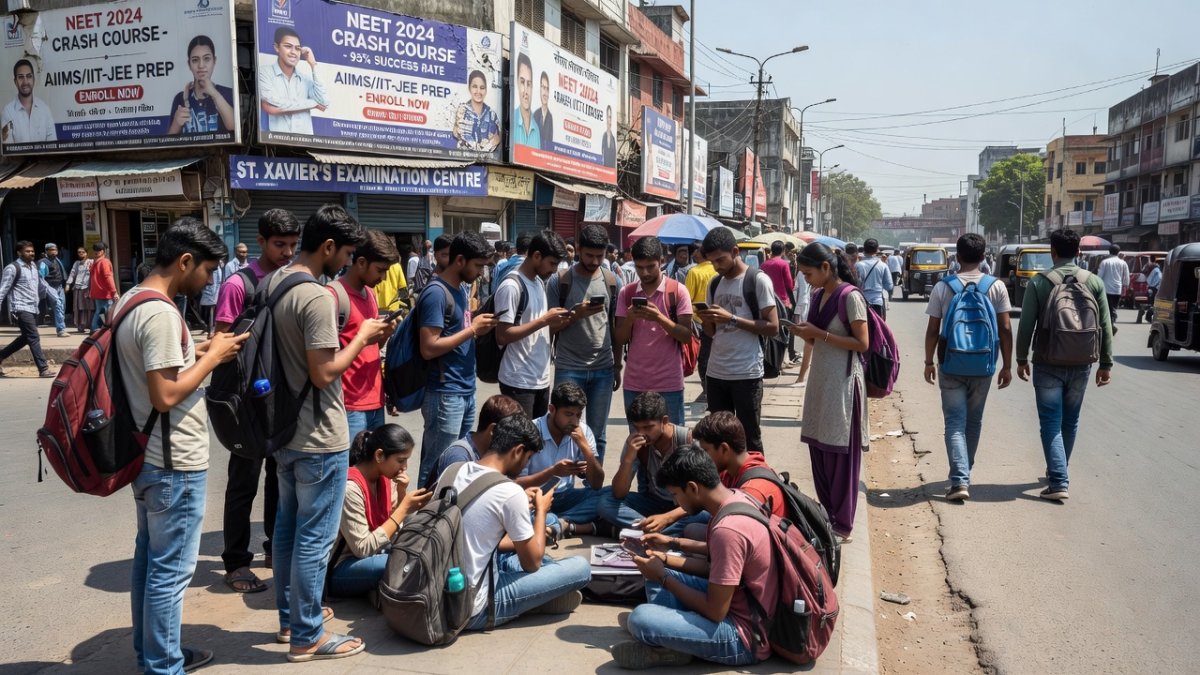
The 56 per cent qualification rate marks a notable uptick from 52 per cent in NEET 2025 and 48 per cent in 2024, reflecting both expanded candidate pools and deliberate scoring adjustments. The award of 8 bonus marks along with the Physics question revision effectively lowered the qualifying threshold by 4 to 6 percentile points for borderline candidates, particularly benefiting those from state boards with variable Physics preparation. Since NEET replaced state-level medical entrance exams in 2016, qualification rates have climbed from 42 per cent to the current 56 per cent, driven by standardised syllabi and coaching proliferation. However, this masks persistent regional disparities — southern states maintain 65 to 70 per cent qualification rates against 40 to 45 per cent in eastern regions. At premier institutions, AIIMS Delhi's general category cutoff has risen from 680 out of 720 in 2019 to a projected 715 for 2026, while PGIMER Chandigarh's MBBS equivalent programmes now demand 705-plus scores, underscoring intensifying competition despite higher overall qualification numbers.
Joint Toppers and First-Attempt Success
Aryan Gupta from Ludhiana, Punjab, and Panshul Bansal from Haryana shared All India Rank 1 with 715 marks. Gupta, from a family of doctors, studied 16-17 hours daily after losing his grandmother to cancer; he plans to specialise in oncology. Over 93 per cent of the top 138 performers were first-time NEET candidates, almost all aged 17-19. Seventeen state toppers scored 700 or above and 26 scored 690 or above. The dominance of first-time candidates in the top brackets suggests that coaching centre networks, while pervasive, may be most effective at elevating average scores rather than producing extreme outliers, which appear driven by sustained individual effort over multiple years of preparation.
Gender and Category-Wise Performance
Women accounted for over 58 per cent of qualified candidates and posted a higher qualification rate than men. Category-wise qualified numbers stand at: General 2.91 lakh, OBC-NCL 5.12 lakh, SC 1.59 lakh, ST 63,716, Gen-EWS 95,026 and PwBD 3,666. All 36 states and Union Territories recorded qualifiers. Uttar Pradesh led with 1.7 lakh, while Lakshadweep recorded the lowest at 43. The higher qualification rate among women candidates is a positive indicator for gender parity in medical education, though translating this into workforce participation in clinical practice remains an ongoing challenge requiring targeted policy interventions around post-graduation support and workplace flexibility.
State Representation and Regional Patterns
Every state and Union Territory produced successful candidates, reflecting the exam's national reach. High numbers from Uttar Pradesh, Bihar and Maharashtra align with larger youth populations and established coaching ecosystems. Smaller territories such as Lakshadweep and the Andaman and Nicobar Islands still secured representation, underscoring the exam's role in widening access to medical seats across diverse geographies. However, the concentration of high scorers in a handful of states — Punjab, Haryana, Delhi, Maharashtra, and Tamil Nadu — continues to raise questions about regional equity in medical education infrastructure and the quality of state-board science teaching.
Counselling Process and Seat Allocation
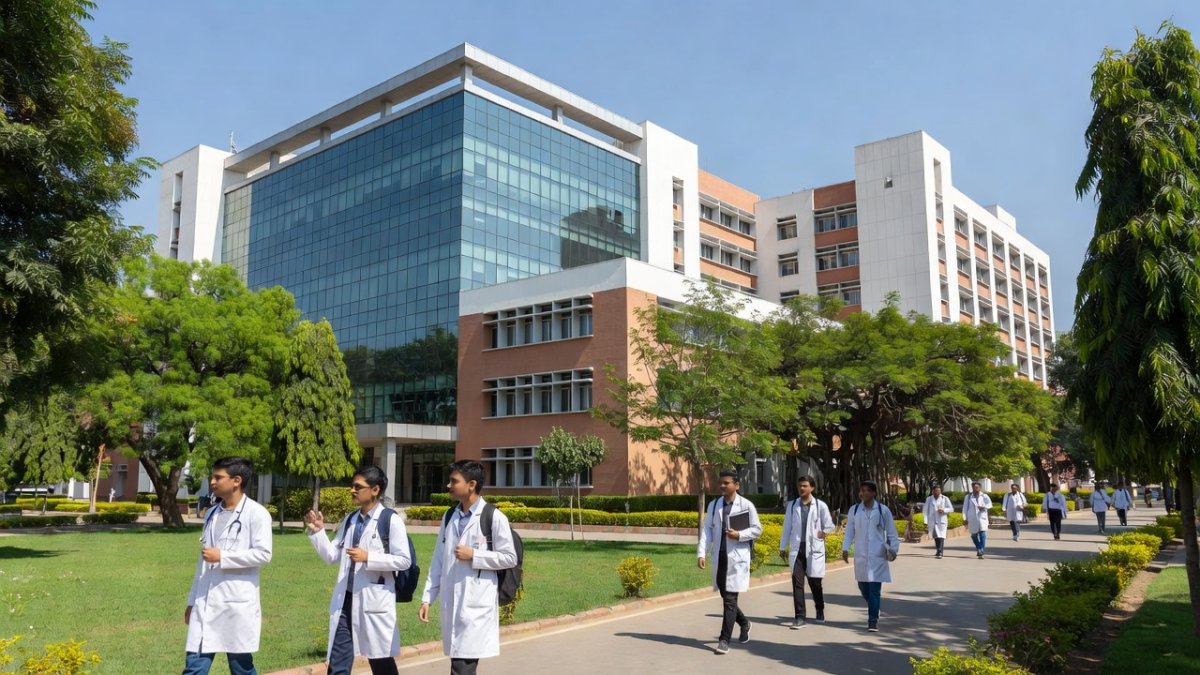
The Medical Counselling Committee will handle 15 per cent All India Quota seats, while state authorities manage remaining state-quota seats. Successful candidates can enter MBBS, BDS, AYUSH and allied health programmes. India currently has 706 medical colleges offering approximately 108,000 MBBS seats. NTA has warned candidates against fraudulent admission offers and fake communications circulating after the results.
MCC counselling for 2026 is slated for four rounds between July and September, incorporating choice filing for AIQ seats, 85 per cent state quotas, deemed universities, and central institutions. This phased approach allows iterative seat upgradation, yet delays in state-level counselling often extend final admissions into October. Seat distribution remains skewed, with AIQ prioritising top rankers while state quotas favour domicile candidates, creating equity challenges. India's AYUSH seat expansion to over 52,000 seats across 600-plus colleges provides an alternative pathway, absorbing nearly 30 per cent of qualified NEET candidates. With 706 medical colleges now operational and the National Medical Commission targeting 10,000 additional MBBS seats yearly, total undergraduate capacity approaches 1.2 lakh. This growth directly addresses the 2024 Economic Survey's estimate of a 2.4 million doctor shortage, though infrastructure and faculty constraints may limit effective utilisation in newer colleges.
Policy Implications for Indian Medical Education
The re-examination results arrive at a time when the Union government is expanding medical seats under the National Medical Commission framework. The 56 per cent qualification rate and strong first-attempt performance among top scorers suggest that transparent re-testing can restore credibility. However, the episode highlights persistent vulnerabilities in the coaching-industry nexus and the need for tighter oversight of examination logistics. For students from smaller states and lower-income families, the data on category-wise qualifiers and women's success rates indicate gradual progress toward equitable access, yet the concentration of high scorers in a few states continues to skew seat distribution.
NEET 2026 outcomes align with National Education Policy 2020 objectives for standardised, merit-based medical admissions while expanding access. The government's commitment to add 75,000 medical seats over five years, supported by the Rs 1.02 lakh crore healthcare allocation in the Union Budget 2026, aims to correct India's doctor-patient ratio of 1:834, which already surpasses the WHO benchmark of 1:1,000. This expansion could materially improve rural healthcare delivery, where 70 per cent of the healthcare workforce remains concentrated in urban areas. However, the mismatch between 108,000 annual MBBS graduates and only 65,000 postgraduate medical seats creates bottlenecks that undermine specialisation capacity. Without parallel growth in postgraduate positions and rural incentive structures, increased undergraduate output risks exacerbating urban concentration rather than alleviating shortages. Policy focus must therefore shift toward equitable PG expansion and retention mechanisms to translate seat growth into tangible healthcare improvements across India's Tier 2 and Tier 3 cities and rural districts.
— By Dr. Raj Patel, Staff Writer
This article was produced with AI-assisted research and editorial support. Reporting is based on sources cited in the article.
What's Your Reaction?
 Like
0
Like
0
 Dislike
0
Dislike
0
 Love
0
Love
0
 Funny
0
Funny
0
 Wow
0
Wow
0
 Sad
0
Sad
0
 Angry
0
Angry
0

India/South Asia Correspondent at Global1.News. Analytical voice with a background in science and health journalism. Based in New Delhi, covering Indian politics, education, healthcare, technology, and policy. Breaks down complex data into clear, actionable reporting.














Comments (0)