
SVB Collapse Exposes the Banking Divide: Entrepreneurs of Color Pay the Price
SVB Collapse Exposes the Banking Divide: Entrepreneurs of Color Pay the Price The Collapse That Shook the Startup World Silicon Valley Bank collapsed on March 10, 2023, after depositors withdrew $42 billion in a single day. The midsize California tech lender ranked as America’s 16th largest bank at the end of 2022. At the time of its failure, SVB provided banking services to ne
The Collapse That Shook the Startup World
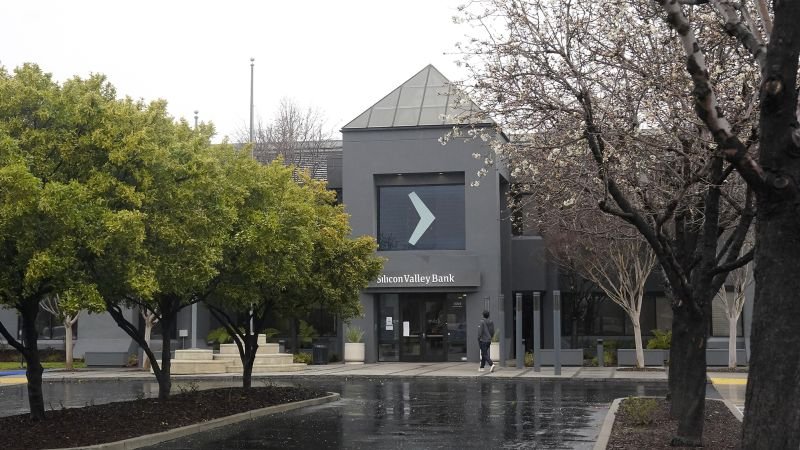
Silicon Valley Bank collapsed on March 10, 2023, after depositors withdrew $42 billion in a single day. The midsize California tech lender ranked as America’s 16th largest bank at the end of 2022. At the time of its failure, SVB provided banking services to nearly half of all venture-backed technology and life-sciences companies in the United States. This concentration meant the bank’s sudden closure sent immediate ripples through the startup ecosystem that depended on its specialized services.
The speed of the withdrawal highlighted how concentrated risk had built up inside one institution. Founders who relied on SVB for payroll, venture debt, and day-to-day operations faced an abrupt halt in access to funds. Because the bank served such a large share of venture-backed firms, its collapse threatened payroll cycles and runway calculations for companies across the country. Regulators later moved to protect all deposits, yet the initial panic exposed how fragile the infrastructure supporting early-stage innovation had become.
SVB’s role extended beyond simple deposit accounts. It offered tailored products that larger national banks often declined to provide to younger companies. When the bank failed, those customized services disappeared overnight. The event therefore tested not only individual balance sheets but also the broader network of relationships that had allowed many technology and life-sciences ventures to operate. The scale of the bank run and the bank’s market position together illustrate why the March 10 collapse produced such widespread concern among founders who had few immediate alternatives.
Why Minorities Felt the Aftershocks Most
Venture capitalist Arlan Hamilton, 43-year-old founder and managing partner of Backstage Capital, stepped in to help founders of color who panicked about losing access to payroll funds. Hamilton observed that many of these entrepreneurs already operated with thinner margins and fewer safety nets. “We’re already in the smaller house. We already have the rickety door and the thinner walls. And so, when a tornado comes by, we’re going to get hit harder,” Hamilton stated. The metaphor captured the structural disadvantages that left minority-led companies more exposed when SVB failed.
Minority entrepreneurs frequently maintain fewer backup banking relationships because earlier rejections from larger institutions have narrowed their options. When SVB collapsed, those founders could not simply shift operations to another established partner. Instead, they scrambled to locate new accounts while simultaneously managing investor calls and employee concerns. The absence of diversified banking ties amplified the immediate operational shock.
Hamilton’s intervention underscored a pattern in which community networks must compensate for gaps left by mainstream finance. Founders who had already navigated higher barriers to entry found themselves once again relying on informal support systems. The collapse therefore revealed how an event that affected the entire startup sector landed with greater force on those who possessed the least redundancy in their financial arrangements. This disparity in resilience stems directly from longstanding differences in access rather than from the failure itself.
SVB Was More Than a Bank for Underserved Founders
SVB regularly sponsored conferences and networking events for minority entrepreneurs. It was known for funding the annual State of Black Venture Report spearheaded by BLK VC. These activities positioned the bank as an active participant in ecosystems that larger institutions often overlooked. By underwriting research and convenings, SVB helped surface data and connections that supported founders who otherwise received limited visibility.
“When other banks were saying no, SVB would say yes,” said Joynicole Martinez, a 25-year entrepreneur and chief advancement and innovation officer for Rising Tide Capital. Martinez, a Forbes Coaches Council member, noted that SVB also offered clients discounted tech tools and research funding. Such practical support lowered operating costs for companies that struggled to secure comparable terms elsewhere. The combination of capital access and ancillary services created a more holistic relationship than many founders experienced with national banks.
The community value extended beyond individual accounts. Events and reports funded by SVB fostered peer learning and investor introductions that proved difficult to replicate after the bank’s closure. Founders who had built their operations around these touchpoints suddenly lost both financial services and the surrounding infrastructure. Martinez’s account illustrates how SVB’s willingness to engage with overlooked segments translated into tangible operational advantages that larger competitors had not matched.
By the Numbers: The Lending Gap in Black and White
Data from the Small Business Credit Survey, a collaboration of all 12 Federal Reserve banks, showed that in 2021 about 16 percent of Black-led companies acquired the total amount of business financing they sought from banks, compared with 35 percent of White-owned companies. The gap reflects persistent differences in approval rates and terms offered to applicants. These figures predate the SVB collapse yet help explain why minority founders maintained fewer alternative banking relationships when the institution failed.
Asya Bradley, immigrant founder of Kinley, joined a WhatsApp group of more than 1,000 immigrant business founders after SVB’s collapse. The group became a rapid channel for sharing practical steps to secure new accounts and maintain operations. “The community was really special because a lot of these folks then were sharing different things that they had done to achieve success,” Bradley said. Such peer networks filled informational voids that formal banking channels had not addressed.
Bradley noted that many women, people of color, and immigrants turn to community or regional banks like SVB because they are often rejected by the top four banks—JPMorgan Chase, Bank of America, Wells Fargo, and Citibank. “The top four don’t want our business. The top four are rejecting us consistently. The top four do not give us the service that we deserve. And that’s why we’ve gone to community banks and regional banks such as SVB,” Bradley said. The survey data and founder accounts together demonstrate how concentrated rejections push underserved entrepreneurs toward a narrower set of institutions, increasing their vulnerability when one of those institutions encounters trouble.
Big Banks' Response vs. the Reality on the Ground
Wells Fargo pointed to its 2022 Diversity, Equity, and Inclusion report, which included the Black Entrepreneur Fund—a $50 million seed, startup, and early-stage capital fund for Black entrepreneurs. Since May 2021, Wells Fargo had invested in 13 Minority Depository Institutions, fulfilling a $50 million pledge to support Black-owned banks. These commitments represent targeted efforts, yet their scale remains modest relative to the overall banking market.
OneUnited Bank, the largest Black-owned bank in the United States, manages a little over $650 million in assets. By comparison, JPMorgan Chase manages $3.7 trillion in assets. The disparity in size underscores how even well-intentioned programs from large institutions operate within a vastly different resource base than the community banks that minority founders have come to rely upon. A $50 million fund, while meaningful, cannot replicate the day-to-day service relationships that SVB had cultivated.
Bradley’s experience of needing a co-signer from her brother to open a business account at one of the top four banks further illustrates the service gap. Large institutions may announce equity initiatives, yet the practical barriers described by founders persist. The numerical contrast between OneUnited’s $650 million and JPMorgan’s $3.7 trillion highlights why announcements from major banks have not fully displaced the role of regional and community institutions for entrepreneurs who continue to face inconsistent access.
The Path Forward: Resilience and Demanding Change
Hamilton established Backstage Capital in the early 2010s after observing that White men controlled nearly all venture capital dollars. “I said, ‘Well, instead of trying to raise money for one company, let me try to raise for a venture fund that will invest in underestimated founders who are women, people of color, and LGBTQ specifically,’ because I am all three,” Hamilton explained. Backstage Capital has since amassed a portfolio of nearly 150 companies and made over 120 diversity investments. This track record shows how targeted capital deployment can build durable companies even when mainstream channels remain limited.
Bradley said she remains “really hopeful” that community banks, regional banks, and fintechs “will all stand up and say, ‘Hey, we are not going to let the good work of SVB go to waste.’” The statement reflects a desire to preserve the specialized services and community orientation that SVB had provided. Founders who benefited from those relationships now seek mechanisms to replicate them across other institutions.
“We know there’s historic, systemic, and just blatant racism that’s inherent in lending and banking. We have to start there and not tip-toe around it,” Martinez told CNN. Sustained progress will require large banks to move beyond modest funds and toward consistent underwriting practices that match the service levels previously available through SVB. At the same time, the growth of Backstage Capital and the rapid mobilization of founder networks demonstrate that resilience already exists within the communities most affected. The combination of internal capital formation and external accountability offers a concrete route to reducing the banking divide exposed by the March 10 collapse.
Source: CNN, Federal Reserve Small Business Credit Survey, Crunchbase
By Jessica Ali, Staff WriterThis article was produced with AI-assisted research and editorial support. Reporting is based on sources cited in the article.
What's Your Reaction?
 Like
0
Like
0
 Dislike
0
Dislike
0
 Love
0
Love
0
 Funny
0
Funny
0
 Wow
0
Wow
0
 Sad
0
Sad
0
 Angry
0
Angry
0

Editor-in-Chief at Global1.News. Atlanta-based journalist who cuts through the BS and tells it like it is. Lead anchor, host, and the voice you hear when the spin stops and the truth starts.














Comments (0)