
Erdogan Demands Turkey’s Place in European Security as NATO Summit Nears
Erdogan's Direct Appeal to NATO Allies Turkish President Recep Tayyip Erdogan addressed parliamentary delegates from all 32 NATO member states in Istanbul on June 29, 2026, stating that "Turkey must be included in all of Europe's defense and security structures." He emphasized that "Turkey's indispensable contributions to European security are sometimes overlooked" and called f
Erdogan's Direct Appeal to NATO Allies
Turkish President Recep Tayyip Erdogan addressed parliamentary delegates from all 32 NATO member states in Istanbul on June 29, 2026, stating that "Turkey must be included in all of Europe's defense and security structures." He emphasized that "Turkey's indispensable contributions to European security are sometimes overlooked" and called for the immediate removal of defense trade restrictions between NATO members. The remarks came one week before the NATO summit scheduled for July 7-8, 2026, at the Bestepe Presidential Complex in Ankara.
Building on decades of strained yet pivotal ties, Erdogan's appeal echoes Turkey's 1999 EU candidacy status and the stalled 2005 accession talks, which were frozen amid disputes over Cyprus and rule-of-law concerns. The 2016 EU-Turkey refugee deal, under which Ankara received €6 billion to manage 3.6 million Syrian refugees, remains a reference point for current negotiations, with Turkish officials citing it as proof of leverage in migration and security matters.
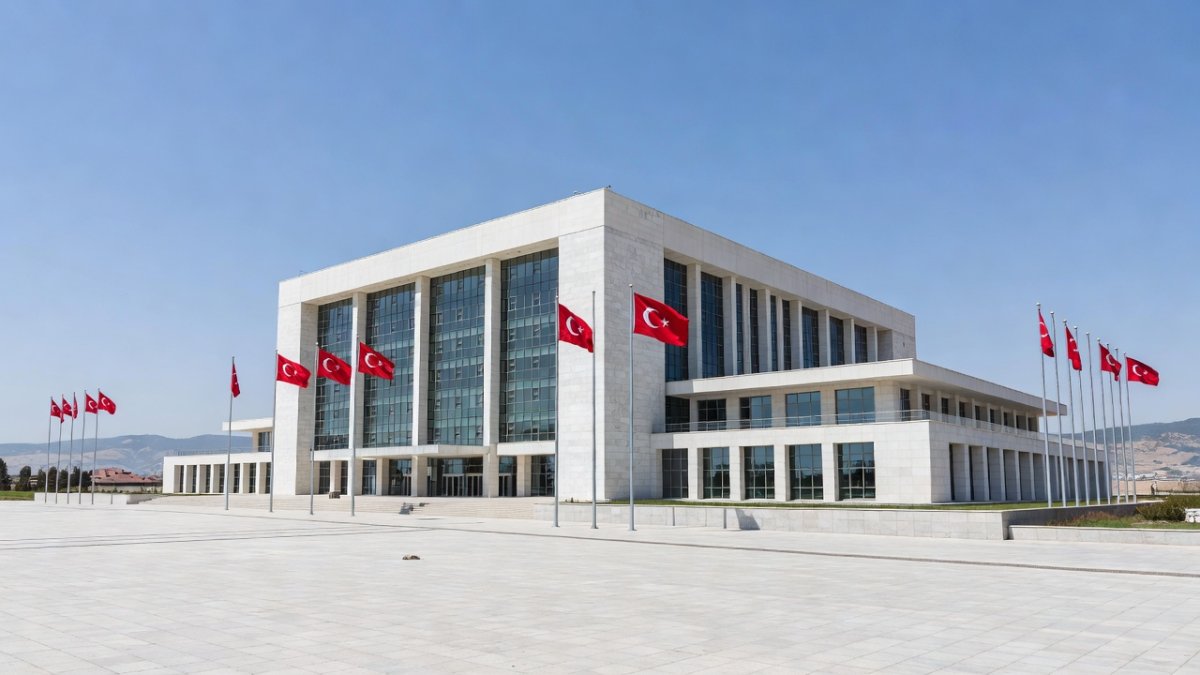
Turkey's Concrete Leverage Points in European Security
Turkey maintains the second-largest standing army in NATO after the United States, with approximately 355,000 active personnel and defense spending at 2.1 percent of GDP in 2025. It controls access to the Black Sea under the 1936 Montreux Convention and hosts Incirlik Air Base, a key NATO installation supporting 5,000 U.S. personnel. These assets give Ankara direct influence over maritime traffic and air operations that affect both European energy security and responses to Russian naval activity. Turkish Foreign Minister Hakan Fidan noted that the Ankara summit will review progress since The Hague meeting and establish a roadmap for defense investment, defense industry production, and support for Ukraine.
Recent Turkish exports underscore this leverage. Turkey delivered a naval warship to Romania, a NATO and EU member bordering Ukraine, marking the first such transfer. Demand for Turkish Bayraktar drones and NATO-standard 155mm artillery shells has risen sharply since Russia's invasion of Ukraine, positioning Turkish defense firms as suppliers in Europe's rearmament drive. Romanian President Klaus Iohannis and Polish Prime Minister Donald Tusk have both publicly praised these deliveries for bolstering NATO's eastern flank.
Defense Industrial Cooperation and Export Growth
Turkey's defense industry has undergone rapid expansion, transforming the country from a net importer into a significant exporter capable of meeting urgent European requirements. The Bayraktar TB2 drone has become a global symbol of Turkish engineering, with combat-proven performance in Ukraine and Libya driving new orders. Complementing this platform is the jet-powered Kizilelma unmanned combat aerial vehicle, designed for high-speed operations alongside manned fighters. The Altay main battle tank program, featuring advanced armor and fire-control systems, is now entering serial production, while Turkish shipyards deliver modern corvettes and frigates that enhance NATO's littoral capabilities in the Black Sea and Mediterranean.
These platforms align directly with Europe's rearmament priorities. Poland has signed major contracts for Bayraktar TB2 systems and is evaluating the Kizilelma for future integration into its air force modernization. Romania, already the recipient of a Turkish-built naval vessel, is negotiating additional maritime platforms to strengthen its Black Sea fleet. Balkan states including Bulgaria and Croatia have expressed interest in Turkish artillery shells and drone surveillance packages, seeking cost-effective alternatives to Western European suppliers facing production bottlenecks. Turkish defense exports, valued at $4.4 billion in 2025, are projected to exceed $6 billion in 2026, reflecting sustained demand across NATO's eastern flank.
This growth trajectory positions Turkish firms as critical nodes in European supply chains. Joint ventures in ammunition production and drone maintenance facilities are under discussion, promising faster delivery timelines than traditional transatlantic routes. European planners increasingly view Turkish industrial capacity as essential for sustaining high-intensity operations should deterrence fail. In the broader Middle East context, these exports also influence energy corridors linking Gulf producers to European markets amid ongoing tensions with Iran.
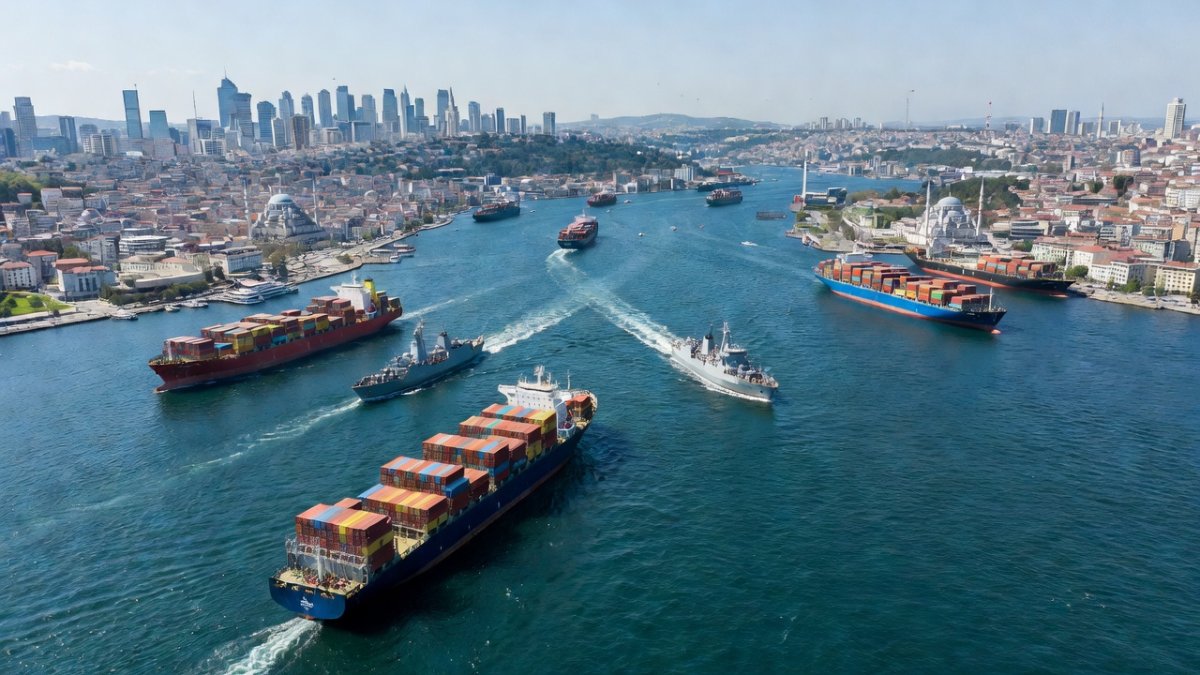
The EU's SAFE Initiative and Blocked Access
At the center of current negotiations is Turkey's exclusion from the EU's 150-billion-euro Security Action for Europe (SAFE) initiative. Europe is accelerating defense cooperation to counter Russia and hedge against possible US disengagement from NATO. Turkish officials argue that participation would align with the bloc's stated goals, yet Cyprus continues to block any upgrade of the EU-Turkey customs union. Annual Turkey-EU trade stands at approximately $230 billion, giving both sides economic incentives to resolve the impasse.
EU priorities include Turkish cooperation on migration management, energy transit routes, Black Sea security, Ukraine support, and stability in the South Caucasus. In exchange, Ankara seeks visa facilitation, modernization of the customs union, and entry into European defense programs. The Bloomberg report of July 2, 2026, titled "Erdogan Shows Europe Why NATO Needs Turkey's Clout on Defense," captured the shifting perception in European capitals. Historical frictions dating to the 2005 accession talks continue to shape these dynamics, with the 2016 refugee deal serving as a template for potential new bargains.
Strategic Calculus for All Parties
Turkey calculates that its geographic position and military capacity provide durable bargaining power. By controlling the Bosporus and Dardanelles, Ankara can influence Russian naval movements and grain exports from Ukrainian ports. European states recognize that excluding Turkey from SAFE risks fragmenting supply chains for drones and artillery at a moment when rapid production scaling is required. The concept of "NATO 3.0" under discussion at the summit reflects an attempt to integrate non-EU NATO members more deeply into collective defense planning.
For the United States, Turkey's continued hosting of Incirlik and adherence to Montreux remain operational necessities. Russia, meanwhile, seeks to exploit any Turkey-EU friction to weaken NATO cohesion. Middle East dynamics intersect here: Turkish defense exports and Black Sea policy affect energy corridors that link Gulf producers to European markets, while Ankara's posture toward Iran and its role in Syrian refugee flows shape EU migration calculations. German Chancellor Friedrich Merz has signaled cautious openness, contrasting with French President Emmanuel Macron's emphasis on EU strategic autonomy.
Broader Middle East and Black Sea Dynamics
Turkey conducts a delicate balancing act between its NATO commitments and pragmatic ties with Russia. The S-400 air-defense dispute continues to strain relations with Washington, while dependence on Russian natural gas and the operational TurkStream pipeline create economic constraints that limit Ankara's room for maneuver. In Syria and the Caucasus, Turkish and Iranian interests frequently collide, yet both powers have coordinated tacitly to contain Kurdish separatism and manage refugee flows. Recent normalization with Israel and several Gulf states has opened new diplomatic channels, potentially easing energy and investment tensions in the Eastern Mediterranean.
Competition with Greece and Cyprus over offshore gas reserves remains a flashpoint. Turkish naval patrols and drilling activities have prompted EU sanctions threats, complicating Ankara's bid for deeper security integration. These regional frictions directly influence Europe's willingness to grant Turkey access to defense programs. A stable Black Sea corridor benefits all parties, yet unresolved Eastern Mediterranean disputes risk derailing summit progress unless confidence-building measures are adopted. Eastern European governments, particularly Poland and Romania, have advocated strongly for Turkish inclusion to counter Russian influence.
What European Leaders Must Decide at Ankara
European leaders arriving in Ankara face four concrete decisions: liberalization of defense trade rules to allow Turkish firms access to NATO-standard components, specific terms for Turkish participation in the SAFE initiative with end-use monitoring, coordination mechanisms for Black Sea maritime security including joint patrols, and a phased roadmap for customs union modernization linked to migration and energy benchmarks. Germany's cautious support, voiced by Chancellor Friedrich Merz, emphasizes incremental steps tied to verifiable Turkish reforms, while France under President Emmanuel Macron maintains reservations over sovereignty concerns and Cyprus veto power. Eastern European states including Poland and Romania back full inclusion to strengthen the eastern flank, and the United States has applied pressure through NATO channels for Turkish integration to ensure alliance cohesion.
The timeline calls for framework agreements by the end of 2026, with initial SAFE pilot projects launching in early 2027 and customs union talks concluding by mid-2028. These choices will determine whether institutional barriers from the 2005 accession freeze persist or give way to pragmatic security cooperation.
Outlook Ahead of the July 2026 Ankara Summit
The Ankara meeting will test whether NATO members can translate Turkey's demonstrated contributions into institutional inclusion. If implemented, expanded access to SAFE and relaxed defense trade rules could accelerate joint production of artillery shells and unmanned systems. Persistent Cyprus objections and unresolved customs union issues remain the principal obstacles. European officials must weigh short-term political costs against longer-term requirements for credible deterrence on NATO's eastern flank.
Delegates are expected to consider three concrete decisions. First, a framework agreement allowing Turkish firms limited participation in SAFE-funded projects under strict end-use monitoring. Second, a phased roadmap for customs union modernization tied to verifiable progress on migration and energy cooperation. Third, establishment of a permanent NATO-EU coordination cell in Ankara focused on Black Sea maritime security and drone interoperability standards. Turkey's position illustrates the broader reality that European security cannot be organized without accounting for Ankara's military weight and geographic control. The summit outcomes will shape whether NATO evolves into a more integrated structure or remains constrained by existing institutional divides.
By Malik Hassan, Staff WriterThis article was produced with AI-assisted research and editorial support. Reporting is based on sources cited in the article.
What's Your Reaction?
 Like
0
Like
0
 Dislike
0
Dislike
0
 Love
0
Love
0
 Funny
0
Funny
0
 Wow
0
Wow
0
 Sad
0
Sad
0
 Angry
0
Angry
0

Middle East Correspondent at Global1.News. Based in Beirut, covering politics, conflict, energy, and society across the Middle East. Brings context and depth to a region often reduced to headlines.











Comments (0)