
CUSMA Review Deadline Arrives on July 1 -- What It Means for Canadian Trade
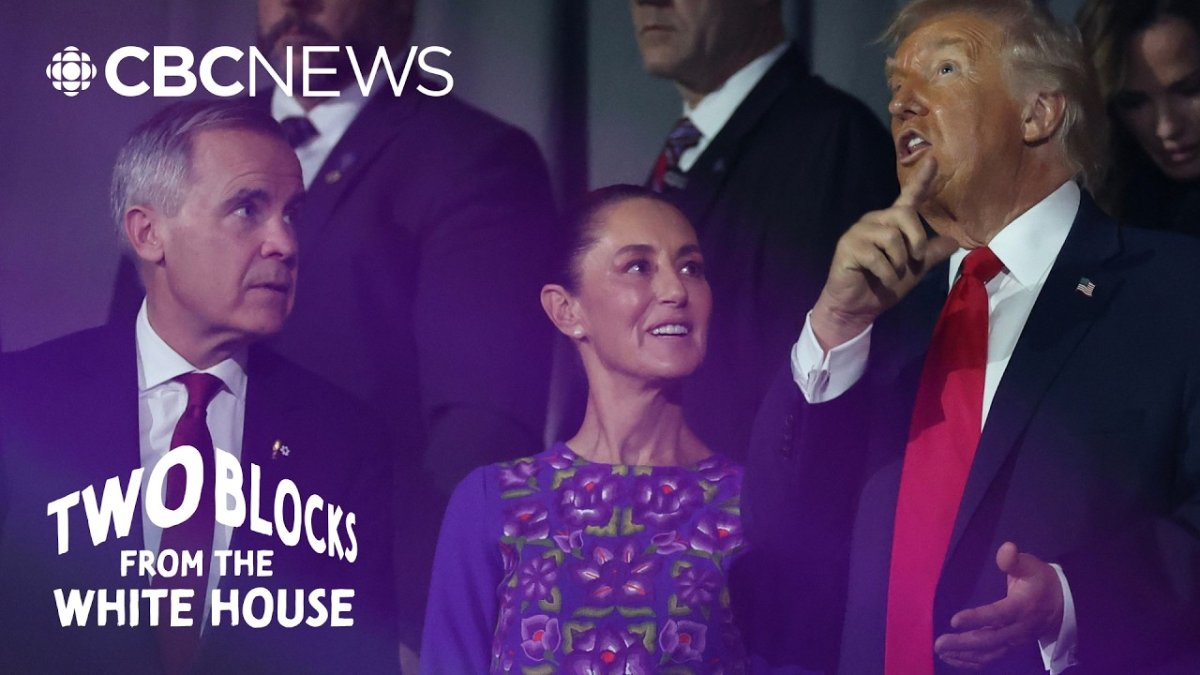
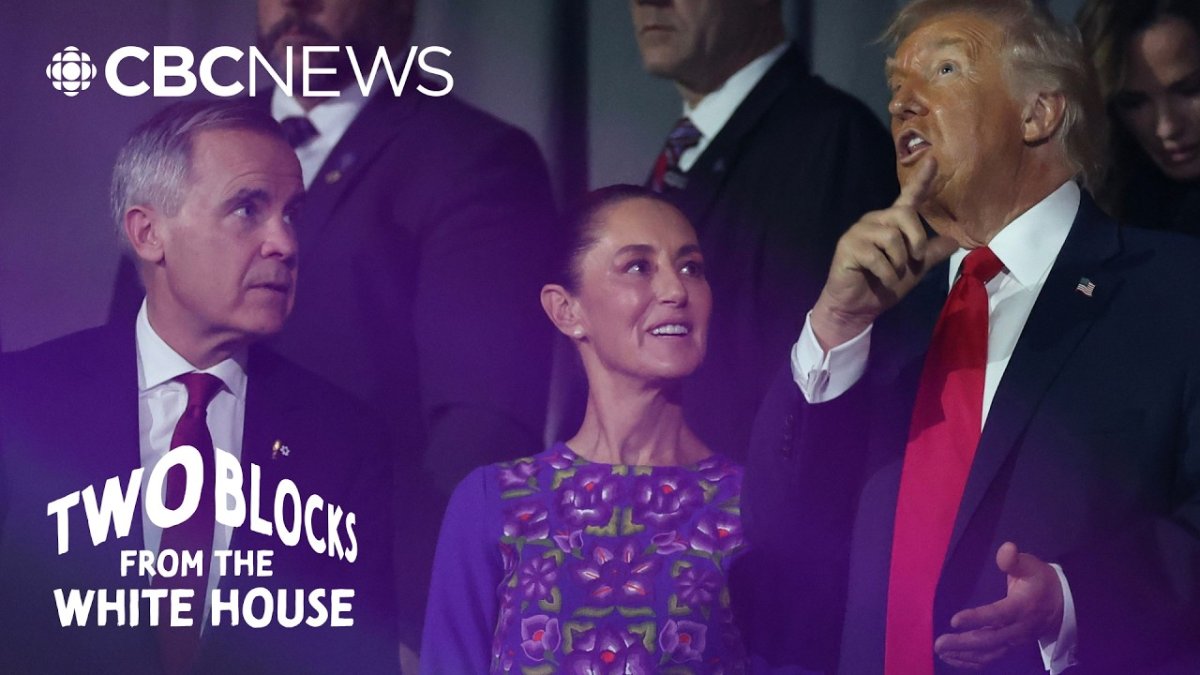
The CBC News video featuring Washington correspondents Willy Lowry, Paul Hunter and guest host Peter Armstrong on "The CUSMA review deadline is here. What now?" published July 1, 2026, opened with live footage from Parliament Hill as Canadian officials prepared statements on the mandatory six-year review of the Canada-United States-Mexico Agreement. The segment examined how Jul
The CBC News video featuring Washington correspondents Willy Lowry, Paul Hunter and guest host Peter Armstrong on "The CUSMA review deadline is here. What now?" published July 1, 2026, opened with live footage from Parliament Hill as Canadian officials prepared statements on the mandatory six-year review of the Canada-United States-Mexico Agreement. The segment examined how July 1, 2026, marks the formal checkpoint for the trade pact that replaced NAFTA in 2020, with two clear paths forward: a sixteen-year extension until 2042 or the launch of full renegotiation talks. Correspondents noted that Prime Minister Mark Carney had already signalled Canada's preference for extension while remaining open to targeted amendments on specific sectors.
What the July 1 Deadline Actually Means
July 1, 2026, functions as a mandatory review checkpoint under Article 34.7 of CUSMA rather than an automatic termination date, according to Trade Minister Dominic LeBlanc speaking from Ottawa. The agreement itself remains in force until at least 2036 unless one party issues a six-month withdrawal notice, a point emphasised by chief negotiator Janice Charette during briefings on Parliament Hill. Officials from Global Affairs Canada clarified that failure to agree on extension simply triggers the possibility of renegotiation without immediate disruption to existing tariff schedules.
Canadian negotiators have described the date as a procedural milestone that allows parties to assess performance since the 2020 implementation, with data from Statistics Canada showing CUSMA currently shields nearly ninety percent of Canadian exports from potential new tariffs. The review process requires formal notification to the other parties but does not compel immediate changes to rules of origin or dispute settlement mechanisms. Federal-provincial coordination meetings held in June 2026 confirmed that provinces retain input on any amendments affecting supply management or energy exports.
Legal experts at the University of Ottawa's Centre for International Policy Studies noted that the sixteen-year extension option would lock in current provisions until 2042, providing long-term certainty for manufacturers in Ontario and Alberta. Without extension, the agreement continues on a rolling basis subject to periodic reviews every six years. This structure was deliberately designed during the original 2018-2020 negotiations to avoid the abrupt termination risks that existed under the old NAFTA framework.
Canada and Mexico's Position
Both Canada and Mexico have publicly stated their preference for the sixteen-year extension while signalling willingness to discuss limited amendments, a position coordinated through joint statements issued from Mexico City and Ottawa in late June 2026. Prime Minister Mark Carney remarked that "What I've seen with the president is that you're not close to making a deal and then you make a deal," reflecting Ottawa's experience with previous bilateral talks. Trade Minister Dominic LeBlanc and chief negotiator Janice Charette lead the Canadian team, with Charette describing July 1 as "a checkpoint... not a cliff" during a press conference at the Lester B. Pearson Building.
Mexico and Canada have formed a common front on core issues including automotive rules of origin and dairy market access, holding virtual coordination calls every two weeks since March 2026. Canadian officials have downplayed concerns about the United States beginning separate talks with Mexico first, noting that federal-provincial relations allow Canada to maintain flexibility on supply management systems in Quebec and Ontario. The two countries also share positions on alcohol sales and energy chapter provisions that affect Alberta's oil and gas sector.
Ambassador David Paterson, Ontario's representative in Washington, emphasised during a June 30, 2026, virtual town hall that "it is important to get the right deal, not just any deal" when addressing automotive parts manufacturers in Windsor and Oshawa. This stance aligns with Mexico's insistence on preserving labour provisions added in 2020 that raised wages in Mexican auto plants. Joint Canadian-Mexican technical working groups continue to meet in Washington to prepare joint proposals ahead of any formal renegotiation.
U.S. Position and Trump's Approach
The Trump administration is widely expected to decline the sixteen-year extension and instead push for renegotiation, despite President Trump having signed CUSMA and previously labelled it a "colossal victory" in 2020. White House trade officials have cited ongoing complaints about dairy access and American alcohol sales in Canada as justification for reopening talks. U.S. Trade Representative offices confirmed that bilateral discussions with Mexico are scheduled for the week of July 20, 2026, in Washington.
Canadian officials have observed that the administration's public rhetoric often precedes pragmatic compromises, consistent with Prime Minister Carney's earlier assessment of negotiation dynamics. The United States has not issued formal withdrawal notice, meaning CUSMA remains fully operational regardless of the July 1 outcome. Republican members of Congress from Michigan and Ohio have urged the administration to seek stronger auto rules of origin to protect American assembly plants.
Despite the tough public stance, U.S. negotiators have acknowledged that abrupt changes could disrupt integrated supply chains across the Detroit-Windsor corridor. The administration continues to reference 2018-2020 renegotiation outcomes as a baseline while floating new demands on digital trade and intellectual property. Ottawa monitors these signals closely through its embassy in Washington and provincial offices in key state capitals.
Key Negotiating Issues
Dairy supply management remains a central flashpoint, with American producers seeking greater access to the Canadian market beyond the quotas established in 2020. Quebec dairy farmers organised through the Union des producteurs agricoles have warned federal negotiators against further concessions that could affect farm incomes in the Eastern Townships. Canada has defended the system as essential to rural economies and stable pricing for consumers across the country.
American alcohol sales in Canada represent another active file, particularly for craft beer and spirits producers in states such as Kentucky and California seeking reduced provincial liquor board markups. Ontario and British Columbia control boards have already adjusted some listing practices since 2020, yet U.S. industry groups continue to press for further liberalisation. Canadian negotiators have linked any movement on alcohol to reciprocal gains on energy exports from Alberta.
Auto rules of origin continue to dominate technical discussions, with current requirements mandating seventy-five percent regional content for tariff-free treatment. Ontario auto sector representatives, including those from the Canadian Vehicle Manufacturers' Association, argue that tightening these thresholds could threaten 125,000 direct manufacturing jobs in the province. Mexico has aligned with Canada on maintaining flexibility for cross-border parts flows that support assembly plants in all three countries.
Canadian Economic Stakes
CUSMA currently governs trade flows worth more than 1.3 trillion dollars annually between Canada and its North American partners, with nearly ninety percent of Canadian exports to the United States enjoying duty-free access. The auto sector in Ontario, the dairy industry in Quebec, and the energy sector in Alberta stand to face the most immediate effects from any renegotiation outcomes. Manufacturing employment data from Employment and Social Development Canada shows 482,000 jobs tied directly to integrated North American supply chains as of March 2026.
Provincial premiers have coordinated positions through the Council of the Federation, with Ontario Premier Doug Ford and Quebec Premier François Legault both emphasising the need to protect supply management and auto investments. Alberta's energy exports, particularly bitumen and natural gas, benefit from CUSMA's streamlined regulatory provisions that reduce duplication with U.S. environmental reviews. Federal officials have modelled scenarios showing potential GDP impacts ranging from 0.8 percent to 2.4 percent depending on the scope of any new tariffs.
Small and medium-sized exporters in British Columbia and Atlantic Canada also rely on predictable rules of origin and dispute settlement mechanisms established under the agreement. The Business Council of Canada has urged negotiators to prioritise certainty over rapid concessions, citing survey data indicating that seventy-two percent of members view CUSMA stability as critical to 2027 investment plans. Labour unions including Unifor have mobilised members in Windsor and St. Catharines to highlight the risks to assembly line employment.
Reactions and Expert Analysis
Drew Fagan of the Munk School of Global Affairs and Public Policy at the University of Toronto described July 1, 2026, as an "anti-Armageddon" date, noting that negotiations will likely stretch across multiple months regardless of the initial extension decision. Fagan's analysis presented at a June 28, 2026, webinar highlighted how previous NAFTA renegotiations extended well beyond formal deadlines without triggering market panic. He emphasised the value of maintaining a united Canadian-Mexican approach on core defensive issues.
David Paterson, Ontario's representative in Washington, reiterated during the same session that securing the right provisions on auto content outweighs the symbolic importance of meeting arbitrary timelines. Janice Charette's characterisation of the date as merely a checkpoint has been echoed by officials at the Canadian Chamber of Commerce, who released a statement on June 30, 2026, supporting measured engagement rather than confrontation. Academic observers at the Centre for International Governance Innovation in Waterloo have modelled various amendment packages and their effects on provincial economies.
Parliamentary committees in Ottawa have scheduled hearings for mid-July to hear from industry witnesses on potential outcomes. The New Democratic Party and Conservative Party have both called for greater transparency in the negotiating mandate, while the governing Liberals stress the importance of federal-provincial alignment. Public opinion polling conducted by Nanos Research in late June showed sixty-eight percent of Canadians favour extending the current agreement with minimal changes.
What Happens Next
U.S.-Mexico talks scheduled for the week of July 20, 2026, will set the immediate pace, with Canadian officials monitoring developments through established trilateral channels. Trade Minister Dominic LeBlanc has indicated that Canada stands ready to engage once the United States clarifies its extension position, potentially through a formal letter to the CUSMA secretariat. Any decision to pursue renegotiation would trigger a new round of consultations with provinces and industry stakeholders beginning in August.
Negotiations, if launched, are expected to continue into 2027 given the complexity of rules of origin and agricultural market access files. Canadian negotiators have prepared detailed position papers on each chapter, drawing on lessons from the 2018-2020 process that produced the current agreement. The federal government has also allocated additional resources to Global Affairs Canada for legal and economic analysis teams based in Ottawa and Washington.
Provincial governments in Ontario, Quebec, and Alberta have established rapid-response teams to assess sector-specific impacts as talks progress. International partners including the European Union and United Kingdom have expressed interest in the outcome, given their own trade agreements with Canada that contain most-favoured-nation clauses linked to CUSMA provisions. Observers anticipate that the process will ultimately produce a modest package of amendments rather than wholesale renegotiation of the agreement's foundational elements.
By Alex Thompson, Staff Writer
This article was produced with AI-assisted research and editorial support. Reporting is based on sources cited in the article.
What's Your Reaction?
 Like
0
Like
0
 Dislike
0
Dislike
0
 Love
0
Love
0
 Funny
0
Funny
0
 Wow
0
Wow
0
 Sad
0
Sad
0
 Angry
0
Angry
0
Canada Correspondent at Global1.News. Based in Toronto, covering Canadian politics, energy, trade, and US-Canada relations. Provides the Canadian perspective on North American and global affairs.













Comments (0)