
US Heat Dome Threatens 2026 World Cup Knockout Stages
The Heat Dome Descends — What's Happening The National Weather Service has confirmed that a powerful heat dome has become established across the eastern and central United States from late June 2026, creating conditions described by forecasters as “historically dangerous”. Some 180 million Americans now sit under major or extreme heat risk warnings, while 46 million people alon
The Heat Dome Descends — What's Happening
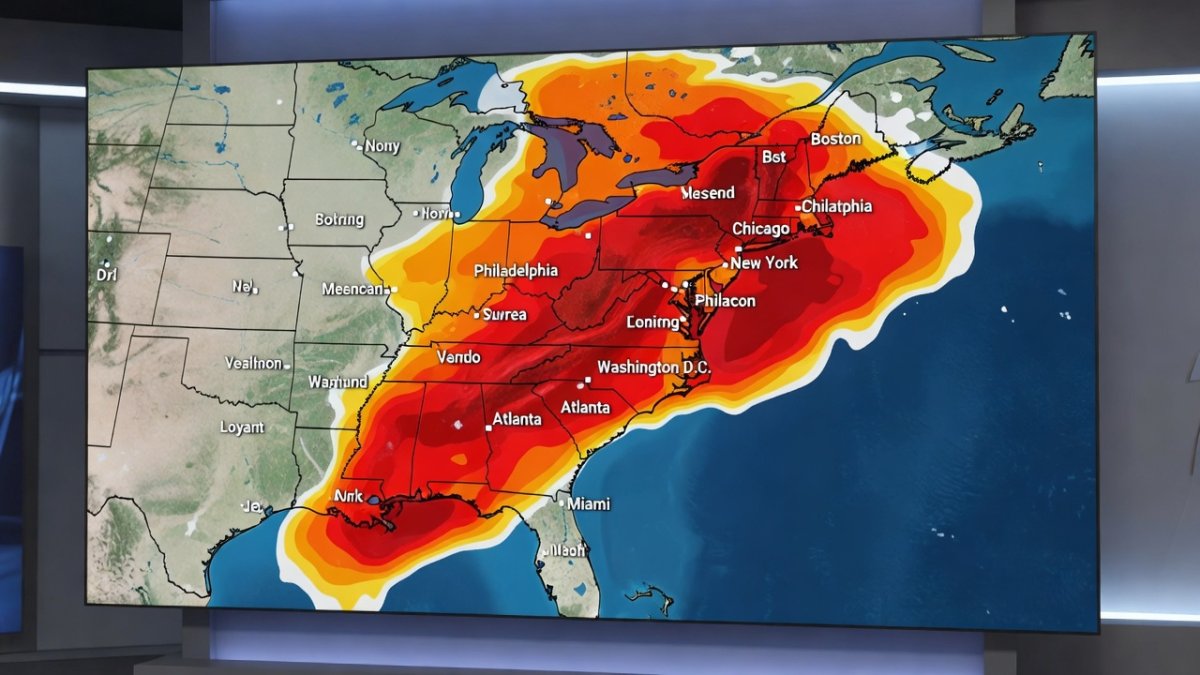
The National Weather Service has confirmed that a powerful heat dome has become established across the eastern and central United States from late June 2026, creating conditions described by forecasters as “historically dangerous”.
Some 180 million Americans now sit under major or extreme heat risk warnings, while 46 million people along the East Coast remain under active heat alerts issued by federal and state agencies.
Temperatures between 100°F and 110°F (38–43°C) are expected across wide areas, with humidity driving heat-index values significantly higher and extending the period of peak danger into the evening hours.
The timing could scarcely be more problematic, coinciding with the World Cup knockout rounds, American Independence Day celebrations on 4 July and Canada Day on 1 July.
Host cities directly in the path of the dome include Philadelphia, the New York/New Jersey metropolitan area, Kansas City and Miami, all scheduled to stage multiple knockout fixtures.
In Philadelphia, the Paraguay versus France match on 4 July is forecast to kick off in 100°F heat with oppressive humidity levels that will test both players and supporters.
The New Jersey stadium, venue for the final itself, lacks air-conditioning in spectator areas, leaving thousands of ticket-holders exposed during what is expected to be the most watched match of the tournament.
Athletes Under Pressure — World Cup Players and Cooling Measures
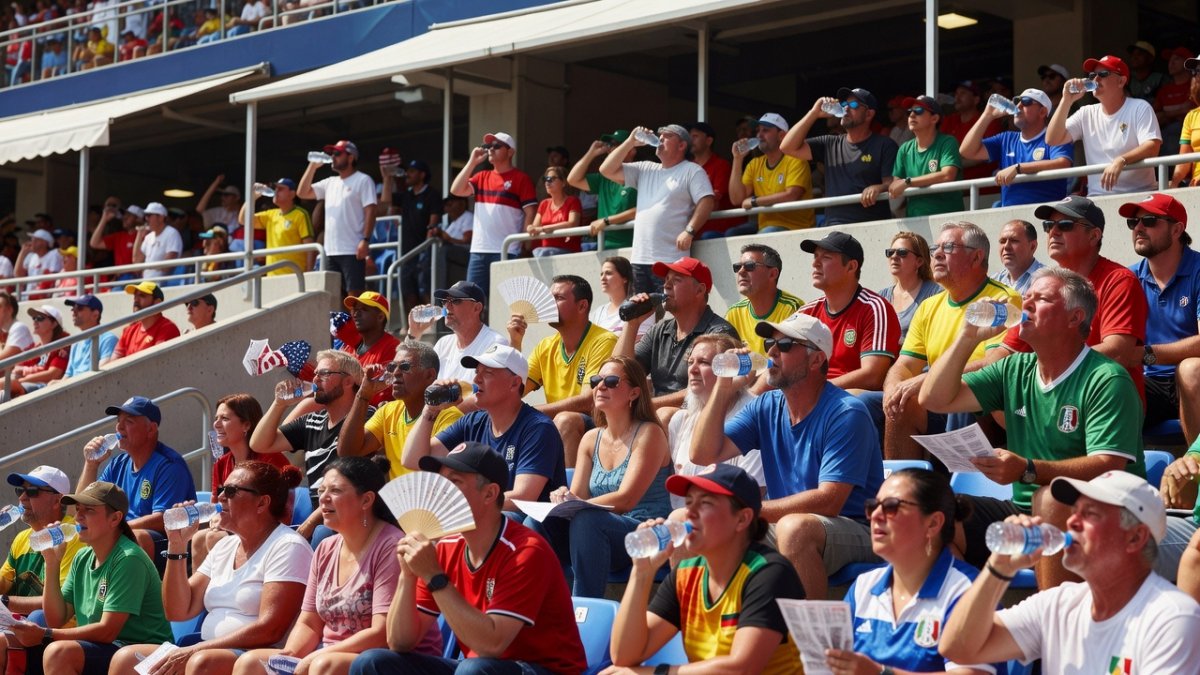
FIFA has responded by introducing mandatory extra hydration breaks and providing air-conditioned benches for substitute players, measures announced after consultation with medical advisers.
Supporters will be permitted to bring one factory-sealed bottle of water into venues, a concession introduced following pressure from supporter groups and health organisations.
An analysis by NPR found that more than one-third of all matches in the tournament are being played in locations classified as high risk under current heat forecasts.
Philadelphia’s Lincoln Financial Field, which will host the Paraguay versus France fixture, has recorded heat-index values above 110°F on several days already this week.
The New Jersey venue’s open stands offer little shade during afternoon kick-offs, prompting concerns that elderly supporters and families with children may struggle to remain for the full duration.
Coaches have been advised to rotate squads more aggressively, with particular attention paid to players from European leagues unaccustomed to such sustained heat and humidity.
Training sessions have been moved to early morning or late evening slots wherever possible, although match schedules remain fixed by broadcasting contracts.
UK Connection — Europe's Record Heatwave and What It Means
British supporters travelling to the United States have been confronted by the additional shock of Europe’s own record-breaking heatwave, which reached its peak just days before the American dome intensified.
London recorded 37°C on what the Met Office confirmed was the hottest June day ever measured in the capital, surpassing previous benchmarks set in 2017.
The Czech Republic, Germany, Poland and Denmark all logged their highest temperatures on record during the same week, according to national meteorological services.
Office for National Statistics data show a sharp rise in heat-related hospital admissions across England during the final week of June, with London and the South East most affected.
Many British fans who had already booked flights and accommodation now face difficult decisions about whether to travel or to watch matches from air-conditioned pubs at home.
Travel operators report increased enquiries about cancellation policies, while the Foreign, Commonwealth and Development Office has updated its guidance for those heading to the eastern United States.
The contrast between the two continents’ simultaneous extremes has been described by climate scientists as a “stark illustration” of the global reach of current atmospheric patterns.
Who Is Most at Risk? — Health Experts Sound the Alarm
Marina Romanell of the Lancet Countdown, interviewed by Channel 4 News, warned that the combination of extreme heat and high humidity creates “a perfect storm for heat-related illness among spectators and athletes alike”.
Daniel Vecellio of the University of Nebraska has highlighted that older adults and individuals with pre-existing cardiovascular or respiratory conditions face the greatest danger during prolonged exposure.
El Niño conditions, which strengthened from 11 June, have amplified the severity of the dome by altering jet-stream patterns and suppressing cloud cover across the affected regions.
Public health officials in Philadelphia have opened additional cooling centres, yet capacity remains limited relative to the number of residents and visitors expected in the city over the holiday weekend.
Emergency services in New Jersey have reported a 40 per cent increase in heat-related call-outs compared with the same period last year, according to state health department figures.
Medical teams at World Cup venues have been placed on heightened alert, with additional paramedics and intravenous fluids stockpiled in anticipation of spectator collapses.
Experts stress that even fit young adults can succumb rapidly when humidity prevents the body from cooling through perspiration, a risk magnified during three-hour matches.
Climate Crisis Context — Why Heatwaves Are Becoming More Frequent
The current episode follows a clear pattern of intensifying heat extremes linked to anthropogenic climate change, compounded this year by the strong El Niño event.
Defra’s latest adaptation report notes that the United Kingdom and other temperate nations must now prepare for temperatures previously considered exceptional on an annual basis.
Sports governing bodies worldwide are being forced to reconsider scheduling, with evening kick-offs and shaded or air-conditioned venues becoming essential rather than optional.
The 2026 tournament, co-hosted by the United States, Canada and Mexico, was already under scrutiny for its environmental footprint; the heat dome has added an urgent public-health dimension.
Researchers at the Grantham Institute have modelled that, without rapid emissions reductions, similar or worse conditions could affect future major sporting events held in mid-latitude cities during summer months.
FIFA’s decision to expand the tournament to 48 teams has increased the number of matches played in potentially vulnerable locations, a factor now intersecting with climate-driven extremes.
British ministers have called for international sporting federations to develop binding heat protocols, citing the recent European records as evidence that no region can consider itself immune.
What It Means for Fans — Practical Challenges and Warnings
Public transport systems in Philadelphia and New York are under strain, with air-conditioned buses and subway cars operating at reduced capacity due to increased demand and mechanical failures in the heat.
Families travelling with children have been advised to carry additional water and electrolyte solutions, while elderly supporters are urged to reconsider journeys that involve long periods outdoors.
Stadium operators have warned that queues for water refill stations and medical assistance could extend significantly, potentially causing fans to miss portions of matches.
Local authorities in host cities have activated emergency heat plans, including misting stations and free transport to cooling centres for those showing signs of distress.
British tour operators have issued revised itineraries that prioritise indoor activities during peak heat hours, while still attempting to deliver the promised match-day experiences.
Some supporters have already decided to sell tickets at face value rather than risk health complications, creating a secondary market that FIFA has yet to regulate.
Channel 4 News footage from the East Coast shows long lines of fans seeking shade hours before kick-off, underscoring the practical difficulties even the most dedicated supporters now face.
The Bottom Line — What Comes Next
FIFA has stated that all cooling measures will be kept under constant review, with the possibility of further schedule adjustments should conditions deteriorate beyond current forecasts.
The final in New Jersey remains the most exposed fixture, and organisers are examining options including earlier kick-off times or additional temporary shading structures.
Health experts continue to emphasise personal responsibility, urging fans to monitor symptoms, stay hydrated and seek shade or medical help at the first sign of dizziness or nausea.
For British supporters who have travelled across the Atlantic, the experience is proving far removed from the celebratory atmosphere originally anticipated.
The convergence of record European temperatures, a North American heat dome and a major international sporting event has created a stress test for both infrastructure and governance that few had foreseen.
Whether the measures introduced prove sufficient will be judged in the coming days, as the knockout stages unfold under conditions that climate scientists warn are becoming the new normal.
Further updates will be provided as the situation develops.
By Erica Thornton, Staff Writer
This article was produced with AI-assisted research and editorial support. Reporting is based on sources cited in the article.
What's Your Reaction?
 Like
0
Like
0
 Dislike
0
Dislike
0
 Love
0
Love
0
 Funny
0
Funny
0
 Wow
0
Wow
0
 Sad
0
Sad
0
 Angry
0
Angry
0

US Politics and Policy Correspondent at Global1.News. Based in Washington DC, covering American politics, policy, elections, and the courts. Knows how the system works and tells you what it actually means.













Comments (0)