
Trump's 50% Tariffs Hit Canadian Small Businesses Hardest: Business Owners Sound Alarm
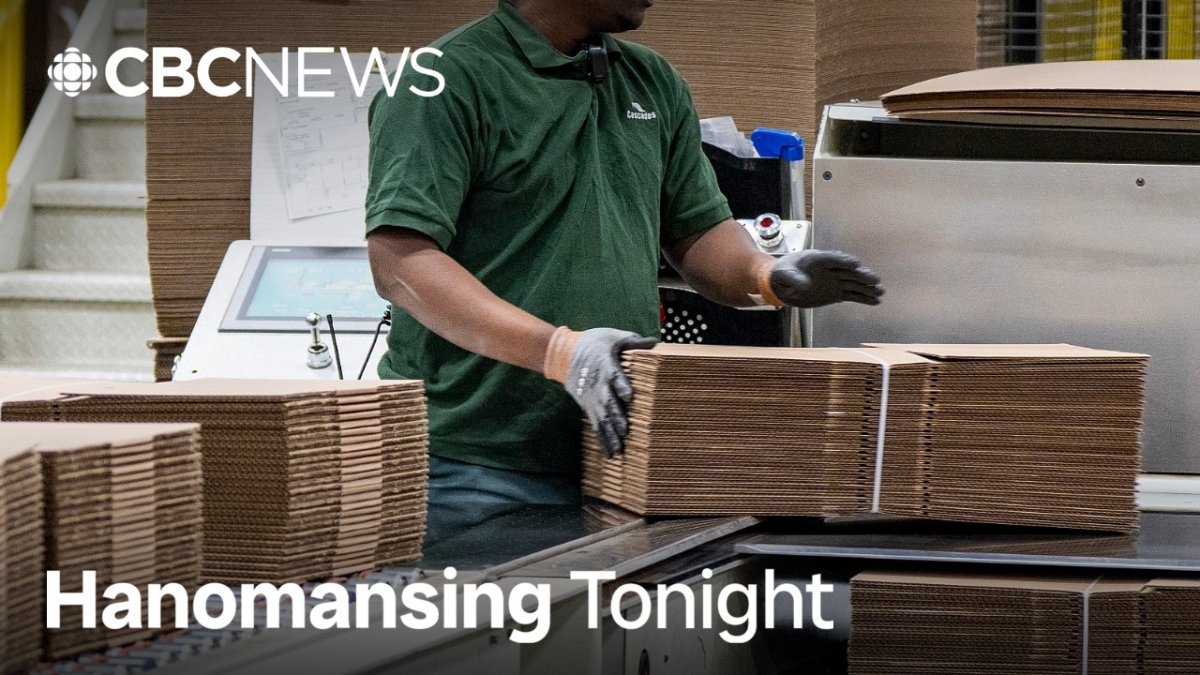
The CBC News video titled "'Hardest challenge yet': Canadian business reacts to Trump's 50% tariff threat | Hanomansing Tonight" features Tia Masic, founder of the Canadian notebook company Hemlock & Oak, who stated that U.S. President Donald Trump's new 50 per cent tariff threat could represent the hardest challenge her business has faced, leaving small Canadian enterprises caught in the crossfire of escalating trade measures.
The CBC News video titled "'Hardest challenge yet': Canadian business reacts to Trump's 50% tariff threat | Hanomansing Tonight" features Tia Masic, founder of the Canadian notebook company Hemlock & Oak, who stated that U.S. President Donald Trump's new 50 per cent tariff threat could represent the hardest challenge her business has faced, leaving small Canadian enterprises caught in the crossfire of escalating trade measures.
The Tariff Proclamations Issued on July 20
On Monday July 20, 2026, President Donald Trump signed three proclamations that imposed 50 per cent tariffs on many Canadian goods valued at approximately $20 billion. The measures target automobiles, dairy products including cheese and milk, alcohol such as wine and spirits, hockey sticks, electronics, and machinery. Auto parts received an explicit correction excluding them from the list. These tariffs apply regardless of whether the goods qualify under the USMCA/CUSMA agreement, effectively overriding the existing trade framework.
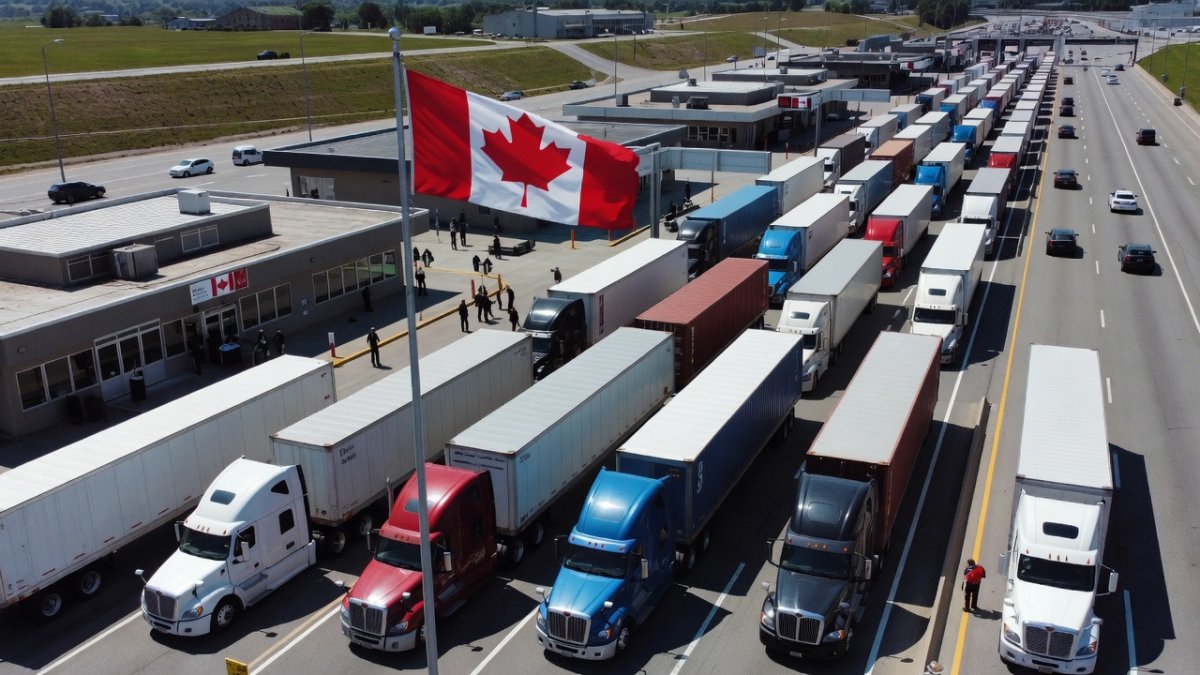
The proclamations take effect in 30 days, placing the implementation date around August 19, 2026. Canadian exporters shipping to the United States now face immediate planning requirements for inventory, pricing, and supply chains. The scale of the affected trade volume directly impacts manufacturers and producers across multiple provinces.
Section 338 of the Tariff Act of 1930
President Trump invoked Section 338 of the Tariff Act of 1930, an obscure provision that had remained largely untested for decades. Trade lawyers in Ottawa and Washington note that this marks the first application of the section against a USMCA partner. The clause permits tariffs in response to alleged discriminatory treatment, which the administration cited regarding U.S. farmers.
Legal experts at the Canadian Chamber of Commerce and the Department of Global Affairs are reviewing the measure's compatibility with existing treaty obligations. The override of USMCA tariff-free protections introduces uncertainty for companies that previously relied on the agreement's rules of origin. No prior administration has used this authority in this manner against Canada.
Prime Minister Mark Carney's Federal Response
Prime Minister Mark Carney described the tariffs as the latest in a series of unilateral U.S. trade actions that violate the USMCA. Speaking from Parliament Hill, Carney stated that Canada had merely matched those measures as its right under the agreement. The federal government has directed officials to prepare retaliatory lists while keeping diplomatic channels open during the 30-day window.
Officials in the Privy Council Office and Global Affairs Canada are coordinating with industry associations to quantify the impact on specific sectors. The response aligns with longstanding Canadian positions on rules-based trade defended at the World Trade organisation and through bilateral mechanisms. Carney emphasized that the measures undermine the predictability Canadian businesses require for cross-border investment.
Provincial Premiers Present a United Front
Ontario Premier Doug Ford declared a policy of "tariff for tariff, dollar for dollar" in response to the federal announcement. Ford's government in Queen's Park has begun compiling lists of U.S. goods that could face equivalent duties, focusing on products from states with significant exports to Canada. Saskatchewan Premier Scott Moe called for intensified negotiations while supporting coordinated federal-provincial action.
Prince Edward Island Premier Dennis King stated that Canadians expect a united front across jurisdictions. British Columbia Premier David Eby announced that B.C. would not return U.S. booze to provincial liquor store shelves, directly affecting American wine and spirits producers. These positions reflect the federal-provincial dynamics that shape Canadian trade policy during disputes with the United States.
Ontario Premier Doug Ford has called for immediate federal compensation to affected industries while signalling that provincial procurement policies could favour Canadian suppliers. British Columbia Premier David Eby has gone further by directing the BC Liquor Distribution Branch to suspend purchases of American alcohol, a move that leverages provincial jurisdiction over liquor sales. Saskatchewan Premier Scott Moe has emphasised the need to protect agricultural exporters, whereas Prince Edward Island Premier Dennis King and Finance Minister Jill Lantz have jointly urged Ottawa to prioritise seafood and potato shipments that cross into New England markets daily.
Under Canada’s constitutional framework the federal government retains sole authority over international trade negotiations, yet provinces control significant levers including government purchasing and the operation of liquor boards. Ontario’s LCBO and the BC Liquor Distribution Branch rank among the largest alcohol buyers in North America, giving them substantial influence over American beverage exporters. Coordinated provincial actions can therefore amplify federal pressure without violating international trade rules.
Regular conference calls between premiers and federal ministers have already begun to align messaging and to catalogue potential retaliatory measures. This federal-provincial machinery, refined during earlier disputes, allows Ottawa to focus on diplomacy while provinces implement targeted restrictions that demonstrate resolve to Washington. Observers note that such unity will prove essential if the 30-day consultation period fails to produce meaningful concessions.
Impact on Small Businesses Such as Hemlock & Oak
Tia Masic of Hemlock & Oak, based in Canada, told CBC News that the 50 per cent tariffs could prove the most difficult obstacle her notebook company has encountered. The company exports finished products to the U.S. market and now faces higher landed costs that may require price adjustments or reduced margins. Masic noted that small businesses lack the scale to absorb sudden duty increases of this magnitude.
The Canadian Chamber of Commerce CEO Candace Laing called the tariffs regrettable yet pointed to the 30-day period as an opportunity for negotiation. Bloomberg reported that the measures cast doubt on any near-term revival of Canadian investment in export-oriented facilities. Exporters of dairy, alcohol, and machinery in Ontario, Quebec, and the Prairies are already modelling scenarios for August 19 onward.
Small enterprises such as Hemlock & Oak, the Canadian notebook company based in Ontario, face immediate pressure from the proposed 50 per cent tariffs. Company leaders have indicated they may need to raise prices by up to 25 per cent to maintain margins, yet many buyers in the United States are already shifting orders to domestic suppliers. Similar firms in specialty manufacturing report parallel challenges, with export contracts now under review and some production lines at risk of temporary shutdowns.
Canada counts more than 1.2 million small businesses that together employ nearly eight million people, representing the backbone of the national economy. Those engaged in manufacturing and specialty goods exports prove especially vulnerable because they lack the scale to absorb sudden cost increases or to redirect shipments quickly. The Canadian Chamber of Commerce has mobilised rapidly, with vice-president Candace Laing urging Ottawa to secure exemptions and to establish targeted support programmes that would help smaller exporters weather the initial shock without widespread layoffs.
Many owners now weigh whether to absorb part of the tariff burden themselves or to pass costs directly to consumers on both sides of the border. Early surveys suggest that roughly two-thirds intend to increase domestic prices modestly while trimming profit margins, a strategy that could erode investment in equipment and hiring over the coming year. Without swift federal assistance, analysts warn that the cumulative effect may slow regional economies in British Columbia, Ontario, and the Prairies where export-oriented small manufacturers cluster.
Economic Consequences for Canadian Consumers
Should Canadian exporters lose significant American market share, some manufacturers may redirect surplus inventory into the domestic market, potentially lowering prices for certain goods in the short term. Conversely, disrupted supply chains could raise input costs for Canadian firms that rely on American components, pushing up prices for finished products ranging from automobiles to processed foods. Either scenario adds uncertainty to an economy already contending with elevated living costs.
The Bank of Canada will closely monitor these developments when setting interest rates. An inflation spike triggered by higher import prices could delay expected rate cuts, while a sharp drop in export revenues might weaken growth and prompt earlier easing. Housing affordability, already strained by high mortgage rates and limited supply, faces additional pressure if consumer spending contracts further.
Cross-border shopping patterns may also shift. Canadians living near the border could increase trips to the United States for tariff-free American goods, while American visitors might reduce spending in Canadian retail and hospitality sectors. Economists estimate that even a modest decline in such tourism-related revenue would compound the broader cost-of-living challenges facing households nationwide.
U.S. Political Reactions and Claims
President Trump defended the tariffs by asserting that Canada cannot survive without the United States. Several Republican members of Congress have begun distancing themselves from the approach, citing potential harm to American supply chains that rely on Canadian components. The administration framed the action as a response to Canada's alleged discriminatory treatment of U.S. farmers.
Trade counsel in both countries are monitoring whether the Section 338 invocation will face domestic legal challenges in U.S. courts. Canadian officials have reiterated that any retaliatory steps will remain proportionate and consistent with Canada's international obligations.
What Happens Next — Negotiation or Escalation
The 30-day window established under the tariff proclamation offers a narrow but critical period for direct talks. Former Bank of Canada governor Mark Carney has already held a preliminary telephone discussion with President Trump, exploring possible carve-outs for key sectors. Canadian negotiators are expected to emphasise the integrated nature of North American supply chains and the mutual economic harm that sustained tariffs would inflict.
Should talks stall, Ottawa retains several retaliatory options, including counter-tariffs on American agricultural and manufactured goods, formal complaints at the World Trade organisation, and invocation of dispute-resolution mechanisms embedded in the USMCA/CUSMA agreement. These steps mirror the approach taken during the 2018 steel and aluminum tariffs, when Canada imposed dollar-for-dollar countermeasures that ultimately contributed to a negotiated settlement.
Over the longer term, repeated tariff threats risk eroding the trust that underpins the world’s closest trading relationship, through which roughly 3.6 billion dollars in goods cross the border each day. Both countries benefit from predictable rules and integrated industries; any prolonged disruption could accelerate diversification efforts by Canadian firms and alter investment decisions for years to come. By Alex Thompson, Staff Writer
This article was produced with AI-assisted research and editorial support. Reporting is based on sources cited in the article.
What's Your Reaction?
 Like
0
Like
0
 Dislike
0
Dislike
0
 Love
0
Love
0
 Funny
0
Funny
0
 Wow
0
Wow
0
 Sad
0
Sad
0
 Angry
0
Angry
0

Canada Correspondent at Global1.News. Based in Toronto, covering Canadian politics, energy, trade, and US-Canada relations. Provides the Canadian perspective on North American and global affairs.













Comments (0)