
Candida auris: Drug-Resistant Fungal Infection Cases...
The Rise of Candida auris: A Silent Fungal Threat Reshaping Hospital Care According to recent data released this week, Candida auris has emerged as one of the most formidable challenges facing healthcare systems worldwide. The figures paint a stark picture of accelerating transmission that demands urgent scrutiny from policymakers and clinicians alike. Health experts warn of ri
The Rise of Candida auris: A Silent Fungal Threat Reshaping Hospital Care
According to recent data released this week, Candida auris has emerged as one of the most formidable challenges facing healthcare systems worldwide. The figures paint a stark picture of accelerating transmission that demands urgent scrutiny from policymakers and clinicians alike.
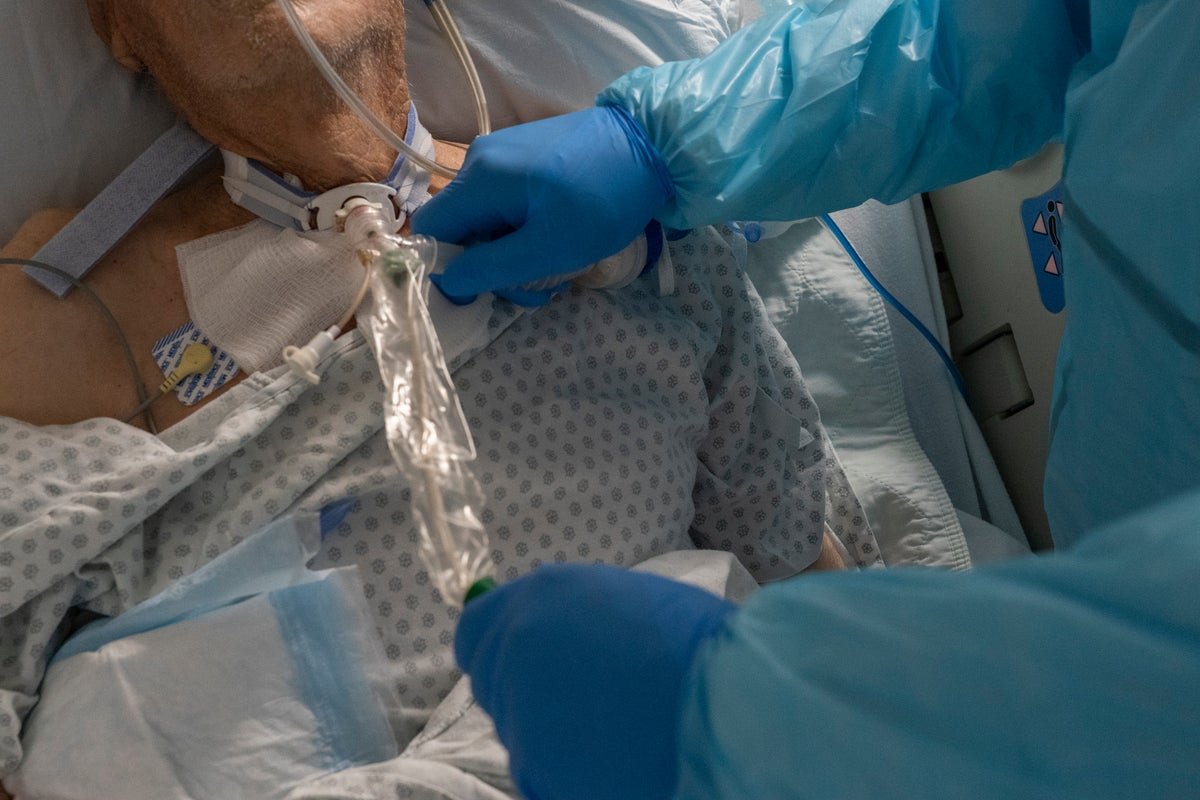
Health experts warn of rising Candida auris cases as CDC data reveals sharp increase in infections (Getty Images)
Escalating Numbers Signal a Public Health Emergency
Recent CDC figures show total cases reaching 6,197 in 2024, a sharp rise from 2,882 in 2022. Clinical cases alone increased by 3,315, while screening cases nearly doubled. These numbers reflect not merely statistical growth but a genuine expansion of the pathogen’s footprint across American hospitals. CDC researchers said the surge coincides with improved screening programmes and the lingering effects of the Covid-19 pandemic, which stretched infection-control resources to breaking point. The increase is therefore partly artefactual, yet the underlying trend remains deeply concerning. Hospitals that once recorded sporadic incidents now manage sustained clusters, forcing infection-control teams to re-evaluate every surface, device and patient movement. The scale of the rise suggests that earlier containment efforts proved insufficient once the organism established itself in high-acuity wards. Public-health analysts note that each additional case multiplies opportunities for silent colonisation, creating reservoirs that are difficult to eradicate. The data therefore serve as both warning and indictment of fragmented surveillance systems that allowed the fungus to gain ground before its full threat was appreciated.
Origins and Global Spread of Candida auris
First reported in the United States in 2016, Candida auris has since travelled across continents with alarming speed. Its emergence coincided with an era of heightened global mobility and increasingly complex medical interventions. Although the precise evolutionary pathway remains under investigation, the organism’s ability to colonise patients for more than two years without symptoms has enabled undetected international dissemination. In the United Kingdom the first detections occurred in 2016, prompting the UK Health Security Agency to establish routine monitoring. Outbreaks have since been documented in London, Manchester and Oxfordshire, each requiring coordinated responses from NHS trusts. The parallel timelines on both sides of the Atlantic underscore how quickly a newly recognised pathogen can embed itself within modern healthcare networks. Analysts argue that the same factors driving the American increase—enhanced screening and pandemic-related disruption—have also shaped the British experience, albeit on a smaller numerical scale. The global pattern reveals a pathogen that exploits gaps in routine microbiology rather than dramatic virulence alone.
How the Fungus Evades Detection and Persists
Candida auris spreads through medical devices and contaminated surfaces, where it can survive for weeks. Colonised patients may transmit the organism for two years or longer while remaining asymptomatic, rendering conventional symptom-based surveillance inadequate. The CDC has emphasised that people without severe underlying medical conditions generally do not carry or become sick from C. auris, including healthcare providers and visitors. This distinction is critical for proportionate infection-control policies. Nevertheless, the organism’s environmental resilience demands rigorous protocols that extend beyond standard cleaning. Chlorine-based disinfectants and dedicated equipment have become central to NHS guidance, yet implementation varies between trusts. The persistence on plastics and fabrics challenges assumptions about terminal cleaning efficacy. Screening therefore functions as the primary defence, allowing identification of colonised individuals before invasive infection develops. Without systematic testing, hospitals risk silent amplification across wards, particularly in intensive-care units where patients undergo frequent device manipulation.
Healthcare facilities implement enhanced cleaning protocols to contain the spread of Candida auris (Global 1 News)
The Human Cost: Symptoms and Severe Outcomes
Patients who develop invasive Candida auris infection typically experience severe flu-like illness accompanied by low blood pressure and high heart rate. Progression can lead to organ failure, sepsis and shock, especially among those already compromised by multiple comorbidities. Exact death rates remain difficult to determine because many fatalities occur in individuals with advanced underlying conditions. This diagnostic ambiguity complicates public communication and resource allocation. In both American and British settings, the infection disproportionately affects patients receiving prolonged courses of broad-spectrum antibiotics or invasive procedures. The resulting clinical picture is one of secondary catastrophe layered upon existing frailty. Families and clinicians face harrowing decisions when an already precarious patient acquires this additional threat. The human dimension extends beyond mortality statistics to prolonged hospital stays, repeated interventions and the psychological burden of isolation precautions that separate patients from loved ones for extended periods.
Therapeutic Limitations Amid Rising Resistance
Treatment currently relies on echinocandins, yet resistance is increasing at a measurable rate. This development narrows therapeutic options precisely when case numbers are climbing. The CDC notes that screening enables healthcare providers and patients to determine colonisation status and thereby interrupt transmission chains. In the absence of new antifungal classes reaching clinical practice rapidly, stewardship programmes must intensify to preserve existing agents. British microbiologists have echoed these concerns, stressing that empirical therapy choices require constant re-evaluation against local resistance patterns. The combination of environmental persistence and diminishing treatment efficacy creates a particularly dangerous profile. Hospitals must therefore balance aggressive case-finding with judicious antifungal use, a tension that tests both laboratory capacity and clinical governance structures. Without accelerated research into novel compounds, the window for effective management may narrow further in coming years.
Britain’s Response: NHS and UKHSA Measures
The UK Health Security Agency has integrated Candida auris into its national surveillance portfolio since the initial 2016 detections. NHS protocols mandate isolation, dedicated equipment and chlorine-based cleaning regimens whenever colonisation or infection is confirmed. These measures mirror CDC recommendations yet must be adapted to the distinctive architecture and staffing models of British hospitals. Outbreaks in London, Manchester and Oxfordshire demonstrated both the effectiveness of rapid response teams and the resource intensity required to contain spread. Trusts that invested early in enhanced screening capacity have generally recorded fewer secondary cases. Nevertheless, workforce pressures and competing infection-control priorities continue to test consistency across regions. The British approach emphasises transparency through mandatory reporting, allowing comparative analysis that can inform national policy. This centralised oversight contrasts with more fragmented systems elsewhere and may offer lessons for international coordination.
Lessons from the Pandemic and Future Preparedness
Improved screening and the Covid-19 pandemic together explain much of the observed increase in reported cases. The pandemic simultaneously amplified vulnerability through extended hospital stays and disrupted routine cleaning and surveillance. These overlapping effects created ideal conditions for Candida auris to proliferate. Looking ahead, health systems must embed fungal surveillance within broader antimicrobial-resistance strategies rather than treating it as an isolated anomaly. Investment in rapid diagnostic technology, expanded laboratory networks and sustained training for infection-control staff will prove essential. The CDC quote that screening allows providers to know whether a patient is colonised and able to spread C. auris encapsulates the preventive philosophy now required. Both American and British authorities recognise that containment depends on vigilance long after outbreaks subside. The coming years will test whether healthcare systems can translate current alarm into durable structural change or whether Candida auris will become another endemic hospital-acquired threat accepted as inevitable.
By Erica Thornton, Staff WriterThis article was produced with AI-assisted research and editorial support. Reporting is based on sources cited in the article.
What's Your Reaction?
 Like
0
Like
0
 Dislike
0
Dislike
0
 Love
0
Love
0
 Funny
0
Funny
0
 Wow
0
Wow
0
 Sad
0
Sad
0
 Angry
0
Angry
0

US Politics and Policy Correspondent at Global1.News. Based in Washington DC, covering American politics, policy, elections, and the courts. Knows how the system works and tells you what it actually means.















Comments (0)