
China DF-27 Missile Threat Spurs Japan-Australia Ties
**Keywords:** China DF-27 missile, Australia security threat, Japan defense buildup 2024-2029, Japan-Australia RAA, Indo-Pacific missile range, South China Sea militarization, Japanese MOD strategy, regional security dynamics China's Expanding Strike Reach Prompts Fresh Scrutiny The Australian think tank report released on June 14, 2026, highlights China's growing ability to co
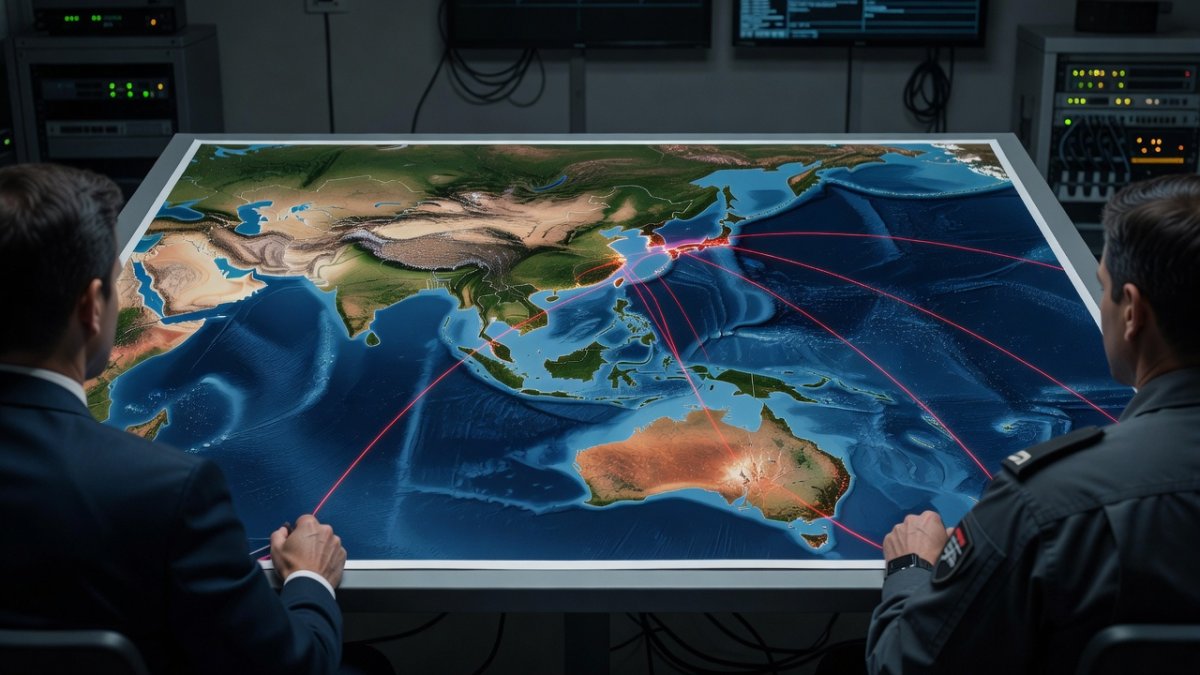
China's Expanding Strike Reach Prompts Fresh Scrutiny
The Australian think tank report released on June 14, 2026, highlights China's growing ability to conduct direct missile strikes on Australian territory. The assessment focuses on systems such as the DF-27, which the U.S. military assessed in December 2025 as having a range of 5,000 to 8,000 kilometers. This capability, combined with Beijing's continued expansion of long-range and hypersonic weapons, alters the security calculations for nations across the Indo-Pacific. Japanese officials have noted that the report's timing coincides with increased Chinese naval activity near the first island chain, raising parallel concerns for Tokyo's southern approaches.
Japan's Ministry of Defense has monitored similar developments through its own intelligence channels. The report's emphasis on the South China Sea as a forward operating area for Chinese forces adds a layer of complexity, as these waters lie closer to Japanese interests than to Australia itself. Analysts note that any increase in Chinese missile deployments there directly affects sea lanes vital to Japan's energy imports. Recent satellite imagery reviewed by the MOD shows expanded missile storage facilities on artificial islands, shortening potential response times for regional actors.
Broader context from the report underscores how China's missile modernization integrates with its naval expansion, creating overlapping threat zones that encompass both Australian and Japanese territories. This convergence has prompted quiet diplomatic exchanges between Tokyo and Canberra ahead of the next Quadrilateral Security Dialogue meeting. The findings reinforce Japan's long-standing view that deterrence requires credible counter-strike options rather than reliance solely on defensive systems.
Technical Details of the DF-27 and Supporting Systems
The DF-27 represents one increment in China's family of intermediate-range ballistic missiles. Its stated range allows coverage of northern Australian bases from launch points within China, while hypersonic variants introduce additional challenges for existing missile defenses. The Australian report links this growth to incremental improvements in guidance, re-entry vehicles, and mobile launch platforms observed over the past three years. Japanese technical assessments further highlight the missile's maneuverable warhead design, which complicates tracking by conventional radar networks.
Japanese defense planners already factor comparable ranges into their own assessments of threats to the Nansei Islands. The 5,000-to-8,000-kilometer envelope overlaps with distances from Chinese coastal sites to key Japanese facilities, underscoring why Tokyo has prioritized long-range counter-strike capabilities in recent budget requests. Historical Chinese missile tests, including multiple DF-26 launches in 2023 and 2024, demonstrated rapid reload capabilities that inform current threat modeling in Tokyo.
Supporting infrastructure such as road-mobile launchers and integrated command networks enhances the DF-27's survivability against preemptive strikes. The report notes continued testing of hypersonic glide vehicles associated with the system, with at least four confirmed flights in 2025 alone. These developments have accelerated Japanese interest in advanced sensor fusion to maintain situational awareness across vast maritime domains.
Japan's 2024-2029 Defense Buildup in Context
Under the 2024-2029 defense buildup program, Japan has allocated increased funding for standoff missiles, integrated air and missile defense, and enhanced intelligence, surveillance, and reconnaissance assets. These measures respond to the same trend of expanding Chinese long-range strike options identified in the Australian report. The program emphasizes rapid deployment of Type 12 surface-to-ship missiles and joint development of hypersonic technologies with the United States. Procurement schedules now include annual production targets exceeding 200 units for extended-range variants.
Ministry of Foreign Affairs officials have framed the buildup as necessary modernization rather than escalation. Budget documents show steady year-on-year growth in procurement lines for precision-guided munitions, with particular attention to interoperability with allied forces. The Australian findings reinforce the rationale for these investments without altering the published schedule. JSDF posture adjustments include forward deployment of additional Patriot batteries and Aegis-equipped destroyers to the southwestern islands.
Long-term planning within the program also incorporates domestic production capacity expansion for missile components. This approach reduces reliance on foreign suppliers while fostering technological sovereignty. The 2026 report provides external validation for these priorities, particularly as Chinese missile test frequency has risen steadily since 2022.
Strengthening the Japan-Australia Reciprocal Access Agreement
The Reciprocal Access Agreement between Japan and Australia facilitates joint training, logistics support, and information sharing. The report's warning about direct strikes on Australia increases the practical value of this framework, as both countries now face overlapping threat envelopes from Chinese missile forces. Expanded exercises under the RAA allow Australian forces to train on Japanese ranges and vice versa, improving familiarity with each other's operational procedures. Recent bilateral drills have incorporated simulated missile defense scenarios using shared data links.
Defense cooperation has already produced tangible results, including coordinated maritime patrols and shared access to satellite data. The June 2026 report adds urgency to ongoing discussions about pre-positioning supplies and expanding port access for Australian vessels in Japanese facilities. These steps remain incremental and subject to annual review by both governments. Joint industrial cooperation on missile components is emerging as a new pillar, with Australian firms exploring technology transfers for guidance systems.
Information-sharing protocols established under the RAA have enabled real-time exchange of intelligence on Chinese missile movements. This has proven valuable during recent monitoring of South China Sea activities. Both nations continue to refine logistics arrangements to support sustained operations in contested environments.
Regional Dynamics in the South China Sea and Beyond
Chinese military infrastructure in the South China Sea provides forward staging for long-range systems, shortening flight times to targets in Southeast Asia and northern Australia. The Australian think tank notes that continued reclamation and airfield upgrades support sustained deployments of missile units. Japan tracks these developments through its own maritime surveillance assets and diplomatic reporting from Manila and Hanoi. Increased Chinese test activity in the region, including DF-27 variants in 2025, has been closely observed by Japanese P-1 patrol aircraft.
ASEAN states have expressed varying degrees of concern, yet formal collective responses remain limited. Japan has responded by deepening bilateral defense ties with the Philippines and Vietnam, including equipment transfers and capacity-building programs. These efforts complement rather than duplicate the Australia-focused findings in the June report. Capacity-building initiatives now include training on Japanese radar systems for improved early warning.
The broader strategic picture reveals how South China Sea militarization affects energy security for multiple regional players. Japan continues to advocate for freedom of navigation through multilateral forums while enhancing its own surveillance coverage. This dual-track approach balances diplomatic engagement with tangible capability improvements.
Implications for Japanese Policy and Industry
Japanese defense contractors stand to benefit from accelerated procurement under the 2024-2029 program, particularly in missile production and sensor integration. The Ministry of Economy, Trade and Industry has encouraged domestic firms to expand supply chains for precision components, citing national security requirements. Export controls on sensitive technologies continue to balance commercial interests with alliance commitments. New partnerships with Australian industry are exploring co-development of seeker technologies for next-generation munitions.
Public debate in Japan has centered on constitutional constraints and alliance burden-sharing. The Australian report provides additional data points for these discussions without shifting the legal framework. Policymakers continue to stress transparency through Diet briefings and annual defense white papers. Industry leaders have highlighted the need for sustained R&D investment to match evolving Chinese capabilities.
Supply chain resilience has become a key focus, with efforts to diversify sources for critical electronic components. This aligns with broader economic security strategies adopted since 2023. The report's findings lend weight to arguments for increased defense spending as a prudent investment in regional stability.
Future Outlook for Deterrence and Alliance Coordination
Both Japan and Australia are investing in resilient basing and dispersed operations to complicate adversary targeting. The shared recognition of growing Chinese missile reach supports further alignment on rules-based maritime order and technology cooperation. No immediate operational changes are required beyond those already planned in existing bilateral and trilateral mechanisms with the United States. Continued emphasis on joint exercises will refine interoperability standards.
Continued monitoring of Chinese missile tests and deployments will inform adjustments to Japan's defense posture. The June 2026 Australian assessment serves as one input among several, reinforcing the need for measured, sustained capability development across the Indo-Pacific. Integration of new sensors into Japan's missile defense architecture will enhance detection ranges against hypersonic threats.
Japan's Missile Defense Architecture Enhancements
Japan's layered missile defense system, comprising Aegis destroyers, Patriot PAC-3 batteries, and emerging hypersonic interceptors, is undergoing targeted upgrades to address DF-27-class threats. Recent budget allocations prioritize integration of advanced radars capable of tracking maneuvering warheads at extended ranges. These enhancements build on lessons from joint U.S.-Japan testing conducted in 2024 and 2025.
Operational adjustments include expanded coverage of the Nansei Islands through additional ground-based sensors and improved data fusion with U.S. assets. The architecture now incorporates greater emphasis on boost-phase detection to counter hypersonic glide vehicles. Japanese engineers are collaborating with American counterparts on next-generation interceptors designed specifically for intermediate-range threats.
Public and parliamentary oversight ensures these developments remain consistent with Japan's exclusively defensive posture. Annual white papers detail progress while maintaining transparency on system limitations. The Australian report underscores the urgency of completing these upgrades within the current five-year planning cycle.
US-Japan Alliance Implications in the Missile Era
The evolving missile threat environment strengthens the case for deeper integration within the U.S.-Japan alliance, particularly in command-and-control arrangements and extended deterrence commitments. Recent bilateral planning sessions have focused on coordinated responses to potential strikes on Japanese or Australian territory. This includes expanded access to U.S. intelligence on Chinese missile deployments.
Joint development programs for hypersonic weapons and counter-hypersonic systems represent a tangible outcome of this alignment. The alliance framework now incorporates regular trilateral exercises with Australia to practice integrated air and missile defense scenarios. Such cooperation mitigates the risk of capability gaps that adversaries might exploit.
Strategic communications between Tokyo and Washington emphasize burden-sharing while preserving Japan's constitutional boundaries. The June 2026 report provides additional context for these discussions, highlighting mutual vulnerabilities that reinforce alliance cohesion. Future posture reviews will likely reflect these shared threat assessments.
Tags: China DF-27, Australia defense report, Japan 2024-2029 buildup, Japan-Australia RAA, Indo-Pacific security, South China Sea, Japanese MOD, missile range analysis
By Kenji Tanaka, Staff Writer
This article was produced with AI-assisted research and editorial support. Reporting is based on sources cited in the article.
What's Your Reaction?
 Like
0
Like
0
 Dislike
0
Dislike
0
 Love
0
Love
0
 Funny
0
Funny
0
 Wow
0
Wow
0
 Sad
0
Sad
0
 Angry
0
Angry
0

Japan Correspondent at Global1.News. Tokyo-based voice covering Japanese politics, technology, economy, and culture. Tracks the intersection of tradition and innovation in one of the world's most dynamic societies.















Comments (0)