
Centre Lifts Emergency Gas Curbs as Hormuz LNG Supplies Resume
The Ministry of Petroleum and Natural Gas issued a notification on July 4, 2026, withdrawing the Natural Gas (Supply Regulation) Order, 2026, thereby ending four months of emergency controls that had been imposed under the Essential Commodities Act, 1955. This rollback follows the West Asia ceasefire that reopened the Strait of Hormuz, allowing suppliers who had invoked force m
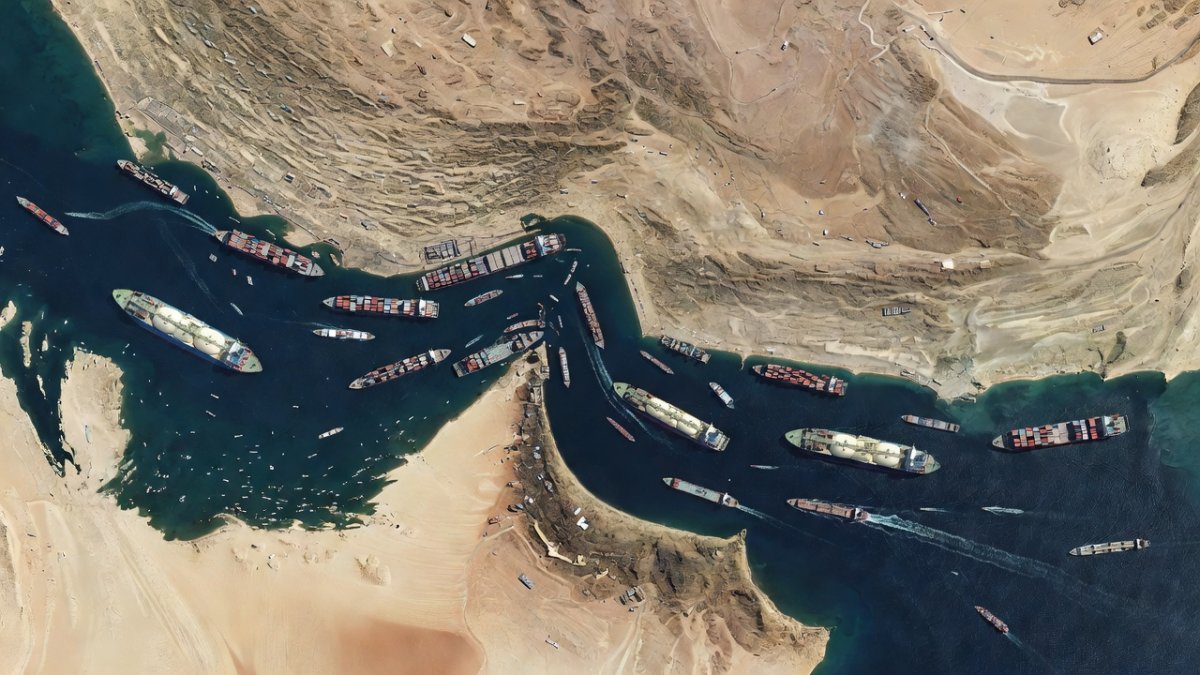
The Ministry of Petroleum and Natural Gas issued a notification on July 4, 2026, withdrawing the Natural Gas (Supply Regulation) Order, 2026, thereby ending four months of emergency controls that had been imposed under the Essential Commodities Act, 1955. This rollback follows the West Asia ceasefire that reopened the Strait of Hormuz, allowing suppliers who had invoked force majeure to resume normal operations. The decision directly affects priority sectors including PNG for household cooking, CNG for transport, LPG production, and fertilizer plants that received 70 percent allocation during the crisis.
Full Article Headline: Centre Lifts Emergency Gas Curbs as Hormuz LNG Supplies Resume
New Delhi – July 5, 2026 — The Government of India has formally ended emergency natural gas supply controls that lasted from March to July 2026, restoring normal allocation mechanisms across the country. The Ministry of Petroleum and Natural Gas notification marks the conclusion of a period triggered by disruptions in LNG shipments through the Strait of Hormuz amid the West Asia/US-Iran-Israel conflict. With 60 percent of India’s LPG imported and 90 percent routed via Hormuz, the lifting of curbs brings immediate relief to households, transport operators, and industrial units in states such as Gujarat, Maharashtra, and Uttar Pradesh.
Inside the Natural Gas (Supply Regulation) Order, 2026
The Natural Gas (Supply Regulation) Order, 2026, was invoked under the Essential Commodities Act, 1955, to prioritise gas allocation during the supply shock. It established two clear priority tiers: Priority Sector I covered PNG for household cooking, CNG for transport, LPG production feedstock, and pipeline fuel, while Priority Sector II ensured fertilizer plants received 70 percent of their normal gas requirements. This framework allowed the Ministry of Petroleum and Natural Gas to direct supplies away from non-essential users toward these critical areas.
GAIL and Indian Oil Corporation implemented the order by enforcing supply cuts of 10-30 percent for industrial consumers. Petrochemical units, textile mills, and ceramic manufacturers faced the steepest reductions as their allocations were diverted. The order applied uniformly across major consuming states including Gujarat, Maharashtra, and Uttar Pradesh, where industrial clusters depend heavily on pipeline gas from GAIL networks.
ONGC fields continued production but could not offset the import shortfall caused by Hormuz blockages. The regulatory mechanism required daily reporting from GAIL and Indian Oil Corporation to the Ministry of Petroleum and Natural Gas, creating a centralised command structure that remained in place until the July 4 withdrawal. This structure protected core energy needs while exposing the limits of India’s domestic gas infrastructure.
Four Months Under Emergency Allocation
The emergency measures began in March 2026 when LNG tankers faced repeated delays at the Strait of Hormuz. Suppliers invoked force majeure clauses, halting deliveries and forcing GAIL and Indian Oil Corporation to ration existing stocks. By April, industrial consumers in Gujarat’s petrochemical belt and Maharashtra’s manufacturing zones reported consistent 20 percent cuts, with some units in Uttar Pradesh facing even steeper reductions.
Textile mills in Surat and ceramic factories in Morbi, Gujarat, were among the hardest hit. These clusters rely on natural gas for process heat and power generation; the 10-30 percent cuts led to production slowdowns and temporary layoffs affecting thousands of workers. The four-month period exposed how quickly supply chain disruptions in West Asia translate into local economic pain across western and northern India.
By June, the Ministry of Petroleum and Natural Gas had arranged a 2.2 MTPA US LPG deal to cover roughly 10 percent of annual imports, providing partial relief. However, this volume proved insufficient to fully restore industrial allocations. The crisis ended only after the West Asia ceasefire reopened Hormuz shipping lanes, allowing normal LNG flows to resume by early July 2026.
Health Impacts: What Happened When CNG and PNG Were Restricted
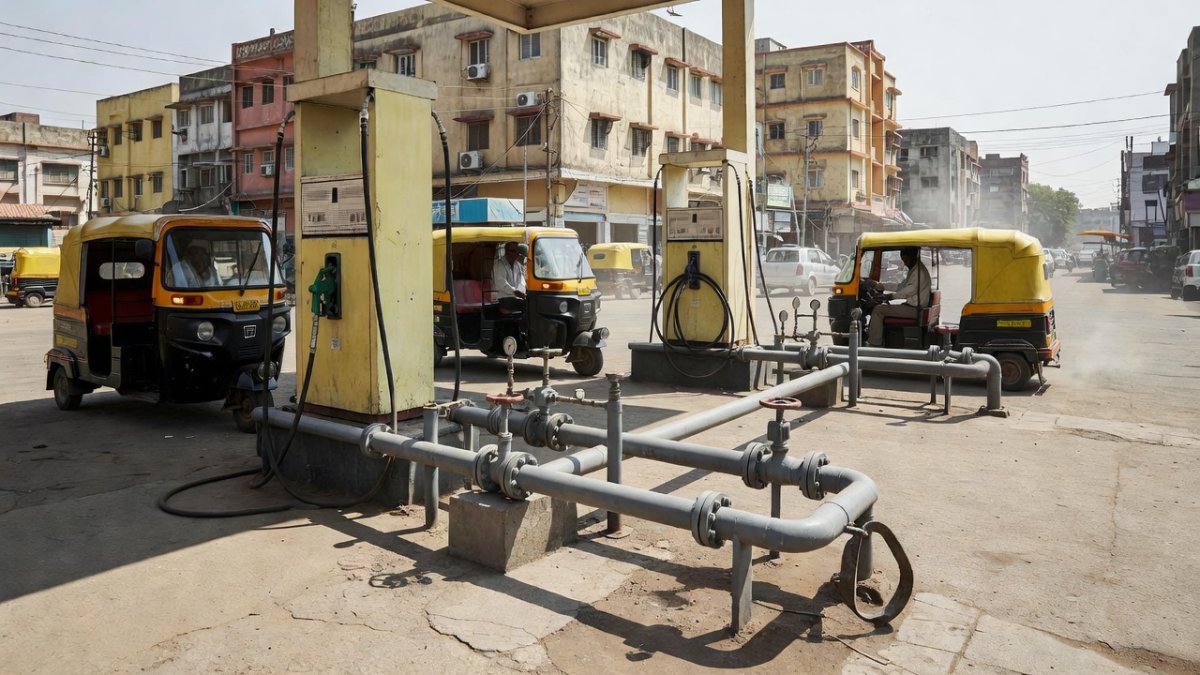
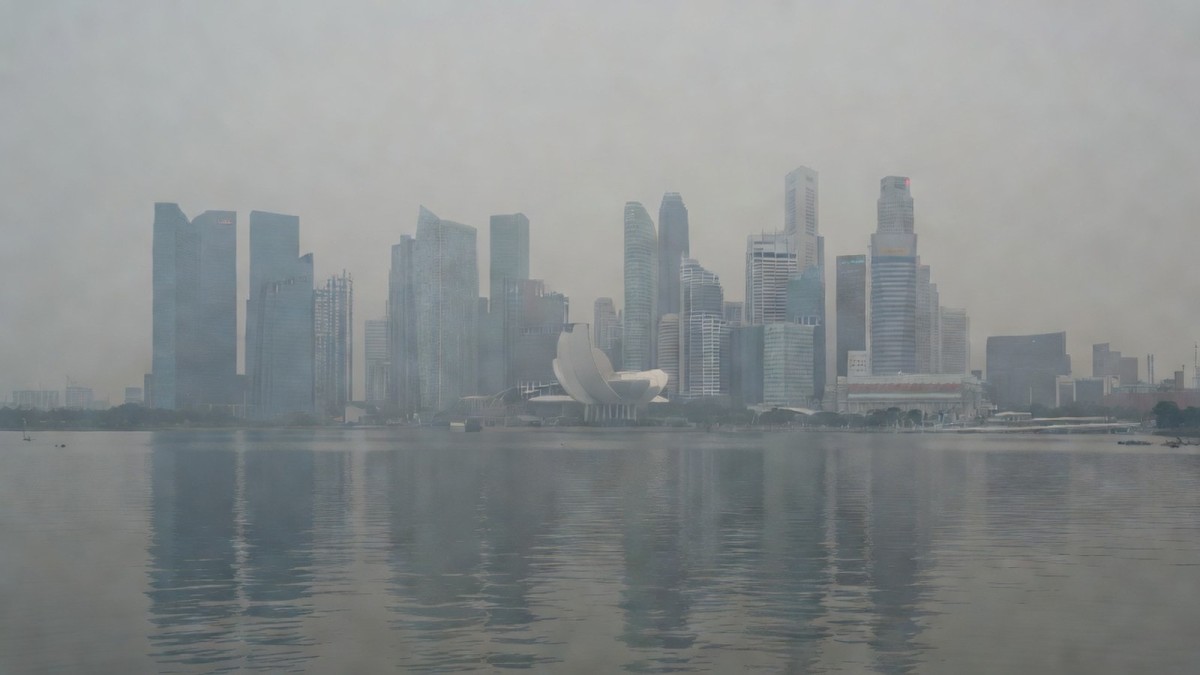
Delhi and Mumbai experienced acute CNG shortages that forced autorickshaw and taxi operators to switch to diesel and petrol. This substitution increased particulate emissions during the summer months, pushing PM2.5 levels higher in both cities. Public health data from municipal corporations showed a measurable rise in respiratory complaints at government hospitals between April and June.
Households without PNG connections in urban slums and peri-urban areas turned to firewood and kerosene for cooking. Indoor air pollution from these fuels disproportionately affected women and children, increasing cases of chronic obstructive pulmonary disease and asthma. The crisis highlighted how energy policy decisions directly influence public health outcomes in densely populated states such as Uttar Pradesh and Bihar.
Rural healthcare centres reported higher admissions for smoke-related illnesses during the same period. The absence of reliable PNG supply removed a cleaner cooking option that the National Programme on Advanced Cookstoves had promoted for years. These health consequences demonstrate that natural gas allocation is not merely an economic matter but a determinant of population-level respiratory health across India.
Fertilizer and Food Security: The Critical Link
Fertilizer plants received 70 percent priority gas allocation throughout the emergency, protecting urea and DAP production for the kharif sowing season. States such as Uttar Pradesh and Punjab, which depend on these plants for timely fertilizer availability, avoided major disruptions to crop cycles. The Ministry of Petroleum and Natural Gas coordinated with the Department of Fertilizers to maintain this flow, recognising the direct link between gas supply and food grain output.
Without this protection, India’s rabi season planning would have faced severe setbacks. Urea production shortfalls would have raised costs for farmers and potentially reduced yields of wheat and paddy. The nutrition angle is clear: stable fertilizer supply supports grain production that underpins the Public Distribution System and midday meal programmes in schools across the country.
The policy choice to shield fertilizer units at 70 percent allocation reflects a deliberate trade-off that prioritised long-term food security over immediate industrial demands. This approach prevented a cascading crisis that could have affected both agricultural output and public health nutrition indicators in 2026-27.
The Strait of Hormuz Vulnerability: India's Energy Security Lesson
India imports 60 percent of its LPG, with 90 percent of those shipments passing through the Strait of Hormuz. The four-month disruption revealed the structural risk of this single chokepoint. While the 2.2 MTPA US LPG deal signed for 2026 covers only about 10 percent of annual requirements, it represents an initial step toward diversification away from Hormuz-dependent sources.
Other nations have built strategic reserves and long-term contracts with suppliers in Australia, Russia, and the United States. India’s eastern seaboard terminals and domestic gas fields such as the KG basin remain underdeveloped relative to demand. The emergency rerouting costs borne by GAIL and Indian Oil Corporation ultimately fall on taxpayers through higher administered prices and subsidy burdens.
Policy action now requires accelerated development of ONGC’s eastern offshore blocks and new LNG terminals in Tamil Nadu and Odisha. Without these investments, future Hormuz closures will again force the Ministry of Petroleum and Natural Gas to invoke the Essential Commodities Act, 1955, repeating the cycle of industrial hardship and public health strain.
What the Lifting Means for Citizens
CNG prices in Delhi, Mumbai, and other major cities are expected to stabilise within weeks as normal supplies return. PNG connections for households in Gujarat and Maharashtra will resume full pressure, reducing reliance on costlier alternative fuels. LPG cylinder prices should ease gradually as the 2.2 MTPA US imports integrate into the distribution network managed by Indian Oil Corporation.
Transport costs for goods across western and northern India will decline, easing pressure on retail inflation. Consumers should monitor state-level notifications from GAIL for any residual allocation adjustments. The Ministry of Petroleum and Natural Gas has indicated that regular review meetings will continue to prevent sudden shortages.
Households in urban areas can expect improved reliability of piped cooking gas, while transport operators gain predictability in fuel availability. These changes directly affect monthly budgets of middle-class families and small businesses that bore the brunt of the March-July restrictions.
The Bottom Line
India’s energy infrastructure functions as both an economic backbone and a public health determinant. The four-month crisis exposed how dependence on a single maritime route can disrupt fertilizer production, urban air quality, and household energy access simultaneously. The July 4, 2026, withdrawal restores normalcy but does not eliminate the underlying vulnerability.
Structural reforms must extend beyond ceasefire-dependent recovery. Expanding domestic production from ONGC fields, securing diversified LNG contracts, and strengthening pipeline networks in states such as Gujarat and Uttar Pradesh are essential next steps. The Ministry of Petroleum and Natural Gas now faces the task of converting this temporary relief into lasting energy security.
Taxpayers and citizens alike have paid the price of delayed diversification. Future policy must treat natural gas allocation as a core component of national resilience rather than a reactive measure under the Essential Commodities Act, 1955.
— By Dr. Raj Patel, Staff WriterThis article was produced with AI-assisted research and editorial support. Reporting is based on sources cited in the article.
What's Your Reaction?
 Like
0
Like
0
 Dislike
0
Dislike
0
 Love
0
Love
0
 Funny
0
Funny
0
 Wow
0
Wow
0
 Sad
0
Sad
0
 Angry
0
Angry
0

Caribbean Correspondent at Global1.News. Based in Port of Spain, Trinidad, covering Caribbean politics, economy, energy, climate, and culture. Amplifying the voices and stories of the Caribbean region.














Comments (0)