
Canada's World Cup Run Ends with 3-0 Loss to Morocco
In a recent CBC News report covering the 2026 FIFA World Cup, Canada suffered a heartbreaking 3-0 defeat to Morocco in the Round of 16 at Houston Stadium on Saturday, ending what had been the most successful men's tournament campaign in Canadian history. The loss, captured in full by CBC News from the opening whistle through the final moments of stoppage time, sent Morocco thro
In a recent CBC News report covering the 2026 FIFA World Cup, Canada suffered a heartbreaking 3-0 defeat to Morocco in the Round of 16 at Houston Stadium on Saturday, ending what had been the most successful men's tournament campaign in Canadian history. The loss, captured in full by CBC News from the opening whistle through the final moments of stoppage time, sent Morocco through to the quarterfinals and brought an abrupt close to a journey that had captured the imagination of a nation.
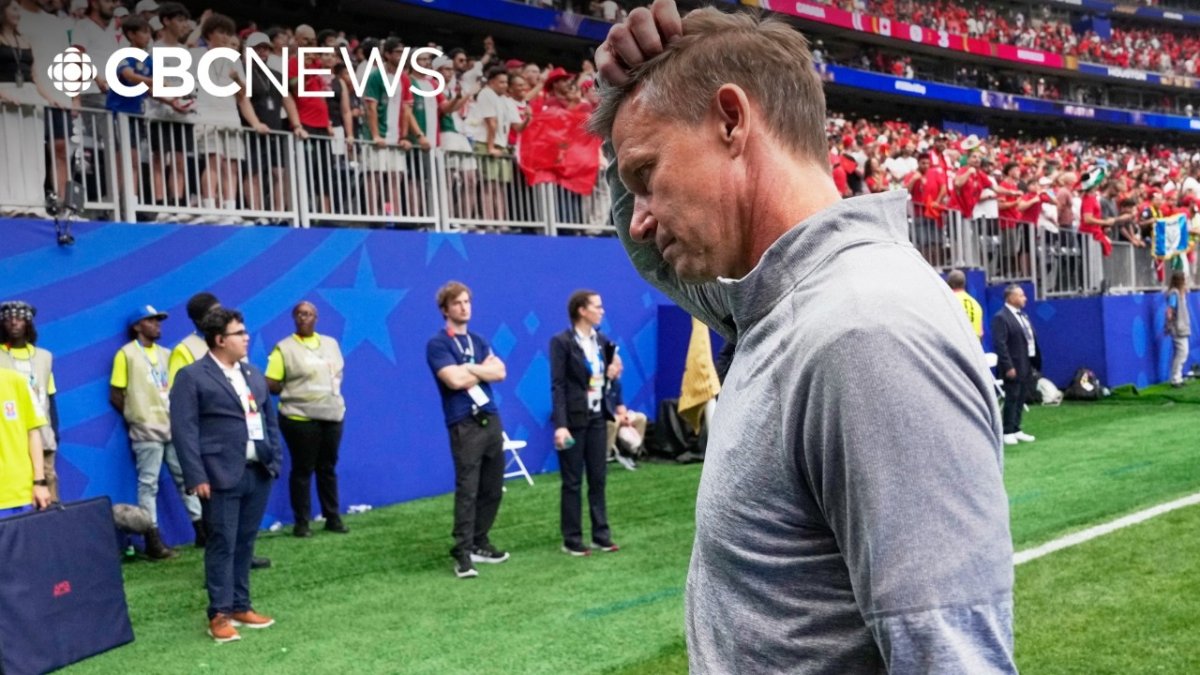
The Match Story
The afternoon in Houston unfolded under a blazing Texas sun, with nearly 70,000 spectators packing the stadium for a clash that promised drama from the outset. Canada, buoyed by their historic run, asserted early dominance in possession, controlling the tempo and carving out promising openings against a Morocco side that appeared content to absorb pressure. Tani Oluwaseyi emerged as the standout threat in those opening forty-five minutes, forcing a sharp save from goalkeeper Yassine Bounou after a clever run into the box, while the Canadian midfield dictated play with crisp passing that belied their underdog status.
Referee Michael Oliver's whistle punctuated the first half with six yellow cards, four of them to Moroccan players, reflecting a physical battle that tested both sides' discipline. Canada created the clearer chances, yet the score remained level at the break, leaving fans hopeful that the breakthrough would arrive after the interval. The narrative shifted dramatically in the fiftieth minute when Luc de Fougerolles conceded a free kick on the edge of the area, allowing Achraf Hakimi to deliver a precise delivery that Azzedine Ounahi converted with clinical finish, leaving Jonathan David caught flat-footed and Maxime Crépeau with little chance to intervene.
Trailing by one, Canada pressed forward in search of an equaliser, their attacks growing more urgent as the minutes ticked away. Ounahi struck again on the counterattack in the eighty-second minute, exploiting spaces left by an advancing Canadian line to double the lead. In the eighth minute of stoppage time, Soufiane Rahimi added a third goal, sealing a result that felt cruel in its finality despite Canada's earlier promise.
Canada's Historic Tournament Run
Canada's path to Houston began on home soil in Toronto, where they opened their campaign with a resilient 1-1 draw against Bosnia-Herzegovina, earning their first-ever World Cup point after decades of futility. The momentum carried north to Vancouver, where a victory over Qatar showcased growing confidence and tactical cohesion under coach Jesse Marsch. A narrow defeat to Switzerland followed, yet the team regrouped with determination that would define their knockout progression.
In Los Angeles, Canada secured their maiden World Cup knockout triumph, defeating South Africa in the Round of 32 and igniting celebrations across the country. That result propelled them into the Round of 16 for the first time in men's history, a remarkable ascent from a FIFA ranking of 120th as recently as 2017. Their overall record of two wins, two losses and one draw across five matches stood as testament to sustained improvement against formidable opposition.
As co-hosts alongside the United States and Mexico, Canada became the first host nation eliminated from the expanded 2026 tournament. Ranked thirtieth entering the competition, they had faced a Morocco side sitting sixth, underscoring the scale of their achievement in reaching this stage.
Injuries and What Might Have Been
The absence of Ismaël Koné loomed large over the entire campaign, his broken leg depriving the squad of a creative fulcrum whose vision and energy had been central to earlier successes. Without him, the midfield lacked the fluidity that might have unlocked Morocco's defence during periods of Canadian ascendancy. Several other players battled through significant knocks, including Stephen Eustáquio, Ali Ahmed and Alfie Jones, whose willingness to play through pain spoke to the depth of commitment within the group.
These injury challenges tested squad depth at critical junctures, forcing Marsch to rotate players who were not fully fit. The cumulative toll became evident in the second half against Morocco, where fatigue appeared to blunt Canada's pressing intensity. Young defender Luc de Fougerolles, thrust into a high-stakes role, showed promise yet carried the weight of the pivotal free kick that shifted the match's direction.
Promise David's memorable group-stage goal offered a glimpse of what an uninjured roster might have achieved, highlighting the fine margins that separate progress from elimination at this level. The tournament exposed both the progress made and the structural needs that remain for sustained competitiveness.
Player Performances
Captain Alphonso Davies, returning from limited minutes, appeared uncertain against Morocco's organised press, his usual dynamism curtailed by the occasion's weight. Jonathan David, normally a reliable finisher, operated well below his best, unable to convert the first-half openings that Canada fashioned. Crépeau stood tall in goal, powerless to prevent any of the three strikes yet commanding his area with authority throughout.
Among the younger contingent, de Fougerolles displayed composure beyond his years until the costly concession, while Oluwaseyi's first-half efforts represented Canada's clearest route to parity. The collective effort from players carrying injuries underscored a resilience that defined this generation's breakthrough.
These individual stories wove together into a narrative of collective endeavour, even as the final scoreline reflected the gap in clinical execution between the two sides.
Coach Marsch's Assessment
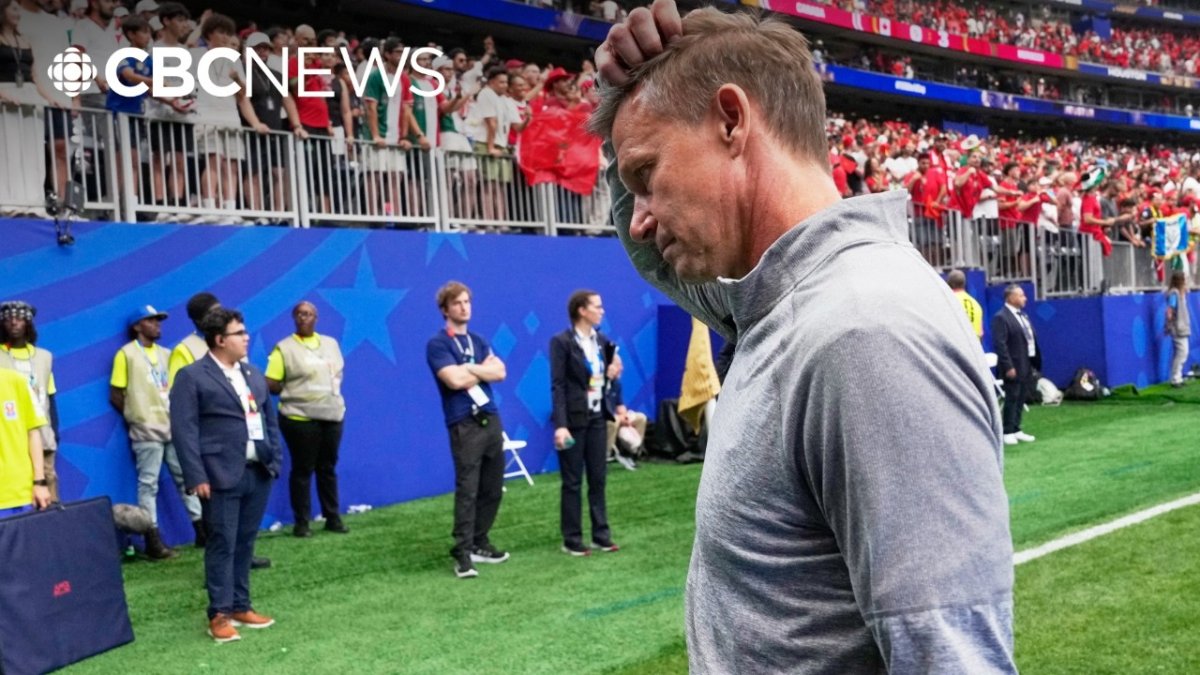
Jesse Marsch, the American coach appointed in 2024, reflected that Canada had been the better team for large stretches, particularly in the opening half when possession and chance creation favoured the hosts. His tactical setup emphasised high pressing and quick transitions, elements that yielded dividends until the free-kick lapse altered the contest's rhythm. Marsch praised the group's mentality, noting how they refused to fold after falling behind.
Analysing the decisive moments, he pointed to the need for greater composure in transition and sharper decision-making in the final third. The coach highlighted how the absence of key personnel amplified the challenge against a technically superior opponent. Marsch's measured assessment balanced disappointment with pride in what had been accomplished.
His leadership had guided Canada to heights previously unseen, establishing foundations for future cycles even as the Houston exit brought this chapter to a close.
Morocco's Class
Morocco demonstrated the pedigree that has elevated them among world football's elite, becoming the first African nation to reach consecutive World Cup quarterfinals. Ounahi's brace, bookended by Hakimi's influential free-kick delivery, illustrated the clinical edge that separates contenders from hopefuls. Bounou's shot-stopping preserved the clean sheet during Canada's brighter spells.
Players such as Noussair Mazraoui added defensive stability and attacking impetus from the back, complementing the squad's blend of European-based talent. Their counterattacking threat proved decisive once Canada committed forward in search of an equaliser. This performance reinforced Morocco's status as a genuine force capable of troubling any opponent.
They now prepare to face the winner of Paraguay versus France, carrying momentum from back-to-back deep runs that have inspired a continent.
The Meaning for Canadian Soccer
This tournament run has accelerated the growth of the sport across Canada, drawing unprecedented attention to a program that once struggled for relevance on the global stage. The climb from 120th to 30th in nine years reflects sustained investment in youth development and professional pathways. Fans who filled stadiums from Toronto to Vancouver and beyond now see tangible proof that sustained progress is possible.
The Round of 16 appearance has inspired a new generation of players and coaches, fostering greater participation at grassroots levels and encouraging corporate support for domestic leagues. While the elimination carries disappointment, the broader legacy lies in elevated expectations and infrastructure improvements that will benefit future teams.
Canadian soccer now stands at an inflection point, with this campaign serving as both milestone and mandate for continued ambition on the world stage.
What Happens Next
Morocco advances to the quarterfinals with confidence, their path intersecting with either Paraguay or France in a matchup that promises further intrigue. Their consistency across consecutive tournaments positions them as perennial contenders from Africa. For Canada, attention turns immediately toward preparation for the 2030 World Cup cycle.
The federation will analyse every aspect of this campaign, from injury management to tactical refinement, seeking to build upon the foundation laid in 2026. Players such as Davies and David will return to their clubs with renewed perspective, while emerging talents gain valuable experience. The road ahead involves targeted recruitment and development programs aimed at closing remaining gaps.
Canada's journey, though ended in Houston, has rewritten expectations and set the stage for continued evolution in the years to come.
By Alex Thompson, Staff WriterThis article was produced with AI-assisted research and editorial support. Reporting is based on sources cited in the article.
What's Your Reaction?
 Like
0
Like
0
 Dislike
0
Dislike
0
 Love
0
Love
0
 Funny
0
Funny
0
 Wow
0
Wow
0
 Sad
0
Sad
0
 Angry
0
Angry
0

Canada Correspondent at Global1.News. Based in Toronto, covering Canadian politics, energy, trade, and US-Canada relations. Provides the Canadian perspective on North American and global affairs.















Comments (0)