
US Rejects USMCA Renewal, Trade Shifts to Annual Reviews
US Rejects USMCA Renewal, Trade Shifts to Annual Reviews The United States delivered a historic blow to North American trade stability on July 1, 2026, formally rejecting a 16-year renewal of the USMCA trade pact that Mexico and Canada had hoped would lock in long-term certainty for the region's $1.6 trillion in annual trilateral commerce. U.S. Trade Representative Jamieson Gre
US Rejects USMCA Renewal, Trade Shifts to Annual Reviews
The United States delivered a historic blow to North American trade stability on July 1, 2026, formally rejecting a 16-year renewal of the USMCA trade pact that Mexico and Canada had hoped would lock in long-term certainty for the region's $1.6 trillion in annual trilateral commerce. U.S. Trade Representative Jamieson Greer announced that Washington would not accept the agreement in its current form, triggering a shift from automatic renewal to periodic annual reviews lasting through 2036.
"We will continue to engage with Mexico and Canada to address the agreement's shortcomings," Greer said in a statement, leaving the door open for negotiations but making emphatically clear that the current framework would not receive the 16-year extension Mexico had formally requested. The decision came on the same day the pact was due for its first mandatory joint review, a milestone that Mexico had hoped would culminate in extension talks rather than a rejection.
The news landed hard in boardrooms and on factory floors from Mexico City to Monterrey to Tijuana. The USMCA — known in Mexico as the T-MEC — governs the trade relationships that sustain millions of Mexican jobs across industries ranging from automotive assembly to avocado farming to medical device manufacturing.
Ebrard Reassures Mexican Families: The Treaty Stays Active
Mexico's Economy Minister Marcelo Ebrard moved with characteristic speed to calm the waters. At a press conference on July 2, Ebrard emphasized that the treaty "remains in force from now until 2036" and that Mexican exports would continue to flow under existing rules throughout the annual review period.
"The agreement is not canceled. It is not suspended," Ebrard told reporters. "It continues to operate exactly as it has." He stressed that 85 percent of Mexican goods still enter the United States tariff-free under the current framework, offering a crucial measure of stability for the millions of Mexican workers whose livelihoods depend on predictable cross-border commerce.
Ebrard's message was aimed squarely at ordinary Mexican families. He referenced the automotive workers in Puebla and Aguascalientes who assemble vehicles for export, the maquiladora employees in Ciudad Juárez and Tijuana who manufacture electronics and medical devices, and the farmers in Michoacán and Baja California who have built their businesses around tariff-free access to the U.S. market.
During President Claudia Sheinbaum's Wednesday morning mañanera, she echoed Ebrard's reassurances while also emphasizing the administration's determination to negotiate improved terms. "Mexico will defend its workers, its businesses, and its sovereignty," Sheinbaum said. "We will enter these talks with strength and with data."
Section 232 Tariffs Dominate the July 20 Agenda
Mexico's priority in the next round of bilateral talks — scheduled for the week of July 20 — will be reducing the burden of Section 232 tariffs on steel, aluminum, and vehicles. These tariffs currently sit at 50 percent on imports from all countries, though USMCA-qualifying goods receive limited relief with a 15 percent minimum rate assessed only on non-U.S. content.
Officials from the Secretaría de Economía have spent weeks preparing detailed technical positions for these discussions. The automotive sector is especially exposed. A single vehicle manufactured in Mexico might contain steel from Monterrey, aluminum from Veracruz, and components from plants in Chihuahua, Guanajuato, and San Luis Potosí — each crossing the border multiple times before final assembly. Each crossing could face tariff calculations under the new framework.
Ebrard expressed confidence that Mexico would secure sector-specific relief, particularly for industries where North American supply chains are so deeply integrated that tariffs would harm U.S. companies as much as Mexican ones. "Eighty-five percent of our exports already qualify under USMCA rules," he said. "Our task in these talks is to protect and expand that access."
The United States and Canada have not yet begun bilateral negotiations in earnest, meaning Mexico's July 20 session with U.S. trade officials will serve as the first real test of whether the Trump administration intends to use the annual review process as a negotiating cudgel or a genuine platform for incremental improvement.
Border Communities and Maquiladora Workers Face the Brunt
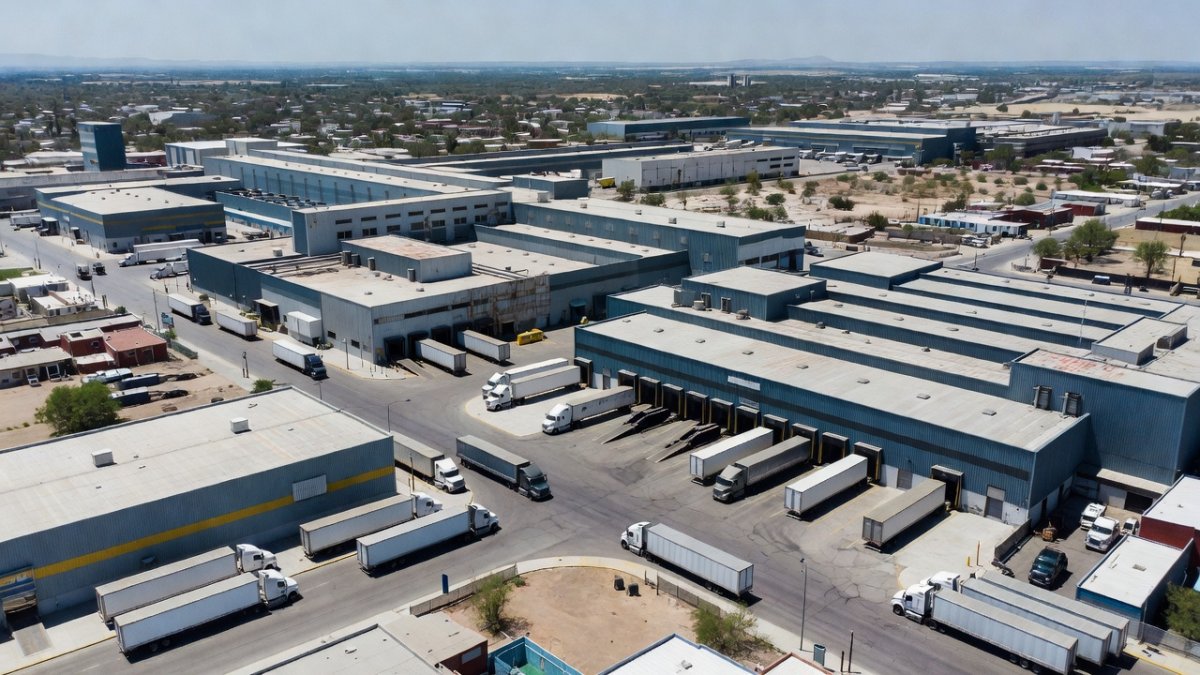
Along Mexico's 2,000-mile northern border, the shift to annual reviews has already stirred anxiety in cities like Tijuana, Ciudad Juárez, Nuevo Laredo, Nogales, and Reynosa. These communities are home to thousands of maquiladora plants that assemble everything from automobile dashboards to pacemakers to flat-screen televisions for U.S. brands.
In Tijuana alone, more than 1,000 maquiladoras employ hundreds of thousands of workers. A single plant manager I spoke with this week described the confusion among his workforce. "People are asking me every day: are we going to lose our jobs? Will the plant move? I tell them what Ebrard says — that the agreement is still in force — but nobody knows what the annual review will bring," he said, asking not to be named because he is not authorized to speak publicly.
The uncertainty is already having real economic effects. Business chambers in border states report that some companies are pausing expansion plans and delaying equipment purchases while they wait for clarity. Economists warn that prolonged uncertainty could slow the very nearshoring boom that has driven job growth in northern Mexico over the past four years.
Families in these colonias — working-class neighborhoods that line the border — now face hard choices. A maquiladora worker in Ciudad Juárez supporting three children on 3,500 pesos a week cannot afford to wait months for trade negotiators to find common ground. For these families, the annual review cycle is not an abstract diplomatic process. It is the difference between steady paychecks and an uncertain scramble.
Mexico's Agricultural Heartland Watches Closely
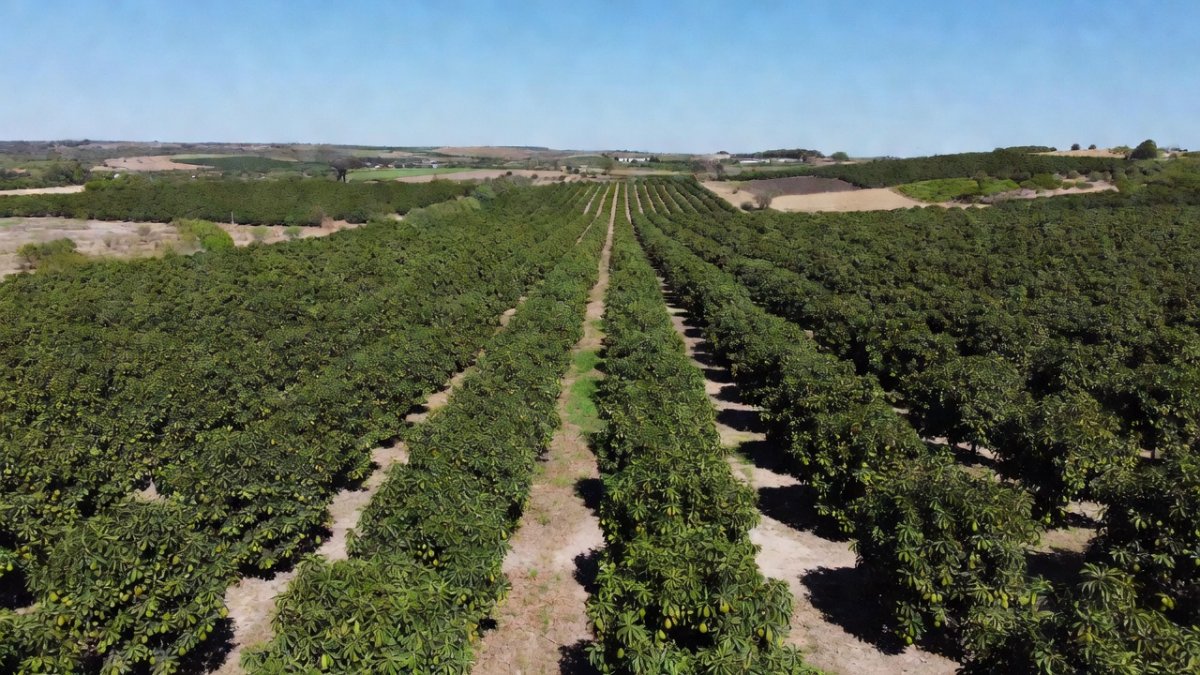
Beyond the industrial border corridor, Mexico's agricultural sector is also exposed to the shifting trade landscape. The United States is the largest market for Mexican agricultural exports — avocados from Michoacán, tomatoes from Sinaloa, berries from Baja California, tequila from Jalisco, and beer from Coahuila and Nuevo León.
The avocado trade alone is worth more than $3 billion annually and supports tens of thousands of jobs in Michoacán, the only Mexican state certified to export avocados to the U.S. market. Farmers and packing plant workers in the region have watched the USMCA developments with growing concern. Any tariff increase on agricultural goods would cut directly into the margins of small-scale producers and ejido cooperatives.
Campesinos in Sinaloa, who export tomatoes and peppers during the winter growing season, face a similar calculus. The U.S. market accounts for the vast majority of Mexico's $45 billion in annual agricultural exports. Even a modest tariff increase would ripple through rural communities that already struggle with water scarcity, organized crime extortion, and limited access to credit.
The Political Landscape: Sheinbaum, Morena, and the Opposition Respond
The USMCA rejection arrives at a politically sensitive moment for the Sheinbaum administration. While President Sheinbaum has maintained strong approval ratings, the trade uncertainty gives opposition parties from the PAN and PRI — and even critics within Morena — ammunition to question the government's economic management and its relationship with Washington.
At the Palacio Nacional, Sheinbaum has adopted a dual strategy: public reassurance combined with quiet diplomacy. She dispatched Ebrard to Washington for preliminary meetings even before the July 1 deadline, and the Secretaría de Relaciones Exteriores has been coordinating with Mexican consulates across the United States to prepare for the upcoming negotiations.
The INE's recent certification of two new political parties — Somos México and Construyendo Sociedades de Paz — adds another layer of complexity. Both parties have campaigned on economic nationalism and skepticism of foreign trade deals, and they will be watching how the Sheinbaum administration handles the USMCA issue as they prepare for the 2027 midterm elections.
Long-Term Implications for Mexican Workers and the Economy
The shift from a 16-year extension to annual reviews has profound implications for Mexico's economic model. The nearshoring trend — which has brought billions of dollars in new manufacturing investment to Mexico as companies move production closer to the U.S. market — depends on trade certainty. Companies making multi-year capital allocation decisions need to know that tariff rates will not change drastically from one year to the next.
Mexico's central bank, Banxico, has signaled that the trade uncertainty could weigh on the peso. Economists at BBVA Mexico and Citibanamex have adjusted their growth forecasts downward, warning that prolonged negotiations could reduce foreign direct investment by 10 to 15 percent in 2027 if no framework agreement is reached.
For PEMEX, which relies on U.S. imports of refined petroleum products and petrochemical feedstocks, the tariff situation adds cost pressure to a company already grappling with debt and declining production. CFE, the state electricity company, imports natural gas from the United States and faces similar exposure.
Yet there are reasons for measured optimism. Mexico enters these negotiations from a position of strength. The country has diversified its trade relationships through agreements with the European Union and Pacific Alliance members. The Mexican economy has proven resilient, and the peso, while volatile, has held up better than many emerging market currencies. Ebrard's experience — he served as Foreign Minister during the original USMCA renegotiation in 2018-2019 — means Mexico has a seasoned negotiator at the table.
What to Watch For
The July 20 bilateral talks will be the first real indicator of whether the annual review process will be a genuine negotiation or merely a platform for U.S. demands. Key signals to watch include whether the United States offers sector-specific tariff relief for automotive and agricultural goods, whether Mexico secures concrete commitments on Section 232 reductions, and whether Canada joins the negotiations later this summer.
For Mexican families, the immediate outlook is one of uncertainty tempered by resilience. The USMCA will continue to function through 2036 under the annual review framework. Mexican exports will continue to cross the border. Jobs in maquiladoras and farms will continue, for now, to provide for families. But the long shadow of annual reviews means that every July, from now until the mid-2030s, Mexico will once again have to make its case for fair trade to a skeptical Washington.
As Ebrard said at the close of his July 2 press conference: "We knew this day would come. We prepared for it. And we will face it with the same determination that has always defined Mexico in the global economy."
Tags: USMCA, T-MEC, Marcelo Ebrard, Jamieson Greer, Section 232 tariffs, Mexico economy, maquiladoras, automotive industry, Mexican workers, Trump trade policy, Claudia Sheinbaum, nearshoring, bilateral talks, border communities, avocados
By Rosa Martinez, Staff Writer
This article was produced with AI-assisted research and editorial support. Reporting is based on sources cited in the article.
What's Your Reaction?
 Like
0
Like
0
 Dislike
0
Dislike
0
 Love
0
Love
0
 Funny
0
Funny
0
 Wow
0
Wow
0
 Sad
0
Sad
0
 Angry
0
Angry
0

Latin America/Andes Correspondent at Global1.News. Based in Bogota, covering politics, environment, energy, and social movements across the Andean region. Passionate about environmental journalism and communities protecting their land.













Comments (0)