
Brazil's Amazon Crackdown Slashes Illegal Mining 98%
In the lush yet imperiled heart of Latin America’s Amazon basin, indigenous Yanomami families once thrived on fish from crystal-clear rivers now choked by mercury from illegal gold mines, a crisis that has already erased 21 percent of the forest’s pre-1970 cover—roughly 851,000 km²—by 2025 and continues to accelerate planetary warming. Patrolling the Amazon: Inside Brazil's War
In the lush yet imperiled heart of Latin America’s Amazon basin, indigenous Yanomami families once thrived on fish from crystal-clear rivers now choked by mercury from illegal gold mines, a crisis that has already erased 21 percent of the forest’s pre-1970 cover—roughly 851,000 km²—by 2025 and continues to accelerate planetary warming.
Patrolling the Amazon: Inside Brazil's War on Illegal Gold Mining
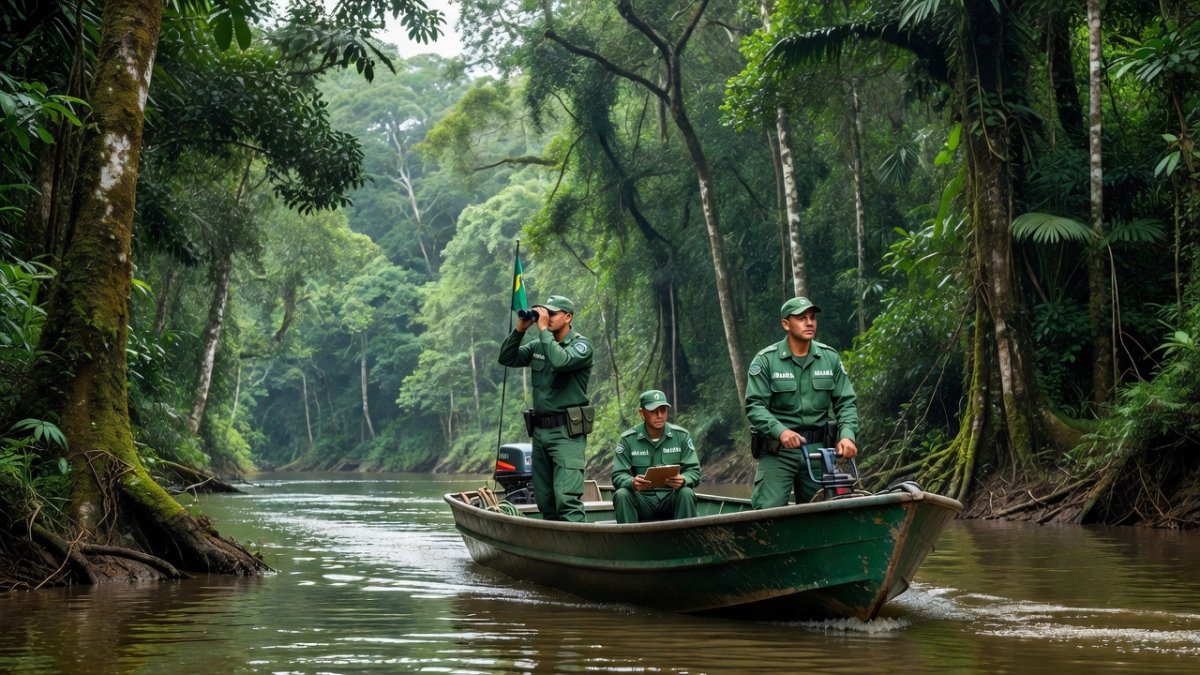
Manaus, Amazonas – Brazil — Deep in the emerald vastness of the Brazilian Amazon, federal agents from IBAMA and ICMBio navigate treacherous rivers and dense jungle trails, dismantling illegal gold mining operations that have devastated indigenous territories and released toxic mercury into waterways feeding countless communities. The Al Jazeera English report captures these patrols in real time, showing agents seizing excavators, burning camps, and confronting armed miners tied to organized crime networks. Their work has produced staggering results: active garimpo sites in Yanomami Territory plummeted from 4,570 hectares in 2024 to just 56 hectares in 2025, an astonishing 98.77 percent reduction. New deforestation from mining fell from 1,800 hectares in 2022 to 45.2 hectares in 2025. Over 10,500 government operations by June 2026 yielded 369 arrests and R$709 million in economic damage to criminal networks. Yet the fight remains urgent as high gold prices and cross-border flows from Venezuela sustain the threat, while PRODES data records 5,796 km² of Amazon deforestation between August 2024 and July 2025 despite an 11 percent year-on-year drop and a 37.5 percent decline in DETER alerts from August 2025 to May 2026.
The Scale of Amazon Deforestation
Cattle ranching drives approximately 80 percent of Amazon deforestation across Latin America, with soy expansion, logging, and mining compounding the assault on the world’s largest rainforest. Peak annual losses exceeded 27,000 km² in the early 2000s, but enhanced enforcement has delivered three consecutive years of decline, including the latest PRODES figure of 5,796 km² for the August 2024–July 2025 period—an 11 percent reduction from the prior year. DETER satellite alerts dropped 37.5 percent between August 2025 and May 2026 compared with the previous period, signaling that sustained patrols and fines are bending the curve. Still, 21 percent of the pre-1970 Amazon forest cover—851,000 km²—has vanished by 2025, releasing billions of tons of stored carbon and disrupting rainfall patterns that sustain agriculture from Brazil to Argentina. These losses hit indigenous territories hardest, where illegal miners clear vast tracts for pits and camps. The data reveal both progress and peril: without continued aggressive action, the Amazon risks crossing irreversible tipping points that would transform it from carbon sink to source, threatening global climate stability and the livelihoods of millions across Latin America.
Crackdown in Yanomami Lands
The 9.6-million-hectare Yanomami Indigenous Territory spanning Roraima and Amazonas states has become ground zero for Brazil’s enforcement surge. Active garimpo mining sites collapsed from 4,570 hectares in 2024 to only 56 hectares in 2025, representing a 98.77 percent reduction achieved through relentless aerial and riverine patrols. Fresh deforestation linked to mining plunged from 1,800 hectares in 2022 to 45.2 hectares in 2025. More than 10,500 integrated operations by June 2026 produced 369 arrests or detentions and inflicted R$709 million in asset seizures and destruction against criminal operators. April 2026 overflights revealed the first signs of ecological recovery as mining scars began healing. Yet the territory remains entangled with organized crime; the Primeiro Comando da Capital uses gold to launder money, complicating efforts to sever financial lifelines. These victories demonstrate that targeted, sustained pressure can reverse even entrenched destruction, offering a replicable model for other indigenous lands across Latin America facing similar extractive threats.
IBAMA and ICMBio's Frontline Battles
IBAMA wields fines reaching R$50 million while physically destroying excavators, motors, barges, and mining infrastructure that scar protected forests. ICMBio manages federal conservation units, erecting physical barriers and removing illegal equipment from ecological stations. In one operation at Estação Ecológica Juami-Japurá in Amazonas, agents dismantled a garimpo valued at R$8 million. Operation Calha Norte and past-nullus barriers have sealed off remote ecological stations against new incursions. In TI Sararé, Mato Grosso, 1,090 integrated operations inflicted R$93.3 million in damages and seized 1.5 tons of explosives. Joint actions with the Federal Police, Army through Operação Ágata, and Força Nacional multiply impact across vast terrain. The Al Jazeera footage shows agents navigating flooded rivers and dense canopy to reach hidden camps, underscoring the physical courage required. These coordinated efforts have driven the dramatic contraction of illegal mining footprints, proving that well-resourced enforcement agencies can protect Latin America’s critical carbon reserves when political will aligns with operational capacity.
Mercury's Poisonous Legacy
Miners release mercury directly into rivers, where it bioaccumulates through the food chain with devastating efficiency. Amazon river dolphins now carry mercury levels 20 to 30 times above safe thresholds, among the highest concentrations ever recorded. In Peru, fish samples have tested at 60 times international safety limits. Contamination reaches water sources, breast milk, and human tissues across the basin. Colombian Amazon communities report children suffering neurological damage, while entire villages can no longer safely consume local fish. In Yanomami territory, traditional fish stocks have collapsed, forcing families to raise fish in tanks for safer protein. The toxin travels far beyond mine sites, poisoning downstream populations throughout Brazil, Peru, and Colombia. This invisible crisis compounds the visible forest loss, turning once-abundant ecosystems into sources of chronic poisoning that will affect generations. Enforcement teams increasingly prioritize mercury cleanup alongside equipment destruction, recognizing that halting new releases is only the first step in reversing decades of toxic accumulation across Latin America’s shared waterways.
Devastating Health Consequences
A public health emergency was declared in Yanomami territory in 2023 after malnutrition, malaria, and mercury poisoning converged into a humanitarian catastrophe. Mining pits create stagnant pools that breed malaria-carrying mosquitoes, spiking infection rates among already vulnerable populations. Mercury exposure causes irreversible neurological and developmental harm, hitting children hardest and impairing cognitive growth across affected communities. By mid-2025, officials noted measurable health improvements following mining reductions, yet contamination persists in soils, sediments, and food chains. Families who once relied on river fish now face protein shortages and long-term toxic burdens. These health impacts ripple outward, straining regional hospitals and underscoring how environmental crimes translate directly into human suffering. Sustained enforcement has begun reversing some trends, but full recovery will require decades of monitoring, remediation, and alternative protein programs. The Yanomami crisis illustrates the indivisible link between forest protection and public health across Latin America’s indigenous frontiers.
Political Hurdles Amid Rising Gold Prices
Congressional legislation perceived as weakening environmental safeguards threatens hard-won gains, sparking fierce debate over balancing small-producer interests against ecosystem protection. Surging gold prices keep economic incentives alive for illegal operators who launder gold using permits from inactive legal mines, according to investigations by Greenpeace and Reuters. Cross-border mining flows from Venezuelan Yanomami lands further complicate enforcement. Despite these obstacles, the 98.77 percent drop in active garimpo and sharp deforestation reductions prove that consistent operations can overcome political headwinds. Continued success demands stronger cross-border cooperation, tighter financial tracking of gold flows, and renewed commitment to indigenous land rights. Latin America’s Amazon stands at a crossroads where enforcement victories must be locked in through durable policy, or the region risks losing both its forests and the climate stability they provide for the entire planet.
By Elena Vasquez, Staff Writer
**Keywords:** Amazon deforestation, illegal gold mining, Yanomami, IBAMA, ICMBio, mercury contamination, Brazil enforcement, garimpo, indigenous territories, Latin America climate, PRODES data, Operation Ágata, malaria, gold launderingThis article was produced with AI-assisted research and editorial support. Reporting is based on sources cited in the article.
What's Your Reaction?
 Like
0
Like
0
 Dislike
0
Dislike
0
 Love
0
Love
0
 Funny
0
Funny
0
 Wow
0
Wow
0
 Sad
0
Sad
0
 Angry
0
Angry
0

Latin America Correspondent at Global1.News. Based in Mexico City, covering politics, economics, energy, and culture across the region. Brings an on-the-ground perspective to stories spanning from the Rio Grande to Patagonia.













Comments (0)