
48% Indian Doctors Use AI as 69% Fear Leaving by 2030
48% Indian Doctors Adopt AI Amid 69% Retention Crisis India's healthcare workforce stands at a critical juncture, with 48% of clinicians now integrating AI tools into daily practice—a sharp jump from 26% last year—yet 69% express intent to exit the profession by 2030.
48% Indian Doctors Adopt AI Amid 69% Retention Crisis
India's healthcare workforce stands at a critical juncture, with 48% of clinicians now integrating AI tools into daily practice—a sharp jump from 26% last year—yet 69% express intent to exit the profession by 2030. This tension between technological uptake and workforce attrition threatens to widen existing gaps in care access, particularly in states already operating below WHO doctor-density thresholds. The Clinician of the Future 2026 report from Elsevier, released July 22, 2026, ties these trends directly to national digital-health initiatives while exposing persistent shortfalls in training and governance.
New Delhi, India — The Clinician of the Future 2026 report underscores how India's push toward AI-enabled care collides with structural vulnerabilities that could erode service delivery for 1.3 billion citizens.
AI Adoption Surges Among Indian Clinicians
Forty-eight percent of Indian doctors and clinicians now use AI in their daily work, according to the Clinician of the Future 2026 report published by Elsevier on July 22, 2026. This marks a sharp rise from 26% the previous year. Among those using AI, 34% rely on healthcare-specific tools while 56% depend on general-purpose platforms. The data directly ties to India's Digital Health Mission and Ayushman Bharat Digital Mission, which have accelerated digital infrastructure across states including Delhi, Maharashtra, and Karnataka.
Apollo Hospitals in Chennai and Hyderabad, along with AIIMS Delhi and Narayana Health in Bengaluru, lead AI integration. Apollo's partnership with Microsoft deploys deep-learning models for chest X-ray analysis, reducing interpretation time by 40%. Narayana Health uses AI-driven pathology platforms to triage biopsy slides. AIIMS employs telemedicine algorithms that prioritize rural referrals. Comparative data reveals India's adoption rate trails both the US and China. The US reports 65% of large hospital systems using FDA-cleared AI tools in radiology, while China's national program covers 80% of tertiary hospitals. India stands at approximately 22% penetration among top-tier facilities. Telemedicine platforms such as Practo and Tata 1mg embed AI triage layers routing 30% of queries to asynchronous specialist review.
Burnout Threatens Workforce Retention by 2030
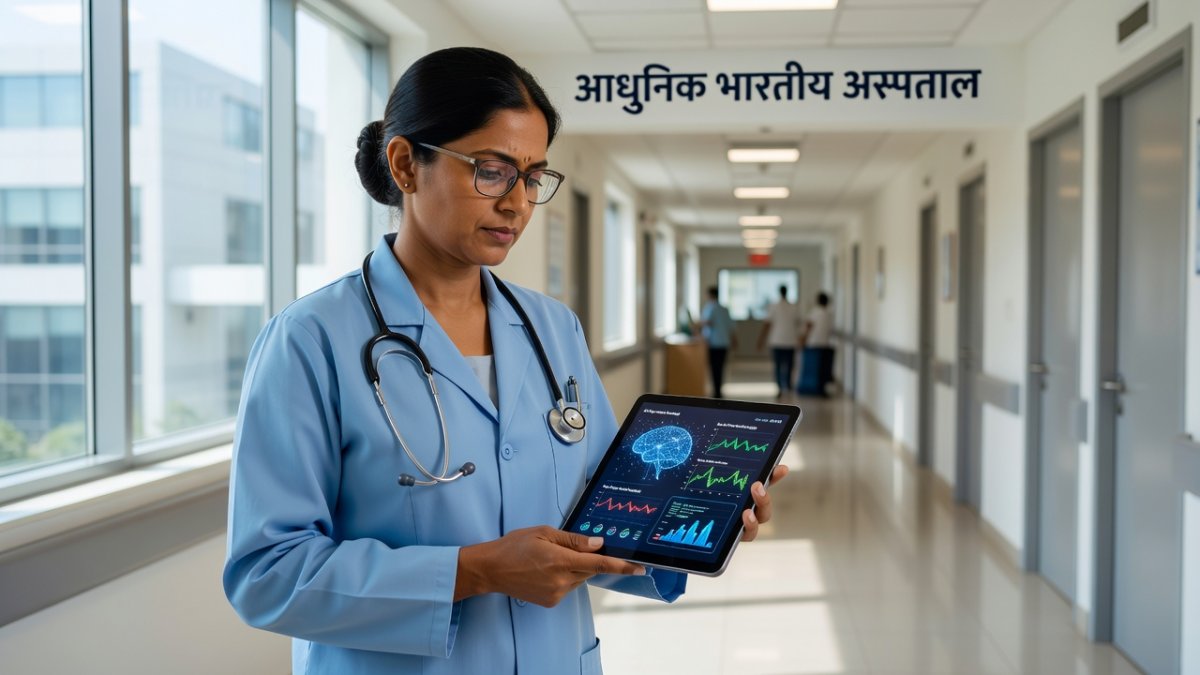
Sixty-nine percent of Indian clinicians express concern they may leave the profession by 2030. Primary drivers include burnout, inadequate training, and workplace stress. India already operates with fewer than one doctor per 1,000 people, below the WHO standard. This shortage hits hardest at government facilities such as AIIMS in Delhi and district hospitals in Uttar Pradesh and Bihar. The report highlights that without intervention, patient wait times and care quality will deteriorate further in underserved regions.
India's doctor-to-population ratio averages 1:1,457 nationally but stark disparities exist: Bihar reports 1:2,800 while Kerala maintains 1:650. Urban tertiary centers handle 200-300 outpatient visits per doctor daily. NMC's 2024 shortage assessment projects a deficit of 4.3 lakh specialists by 2030. Union Budget 2026 allocates Rs 1.12 lakh crore to health, a 15% increase. 28% of postgraduate doctors migrate abroad within five years citing 70-hour weeks. States with higher AI pilot density, such as Tamil Nadu, record 11% lower attrition in district hospitals.
Training Deficits and Governance Shortfalls
Only 45% of clinicians feel they have received adequate AI training. The gap widens among doctors, where just 18% report sufficient preparation compared with 46% of nurses. Workplace access to digital technologies stands at 41% overall but drops to 30% for doctors. Only 40% believe their organisations maintain strong AI governance systems. These figures matter for institutions like Apollo Hospitals in Chennai and Fortis Healthcare in Gurugram, which lead private-sector adoption yet still face uneven implementation across their networks.
Effective AI training must cover algorithmic bias detection, data governance, and integration of predictive outputs. Core modules should include statistical literacy for model confidence intervals and ethical frameworks for override decisions. Current NMC guidelines allocate zero dedicated hours to AI across the 5.5-year MBBS curriculum. The UK NHS AI Lab mandates 20-hour certification modules for all radiologists. US AMA embeds AI ethics into residency accreditation. CMC Vellore introduced a 30-hour elective on ML applications in 2024. AFMC Pune launched a joint program with DRDO on defense telemedicine AI. These reach fewer than 8% of students nationally.
Policy Push Through NITI Aayog and IndiaAI Mission
NITI Aayog has designated healthcare as a priority sector in its national AI strategy. The 2026 Union Budget allocated Rs 2,000 crore for AI in healthcare under the IndiaAI Mission. Health-tech startups raised over $2 billion in 2025, with major activity in Bengaluru and Hyderabad. Private chains including Max Healthcare and Apollo are deploying AI for diagnostics and administrative tasks. However, the National Medical Commission has not yet issued formal AI training guidelines, leaving medical colleges in states such as Tamil Nadu and West Bengal without standardised curricula.
The IndiaAI Mission earmarks Rs 1,500 crore for healthcare applications through 2027, prioritizing diagnostic datasets and federated learning. Funds support a national radiology repository with 50 million anonymized scans by 2028. Telangana's AI diagnostics program equips 450 primary health centers with automated retinopathy screening. Gujarat's AI telemedicine network links 1,200 sub-centers to specialists. Liability questions remain unresolved under DPDP Act 2023. The act classifies health data as sensitive but lacks clauses on algorithmic accountability. Hospitals bear primary responsibility but developers face no standardized audit requirements.
Trust Levels and Patient Care Impact
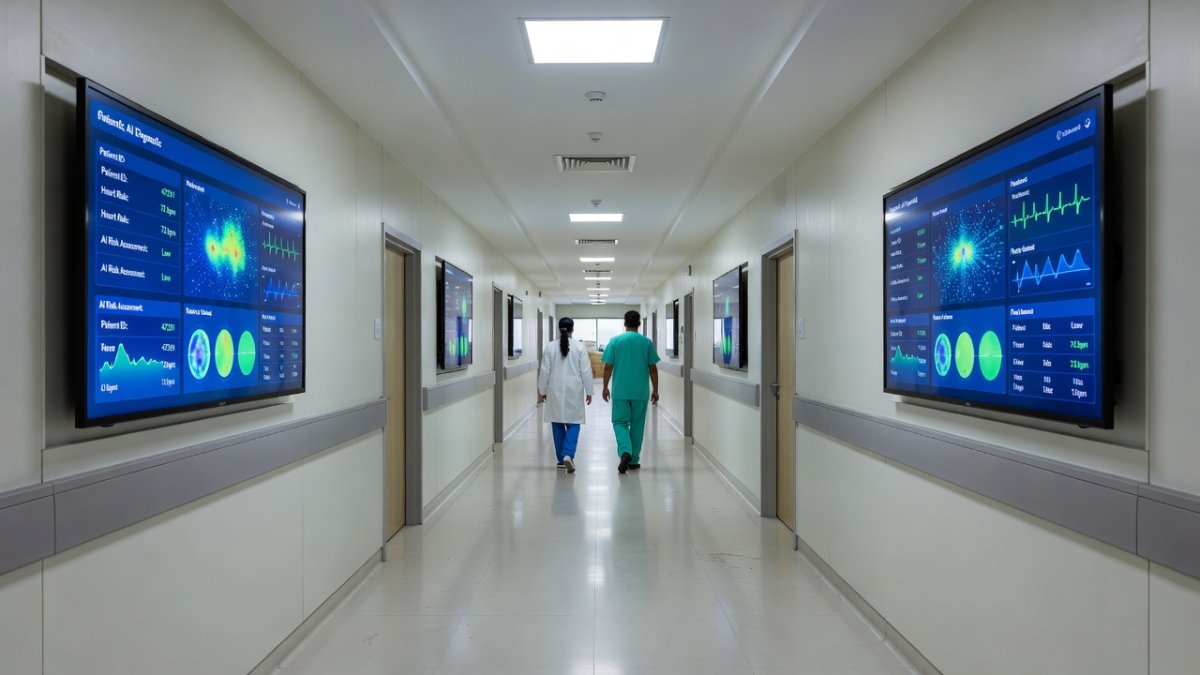
Seventy-five percent of Indian clinicians believe AI can improve patient care, and 50% say it is already making a positive difference. Eighty percent view AI as a valuable assistant over the next five to ten years. Trust remains moderate: 35% report high trust in AI tools while 57% hold moderate trust. Sixty-four percent state they have enough digital tools for quality care. These perceptions directly affect taxpayers funding the Ayushman Bharat scheme and patients in rural districts who rely on AI-supported telemedicine from primary health centres.
Economic and Systemic Implications for India
The combination of rising AI use and retention fears creates pressure on the healthcare economy. With doctor density already low, losing 69% of the current workforce by 2030 would strain public finances and widen urban-rural disparities. States like Kerala and Tamil Nadu, which have invested heavily in digital health, may fare better than Bihar or Jharkhand. Policymakers must link AI governance reforms to existing frameworks such as the National Health Authority and ICMR guidelines to prevent fragmented adoption. Private-sector leadership alone cannot close the training gap across the 1.3 billion population.
Outlook for Doctors, Patients and Policymakers
India's health-tech ecosystem offers clear opportunities if training and governance catch up. The Elsevier report data shows moderate trust and partial access, indicating that targeted investment in medical education and hospital infrastructure can convert AI potential into measurable gains in life expectancy and disease management. Without swift action from the Ministry of Health and NITI Aayog, the 48% adoption rate risks becoming a statistic of unrealised promise rather than a foundation for resilient care delivery.
— By Dr. Raj Patel, Staff Writer
This article was produced with AI-assisted research and editorial support. Reporting is based on sources cited in the article.
What's Your Reaction?
 Like
0
Like
0
 Dislike
0
Dislike
0
 Love
0
Love
0
 Funny
0
Funny
0
 Wow
0
Wow
0
 Sad
0
Sad
0
 Angry
0
Angry
0

India/South Asia Correspondent at Global1.News. Analytical voice with a background in science and health journalism. Based in New Delhi, covering Indian politics, education, healthcare, technology, and policy. Breaks down complex data into clear, actionable reporting.












Comments (0)