
Oliver Tree Killed in Rio Helicopter Collision - 6 Dead
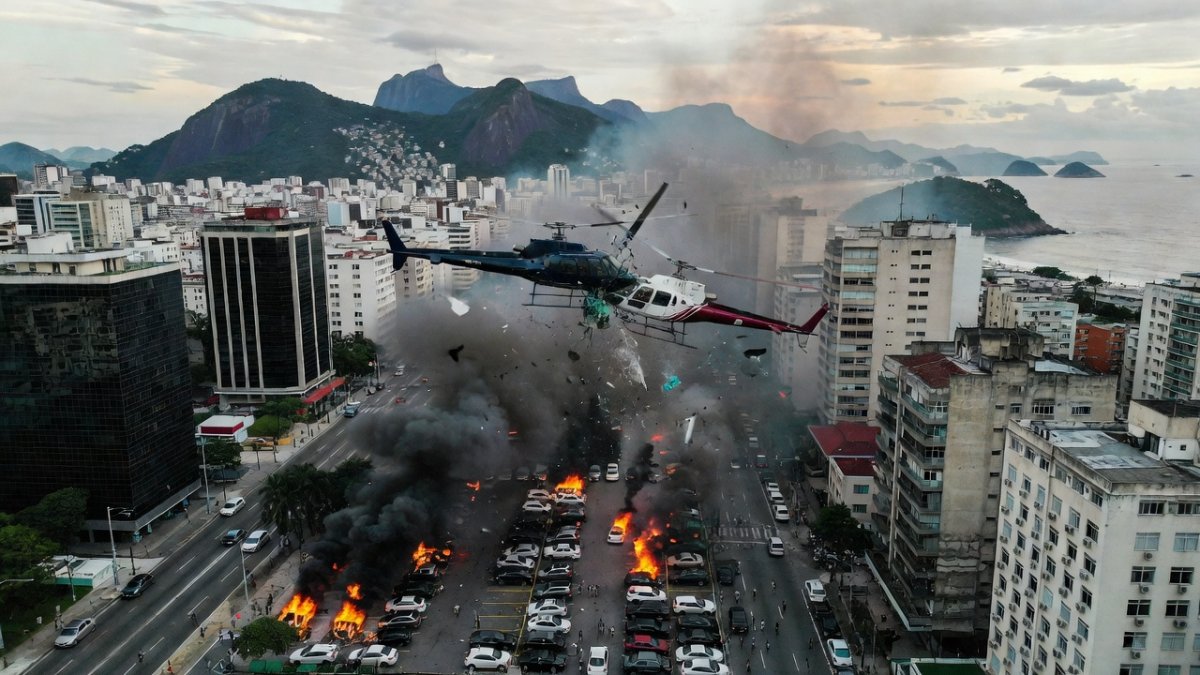
The Crash Over Rio de Janeiro The collision of two helicopters over Rio de Janeiro on Sunday claimed the lives of six people when one aircraft plummeted into the car park of a dealership and set around twenty vehicles ablaze. The dramatic descent was captured in footage published by Brazilian media, showing flames and thick smoke rising from the urban site amid the city's dense
The Crash Over Rio de Janeiro
The collision of two helicopters over Rio de Janeiro on Sunday claimed the lives of six people when one aircraft plummeted into the car park of a dealership and set around twenty vehicles ablaze. The dramatic descent was captured in footage published by Brazilian media, showing flames and thick smoke rising from the urban site amid the city's dense skyline. This incident unfolded in a metropolis where daily helicopter traffic threads between mountains and coastline, turning an ordinary Sunday into a scene of sudden destruction.
Brazilian outlets quickly shared images of the burning wreckage, highlighting how the crash site became engulfed in smoke that could be seen across nearby neighborhoods. The event drew immediate attention because Rio serves as a hub for both local transport and international visitors who rely on aerial views of landmarks. Emergency crews arrived to find the dealership area transformed into a zone of intense heat and scattered debris from the impact.
Residents in the vicinity described hearing the collision before witnessing the fireball that consumed the parked cars below. The urban layout of Rio, with its mix of residential blocks and commercial spaces, meant the falling helicopter struck a location filled with vehicles, amplifying the visible destruction. This tragedy underscores the risks present in a city where air travel forms part of the everyday rhythm.
Emergency Response by the Military Fire Department
The Military Fire Department of the State of Rio de Janeiro received the call at 09:00 local time and moved swiftly to the scene to contain the blaze. Their teams worked to secure the area around the dealership while extinguishing the fires that had spread across the vehicles. This response reflects the established role of the Military Fire Department within Brazil's emergency infrastructure, where rapid mobilization is essential in densely populated zones.
Firefighters faced the challenge of managing both the aircraft wreckage and the burning cars in an urban setting that limited access routes. The Military Fire Department coordinated efforts to prevent further spread while ensuring public safety around the crash site. Their actions demonstrated the preparedness required for incidents involving aviation in Rio's complex environment.
Local protocols guided the Military Fire Department as they established perimeters and supported initial assessments of the damage. The department's involvement highlights how Brazilian emergency services integrate aviation incidents into their standard operations across major cities. Such responses are critical in a nation where helicopter use supports tourism and business travel.
The Victims: Oliver Tree and Five Others
Oliver Tree, the 32-year-old US musician and internet personality, was among those who died in the collision while traveling as part of his world tour. Known for hits including Life Goes On, Miss You, and Alien Boy, he had performed in São Paulo on 6 June and was scheduled for shows in Europe later in the summer. His presence on the flight brought international attention to the incident in Rio de Janeiro.
The other victims included Argentine content creator Gaspar Prim Diaz, also known as Gaspi, along with Lucas Brito Chaves, Lucas Vignale, pilot Alexandre Souza, and second pilot Charles Marsillac. All six individuals on the two aircraft are presumed to have perished in the crash. Their names emerged from the flight manifests released during the early stages of the response.
Tributes arrived from collaborators such as KSI, who had worked with Oliver Tree on the track Voices, and from Jackass star Steve-O, both expressing grief over the loss. These messages illustrated how the tragedy extended beyond Brazil to touch global entertainment circles. The human cost resonated with fans who followed Tree's distinctive style and career trajectory.
Investigation Underway by Brazilian Authorities
Brazilian authorities have launched a formal investigation into the cause of the helicopter collision over Rio de Janeiro. The Military Fire Department of the State of Rio de Janeiro, civil police, and aviation safety agencies are examining flight paths, air traffic control communications, and operational protocols. This coordinated effort aims to determine the sequence of events in the crowded airspace above the city.
Investigators are focusing on the specific conditions that led to the mid-air impact on Sunday. The process involves reviewing records from both aircraft and any available recordings from the area. Brazilian officials emphasize thorough analysis to understand how such an event occurred in a region known for its active helicopter operations.
The investigation proceeds with input from multiple agencies to ensure all aspects of the incident receive proper attention. This approach aligns with standard procedures for aviation accidents in Brazil, where urban density adds layers of complexity. Findings will inform future safety measures in Rio's skies.
Aviation Safety in Rio de Janeiro
Rio de Janeiro maintains a busy airspace that accommodates Santos Dumont and Galeão airports alongside extensive helicopter traffic serving hotels, tourist sites, and business needs. Helicopters frequently navigate routes near Christ the Redeemer and Sugarloaf Mountain, supporting the city's tourism economy. The Sunday collision draws attention to the operational demands placed on pilots in this setting.
Brazil maintains aviation regulations that govern helicopter movements in urban centers like Rio, where geography creates narrow corridors between natural features and built environments. Recent safety records show ongoing efforts to manage these challenges through training and monitoring. The current incident fits into broader discussions about maintaining standards amid high traffic volumes.
The tourism sector in Rio depends on reliable air transport for visitors seeking aerial perspectives of the coastline and mountains. Any disruption to helicopter services can influence perceptions of safety among international travelers. Brazilian authorities continue to balance economic benefits with the need for rigorous oversight in this sector.
Cultural Impact and the Global Music Connection
Oliver Tree's career, marked by his rise after going viral in 2016 and his signature bowl haircut, connected audiences worldwide through his music and online presence. His tour stop in São Paulo placed Brazil on the itinerary of a major international artist, reflecting the country's status as a destination for global entertainment events. The loss in Rio highlights the intersection of these tours with local infrastructure.
Brazil regularly hosts concerts that draw millions of attendees to venues in São Paulo and Rio, strengthening cultural exchanges between international performers and Brazilian fans. This tragedy affects both the local music community and the broader touring industry that relies on safe travel between cities. Artists and audiences alike recognize the role of Brazilian hubs in worldwide circuits.
The event serves as a reminder of how entertainment figures from abroad become part of Brazil's cultural landscape during their visits. Oliver Tree's scheduled dates in Lisbon and the United Kingdom illustrated the continuous movement of such tours across continents. The collision in Rio interrupts that flow and prompts reflection on the connections forged through music.
What Comes Next
The investigation by Brazilian authorities will follow established timelines for aviation incidents, with updates expected as evidence is reviewed. Potential regulatory adjustments may arise from the findings regarding helicopter operations in Rio. These steps aim to address any identified gaps in current protocols.
Helicopter tourism in Rio could face temporary adjustments while safety reviews continue, affecting operators who serve visitors to the city's landmarks. Broader implications for aviation safety in urban Brazil include renewed focus on training and coordination among agencies. The Military Fire Department of the State of Rio de Janeiro and aviation bodies will contribute to these evaluations.
A city positioned between mountains and sea, where helicopters form part of the daily landscape, now confronts the consequences of this rare but devastating event. The coming weeks will reveal more about the causes and the measures taken to prevent recurrence. Brazilian resilience in the face of such incidents remains evident in the coordinated response already underway.
By Elena Vasquez, Staff WriterThis article was produced with AI-assisted research and editorial support. Reporting is based on sources cited in the article.
What's Your Reaction?
 Like
0
Like
0
 Dislike
0
Dislike
0
 Love
0
Love
0
 Funny
0
Funny
0
 Wow
0
Wow
0
 Sad
0
Sad
0
 Angry
0
Angry
0

Latin America Correspondent at Global1.News. Based in Mexico City, covering politics, economics, energy, and culture across the region. Brings an on-the-ground perspective to stories spanning from the Rio Grande to Patagonia.















Comments (0)