
Bolivia's Vanishing Glaciers Threaten La Paz Water Security
**Keywords:** Bolivia glaciers, Chacaltaya, La Paz water crisis, tropical Andes melt, Zongo Glacier, GLOF risk, COP30, IYPG2025, Illimani, Tuni-Condoriri, Andean ice loss, EPSAS, UMSA monitoring, peak water In the shadow of the Cordillera Real, Bolivian families once skied on Chacaltaya’s pristine slopes at 5,240 meters, but today only barren rock remains where the world’s high
Bolivia’s Vanishing Glaciers: From Chacaltaya’s Death to La Paz’s Thirst by 2080
La Paz, Bolivia – June 2026 — High in the Andes, the disappearance of Chacaltaya has left communities staring at exposed rock where ice once fed rivers and dreams. With Andean glaciers losing mass at 0.7 meters per year—35 percent faster than the global average—Bolivia confronts an ice-free future by the 2080s. Scientists from SENAMHI and Universidad Mayor de San Andrés warn that peak water has already passed for many basins, turning initial melt surges into permanent scarcity for over two million residents in La Paz and El Alto.
Chacaltaya: The Glacier That Vanished
Chacaltaya Glacier at 5,240 meters near La Paz stood as a symbol of Andean life until its complete disappearance around 2009. Once home to the world’s highest ski resort, the site now reveals only barren rock, marking the first documented case of a tropical glacier lost primarily to anthropogenic climate change. Local elders recall weekend crowds and children learning to ski on its gentle slopes, yet rising temperatures pushed the glacier past its survival threshold. This loss serves as a stark warning for the entire tropical Andes, where glaciers hover near the 0°C year-round threshold that makes them the most vulnerable on Earth. Data from long-term monitoring shows the ice vanished faster than models predicted, stripping away both cultural heritage and a natural water regulator. Bolivian researchers at UMSA continue to study the exposed terrain, documenting how the absence of Chacaltaya has already altered local microclimates and seasonal runoff patterns. The glacier’s fate underscores how quickly human emissions can erase centuries of accumulated ice in Latin America’s high mountains.
Tropical Andes: Ground Zero for Glacier Loss
The tropical Andes experience melt rates far exceeding global averages, with Andean ice loss reaching 0.7 meters annually—35 percent faster than worldwide figures. Tropical glaciers remain the most vulnerable globally because they sit near the 0°C threshold year-round, leaving little buffer against even modest warming. Bolivia’s glacier area shrank 43 percent from roughly 530 square kilometers in 1986 to about 300 square kilometers by 2014, a pace that outstrips losses in temperate zones. Globally, alpine glaciers have shed around 40 percent of their mass since 2000, while a single peak year saw 600 gigatons disappear. In this context, Bolivia’s Cordillera Real acts as an early-warning system for Latin America. The region’s glaciers respond rapidly to temperature spikes because they lack the protective cold of higher-latitude ice fields. Scientists emphasize that continued emissions will accelerate this trend, pushing more Andean nations toward irreversible ice loss within decades. Venezuela already lost its last glacier at Pico Bolívar between 2024 and 2025, while Peru witnessed the dramatic 2025 collapse of Vallunaraju, illustrating the shared regional emergency.
Water Towers of the Cordillera Real
Zongo Glacier in the Cordillera Real serves as the global benchmark for tropical glaciology, monitored continuously by France’s IRD through the GLACIOCLIM program. Its annual mass balance typically ranges from -0.5 to -1.5 meters water equivalent, reflecting persistent negative trends. Nearby, the Tuni-Condoriri glacier system feeds critical reservoirs including Incachaca and Hampaturi that supply La Paz and El Alto, home to more than two million people. These glaciers provide the highest percentage of dry-season water in Latin America, contributing 61 to 85 percent of La Paz’s supply during droughts. Illimani peak above 6,400 meters functions as another vital freshwater reservoir for surrounding valleys. Monitoring by SENAMHI Bolivia and UMSA tracks these changes in real time, revealing how shrinking ice directly threatens urban water security. The peak water phenomenon—initial melt increases followed by permanent decline—has already begun in several Bolivian basins. Without these natural towers, dry-season flows would collapse, forcing greater reliance on aging infrastructure that cannot meet rising demand.
Sixty New Lakes, One Warning
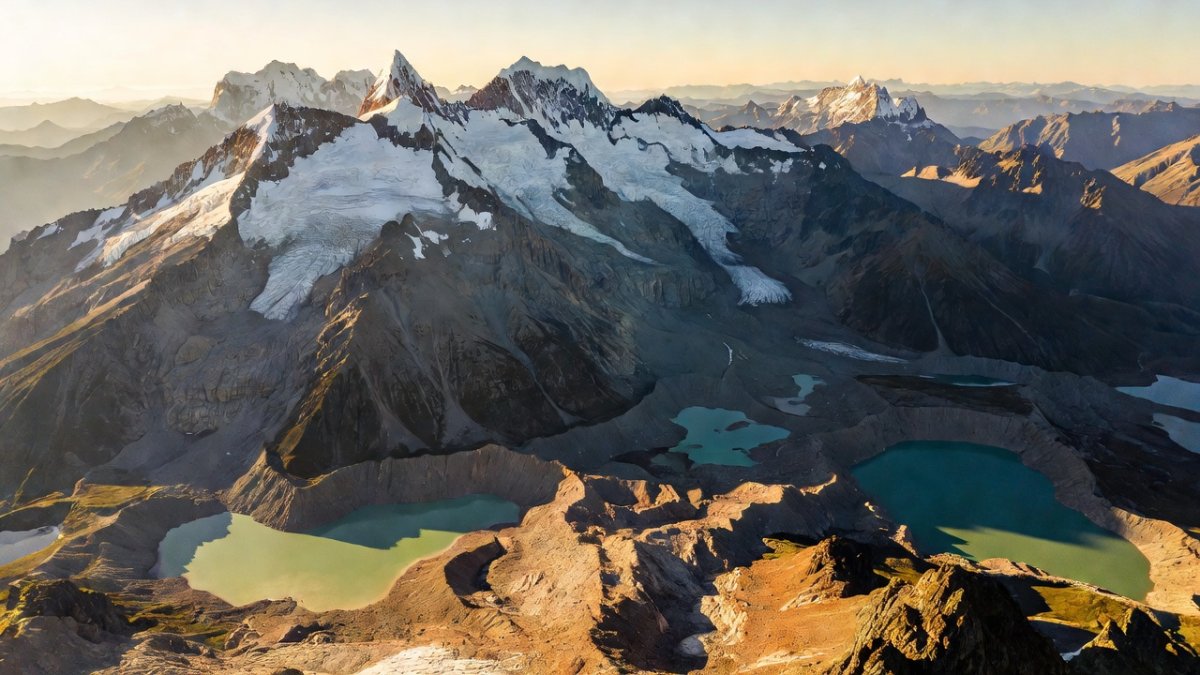
Sixty new glacial lakes have formed in Bolivia in just six years, dramatically raising the risk of glacial lake outburst floods. These sudden events can unleash destructive floods downstream, threatening communities and infrastructure built without adequate GLOF defenses. The rapid lake formation signals accelerating melt that will leave Bolivia entirely ice-free by the 2080s if current rates persist. Each new lake represents both a potential water source and a looming hazard, requiring urgent hazard mapping and early-warning systems. Researchers link the surge in lakes directly to the 43 percent glacier-area reduction recorded between 1986 and 2014. In the Cordillera Real, these water bodies now dot former glacier beds, altering local hydrology and increasing flood exposure for rural populations. International attention turned to this issue during the 2025 UN International Year of Glaciers’ Preservation, led by UNESCO and WMO, which highlighted Bolivia’s situation as a global priority. Without coordinated adaptation, the combination of new lakes and shrinking ice will compound water and disaster risks across the Andes.
La Paz and El Alto: A Thirsty Metropolis
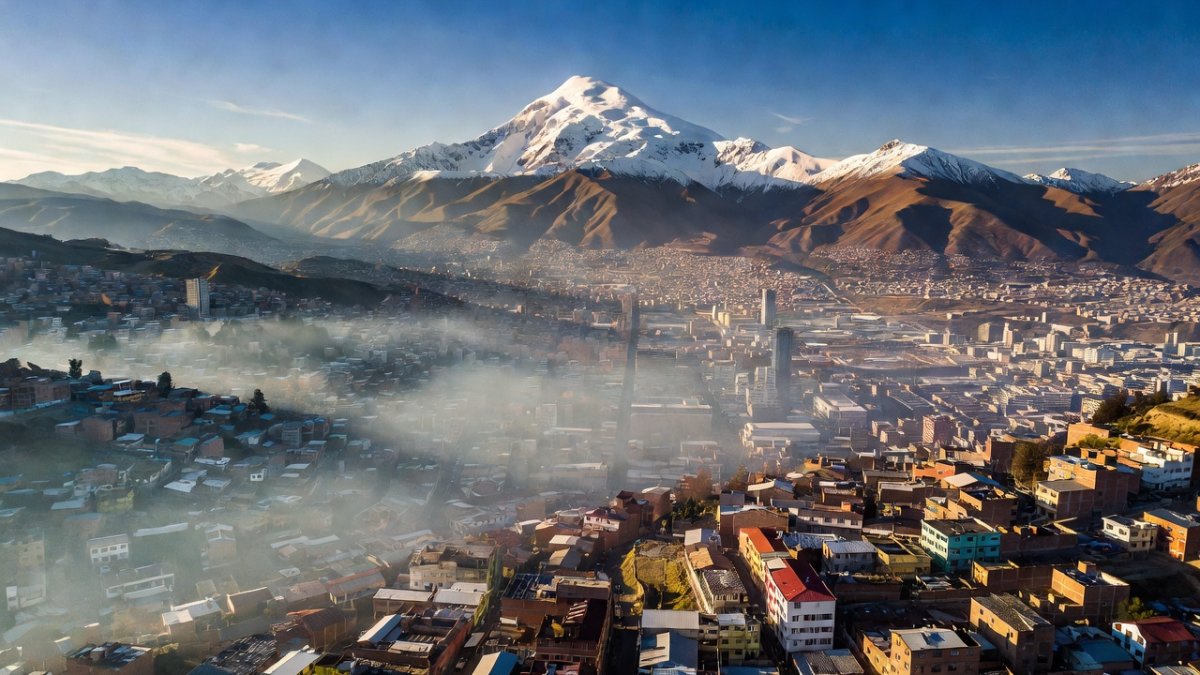
La Paz and El Alto together draw 61 to 85 percent of their water from glacial melt during droughts, the highest dependency rate in Latin America. El Alto ranks among the region’s fastest-growing cities, where surging demand already outpaces aging infrastructure managed by EPSAS. Water shortages struck again in early 2026 as reservoir levels dropped below critical thresholds, forcing rationing and emergency measures. The Tuni-Condoriri system, once reliable, now delivers diminishing volumes as glaciers retreat. Peak water has passed, meaning future dry seasons will bring even sharper deficits. Local authorities struggle to expand treatment capacity while populations climb, leaving informal settlements especially vulnerable. Data from UMSA monitoring shows that without new storage and conservation strategies, shortages will become chronic. The human cost falls heaviest on low-income families who already spend hours queuing for tankers during crises. Bolivia’s capital region thus embodies the direct link between distant glacier loss and daily urban survival.
What This Means for Latin America
Across the Andes, similar stories unfold: Venezuela lost its final glacier at Pico Bolívar in 2024-2025, and Peru suffered the 2025 Vallunaraju collapse. Chile holds 76 percent of South America’s glaciers, yet even these larger ice fields face accelerating loss. Bolivia’s experience offers lessons for the entire continent as tropical glaciers prove most sensitive to warming. COP30 in Belém, Brazil, in November 2025 featured an IAEA panel on glacier monitoring with active Bolivian participation from UMSA, underscoring regional cooperation needs. The 2025 UN International Year of Glaciers’ Preservation amplified calls for emissions cuts and adaptation funding. Latin American nations share interconnected water systems where upstream glacier loss quickly translates into downstream scarcity. Coordinated monitoring and cross-border data sharing remain essential to manage risks that ignore national boundaries. Bolivia’s 60 new lakes and projected ice-free status by the 2080s serve as a continental alarm.
The Bottom Line — What Comes Next
Adaptation must accelerate through expanded reservoir capacity, efficient irrigation, and diversified water sources before peak deficits hit. Emissions reductions remain non-negotiable if any Andean ice is to survive past mid-century. Bolivian scientists continue vital work with SENAMHI and international partners, yet funding gaps hinder scaling early-warning systems for GLOFs. Communities around Illimani and the Cordillera Real need support to transition from glacier-dependent livelihoods. Regional platforms emerging from COP30 and the International Year of Glaciers offer pathways for shared technology and finance. Without swift action, the barren rock at Chacaltaya will become the norm rather than the exception across Latin America’s mountains. The data are clear: every fraction of a degree avoided preserves water security for millions downstream. Bolivia’s glaciers have already delivered their warning; now governments and citizens must respond with equal urgency. By Elena Vasquez, Staff Writer
This article was produced with AI-assisted research and editorial support. Reporting is based on sources cited in the article.
What's Your Reaction?
 Like
0
Like
0
 Dislike
0
Dislike
0
 Love
0
Love
0
 Funny
0
Funny
0
 Wow
0
Wow
0
 Sad
0
Sad
0
 Angry
0
Angry
0

Latin America Correspondent at Global1.News. Based in Mexico City, covering politics, economics, energy, and culture across the region. Brings an on-the-ground perspective to stories spanning from the Rio Grande to Patagonia.














Comments (0)