
Dr. Nagham Nawzat Aids Yazidi ISIS Survivors in Duhok
Healing Amid the Shadows of Genocide In the city of Duhok, within Iraq's Kurdish region, Dr. Nagham Nawzat has become a vital figure for Yazidi women who endured captivity under Islamic State militants. Her work as a gynaecologist extends beyond medical examinations to include emotional support for survivors of systematic violence. Since 2015, she has assisted more than 1,200 w
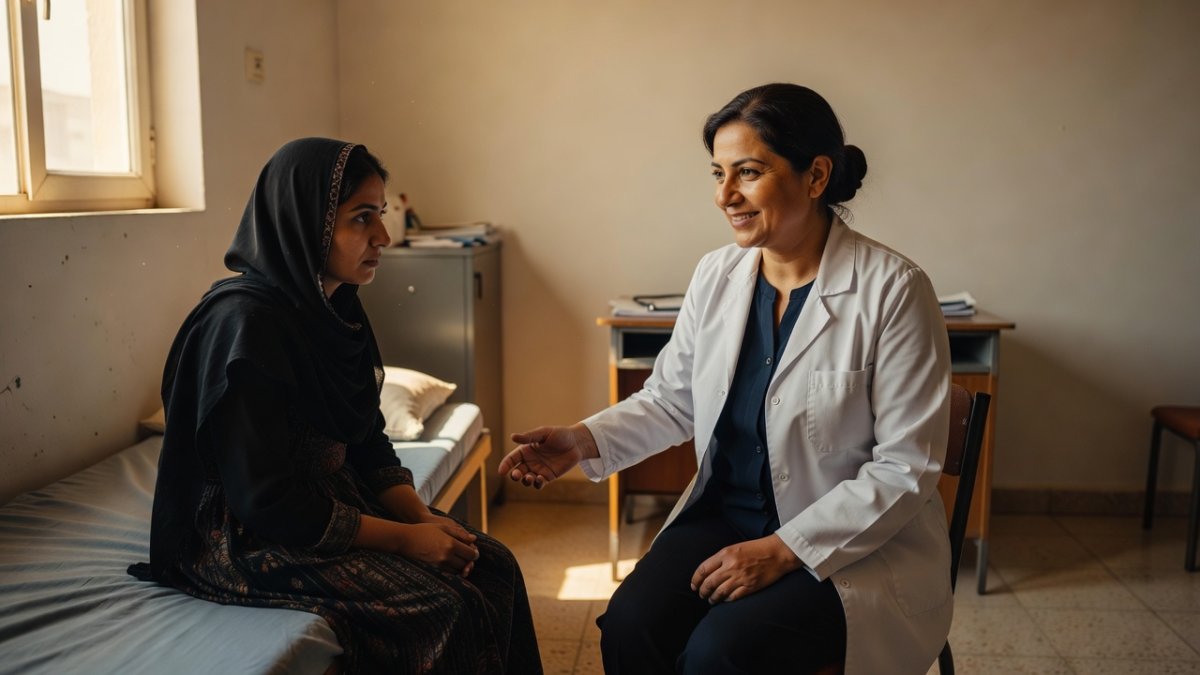
Healing Amid the Shadows of Genocide
In the city of Duhok, within Iraq's Kurdish region, Dr. Nagham Nawzat has become a vital figure for Yazidi women who endured captivity under Islamic State militants. Her work as a gynaecologist extends beyond medical examinations to include emotional support for survivors of systematic violence. Since 2015, she has assisted more than 1,200 women at the Duhok Survivors' Centre, a facility funded by the United Nations Population Fund that addresses gender-based violence. This centre stands as the only one of its kind in Iraq dedicated to such specialized care.
The scale of need became clear after Islamic State seized territory in 2014. At least 12,000 Yazidis were killed or kidnapped during that period. The United Nations has characterized these acts as an ongoing genocide against the religious minority. Dr. Nawzat's efforts focus on restoring dignity and health to those who returned, many of whom faced prolonged isolation and abuse.
Stories of Captivity and Release
Shireen was 19 when Islamic State fighters entered her home in Sinjar on 3 August 2014. She was taken from her family and sold as a sex slave, first in Tal Afar and later in Mosul to a fighter named Abu Omar. For more than two years she remained confined to his house, performing daily chores under guard and unable to step outside even for fresh air. Abu Omar also brought two other Yazidi girls, aged six and ten, into the household, where the younger ones were forced into labor and subjected to further violence.
Shireen was released in 2016 during Iraqi forces' operations to retake Mosul. Upon return she experienced depression and recurring nightmares. Her uncle and several friends had been killed, while her father and one sister remained missing. At the Duhok Survivors' Centre she met Dr. Nawzat, who conducted a physical check-up and offered space to speak about her experiences. Shireen later described how this support helped her continue, stating that without it she would not be here today.
The Yazidi Community and Regional Upheaval
Yazidis follow a faith centered on Yasdan and the revered Peacock Angel, Melek Tawwus. During captivity many survivors were compelled to convert to Islam and told their beliefs were devil worship. These forced conversions formed part of a wider campaign that displaced thousands and fractured families across northern Iraq. By July 2018, according to Hussein al-Qaidi of the Kurdistan Regional Government's Kidnapped Affairs department in Duhok, 2,023 Yazidi women had been liberated from Islamic State areas.
The conflict's effects reached beyond immediate violence into long-term displacement. Many survivors returned to communities still recovering from loss of land and livelihood. Dr. Nawzat's clinic provides continuity of care in this environment, where access to specialized services remains limited. Her approach combines thorough medical assessment with attentive listening, allowing women to recount fears at their own pace.
A Career Shaped by Early Concerns for Women
Dr. Nagham Nawzat was born in Mosul in 1976 to a Yazidi family. She pursued medicine with a focus on women's health, graduating from Mosul's Medical College in 2002. Her decision to specialize in gynaecology reflected longstanding attention to issues affecting women in her community. When Islamic State expanded control over nearly a third of Iraq in 2014, she chose to join the Duhok Survivors' Centre the following year.
At the centre she applies a post-traumatic medical method that begins with physical evaluation and moves to psychological support. Patients often share accounts of isolation and repeated harm. Dr. Nawzat responds with reinforcement that emphasizes their strength, positioning herself as a steady presence they can trust. In March 2016 she received the International Women of Courage Award from then-Secretary of State John Kerry for this combination of clinical care and advocacy against gender-based violence.
Personal Risks and Sustained Commitment
Dr. Nawzat has received threats against her life because of her work with survivors. These dangers arise in a setting where those who document or treat the consequences of Islamic State actions can themselves become targets. Despite such pressures she continues her volunteer role at the centre, maintaining contact with women who require follow-up care.
Her persistence reflects the broader necessity of sustained services in post-conflict areas. The centre's model demonstrates how targeted medical and emotional support can address immediate health needs while contributing to longer-term recovery. Figures on total survivors assisted remain tied to the 1,200 women documented through her direct involvement.
Connecting Struggles Across the Middle East
The experiences of Yazidi women under occupation and displacement echo patterns seen in other regional conflicts where civilian populations face targeted violence and loss of autonomy. In each case, access to health services that acknowledge both physical and psychological harm becomes essential. Dr. Nawzat's practice illustrates how local professionals can fill gaps left by larger institutional responses.
Her story also highlights the role of international recognition, such as the 2016 award, in drawing attention to ongoing needs. As reconstruction efforts continue in northern Iraq, the demand for specialized centres like the one in Duhok persists. The work underscores the importance of protecting those who provide care amid persistent insecurity.
By Fatima Al-Rashid, Staff WriterThis article was produced with AI-assisted research and editorial support. Reporting is based on sources cited in the article.
What's Your Reaction?
 Like
0
Like
0
 Dislike
0
Dislike
0
 Love
0
Love
0
 Funny
0
Funny
0
 Wow
0
Wow
0
 Sad
0
Sad
0
 Angry
0
Angry
0
Gulf/MENA Correspondent at Global1.News. Based in Doha, covering Gulf politics, energy markets, diplomacy, and development across the Middle East and North Africa. Tracks the economic transformation of the Gulf states.










Comments (0)