
Five Officers Hurt in Thames Collision Near Westminster
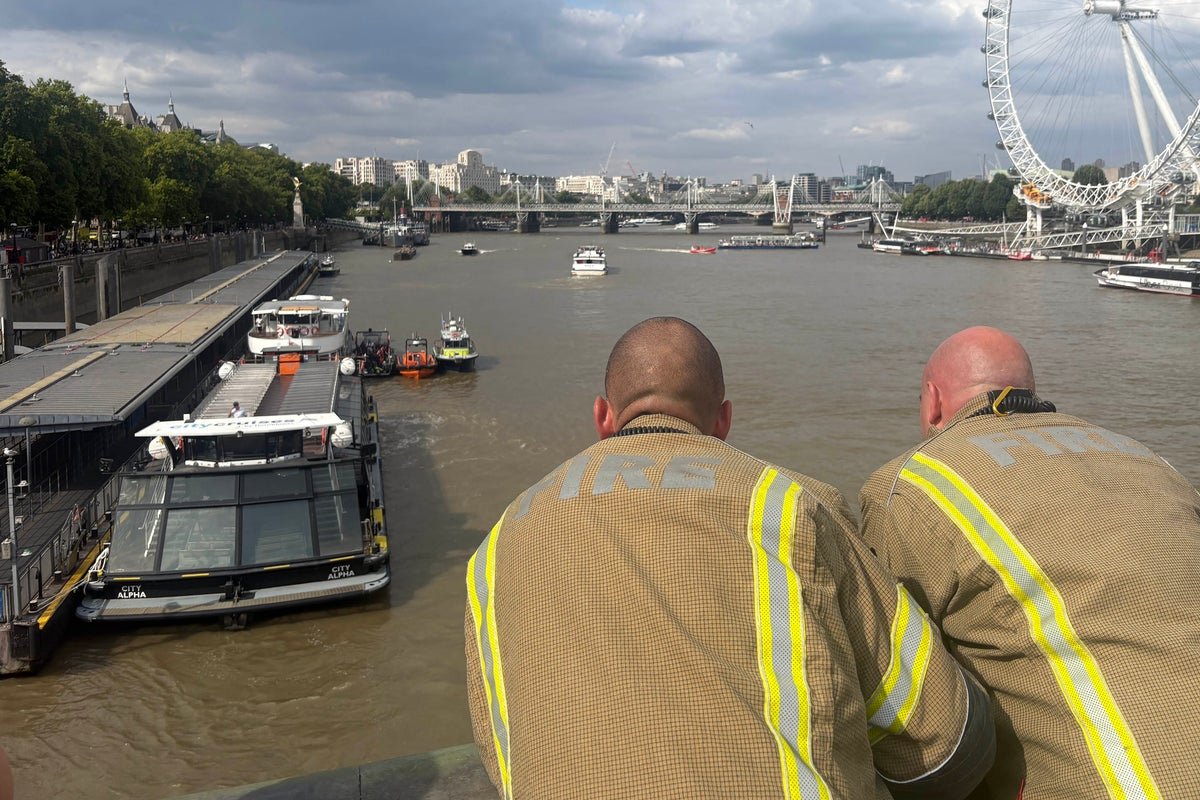
Five officers from the Metropolitan Police’s Marine Policing Unit were injured when their vessel was struck by another boat on the River Thames just downstream from Westminster Bridge, an incident that unfolded while they responded to a report of a person in the water.
Five Officers Hurt in Thames Collision Near Westminster
London, UK — Article continues...
The Collision Near Westminster Bridge
Five police officers sustained injuries when a boat crashed into a police vessel on the River Thames close to Westminster Bridge. The incident occurred while officers from the Metropolitan Police were attending a report of a person in the water. A number of officers entered the water following the collision, according to initial reports. The incident unfolded on a stretch of the River Thames immediately downstream from Westminster Bridge, a location where the waterway narrows sharply beneath one of London’s most iconic crossings. Just metres from the Palace of Westminster, the site sits at the symbolic and practical heart of British governance, where parliamentary proceedings and high-profile state events unfold daily. This proximity amplifies every navigational risk, as vessels must manoeuvre through a confined channel flanked by the bridge’s stone arches and the Embankment walls. Comparable tragedies underscore the persistent hazards. The Marchioness disaster of 1989, in which a dredger collided with a pleasure steamer near Blackfriars Bridge, claimed 51 lives and exposed longstanding deficiencies in river traffic management and look-out procedures. Subsequent collisions, including several involving passenger ferries and workboats in the 1990s and early 2000s, prompted incremental reforms yet left central London’s river corridor among the most congested in Europe. Tourist vessels such as Thames Clippers, scheduled commuter services, and private launches create a constant weave of traffic, particularly during peak hours when sightseeing boats vie with police launches and maintenance craft for safe passage under the bridge’s limited clearance.
Officers Acting on an Emergency Call
The officers involved were responding to a call concerning a person in the water at the time of the crash. This took place in a busy stretch of the Thames in central London, an area overseen by the force's Marine Policing Unit. The precise sequence leading to the impact remains under examination by the relevant authorities.
Injuries and Immediate Response
Five officers received injuries during the event. Several entered the water after the boat struck the police vessel. Details of their conditions have not been released, and the Metropolitan Police has yet to confirm further medical updates or the involvement of other emergency services at the scene.
River Safety on the Thames in Central London
The crash has prompted questions about safety measures for vessels operating on the River Thames near Westminster Bridge. The Port of London Authority holds responsibility for navigation and safety standards across the tidal Thames. Any review of procedures would involve coordination between the authority, the Metropolitan Police Marine Policing Unit, and local councils responsible for the surrounding Westminster area. The Port of London Authority, established under the Port of London Act 1908 and granted statutory responsibility for navigation and safety across the tidal Thames, sets speed limits, issues pilotage requirements and maintains buoyage systems. Post-Marchioness inquiries led to the introduction of the Thames Safety Plan and mandatory Automatic Identification System tracking for larger vessels, yet critics have long argued that enforcement remains stretched across a 95-mile tidal reach. Any fresh review following this collision would necessarily involve the Authority alongside the Metropolitan Police Marine Policing Unit, whose officers operate from bases at Wapping and must coordinate with Westminster City Council on matters ranging from pier maintenance to emergency access points.
Role of the Metropolitan Police Marine Policing Unit
The Marine Policing Unit routinely patrols the Thames to respond to incidents including those involving people in the water. Officers in this unit operate in a challenging environment where strong currents and heavy river traffic are constant factors. The latest event highlights the operational demands placed on personnel working in these conditions. The Marine Policing Unit fields approximately 140 officers and deploys a fleet that includes rigid-hull inflatable boats and the faster Targa-class vessels, enabling rapid response in currents that can exceed four knots. This operational model contrasts with river policing in cities such as Paris, where the Brigade Fluviale maintains a smaller but more heavily armed presence focused on counter-terrorism, or New York, where the Harbor Unit integrates with the Coast Guard under a unified command structure. London’s fragmented responsibilities—split between the PLA, the Met, the Environment Agency and local authorities—have repeatedly been cited in parliamentary reports as a barrier to coherent safety standards.
Implications for River Policing in London
Incidents of this nature draw attention to the resources allocated to river policing and the coordination required with the Port of London Authority. Westminster Bridge lies in close proximity to the Palace of Westminster, making the location sensitive for both security and public safety. Any future changes to operational protocols would be considered by the Metropolitan Police in consultation with national bodies responsible for maritime regulation. Westminster Bridge’s position at the threshold of the Palace of Westminster renders every river incident a matter of national security as well as public safety. The location falls within a designated restricted zone where the Metropolitan Police’s Counter Terrorism Command maintains heightened vigilance, requiring seamless liaison between marine officers, parliamentary security teams and the PLA’s vessel traffic service. Any lapse in coordination could expose vulnerabilities in the capital’s layered protective arrangements, particularly given the bridge’s role as a primary route for both ceremonial processions and daily commuter flows. Resource allocation for river policing has long been a point of contention. Despite repeated recommendations from the London Assembly for increased funding to match rising passenger numbers on the Thames, the Marine Policing Unit’s budget has remained relatively static, forcing reliance on overtime and ageing vessels. Broader implications extend to national maritime regulation, where the Maritime and Coastguard Agency and the Department for Transport may now press for updated risk assessments that incorporate the lessons of this collision into future licensing conditions for commercial operators.
Next Steps for Investigation
Authorities are expected to examine the circumstances of the collision and the effectiveness of current safety arrangements on this section of the Thames. The Metropolitan Police has not indicated a timeline for releasing further information. Developments will be monitored by those with oversight of river traffic and emergency response in the capital.
By Erica Thornton, Staff WriterThis article was produced with AI-assisted research and editorial support. Reporting is based on sources cited in the article.
What's Your Reaction?
 Like
0
Like
0
 Dislike
0
Dislike
0
 Love
0
Love
0
 Funny
0
Funny
0
 Wow
0
Wow
0
 Sad
0
Sad
0
 Angry
0
Angry
0

US Politics and Policy Correspondent at Global1.News. Based in Washington DC, covering American politics, policy, elections, and the courts. Knows how the system works and tells you what it actually means.











Comments (0)