
Amnesty International Demands Investigation of Israeli Strikes in Lebanon as Potential War Crimes
Amnesty International Demands Investigation of Israeli Strikes in Lebanon as Potential War Crimes Amnesty International's Investigation Details Amnesty International released findings on July 9, 2026, calling for Israeli attacks on Lebanon to be investigated as war crimes. The organization documented cases where strikes eliminated entire families, highlighting what it described
Amnesty International's Investigation Details
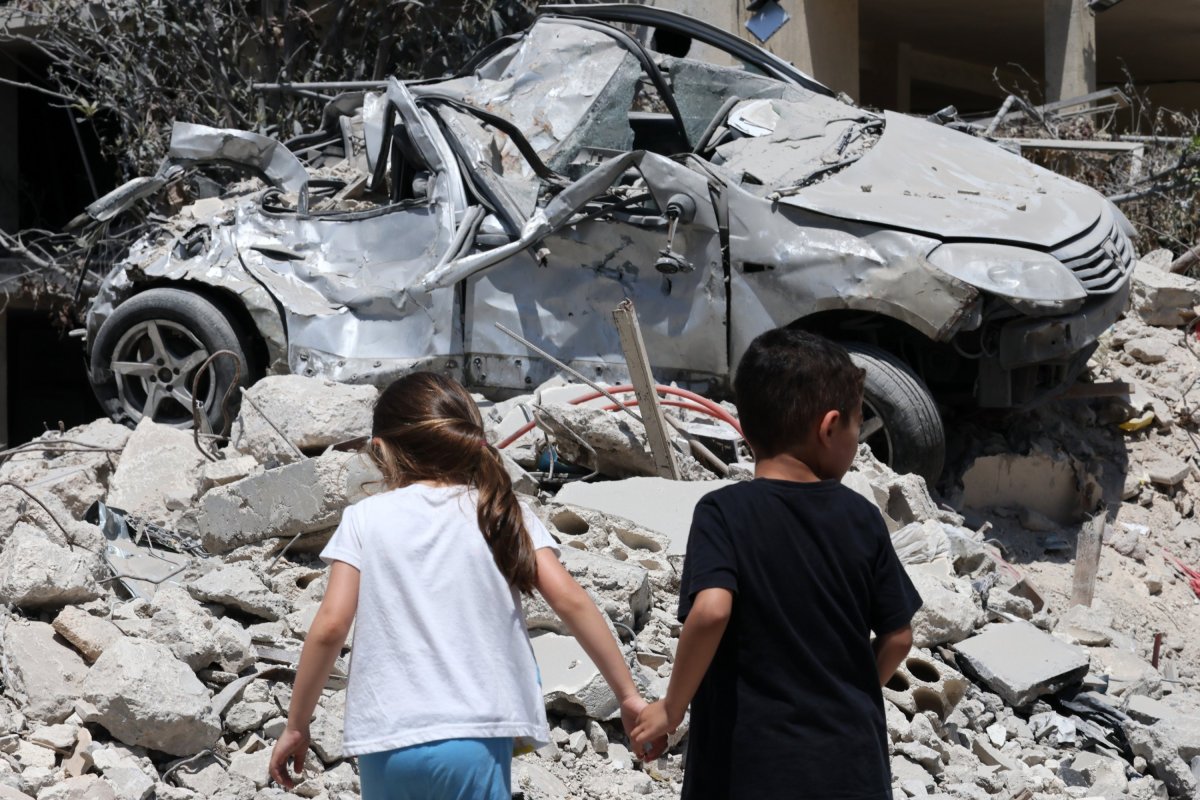
Amnesty International released findings on July 9, 2026, calling for Israeli attacks on Lebanon to be investigated as war crimes. The organization documented cases where strikes eliminated entire families, highlighting what it described as a pattern of civilian harm. Its analysis focused on three specific incidents between March 6 and March 13, resulting in 24 civilian deaths, including 12 children. Researchers conducted interviews with 15 individuals, including survivors, relatives, paramedics, journalists, and local officials, to build the evidentiary base.
The report concluded that Israeli forces violated international humanitarian law by failing to distinguish between civilians and military objectives or by not taking all feasible precautions to minimize civilian harm. Kristine Beckerle, Amnesty's deputy regional director for the Middle East and North Africa, emphasized the rapid obliteration of families within a single week. She urged an immediate comprehensive arms embargo on Israel alongside universal jurisdiction prosecutions. These recommendations connect directly to broader questions of accountability in conflicts involving Iranian-aligned networks across the region.
Analysis of the Three Specific Strikes
The documented strikes occurred in Al-Thakana near Tyre on March 6, Irkay near Saida on March 7, and Al-Rahbat near Tyre on March 13. In each case, Amnesty found reasonable grounds to conclude that attacks targeted civilian homes without sufficient evidence of military necessity provided by Israeli authorities. Lebanese authorities reported overall casualties exceeding 4,300 since the escalation, with more than 250 children among the dead. The strikes wiped out multiple family units in rapid succession, according to survivor accounts gathered by the organization.
These incidents unfolded shortly after Hezbollah entered the wider conflict on March 2. The concentration of strikes in southern Lebanon districts illustrates the intensity of operations in areas with dense civilian populations. Without detailed target information from Israel, the pattern raises strategic questions about proportionality in responses to proxy threats originating from Iranian support networks. The findings underscore how localized attacks can produce second-order effects on community structures and displacement patterns throughout the Tyre and Saida regions.
Israel's Official Defense and Position
Israeli authorities responded that certain strikes targeted Hezbollah military objectives while others were referred for internal examination. The Israel Defense Forces stated a commitment to mitigating harm to civilians during operational activity. Defense Minister Israel Katz framed the operations as necessary responses to Hezbollah, claiming that most of the group's capabilities and leadership had been neutralized. He indicated that Israeli forces would maintain a self-declared security zone inside Lebanon for as long as required.
Despite follow-up requests, the Israeli military did not supply specific information on the three Amnesty-examined attacks, including potential targets. This lack of detail limits external assessment of compliance with distinction and precaution requirements under international humanitarian law. Katz's statements reflect Israel's core objective of preventing cross-border threats from Iranian-backed groups, yet they also highlight ongoing tensions over verification mechanisms in active conflict zones. The position aligns with longstanding Israeli priorities of deterrence against proxy forces operating from Lebanese territory.
The Framework Agreement and Its Implementation Limits
A US-brokered framework agreement signed on June 26, 2026, in Washington outlined provisions for Israeli withdrawal from southern Lebanon and deployment of the Lebanese Armed Forces. Despite this diplomatic step, Israel has continued intermittent strikes in the south. The agreement sought to restore stability following Hezbollah's March 2 entry into the wider regional confrontation that began with US and Israeli actions against Iranian sites on February 28.
Implementation challenges stem from differing interpretations of security guarantees and the pace of force redeployment. Lebanese authorities continue to record civilian casualties, indicating that the agreement has not yet produced a durable cessation of hostilities. This situation illustrates the difficulty of translating diplomatic frameworks into operational realities when multiple actors, including Iranian-aligned militias, retain influence over escalation decisions. The limits of the agreement reveal how proxy dynamics can constrain the effectiveness of externally mediated arrangements in the Levant.
Hezbollah's Role as Iranian Proxy
Hezbollah joined the broader Middle East conflict on March 2 in support of Iran, triggering Israel's major airstrikes and ground operations. The group's actions reflect its position within Iran's regional proxy network, which seeks to extend deterrence and influence across multiple fronts. Israeli operations have focused on degrading Hezbollah's military infrastructure and leadership as part of efforts to neutralize threats along the northern border.
This proxy relationship amplifies Sunni-Shia geopolitical competition and complicates direct state-to-state diplomacy. Hezbollah's involvement demonstrates how Iranian support enables sustained pressure on Israel while exposing Lebanese civilians to retaliatory measures. The resulting dynamics affect energy market calculations in the Gulf and influence calculations by states pursuing economic diversification away from traditional hydrocarbon dependencies. Understanding these linkages is essential for assessing the durability of any future de-escalation efforts.
Humanitarian Toll on Lebanese Civilians
Lebanese authorities have recorded more than 4,300 deaths since the escalation, including over 250 children. The three analyzed strikes alone killed 24 civilians, half of them minors, illustrating concentrated family-level devastation within a short timeframe. Survivor testimonies describe sudden loss of entire households, contributing to long-term social and economic disruption in affected communities.
The humanitarian consequences extend beyond immediate fatalities to include displacement and strain on local services in Tyre and Saida districts. These outcomes intersect with existing vulnerabilities in Lebanon, where reconstruction needs remain significant. The pattern of civilian harm documented by Amnesty raises questions about the balance between military objectives and protection of non-combatants in densely populated areas near the border. Regional actors, including Gulf states monitoring Iranian influence, view such tolls as potential sources of future instability.
International Legal Dimensions and Arms Embargo Debate
Amnesty International's call for an arms embargo and universal jurisdiction prosecutions places the Lebanon operations within wider debates on enforcement of international humanitarian law. The organization cited failures in distinction and precaution as grounds for further investigation. Israeli responses have emphasized internal review processes, yet the absence of detailed target information has hindered independent verification.
These legal arguments connect to ongoing discussions about accountability mechanisms in conflicts involving non-state actors backed by state sponsors. An embargo would aim to alter the balance of capabilities, while prosecutions could target individual responsibility. Both proposals carry implications for relations between Western suppliers and regional partners, potentially affecting leverage in negotiations over Iran's nuclear program and proxy activities. The debate reflects competing priorities between security imperatives and civilian protection standards.
Regional Implications and Outlook for Stability
The Lebanon conflict intersects with multiple regional fault lines, including Iranian proxy expansion, Israeli security requirements, and Gulf state concerns over escalation spillover. Intermittent strikes after the June framework agreement suggest that core disputes over Hezbollah's residual capabilities remain unresolved. Second-order effects include pressure on Lebanese state institutions and potential ripple impacts on energy diplomacy within OPEC+ frameworks.
Great power competition adds another layer, as external actors weigh involvement against risks of wider entanglement. The outlook for stability hinges on whether the framework agreement can be reinforced with verifiable withdrawal and deployment steps, alongside credible guarantees against renewed proxy activity. Without progress on these fronts, the risk of renewed cycles of violence persists, affecting normalization trends and economic diversification efforts across the Middle East. Sustained diplomatic engagement remains necessary to address these interconnected challenges. By Malik Hassan, Staff Writer
This article was produced with AI-assisted research and editorial support. Reporting is based on sources cited in the article.
What's Your Reaction?
 Like
0
Like
0
 Dislike
0
Dislike
0
 Love
0
Love
0
 Funny
0
Funny
0
 Wow
0
Wow
0
 Sad
0
Sad
0
 Angry
0
Angry
0

Middle East Correspondent at Global1.News. Based in Beirut, covering politics, conflict, energy, and society across the Middle East. Brings context and depth to a region often reduced to headlines.









Comments (0)