
Yazidi Genocide Survivors: Dr Nagham Nawzat's Work in Duhok
The 2014 Sinjar Attack and the Shadow of Genocide On August 3, 2014, Islamic State militants launched a brutal assault on the Yazidi community in Sinjar, northern Iraq. Thousands of families were trapped on Mount Sinjar without food or water as fighters swept through villages, executing men and older women while abducting younger women and girls. The attack displaced over 400,0
The 2014 Sinjar Attack and the Shadow of Genocide
On August 3, 2014, Islamic State militants launched a brutal assault on the Yazidi community in Sinjar, northern Iraq. Thousands of families were trapped on Mount Sinjar without food or water as fighters swept through villages, executing men and older women while abducting younger women and girls. The attack displaced over 400,000 people and marked the beginning of a systematic campaign of violence that the United Nations later designated as genocide. International observers documented mass graves and widespread atrocities that targeted the Yazidi religious minority for extermination and enslavement.
The UN's recognition of these events as genocide in 2016 highlighted the intent to destroy the Yazidi people through killings, sexual slavery, and forced conversions. Tens of thousands were killed or kidnapped during the initial onslaught, with thousands still missing years later. This designation placed the crisis within the framework of international law, yet accountability remains elusive as many perpetrators evade justice across borders. The attack's legacy continues to shape the lives of survivors who seek safety in displacement camps across Iraq's Kurdistan region.
Dr. Nagham Nawzat: A Lifeline in Duhok
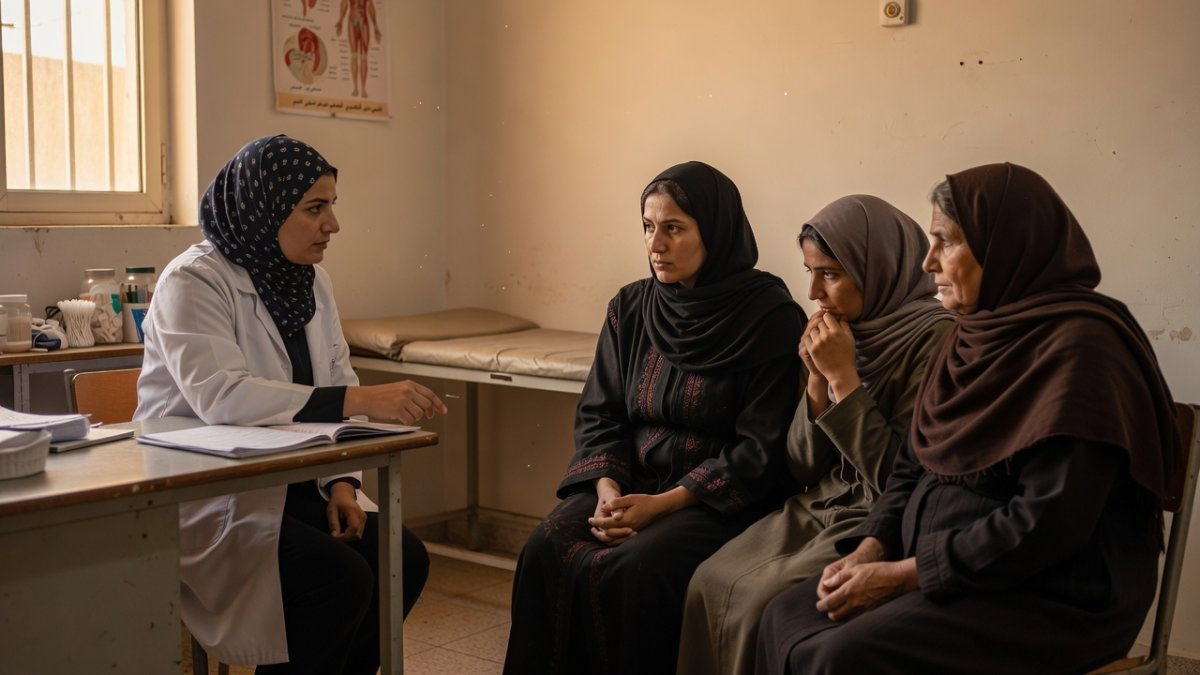
Dr. Nagham Nawzat, a 36-year-old Yazidi gynaecologist based in Duhok, has emerged as a central figure in the response to this humanitarian emergency. Since the 2014 attacks, she has provided medical and psychological support to more than 1,000 women and girls who survived IS captivity. Working from a clinic in Iraq's Kurdistan region, Dr. Nawzat addresses the physical and emotional wounds inflicted by systematic sexual violence and torture. Her patients range from young children to adults, many requiring immediate interventions that extend beyond standard medical care.
The scale of the crisis she confronts is staggering, with survivors arriving daily from camps and remote areas. Dr. Nawzat has treated girls as young as nine who endured repeated assaults, often necessitating reconstructive surgeries and long-term mental health support. She approaches each case with a survivor-centered philosophy, stating that every woman who enters her clinic represents not merely a patient but a testament to resilience. Her dedication persists despite the overwhelming demand, as thousands of Yazidi women continue to grapple with the aftermath of captivity and loss.
Shireen's Ordeal: A Survivor's Voice
Shireen was 19 and preparing for a high school exam in her Sinjar home when IS militants abducted her on August 3, 2014. She was quickly sold into sexual slavery and later transferred to another fighter in Mosul. Her captor professed affection while subjecting her to repeated rape, an experience she describes as fundamentally destructive: "He said I love you but when you love someone you don't rape her. It destroyed my life." Shireen's testimony captures the profound betrayal and dehumanization inflicted upon thousands of Yazidi women during this period.
After escaping, Shireen sought treatment from Dr. Nawzat, joining the ranks of survivors rebuilding their lives in Duhok. Her story underscores the personal dimensions of the genocide, where individual traumas intersect with collective suffering. Many women like Shireen face ongoing stigma and isolation, yet they find pathways to recovery through specialized care that validates their experiences. These accounts serve as vital records for documenting the atrocities and advocating for sustained international attention.
The Road to Recovery: Medical and Psychological Challenges
Recovery for survivors involves complex medical procedures to address injuries from prolonged sexual violence and torture. Dr. Nawzat frequently performs reconstructive surgeries while coordinating psychological support to manage trauma, depression, and post-traumatic stress. The challenges are compounded by the young age of many patients, whose developing bodies and minds require tailored interventions that account for both physical healing and emotional restoration. Limited resources in the region often force difficult choices about prioritization of care.
Psychological recovery proves equally demanding, as survivors confront memories of captivity alongside societal pressures that discourage open discussion of their experiences. Dr. Nawzat integrates counseling into her practice, emphasizing holistic approaches that recognize the interconnected nature of physical and mental wounds. Many women report gradual improvements through consistent treatment, yet the process remains protracted and uncertain. The absence of adequate funding and specialized personnel further strains efforts to meet the needs of over 1,000 documented cases under her care.
Facing Death Threats: Courage Amidst Danger
Dr. Nawzat has received multiple death threats from individuals opposed to her work with Yazidi survivors. These warnings target her advocacy and medical interventions, yet she continues her practice without hesitation. Her resolve stems from a deep commitment to the community, expressed in her declaration that she dedicates her life to the Yazidis and will not abandon them. Such threats highlight the personal risks borne by human rights defenders in post-conflict settings.
Despite the dangers, Dr. Nawzat maintains her clinic as a sanctuary for those in need. Security concerns have prompted some adjustments to her routine, but they have not deterred her from expanding services. Her perseverance inspires colleagues and survivors alike, reinforcing the importance of sustained support for medical professionals operating under threat. The international community has occasionally voiced concern, though concrete protections remain inconsistent.
Seeking Justice: Mechanisms and International Recognition
Justice mechanisms for the Yazidi genocide have included UN investigations and calls for accountability, yet prosecutions remain limited. The 2016 genocide designation by the United Nations provided a legal foundation for pursuing perpetrators, but domestic courts in Iraq and elsewhere have struggled with evidence collection and extradition challenges. Thousands of missing Yazidis underscore the incomplete nature of these efforts, leaving families without closure or reparations.
Dr. Nawzat's documentation of survivor testimonies contributes indirectly to these processes by preserving evidence of systematic crimes. International recognition has facilitated some humanitarian aid, but gaps persist in translating declarations into tangible outcomes such as victim compensation or perpetrator trials. Analysts note that stronger coordination between global bodies and local authorities could enhance the effectiveness of existing frameworks, though political obstacles continue to impede progress.
Echoes of Injustice: Broader Patterns in the Region
The Yazidi experience reflects wider patterns of targeted violence against minority communities across the Middle East, where displacement and sexual violence serve as tools of control. Similar dynamics have unfolded in other conflicts, underscoring the need for consistent application of international human rights standards. Dr. Nawzat's work illuminates how individual acts of medical solidarity can counter systemic erasure, even as structural inequalities persist.
These regional injustices demand renewed focus on prevention and accountability to prevent recurrence. By centering survivor narratives and medical realities, efforts like those in Duhok offer models for addressing trauma on a larger scale. The ongoing struggles of Yazidi women connect to broader calls for dignity and justice that resonate throughout affected populations in the area.
By Fatima Al-Rashid, Staff WriterThis article was produced with AI-assisted research and editorial support. Reporting is based on sources cited in the article.
What's Your Reaction?
 Like
0
Like
0
 Dislike
0
Dislike
0
 Love
0
Love
0
 Funny
0
Funny
0
 Wow
0
Wow
0
 Sad
0
Sad
0
 Angry
0
Angry
0
Gulf/MENA Correspondent at Global1.News. Based in Doha, covering Gulf politics, energy markets, diplomacy, and development across the Middle East and North Africa. Tracks the economic transformation of the Gulf states.











Comments (0)