
Could Russia's Wartime Debt Boom Trigger a Banking Crisis?
Russia's wartime borrowing spree has created a debt boom propping up its sanctioned economy, but surging corporate and household loans now threaten to trigger a full-blown banking crisis as bankruptcies hit record levels and hidden bad debts mount.
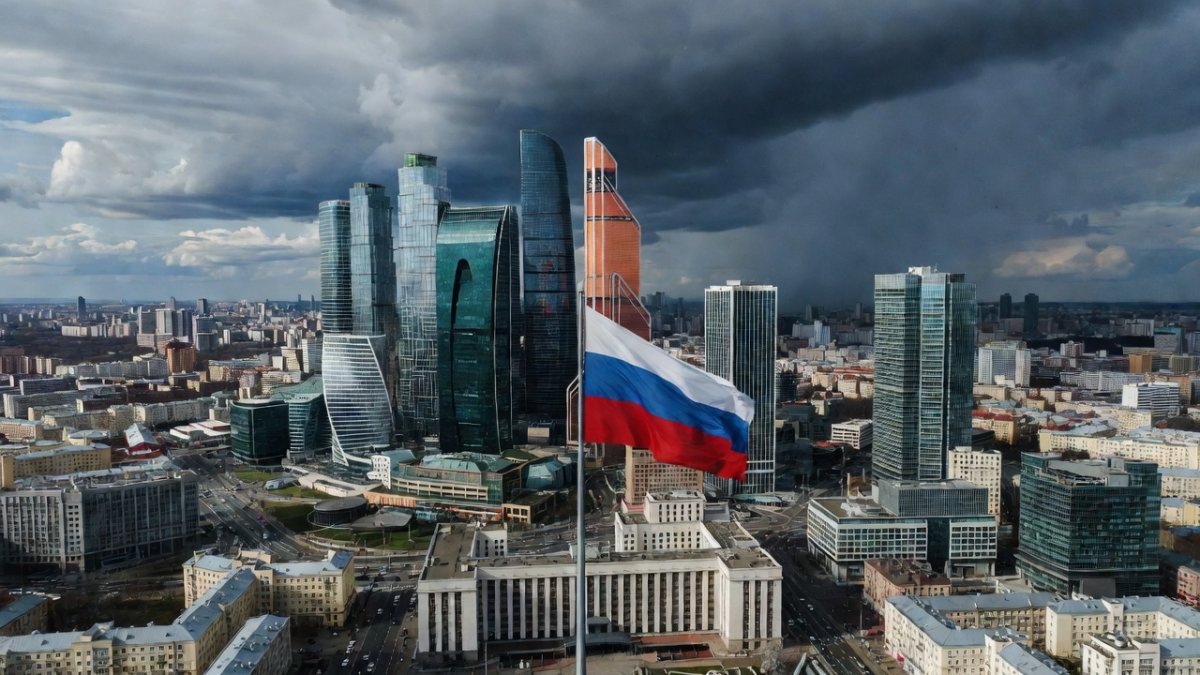
Russia's wartime borrowing spree has created a debt boom propping up its sanctioned economy, but surging corporate and household loans now threaten to trigger a full-blown banking crisis as bankruptcies hit record levels and hidden bad debts mount. With corporate debt up 93 percent since 2021 and over 636,000 personal bankruptcies in 2025 alone, the Kremlin's subsidized lending model is showing dangerous cracks. Independent analysts warn that official figures mask a "latent crisis" that could force state intervention or worse if sanctions tighten further.
Russia's Wartime Debt Boom Risks Banking Crisis
Moscow, Russia - Article continues with analysis of how subsidized wartime lending has fueled record debt levels and hidden banking risks across Russia.
The Borrowing Boom That Propped Up Russia's War Economy
Since 2022 the Russian government has expanded subsidized lending programs to support defense-related industries along with agriculture, small businesses and factories that sought to replace Western suppliers. These measures helped sustain economic activity despite Western sanctions imposed after the full-scale invasion of Ukraine.
State-owned banks such as Sberbank and VTB played central roles in channeling funds to priority sectors. The Finance Ministry coordinated the rollout of these programs, which the Kremlin presented as essential for maintaining production levels in key regions including Moscow and St Petersburg.
Western analysts note that the borrowing surge created short-term stability while embedding long-term vulnerabilities in the financial system. European intelligence assessments have highlighted how this approach masked underlying weaknesses rather than resolving them.
The current borrowing surge echoes the Soviet Union's late-1980s military Keynesianism, when defense outlays consumed 15-18 percent of GDP and were financed through hidden budget deficits and directed credits from Gosbank. Today's Kremlin has revived this model under the guise of "preferential mortgages," channeling subsidized loans at 6-8 percent through state banks such as Sber and VTB directly into households that supply labor to defense plants in the Urals and Volga regions. These programs, expanded after February 2022, have funneled more than 4 trillion rubles into new housing while simultaneously guaranteeing demand for steel, cement, and electronics produced by enterprises now operating on wartime schedules.
Defense contractors receive parallel working-capital facilities from the same banks, creating a closed loop in which mortgage borrowers become both consumers and future conscripts or factory workers. This architecture replicates the post-Soviet pattern of the 1990s, when selective credit allocation preserved military-industrial cores at the expense of civilian sectors, yet it now operates at far higher interest-rate levels and under Western sanctions that limit external refinancing.
Corporate and Household Debt Reach Dangerous Levels
Russian corporate debt has grown by 93 percent since 2021, while household debt has risen by 57 percent over the same period. This rapid accumulation now exerts systemic pressure as elevated interest rates increase the cost of servicing existing loans.
Recent tax increases have further squeezed corporate profits, making repayment more difficult for many borrowers. The Central Bank has maintained that commercial banks remain financially healthy and possess sufficient reserves to absorb potential losses.
Analysts at the Foreign Policy Research Institute argue that the official narrative understates the risks. Maximilian Hess has pointed out that sustained high rates combined with slowing growth could push more borrowers into distress without additional state support.
Bankruptcy Wave Signals Underlying Distress
A record 636,000 Russians declared bankruptcy in 2025, representing a 30 percent increase from the previous year and more than three times the roughly 197,000 cases recorded in 2021. The upward trend continued into 2026, with bankruptcies rising 13.7 percent year-on-year in the first quarter to 137,500.
Russian courts declared 3,550 companies bankrupt in the first half of 2026, an increase of 10.8 percent compared with the same period a year earlier. Smaller enterprises have faced the sharpest impact from these developments.
The Central Bank continues to report that bad corporate loans represent around 4 percent of total lending. Independent observers suggest the true level of distress may be higher because large borrowers frequently restructure obligations instead of defaulting.
Small Businesses Bear the Brunt of the Crisis
Central Bank data indicate that by April 2026 nearly 10 percent of microenterprises had experienced significant difficulties with loan repayments over the preceding 12 months. By May roughly one in six of Russia's 600,000 small and medium-sized enterprises with outstanding loans had fallen behind on repayments.
These firms often lack the access to restructuring options available to larger state-linked companies. The pattern reflects broader challenges in sectors that expanded rapidly under subsidized lending but now face higher borrowing costs.
CMAKP, a Moscow-based economic think tank, has documented how smaller borrowers are disproportionately affected. Its May report warned that the concentration of problem assets among these enterprises could amplify risks across the banking system.
Regions outside the Moscow-St. Petersburg axis have suffered the sharpest contraction. In Novosibirsk and Sverdlovsk oblasts, small-enterprise loan delinquencies have risen above 14 percent, while in the Far Eastern Federal District the figure exceeds 17 percent, according to internal Central Bank supervisory data. The 21 percent key rate has rendered working-capital loans prohibitive for firms with margins below 25 percent, forcing many into informal lending networks tied to regional elites who maintain closer ties to the Presidential Administration.
Retail trade, construction, and agriculture face the most acute exposure. Construction firms in Rostov and Krasnodar have seen project starts fall by more than half since the rate hike, while agricultural cooperatives in the Central Black Earth region struggle to finance imported equipment and seeds. These sectors lack the state guarantees routinely extended to defense-adjacent suppliers, reproducing the selective survival pattern familiar from the 1998 crisis when only politically connected enterprises received restructuring.
The "Latent Crisis" - What the Official Numbers Hide
A recent European intelligence report cited by Reuters described the practice of loan restructuring as creating an "illusion of a dynamic economy" that masks an "explosive situation" for the Russian banking sector. The report estimated that 10 percent of corporate loans are of doubtful quality, well above the official figure.
CMAKP stated in its May report that banks' combined stock of problem assets held against both corporate and household borrowers had exceeded the critical threshold of 10 percent. The think tank noted that the deterioration in asset quality is being masked by restructuring and the dominance of state-owned banks.
Maximilian Hess observed that the International Monetary Fund has long viewed a 10 percent non-performing loan rate as a sign of significant banking distress. This assessment aligns with concerns raised by other Western monitoring bodies about hidden vulnerabilities.
Kremlin's Options: National Wealth Fund and State Banks
To ease mounting pressure the Kremlin may ultimately need to draw on the federal budget or the National Wealth Fund to inject capital into banks holding large volumes of troubled loans. Such intervention would represent a direct fiscal response to the accumulating risks.
State-owned banks already dominate the sector and have absorbed much of the subsidized lending activity since 2022. Their balance sheets now carry a substantial share of the restructured obligations that obscure the true extent of problem assets.
Officials at the Central Bank have repeatedly asserted that existing reserves are adequate. Independent analysts counter that any large-scale recapitalization would require explicit political decisions at the highest levels of government.
Western Sanctions and the Threat of a Systemic Collapse
A more serious crisis could develop if Western sanctions further restrict Moscow's hard-currency earnings and its oil and gas exports, particularly to Asian buyers. Reduced revenues would limit the resources available for any emergency support to the banking system.
The Finance Ministry and energy companies such as Gazprom and Rosneft have relied on steady export income to fund both state programs and debt servicing. Disruptions in these flows would tighten fiscal space at a time when problem loans are already rising.
European intelligence assessments have warned that sustained external pressure could accelerate the deterioration now visible in bankruptcy statistics and repayment data. The combination of internal debt dynamics and external constraints creates a narrow margin for policy responses.
Russia continues to earn roughly $180-200 billion annually in hard currency from oil and gas exports, largely routed through shadow fleets and intermediaries in India and China. European policymakers could tighten this flow by expanding the price-cap enforcement mechanism to include secondary-market insurance and by sanctioning the remaining shadow-tankers that still dock in EU ports for maintenance. Such measures would directly reduce the foreign-exchange inflows that currently finance parallel imports of dual-use components.
Ukrainian long-range drone strikes on refineries have already demonstrated the vulnerability of domestic processing capacity, cutting export-grade product volumes and forcing greater reliance on imported fuels. Should Europe coordinate with Kyiv to target additional export terminals and pipeline junctions, the resulting revenue shortfall would expose the structural weaknesses hidden by the current borrowing boom and force the Central Bank into even more aggressive capital controls reminiscent of the post-1998 period.
Analysis and Implications for Russia's Economic Future
The debt accumulation since 2022 has supported wartime production but has also transferred substantial risk onto the banking sector. Official statistics continue to present a contained picture, yet multiple independent sources point to higher levels of distress than reported.
State intervention through the National Wealth Fund remains the most plausible backstop, though it would divert resources from other priorities. The dominance of state-owned banks may delay visible failures while concentrating losses within institutions closely tied to the Kremlin.
Western analysts including those at the Foreign Policy Research Institute emphasize that the situation remains fluid. Further deterioration in repayment capacity or additional sanctions pressure could force more explicit recognition of losses that have so far been managed through restructuring.
By Irina Volkov, Staff WriterThis article was produced with AI-assisted research and editorial support. Reporting is based on sources cited in the article.
What's Your Reaction?
 Like
0
Like
0
 Dislike
0
Dislike
0
 Love
0
Love
0
 Funny
0
Funny
0
 Wow
0
Wow
0
 Sad
0
Sad
0
 Angry
0
Angry
0
Russia/Eastern Europe Correspondent at Global1.News. Covering Russian politics, energy, security, and the shifting dynamics of the post-Soviet space. Provides clear-eyed analysis on one of the world's most opaque regions.











Comments (0)