
Iran's Strait of Hormuz Crisis: Short-Term Gains Against American Leverage
The Strait of Hormuz has once again become the flashpoint for a simmering confrontation between Iran and the United States, with Tehran's Islamic Revolutionary Guard Corps escalating maritime threats that now leave commercial vessels and their crews stranded in contested waters. A Pakistani analyst featured on Al Arabiya English argues that while Iran is winning the short-term
The Strait of Hormuz has once again become the flashpoint for a simmering confrontation between Iran and the United States, with Tehran's Islamic Revolutionary Guard Corps escalating maritime threats that now leave commercial vessels and their crews stranded in contested waters. A Pakistani analyst featured on Al Arabiya English argues that while Iran is winning the short-term tactical game, American leverage carries the risk of transforming into a strategic liability if overextended.
Iran's Strait of Hormuz Crisis: Short-Term Gains Against American Leverage
Dubai, UAE – June 30, 2026 — The standoff in the Persian Gulf's vital chokepoint has entered a new phase, with Iran's IRGC deploying fast-attack craft and mine-laying assets to create what amounts to a de facto exclusion zone — without any formal declaration of closure. Satellite imagery confirms intensified patrols near the islands of Abu Musa and Greater Tunb, where Tehran maintains forward operating positions. Shipping operators report rising insurance premiums and several vessels have been rerouted as uncertainty deepens.
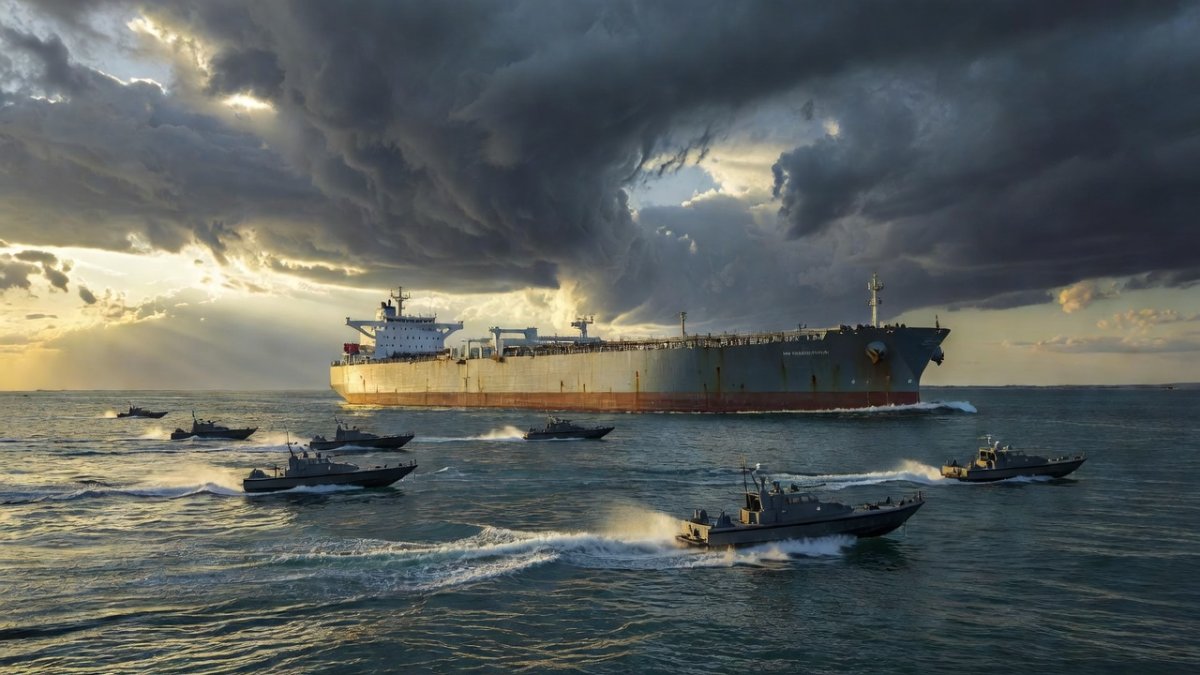
Escalation at the Strait of Hormuz
Iran's Islamic Revolutionary Guard Corps has intensified its maritime posturing in the Strait of Hormuz, issuing explicit warnings that vessels deviating from designated shipping lanes will face interception. Several commercial ships and their crews remain stranded after evacuation operations were abruptly halted, leaving tankers vulnerable in contested waters. These moves directly threaten the passage of roughly 20 percent of global oil trade that transits the narrow waterway daily.
IRGC naval units have deployed fast-attack craft and mine-laying assets in patterns consistent with asymmetric doctrine, creating a de facto exclusion zone without a formal declaration of closure. Satellite imagery and shipping reports indicate increased patrols near the islands of Abu Musa and Greater Tunb, where Tehran maintains forward operating positions. The resulting uncertainty has already prompted several operators to reroute or delay transits.
Regional observers note that these actions coincide with stalled nuclear talks and renewed sanctions pressure, suggesting Tehran is using maritime leverage to alter the diplomatic calendar.
Iran's Short-Term Tactical Calculus
Tehran calculates that its asymmetric advantages in the Strait deliver immediate bargaining power before any sustained Western response can materialize. By keeping vessels and crews in limbo, Iranian authorities create daily headlines that amplify the perception of control over a critical chokepoint. This short-term visibility strengthens the IRGC's domestic narrative of successful resistance against sanctions.
The strategy also exploits the time lag between threat and retaliation. While the United States possesses superior conventional forces, assembling a credible escort coalition requires weeks of coordination that Iran can use to extract concessions on sanctions relief or frozen assets.
Furthermore, Iran's posture tests the willingness of Gulf Arab states to absorb economic pain on behalf of American red lines.
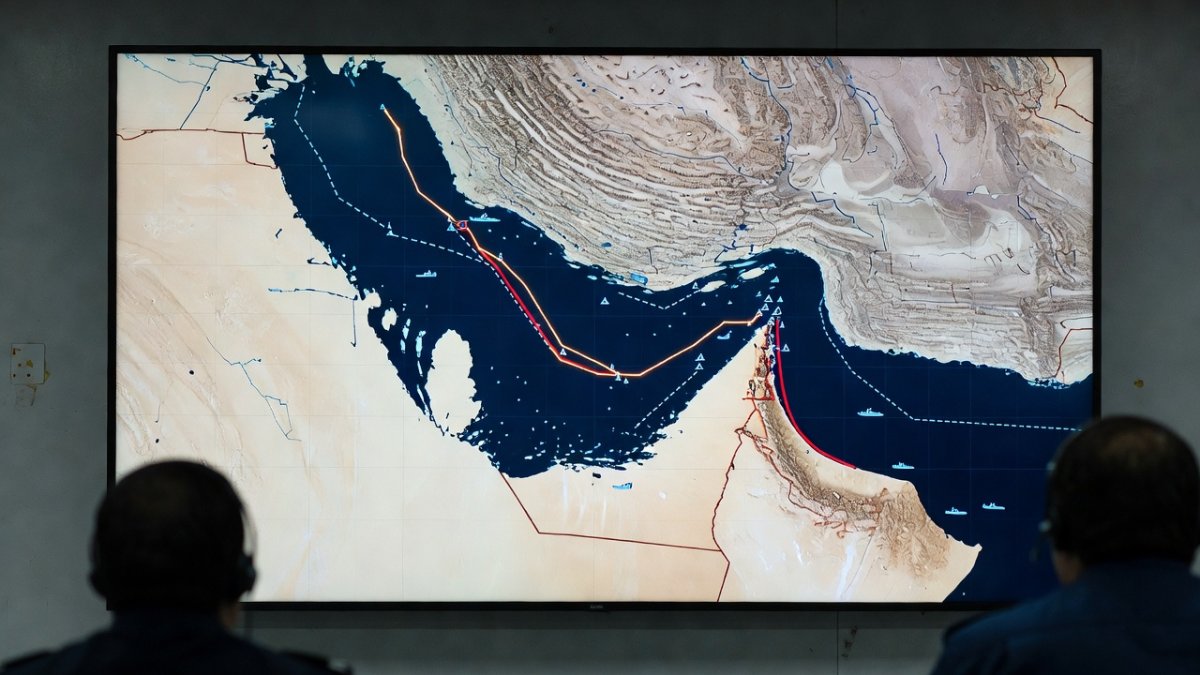
US Leverage: From Strength to Strategic Liability
Washington retains unmatched military reach and financial instruments that could, in principle, impose severe costs on Iranian maritime activity. Carrier strike groups, sanctions designations, and secondary penalties on shipping companies constitute formidable tools. Yet the Pakistani analyst correctly identifies the risk that over-application of these instruments may convert latent strength into active liability.
Extended naval deployments in the Gulf increase the probability of miscalculation or accidental confrontation, potentially drawing the United States into a limited conflict it has sought to avoid.
The deeper vulnerability lies in the perception that American leverage depends on Gulf Arab cooperation. If Riyadh and Abu Dhabi conclude that U.S. policy prolongs rather than resolves the crisis, they may quietly distance themselves from joint initiatives.
The Gulf States' Predicament
Saudi Arabia and the United Arab Emirates confront direct exposure to any sustained disruption in Hormuz. Both countries have invested heavily in Vision 2030 diversification programs that presuppose stable energy revenues and secure export routes.
These states also navigate delicate security dependencies. While they host U.S. forces and participate in regional maritime coordination, they remain geographically adjacent to Iranian territory and lack independent capacity to guarantee safe passage through the Strait.
Pakistan's Strategic Position
Pakistan occupies a distinctive vantage point shaped by its long border with Iran, substantial Shia population, and deep economic ties to Gulf monarchies that employ millions of Pakistani workers.
Islamabad's interest lies in preventing any conflict that would force a binary choice between Tehran and Riyadh. The analyst's framing — that Iran gains short-term while U.S. leverage risks backfiring — reflects Islamabad's preference for managed competition rather than open confrontation.
Global Energy Market Fallout
Disruptions at Hormuz immediately affect benchmark crude prices and LNG spot markets, with historical precedent in the 1980s Tanker War when similar threats drove sustained premiums.
The absence of readily scalable bypass infrastructure means that even partial closures produce outsized effects on global supply. Qatar's LNG exports face particular vulnerability.
Strategic Implications for Regional Order
The current Hormuz standoff will shape the trajectory of great-power competition in the Gulf. China's interest in stable energy flows and its growing diplomatic footprint suggest Beijing may quietly encourage restraint.
Arab-Israeli normalization faces renewed tests. Gulf states that advanced ties with Israel partly to balance Iran now confront the reality that security cooperation with Jerusalem does not automatically translate into protection of maritime trade routes.
Ultimately, the crisis underscores the enduring asymmetry between Iran's ability to impose immediate costs and the slower, more diffuse instruments available to its adversaries.
By Malik Hassan, Staff Writer
This article was produced with AI-assisted research and editorial support. Reporting is based on sources cited in the article.
What's Your Reaction?
 Like
0
Like
0
 Dislike
0
Dislike
0
 Love
0
Love
0
 Funny
0
Funny
0
 Wow
0
Wow
0
 Sad
0
Sad
0
 Angry
0
Angry
0

Middle East Correspondent at Global1.News. Based in Beirut, covering politics, conflict, energy, and society across the Middle East. Brings context and depth to a region often reduced to headlines.













Comments (0)